Arthur Christmas (2011) – Film Review

From Sony Pictures Animation and Aardman Animations, the latter being the iconic British company behind many beloved handcrafted films, such as ‘Wallace & Gromit,’ ‘Chicken Run,’ ‘Morph’ and ‘Early Man,’ comes a festive family adventure focusing on ‘Santa’s son; ‘Arthur,’ as he races across the globe to deliver a present to an overlooked child. And, although the film doesn’t feature the impeccable stop-motion animation the company is best known for, it does make up for its mostly generic CG visuals through its amusing moments, charming characters and inventive story.

Plot Summary: On the night of Christmas Eve, after ‘Santa’ and his enormous team of elves believe themselves to have succeeded in another year of present delivery for the children of the world. ‘Santa’s clumsy son; ‘Arthur,’ and a skilled gift wrapping elf, named; ‘Bryony,’ discover a young girl’s present has been misplaced, leaving her the only child in the world without a gift from ‘Santa.’ Fearing what the young girl will think when she awakens to find nothing under the tree Christmas morning, ‘Arthur’ sets out on a desperate mission with ‘Santa’s elderly father to deliver the forgotten gift…

Directed by Sarah Smith and Barry Cook, ‘Arthur Christmas’ is actually the first directorial effort from Cook since the iconic Disney flick; ‘Mulan,’ in 1998, with Smith having never directed a feature before in her career. Yet, even with these fairly inexperienced directors, ‘Arthur Christmas’ never gets muddled within its own story, managing to balance its many characters, exciting sequences and themes of family and symbolism/icons immensely well, whilst the film also cleverly answers the question that has perplexed children around the world for years, that being “How Does Santa Deliver Every Child’s Present in a Single Night?” The only major issue ‘Arthur Christmas’ suffers from as a film is its fast-pacing, which does remain very quick throughout the runtime and results in some scenes feeling very rushed.

James McAvoy portrays the film’s humble protagonist; ‘Arthur,’ who is likeable enough and easy to root for as a character in wanting to deliver the misplaced present, though I could see McAvoy’s performance irritating some viewers, as ‘Arthur’ is always very energetic, jumping from fearful to cheerful incredibly fast, even if it is a nice change-of-pace for a protagonist to have nothing but love for the Christmas season. The rest of the cast of Bill Nighy, Hugh Laurie, Ashley Jensen, Jim Broadbent and Imelda Staunton, are all exceptional in their roles as the ‘Claus’ family, adding up to a splendid family-dynamic which the story actually explores a fair amount of.

Just as lively as the film’s fast pacing, the animated cinematography for ‘Arthur Christmas’ is very innovative, constantly displaying a number of visually interesting and fairly unique shots, many of which capture the massive scale of the ‘S-1,’ the high-tech sleigh-replacement ‘Santa’ now utilises, as it soars across the sky. Additionally, with ‘Arthur’ and ‘Grandsanta’ being unfamiliar with the modern world due to them being confined to the North Pole for much of their lives, much of their journey revolves around them accidentally arriving at various locations as they attempt to find the young girl’s home in Trelew, England. And, each location manages to feel diverse and allows for many exhilarating set pieces, from the sleigh being chased by the Spanish police force through Trelew, Argentina, to ‘Arthur’ and ‘Grandsanta’ almost being eaten alive by lions after finding themselves on the Savannah plains.

However, the original score by Harry Gregson-Williams is the complete opposite, as the film’s soundtrack is your standard animated score with little memorable or interesting about it. From tracks, like ‘Trelew, Cornwall, England,’ ‘Operation Christmas’ and ‘Goodbye Evie,’ the original score is fairly disappointing when considering many of the film’s creative ideas in regards to its story. With that said, the track; ‘One Missed Child,’ does capture ‘Arthur’s true awe at the sight of the original sleigh perfectly, as short as the scene itself may be.

The animation itself isn’t extremely well detailed but does remain attractive throughout the story, despite my distaste of a few of the character’s designs that is, as I personally found many of the characters to appear far too cartoonish and even slightly unappealing, particularly, when it comes to many of the elves’ designs. These design choices are actually intentional, however, as the animators decided to approach the character designs with the goal of making them feel authentically British and quirky, rather than air-brushed and immensely appealing.

In summary, ‘Arthur Christmas’ has far more merits than it does faults, as the film serves as a refreshing take on the typical ‘Santa’ saves Christmas story. Interjecting a family dynamic and a large array of adult-centred humour into what is already an entertaining and surprisingly smart narrative for a family flick. So, even in spite of its average-looking animation and overly fast pacing, ‘Arthur Christmas’ is truly a joyful film to watch with a heartfelt message at its core, and I feel is likely to become a modern Christmas classic in time. Final Rating: 7/10.

0c1f74f2f315a3b102cde84ba1b6000e

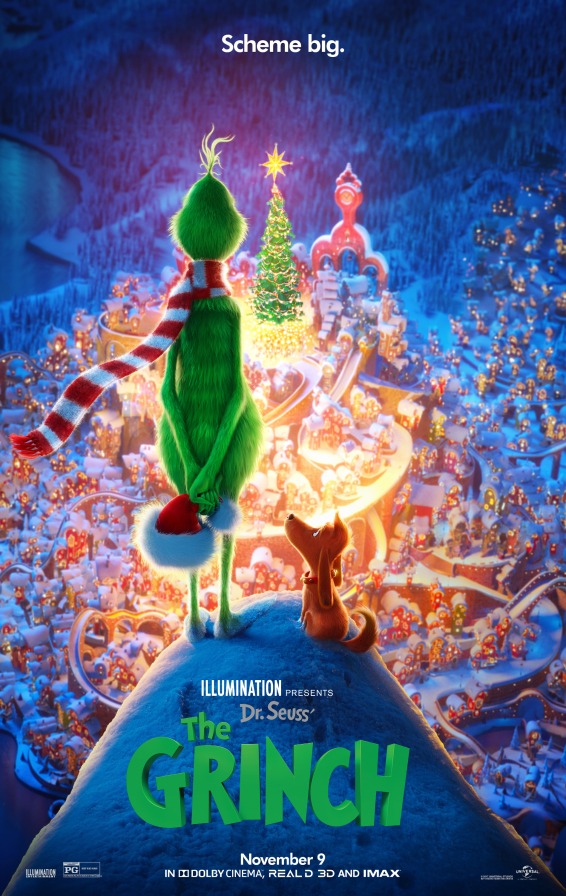
The Grinch (2018) – Film Review

Theodor Seuss Geisel, better known as his pen-name; ‘Dr. Seuss,’ is recognised today as one of the best authors in children’s literature. Through his whimsical writing, memorable characters and surreal illustrations, many of Geisel’s stories have become truly timeless as a result of how original they were compared to other children’s books released around the same period. So, of course, it would only be a matter of time till Geisel’s various characters began making their way to the silver screen, with one of his most villainous characters; ‘The Grinch,’ receiving many adaptations, the most recent of which possibly being the worst to date.

Plot Summary: In the town of ‘Whoville,’ the residents, known as the ‘Whos,’ excitedly await the arrival of Christmas Day. But, just north of ‘Whoville,’ on the top of ‘Mount Crumpit,’ the cantankerous and green-furred; ‘Grinch,’ begins to hatch a plan with his loyal dog; ‘Max,’ crafting a scheme to steal Christmas from the ‘Whos’ in an attempt to silence their irritating holiday cheer once and for all…

This 2018 readaptation of ‘How the Grinch Stole Christmas!’ is animated by Illumination Animation, the animation company behind modern family flicks, like ‘Despicable Me,’ ‘Sing’ and ‘The Secret Life of Pets,’ in addition to a previous ‘Dr. Seuss’ adaptation; ‘The Lorax,’ in 2012. This isn’t surprising of course, as Illumination Animation have truly exploded in popularity since 2010, mostly due to their creation of ‘The Minions.’ And, whilst I personally don’t despise the company as a whole, as I feel many of their films are entertaining enough for younger viewers, it’s fair to say their film catalogue is spotty at best, with many of their films boasting extremely predictable humour and generic animation/character designs, and ‘The Grinch’ is, unfortunately, no exception.

Benedict Cumberbatch portrays the title character, and although Cumberbatch is usually an actor I adore, having given an array of brilliant performances throughout his career. ‘The Grinch’ is without a doubt one of his weakest, as his performance somehow manages to feel both minimum effort and also far too cartoonish. Resulting in this version of the nefarious characters becoming instantly forgettable, especially when put in comparison with Jim Carrey’s beloved performance. Then there is also Cameron Seely and Rashida Jones, who portray ‘Cindy-Lou Who’ and her mother; ‘Donna,’ who this time around have their own subplot mostly unrelated to ‘The Grinch’s scheme, which serves little purpose aside from one particular scene. And, finally, there is Pharrell Williams as the story’s narrator, which is some of the most bizarre casting I’ve ever seen, as his Southern American dialect doesn’t at all fit the role of a traditional Christmas storyteller.

Similar to the rest of Illumination Animation’s releases, ‘The Grinch’ is visually impressive at a first glance, as the film’s animated cinematography and extremely vibrant colour palette is likely to catch any viewer’s eye. Yet, also in line with their other films, Illumination Animation’s style does feel very repetitive after so long, as each character/location does little to make itself stand out. A perfect example of this is ‘The Grinch’ himself, as while ‘The Grinch’ is implied to have very poor hygiene similar to other adaptations of the story, neither ‘The Grinch’ nor his home within ‘Mount Crumpit’ are ever displayed as unpleasant, even though ‘The Grinch’s home being dark and filthy serves as an extension of his vile personality.

Aside from ‘Tyler the Creator’s abysmal new rendition of ‘You’re a Mean One, Mr. Grinch,’ the original score by Danny Elfman is completely unremarkable. From ‘A Wonderful Awful Idea’ to ‘Stealing Christmas,’ all of the film’s tracks lack both memorability and charm, barley embracing the fantastical nature of ‘Dr. Seuss’ stories or the festive season itself, with the rest of the film’s soundtrack just relying on other modern renditions of classic Christmas songs.

Undoubtedly, the most disappointing aspect of this readaptation, however, is the actual animation style as one obvious benefit that this new adaptation has over the live-action adaptation of ‘How the Grinch Stole Christmas!’ is simply being animated, as this allows the film’s designs to greatly lean into the wonderful illustrations of ‘Dr. Seuss,’ as his sketches are incredibly difficult to recreate in real life as result of their harsh curves and gravity-defying architecture. But, strangely, the film doesn’t take advantage of this, with many designs only having a slight ‘Seuss’ influence in spite of the clearly inspired rhyming dialogue.

In summary, ‘The Grinch’ is a worst-case scenario for a readaptation, as I feel this animated film falls flat in most areas, never reaching the emotional or comedic heights of ‘How the Grinch Stole Christmas’ from 2000, or even matching up to the delightful hand-drawn animation seen in the original 1966 short. So, whilst its visuals may appear pleasant at first, it quickly becomes apparent something is missing, as this new adaptation gives the impression it was made by a team of producers rather than just one director, and as a result, fails to breathe new life into this age-old Christmas tale. Final Rating: 3/10.

grinch_ver5_xxlg

How to Train Your Dragon (2010) – Film Review

One of the highest-regarded films from DreamWorks Animation, 2010’s ‘How to Train Your Dragon’ is successful in nearly every regard as an animated feature, making many changes to its original source material (all of which for the better), to excel as a brilliant piece of family-focused storytelling. With plenty of memorable characters, exhilarating action sequences and an outstanding original score by John Powell, ‘How to Train Your Dragon’ would soon go on to become one of DreamWorks’ most recognisable and profitable franchises for good reason.

Plot Summary: On the island of ‘Berk,’ ‘Hiccup,’ the frail son of the Viking Chief, aspires to hunt dragons and keep his home safe like the rest of his clan, earning the respect of his fellow Vikings. But, after injuring a ‘Night Fury,’ one of the rarest and most powerful dragons known to exist, ‘Hiccup’ forms an unlikely friendship with the creature, soon realising that dragons aren’t at all what Vikings believe them to be…

The first film to be directed by duo Chris Sanders and Dean DeBlois since the Disney animated classic; ‘Lilo and Stitch,’ in 2002. The film adaptation of ‘How to Train Your Dragon’ makes many alterations to the story seen in the original children’s book. As, firstly, ‘Hiccup’ does not have a love interest, and the now-iconic DreamWorks character; ‘Toothless,’ is about the size of the ‘Terrible Terror’ dragon breed, his skin is also green and red, not black. Furthermore, ‘Toothless’ gets his name when ‘Hiccup’ first finds him with no teeth. But, the film’s producers decided, with the approval of author Cressida Cowell, that it would be more cinematic to make ‘Toothless’ large enough to be ridden as a flying mount. As such, ‘Toothless’ was completely redesigned as a rare ‘Night Fury,’ a highly intelligent breed of dragon evolved for speed and stealth with teeth that retract into their jaw when shooting a fiery pulse.

Protagonist; ‘Hiccup,’ is portrayed by Jay Baruchel, a fairly under-the-radar actor. But, similar to his character in ‘The Sorcerer’s Apprentice’ from 2011, Baruchel suits a nervous character, like ‘Hiccup,’ extremely well due to his naturally anxious voice, making for a likeable yet never vexatious protagonist. Gerard Butler as ‘Hiccup’s father; ‘Stoick,’ is another member of the cast who naturally fits his character, as Butler’s rough Scottish accent melds with the hefty Viking’s design perfectly. The film also features a great ensemble cast for the other young dragon recruits through America Ferrera, Jonah Hill, Christopher Mintz-Plasse, T.J. Miller and Kristen Wiig, who together provide many of the film’s comedic moments.

The animated cinematography throughout ‘How to Train Your Dragon’ is superior to a number of other animated flicks when put in comparison, as the film continuously features beautiful visuals. The most obvious being within the scene; ‘First Flight,’ in which, ‘Hiccup’ hops aboard ‘Toothless’ for the first-time as they soar across the stunning land of ‘Berk,’ breezing over acres of forest and past/through cliffs, all while being tracked by the camera. Interestingly, many of these dragon-flying moments are also inspired by combat and aerobatic aircrafts, as ‘Toothless’ performs many aerobatic maneuvers and combinations, such as a ‘Loop and Snap.’

Nominated for an Oscar at one point-in-time, the original score by John Powell is truly sensational, a majestic score that occasionally even utilises bagpipes in order to further fit with the film’s Scottish setting (which is alluded to by the many Scottish accents). And, while Powell has always been known for creating phenomenal scores for animated flicks, with ‘Ice Age,’ ‘Kung Fu Panda’ and ‘Horton Hears a Who!,’ being just some of his sublime work, the soundtrack for:’How to Train Your Dragon’ is by far some of his best, with the tracks; ‘This is Berk’ and ‘Forbidden Friendship,’ becoming some of the most notable tracks in all animation.

The animation itself has begun to show its age in a handful of shots since the film’s initial release, but as a result of the film’s many wonderful designs, usually in relation to its dragons, which display different abilities, colours, horns and skin-tones for each breed, the film manages to redeem any shot that feels at all dated. These pleasant designs also help distract from the film’s overly fast pacing, as whilst I understand that younger viewers may have shorter attention spans, the film can sometimes feel as if its rushing through one scene to quickly get to the next.

In summary, although I possess the quite controversial opinion of disliking the sequels to ‘How to Train Your Dragon,’ as I personally find them much more generic and by-the-numbers in terms of their storylines, especially when compared to the original, the first of the series is still one of DreamWorks’ best efforts, and I’d even argue is on the level of beating out their previous fantasy franchise; ‘Shrek,’ in regard to its characters, creatures and world-building. So, even if you don’t enjoy animated/family films, perhaps ‘How to Train Your Dragon’ will sway you into the genre just as it does with its wondrous story. Final Rating: 8/10.

how-to-train-dragon-poster1

Monster House (2006) – Film Review

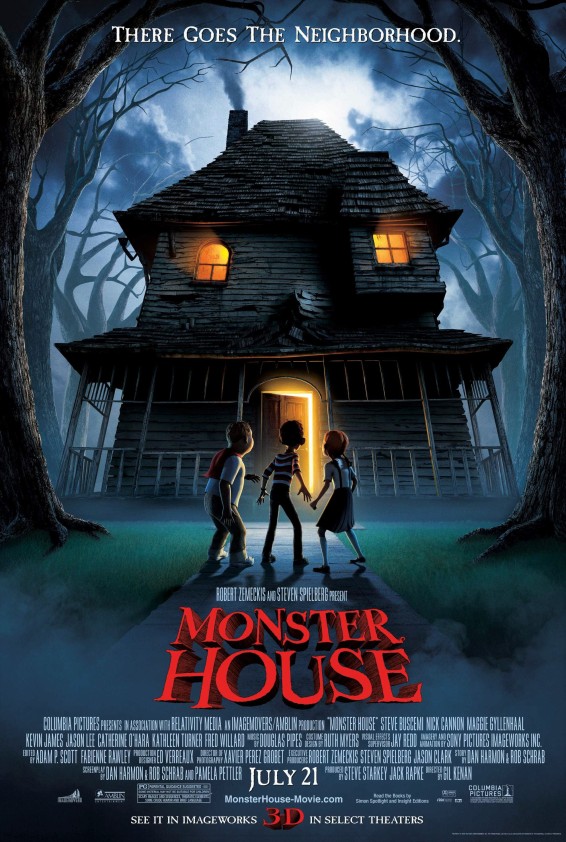
A personal childhood classic for me, ‘Monster House’ is one of those rare kids films that isn’t afraid to explore darker themes of death, grief and childhood fears. Whilst still managing to be a solid piece of entertainment for any family urging for a creepy adventure, as producers Robert Zemeckis and Steven Spielberg jump on board alongside Gil Kenan, director of the ‘Poltergeist’ remake from 2015, as his directorial debut, this animated adventure is always a joy to return to for me.

Plot Summary: After his cranky, elderly neighbour suffers a heart attack and is taken to hospital, suspicious teenager; ‘DJ,’ invites his clumsy best friend; ‘Chowder,’ over, only to discover that his creepy neighbour’s house is, in fact, a living, breathing monster. Now, with the help of the quick-witted student; ‘Jenny,’ the trio hatch to destroy the house before it can claim victims on Halloween night…

This simple, yet extremely strange plot is one of the best aspects of the film, as the director makes as much use out of this concept as possible. Usually getting extremely creative and even catching the audience by surprise at a few points, no matter their age. Having a great blend of both comedy and tame horror, the film has a mostly light-hearted tone, aside from the occasional dark scene, of course, which actually works quite well for the film’s story. The jokes throughout the film are also pretty decent, as despite some gags being a little too cheesy or immature at points. For the most part, the comedy throughout the film can get a laugh out of me.

The three main characters within the film are portrayed by Mitchel Musso, Sam Lerner and Spencer Locke, who all provide likeable and varied personalities to each of their respective characters, while Steve Buscemi lends his voice to the creepy ‘Old Man Nebbercracker,’ who actually turns out to a very interesting and even sympathetic character by the end of the film’s swift runtime.

The animated cinematography is overall nothing outstanding, but does lend itself well to creating some attractive shots and eerie visuals throughout the film. I also personally enjoyed how the film utilised more hand-held like camera movements during the more chaotic scenes of action or terror throughout the story. The film even blends its bright animation colour palette with a more dark/pale horror-esque palette, only a little detail, but I appreciated it regardless. The original score by Douglas Pipes is also another wonderful element of the film, combing the feel of a classic animated film with undertones of horror.

Although the animation can sometimes range in quality, the visual look of the almost stop-motion-like animation does give the film an eerie appeal. However, due to the film’s age, the film has definitely begun to show some cracks here and there, as various points in the narrative characters can begin to look a little clunky or unnatural with their movements. This is mostly due to the motion capture technology that was used very heavily throughout the film, long before films such as ‘Avatar’ or ‘Rise of the Planet of the Apes’ truly pushed the technology to its limits.

Many of the character designs throughout the film are also quite memorable, especially with the character, ‘Bones,’ in particular, who always comes to mind for me when thinking of this film. I also personally adore the design of the ‘Monster House’ itself, as the design is incredibly menacing and really feels like a true horror antagonist.

In summary, ‘Monster House’ never fails to be entertaining for me, every time I revisit it, as the film truly provides a creepy experience which most other family/animated films simply can’t, as films such as ‘Hotel Transylvania’ or ‘Goosebumps’ always try to capture this tone, but usually fall short. It’s here ‘Monster House’ succeeds, as despite some clunky animation and cheesy dialogue at points, the film succeeds in being an spooky adventure with a fantastic cast, and effective original score that the entire family could enjoy. Maybe it’s nostalgia for me, but I personally believe the film is honestly a great choice when it comes to a Halloween night, or maybe just a rainy evening. Final Rating: 7/10.

monsterhouse_poster

Wreck-It Ralph (2012) – Film Review

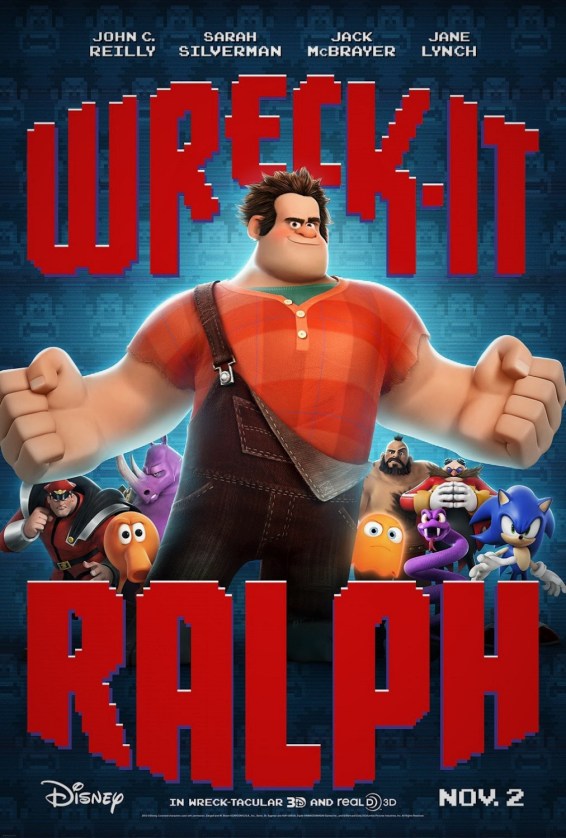
Equally entertaining for both children and parents who will catch the many references to classic arcade games, ‘Wreck-It Ralph’ is a funny, colourful, and exciting adventure from Walt Disney Animation Studios. Directed by Rich Moore, most known for his work on ‘The Simpsons,’ in addition to some other recent Disney flicks. This eight-bit odyssey may not quite match-up to some of the other iconic films Disney has released in its many years of crafting animated stories, yet is still sure to please any video game-enthusiasts in search of a new favourite.

Plot Summary: After many years of being the bad guy and being defeated in his own game day-after-day, ‘Wreck-It Ralph’ longs to be as beloved as his game’s perfect protagonist; ‘Fix-It Felix.’ So, when a modern, first-person sci-fi shooter arrives in his arcade, ‘Ralph’ sees his opportunity for heroism and happiness. But, now, with his game at risk of being put out-of-order due to his disappearance, ‘Ralph’ must quickly return home before it’s game over for everyone…

From the get-go, one of the best elements of ‘Wreck-It Ralph’ has to be its initial concept, as the film portrays the idea of video game characters coming to life in a similar fashion to the ‘Toy Story’ series, but also adds a living virtual world alongside. Interestingly, Disney first began developing an animated film based around a world of video game characters in the 1980s. At that time, the project was titled; ‘High Score,’ it was then changed to ‘Joe Jump’ in the 1990s. Until, in the late 2000s, when the film was finally pushed forward, the first two months of story development focused on ‘Fix-It Felix Jr.’ as the protagonist, which eventually evolved to the film we received in 2012.

John C. Riley and Sarah Silverman lead the cast as the titular character; ‘Wreck-It Ralph,’ and candy-coated racer; ‘Vanellope Von Schweetz,’ superbly, as unlike most animated films, the main group of actors regularly recorded their sessions together in the same room, a situation which led to large amounts of improvising and gave the cast a real sense of chemistry. But, regardless of how much of his dialogue was improvised, ‘Ralph’ still remains, in my opinion, one of the most memorable and likeable characters Disney has created in their more modern animations, mostly due to his design and understandable motivation of wanting to be seen as a hero rather than a villain. Jack McBrayer, Jane Lynch, and Alan Tudyk make up the remainder of the cast, who are all also wonderful within their roles as ‘Fix-It Felix,’ ‘Sergeant Calhoun,’ and ‘King Candy,’ respectively, as each actor plays into whichever type of game they originate from, e.g. intense sci-fi soldier with a overly dramatic backstory or a quirky kart-racer.

An area ‘Wreck-It Ralph’ is lacking, however, it’s on the promise of exploring the many different video game worlds its story implies, as while the film does explore its two signature worlds of ‘Hero’s Duty’ and ‘Sugar Rush’ effectively, ensuring each location feels vastly different in terms of both its design, animated cinematography, and colour palette. The film is limited in how many video games its characters actually explore, which is a shame when considering the many possible adventures it’s different arcade worlds could contain, especially when taking into account the huge number of cameos from video game icons, like ‘Pac-Man,’ ‘Q’bert,’ and ‘Sonic the Hedgehog.’

Although the original score by Henry Jackman is a huge missed opportunity to have a classic eight-bit score to further fit with the video game narrative, the film’s soundtrack still features plenty of great tracks, which just like the film’s visuals, alter depending on which video game world the characters are currently inside, as outside of the generally enjoyable tracks; ‘Wreck-It Ralph’ ‘Life in the Arcade,’ and ‘Messing with the Program,’ the score occasionally gets quite creative, even having an original theme created for the kart-racing game; ‘Sugar Rush’ by J-pop band; ‘AKB48,’ as the fictional video game is supposedly manufactured in Japan.

Whilst the animation itself is visually stunning and brimming with small details as with nearly every animated Disney film, the main flaw ‘Wreck-It Ralph’ suffers from its without a doubt its story structure, as what may throw many viewers off is that the film begins focused entirely on ‘Ralph’ and his journey, before then quickly and drastically changing direction to focus more on ‘Vanellope’ and her desire to become a playable ‘Sugar Rush’ racer, which can be a little jolting when recalling the film’s first act.

In summary, ‘Wreck-It Ralph’ may not always use its signature concept to its best extent, and can often go too far when it comes to some of its immature or video game-related humour. Yet, the film’s delightful characters, gorgeous and distinctive locations and beautiful animation all manage to save the film from its faults. So, despite ‘Wreck-It Ralph’ not going down with audiences as successfully as some other animated Disney flicks, like ‘Frozen’ or ‘Zootropolis,’ for example, I still feel the film is worth grabbing a joystick for, should you get the chance. Final Rating: 7/10.

wreckit_ralph_ver6_xlg

Inside Out (2015) – Film Review

From the iconic animation studio Pixar, who brought-us animated classics, such as ‘Toy Story,’ ‘Monsters, Inc.,’ ‘Finding Nemo,’ ‘The Incredibles,’ and ‘Ratatouille,’ among many others, comes another emotional and beautifully animated adventure with some surprisingly deep concepts and ideas to boot. As, ‘Inside Out’ takes place nearly entirely inside the mind of a young girl, focusing on how her various emotions handle new and unexpected changes within her life.

Plot Summary: After young ‘Riley’ is uprooted from her Midwest life and moved to San Francisco, her emotions; ‘Joy,’ ‘Sadness,’ ‘Fear,’ ‘Anger,’ and ‘Disgust,’ all being to conflict on how best to navigate a new city, house, and school. But, after a freak accident causes ‘Joy’ and ‘Sadness’ to be flung from ‘Headquarters’ with ‘Riley’s ‘Core Memories,’ the two have to find their way back before it’s too late…

Even though ‘Inside Out’ usually streamlines many of its story’s concepts and themes to make them more understandable for children, the animated flick also never fails to remain both very imaginative and very colourful throughout its runtime. As, with the film’s story taking place within the mind of an eleven-year-old girl, ‘Inside Out’ doesn’t hold back from bringing to life the world within a child’s head, a world not confined by the barriers of logic and psychics. From ‘Imagination Land’ to ‘The Train of Thought,’ and ‘Long Term Memory,’ ‘Inside Out’ constantly explores plenty of amusing locations and is always building on its enchanting ideas.

Despite some characters not receiving quite as much screen-time as others, ‘Riley’s various emotions are portrayed superbly by Amy Poehler, Phyllis Smith, Bill Hader, Lewis Black, and Mindy Kaling, with Poehler and Smith as ‘Joy’ and ‘Sadness’ being the true stand outs of the cast, as their two characters bounce extremely well of each other due to the polarity of their friendship, which also makes for plenty of humorous moments. Richard Kind also makes an appearance within the film as ‘Bing Bong,’ ‘Riley’s imaginary friend from when she was younger, who in many ways is the true heart of the film, as alongside his variety of entertaining quirks (some of which do result in a few immature jokes). ‘Bing Bong’ also ends up becoming a very likeable and charming character mostly as a result of the scene; ‘The Memory Dump,’ easily one of ‘Inside Out’s most impactful and heartbreaking moments.

Filled with plenty of inventive shots throughout, the animated cinematography does add to the film’s already incredibly vibrant colour palette and varied locations, with a constant array of attractive shots, the film’s visuals are always appealing to look at when inside ‘Riley’s mind. Yet, when the viewer is thrown back into the real world, the colour palette is far more pale and tame, creating a clear visual contrast between the two.

Featuring a number of memorable tracks, such as ‘Bundle of Joy,’ ‘Team Building,’ ‘Rainbow Flyer,’ and even the track that plays over the film’s ending credits; ‘The Joy of Credits,’ the original score by Michael Giacchino is truly one of the best scores Pixar has to offer, even when taking into account their already impressive list of soundtracks, as nearly all of the film’s best moments whether comedic or emotional are elevated by the film’s wonderful score, with many of the tracks throughout ‘Inside Out’ displaying great variety and talent.

Similar to many of the other films from Pixar’s catalogue, the animation throughout ‘Inside Out’ is simply gorgeous. As not only do all of the designs of the different emotions differ drastically depending on which emotion they representing, but the level of detail on every character and location throughout the film is astounding, with the individual particles that make up each emotion even being visible during many of the film’s close-ups. Interestingly, when ‘Inside Out’ was in the very early stages of its development, many other emotions were also considered as characters (around twenty-seven in total). But, after the writer’s decided to just settle on the core five emotions to make the narrative less-complicated, many other potential characters had to be left on the cutting-room floor, e.g. ‘Surprise,’ ‘Pride,’ and ‘Trust.’

In summary, ‘Inside Out’ is definitely worth a watch for any age, as although this animated flick isn’t without its faults, ‘Inside Out’ still remains a delightful experience from start-to-finish, mostly due to its unique story, great voice performances, and extraordinary visuals, the film really feels as if there isn’t the slightest ounce of laziness put into crafting it. And, whilst there has been plenty of other exceptional animated classics produced by Pixar in the past, their fifteenth animated feature is certainly one of their most experimental yet least discussed to-date, which I think is a shame, as while ‘Inside Out’ may be aimed mostly towards children, I feel this film might speak an even deeper volume to adults. Final Rating: 8/10.

inside_out_xxlg

Tangled (2010) – Film Review

Disney’s first CG animated fairytale is both incredibly funny and heartwarming, as ‘Tangled’ brings to life the well-known fairy princess; ‘Rapunzel,’ now updated for a new generation of children. Through some beautiful animation, wonderful original songs and an incredibly vibrant colour palette. ‘Tangled’ feels almost as if it’s an enchanting classic restored from Disney’s golden age of animation, despite its few small problems here and there.

Plot Summary: When the ‘Kingdom of Corona’s most-wanted and most charming bandit: ‘Flynn Rider’ hides out in a mysterious tower, he’s taken hostage by ‘Rapunzel,’ a feisty tower-bound teen with magical golden hair. Eventually leading the two of them to strike a deal so ‘Rapunzel’ can achieve her long-desired dream of seeing the annual release of the kingdom’s lanterns…

Heavily praised since its release, ‘Tangled’ was created by Walt Disney Animation Studios, which have produced a variety of fantastic animated films in recent days. Releasing films such as: ‘Bolt,’ ‘Zootropolis,’ ‘Wreck-It Ralph’, ‘Moana’ and, of course, the smash-hit; ‘Frozen,’ in 2013. Many of which even beginning to surpass Disney’s other animation company over time, this obviously being Pixar, who now seem to be far more focused on creating constant sequels, prequels and spin-offs rather than original stories.

Mandy Moore and Zachary Levi bounce extremely well off of each other as ‘Rapunzel’ and ‘Flynn Rider,’ with both the characters having plenty of amusing moments in addition to some surprisingly great chemistry (considering they are fully animated). The cast also features Donna Murphy as ‘Mother Gothel’ and Ron Perlman as one of the ‘Stabbington Brothers’ (a.k.a. The antagonists of the film), and although neither of these two villains ever become quite as memorable or as iconic as some other Disney antagonists. They do serve their roles within the story effectively and are intimidating enough. During the story, ‘Rapunzel’ also receives a character arc, growing as a character to become more confident and independent as the runtime continues on, which I feel is not only executed well, but also gets across an important message for children.

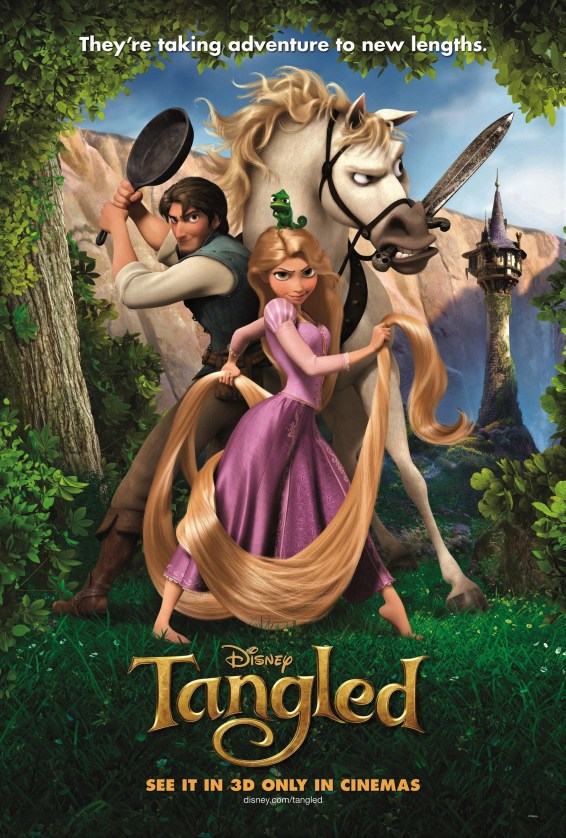
Featuring an array of stunning wide shots, the animated cinematography throughout ‘Tangled’ is decent overall. While nothing overly imaginative, the animated cinematography works really well for many of the film’s fast-paced action sequences. The animated cinematography is also improved by the film’s incredibly colourful visuals, as many scenes throughout the film are dripping with bright colours and magnificent lighting. Some of the colouring of character’s clothing even reflect their personalities, as ‘Rapunzel’ wears purple, a colour often associated with royalty and ‘Flynn’ wears blue and white, colours that often stand for goodness. Whereas ‘Mother Gothel’ wears red, a colour that usually symbolises evil.

The original score by Alan Menken is certainly the weakest element of the film, as ignoring the actual songs within the film, most notably; ‘When Will My Life Begin’ and ‘I See the Light.’ The score is mostly generic and little bland at points when it comes to animated flicks, as I feel the soundtrack could’ve been greatly improved if the score would’ve embraced the more fantasy-esque aspects of its narrative. Occasionally, the film can also over-rely on musical cues, as during a number of scenes the film feels the need to accompany every action or piece of humour with a trumpet cue, which feels nothing but unnecessary throughout.

Being many years on from the film’s initial release, it’s inevitable that the film’s animation would begin to age. However, although a couple of the close-ups on character’s faces may look a little outdated. ‘Tangled’s animation predominantly holds-up well since 2010. In particular, the CG effects on ‘Rapunzel’s long hair, which still look marvellous even today. The film’s humour is also fairly excellent, as the film has a large amount of range when it comes to its jokes, usually having plenty of comedic moments that will appeal to older viewers as well as young children. ‘Tangled’ also gets some great comedic moments out of its horse character; ‘Maximus,’ who, quickly ends up becoming one of the film’s greatest characters through his constant drive to catch ‘Flynn Rider,’ with many of his movements being presented as if he is a large dog or even a human.

In summary, although it may not be one of Disney’s best, ‘Tangled’ is still very enjoyable from start-to-finish. Despite its sometimes overly fast pacing and slightly dated animation, the film has more than enough to please families, with some likeable protagonists, plenty of memorable songs and an overall joyful and adventurous tone. ‘Tangled’ is, in my opinion, on the upper level of fantastical family films, and whilst some may feel the film is aimed more towards one gender with its story being based around a fairy princess, I’d argue otherwise. Final Rating: 8/10.

tangled_ver3_xxlg

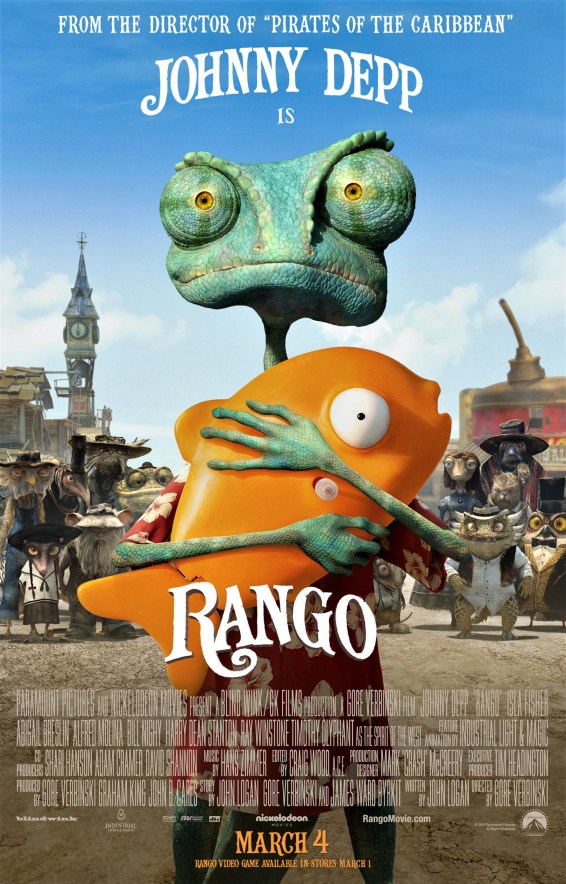
Rango (2011) – Film Review

From the director of ‘The Ring’ and the first three entries in the ‘Pirates of the Caribbean’ series, Gore Verbinski, comes ‘Rango,’ an animated western featuring a bizarre cast of comically grotesque animals. And, even though that strange concept may not sound as if it couldn’t possibly work, ‘Rango’ is without a doubt one of my favourite animated films in recent memory, as the film’s entertaining story and classic western visuals make the film an incredibly fun watch, regardless of your age.

Plot Summary: When ‘Rango,’ an ordinary pet chameleon accidentally winds up in the small town of ‘Dirt’ following a car accident, he begins to realise the dry, lawless outpost is in desperate need of a new sheriff. Being the talented actor that he is, ‘Rango’ poses as the answer to their problems…

Whilst ‘Rango’ is front and foremost a family flick, ‘Rango’ also serves a pretty successful throwback to classic westerns, balancing plenty of hilarious moments with more serious scenes and even some exciting action sequences throughout its story. The film even features a reference to the icon of the western-era himself, that being Clint Eastwood as the ‘Spirit of the West,’ which I really appreciated as a fan of the genre. However, the character himself isn’t actually portrayed by Clint Eastwood, which I did feel slightly took away from the scene he appears in despite its short length.

Although the supporting cast of Isa Fisher, Abigail Breslin, Bill Nighy, Alfred Molina, and Ned Beatty are all fantastic as the residents of the small town of ‘Dirt,’ each having a western accent which sometimes even makes their voice unrecognisable in Isla Fisher’s case. Johnny Depp as the protagonist ‘Rango’ is truly some flawless casting, as Depp always portrays ‘Rango’ as likeable and funny, yet cowardly, with plenty of humorous lines throughout the runtime. The film’s antagonist ‘Rattlesnake Jake’ is also worth mentioning, as Bill Nighy lends his voice to this gigantic menacing gunslinger, actually mirroring the two actor’s characters within the ‘Pirates of the Caribbean’ series, whether intentional or not.

‘Rango’ is also one of the rare animated films which actually has some pretty stunning cinematography, as all of the film’s animated cinematography is very reminiscent of classic westerns. From extreme close-ups of characters’ faces during stand-offs to wide shots of the barren desert, to even close-ups of broken bottles hanging above a door-frame, every shot really adds to the narrative, whilst also displaying the film’s large variety of distinct locations. Truly utilising the limitless potential of animated cinematography. Legendary cinematographer, Roger Deakins, who worked on iconic films, like ‘The Shawshank Redemption,’ ‘No Country for Old Men’ and ‘Skyfall,’ in the past, was even consulted when it came to the film’s cinematography.

Revered composer Hans Zimmer returns to the work once again with director Gore Verbinski, and once again with another magnificent original score. This time replicating classic western scores without taking away from the film’s adventurous tone. Making fantastic use of both electric and acoustic guitars, tracks such as ‘Rango and Beans’ and ‘Rango Returns,’ feel as if they were ripped straight out of the golden age of film. The soundtrack even includes a unique western-esque version of the orchestral classic; ‘Ride of the Valkyries,’ which backs up what is already a memorable action sequence.

The animation itself is wonderful throughout the film, as ‘Rango’ takes a more daring and unique route when it comes to its animation, as rather than being overly colourful and cartoonishly attractive similar to films, like ‘Toy Story,’ ‘Frozen,’ or ‘Despicable Me,’ ‘Rango’ focuses far more on being rather realistic and dirty, with each location always feeling very old and rustic. The character designs themselves also reflect this, as every piece of clothing and every object is enveloped in scratches and dirt, giving the film an unpleasant yet not necessarily unattractive look. This animation style also continues to the film’s colour palette, as the pale beiges and browns give the film a true western feel. Due to ‘Rango’s reliance on this highly detailed kind of animation, however, there is the occasional shot where the animation looks slightly dated by today’s standards.

In summary, packed with plenty of great comedic moments, attractive visuals, a great original score and, of course, its marvellous cast. ‘Rango’ stands as one of the best modern animated films to date, as this western adventure truly does anything it can to make itself stand out. As, despite the film’s few fourth-wall-breaking moments (which come across as slightly cheesy) and the film’s sometimes overly fast pacing, ‘Rango’ still remains an enthralling ride. Although this animated flick may seem pretty unusual when compared to many other films the family can enjoy together, this true oddball of a film is sure to please those who decide to give it a chance. Final Rating: 8/10.

rango_ver2_xxlg

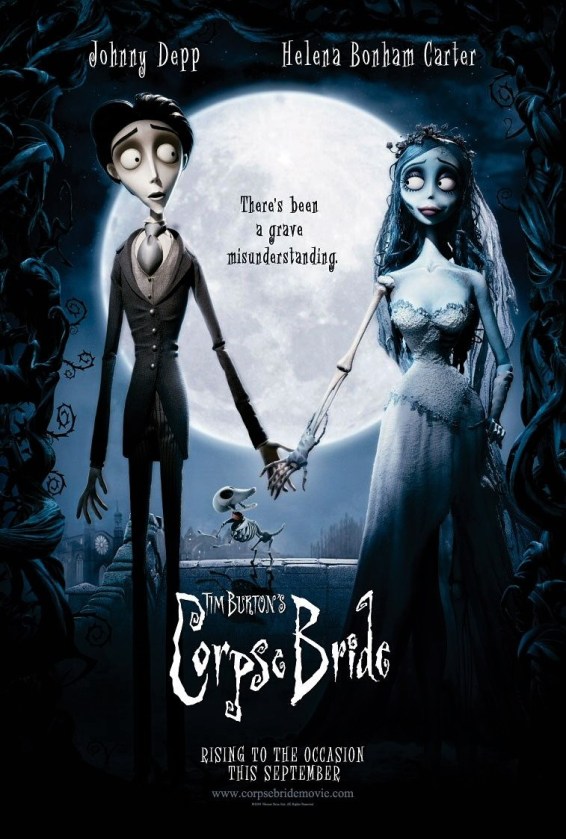
Corpse Bride (2005) – Film Review

Tim Burton’s twisted story of a man accidentally marrying a deceased bride could certainly be seen as too dark for an animated family adventure by some, but the film actually blends many of its dark scenes with plenty of gothic charm, heart and humour throughout. Making this stop-motion flick not quite one of the director’s best, but definitely a must-watch for fans of the unique director.

Plot Summary: When shy groom, Victor Van Dort, practices his wedding vows in the inadvertent presence of a deceased young woman, she rises from her grave assuming he has married her. Before he knows it, ‘Victor’ soon finds himself in the land of the dead, and now must find a way to return to the land of the living before he loses his still-living wife forever…

Alongside the entertaining narrative, throughout the film there are various different musical sequences, which were surprisingly entertaining considering I’m usually not a huge fan of musical numbers in film. But, I actually found many of the songs throughout the film actually added to the plot and gave the film another creative element which worked really well when combined with the brilliant original score by Danny Elfman.

Johnny Depp and Helena Bonham Carter portray ‘Victor’ and his accidental ‘Corpse Bride,’ alongside the supporting cast of Emily Watson and Paul Whitehouse. Who, are all terrific, with the two leads in particular having pretty some great chemistry with each other, which really added to some of the romantic scenes throughout runtime (especially when it comes to an animated film). The cast also features Richard E. Grant, who portrays the villainous, ‘Barkis Bittern,’ perfectly, coming across as very sly, rude and intelligent from start-to-finish.

The cinematography by Pete Kozachik is pretty effective considering his previous work is usually far from the realm of stop-motion animation, as although there is definitely room for improvement, the cinematography is interesting enough to keep the viewer engaged throughout the film’s story.

Without a doubt, the original score by Danny Elfman is definitely one of the best elements of the film, as well as being one of my favourites for a Tim Burton flick, as while not quite on the level of the original ‘Batman’ or ‘Edward Scissorhands,’ for example, the entire soundtrack still perfectly captures the creepy tone of the film, as well as many of it’s more emotional moments, all adding to both an extremely memorable and beautiful score. Especially the tracks; ‘Main Titles’ and ‘End Credits Pt. 1,’ which are my two personal favourites from the film.

The stop-motion animation throughout the film is simply outstanding, as each character’s unique design influences their movements, with many of the characters having very interesting and over-the-top designs which perfectly fit within the world of a Tim Burton story. The film also has an unexpectedly ranged colour palette, as in addition to the usual dark Burton-esque colours. The film surprisingly also uses a large range of bright greens, purples and reds in a few scenes, which all really help the film stand out, and give a little more light to many of the miniature sets and various characters.

In summary, while I didn’t expect to enjoy ‘Corpse Bride’ as much as I did, the film’s fantastic stop-motion animation, great humour and emotional scenes all topped with the unique Tim Burton style, I’d say the film is a pretty solid watch aside from the occasional cheesy joke or scene. Final Rating: 8/10.

corpse_bride_xlg

Rise of the Guardians (2012) – Film Review

Truly a very underrated DreamWorks flick, in my opinion, ‘Rise of the Guardians’ is a comedic and action-packed animated adventure. Feeling almost like an ‘Avengers’ blockbuster aimed towards a younger audience at points, filled with plenty of heart, emotion and a wonderful original score by Alexandre Desplat, the film is a genuinely an animated hidden gem.

Plot Summary: When an evil spirit known as ‘Pitch’ lays-down the gauntlet to take over the world, the immortal ‘Guardians,’ a.k.a. ‘Santa Claus,’ the ‘Easter Bunny,’ the ‘Tooth Fairy,’ ‘Sandman’ and ‘Jack Frost’ must join forces for the first-time in millennia to protect the hopes, beliefs, and imagination of children all over the world…

‘Rise of the Guardians’ takes a lot of inspiration from the children’s book series; ‘The Guardians of Childhood’ by William Joyce, as the film has a lot of fun with its plot, playing into the over-the-top ideas of its story resulting in many interesting/unique locations and plenty of little jokes between the characters.

The entire cast of Chris Pine, Alec Baldwin, Hugh Jackman and Isla Fisher, are all fantastic as their various characters. Each giving their character a likeable and amusing but not overly irritating personality, I particularly enjoy Hugh Jackman and Alec Baldwin as the ‘Easter Bunny’ and ‘Santa Claus,’ as I feel these characters were definitely given many of the best jokes and moments throughout the film’s runtime, with the actors behind their voices clearly having a lot of fun of portraying them.

Throughout the film, the animated cinematography is fairly decent, as while by no means anything exceptional. The film does make use of many different moving shots, usually having the camera tracking or spinning around the characters/locations to make the film feel like a true spectacle. The original score by Alexandre Desplat is easily one of my favourite elements of the film however, as while this composer has worked on many other brilliant soundtracks in his past, such as ‘The Imitation Game,’ ‘Harry Potter and the Deathly Hallows’ (Part I and II) and ‘The Shape of Water’ just to name a few. I feel this has to be one of his most underrated scores similar to the film itself, as the tone captures all the elements of wonder, amazement and excitement perfectly.

The animation within the film is stunning throughout, everything from the hairs on top of the character’s heads, to the many sand effects for ‘Sandman’s abilities, alongside ‘Jack Frost’s snow/ice effects all look phenomenal. The film is always very beautiful to look at and has a very diverse colour palette, ranging from light blues, to pale greens and dark blacks, making every scene look appealing and always different from the last.

My main issues with the film mostly revolves around its cheesiness, as while the film isn’t only aimed at children and does manage to reach an adult audience most of the time, the film never quite catches the older audience like a Pixar film would for example. There is also a small group of child characters in the film who play a role in the narrative helping the guardians, unfortunately I found these characters quite irritating, as I felt the film played into their ‘childlike nature’ a little too much, luckily, these characters don’t receive too much screen-time.

In summary, ‘Rise of the Guardians’ is one of those great family films that can entertain most children and a fair few adults, while by no means is it one of the best animated films. It’s certainly up there with some of DreamWorks’ other classics, such as ‘Shrek,’ ‘Kung Fu Panda,’ ‘Megamind’ or ‘How to Train Your Dragon,’ for me, as although the film may not be winning an Oscar for best-animated film anytime soon, I still feel it’s still a great watch around Christmas, Easter, or maybe just your standard family film night. Final Rating: 7/10.

rise_of_the_guardians_ver8_xxlg