Iron Man (2008) – Film Review

Before ‘The Avengers’ or the ‘Guardians of the Galaxy’ hit the silver screen, director Jon Favreau began the Marvel Cinematic Universe with its first character; ‘Iron Man.’ Blowing audiences away with some incredible visual effects, thrilling action scenes and a very charismatic lead performance by Robert Downey Jr. as the egotistical; ‘Tony Stark.’ And, considering the film was self-financed by Marvel and had a mostly improvised screenplay, it’s incredibly impressive that ‘Iron Man’ is as entertaining and as exhilarating as it is by today’s standards.

Plot Summary: After being held captive by terrorists in an Afghan cave for months, billionaire and weapons engineer: ‘Tony Stark’ builds a weaponised suit of armour to fight his way out after discovering his weapons are being used for a more sinister purpose. Yet even after safely returning home, ‘Tony’ soon uncovers a nefarious plot with global implications, forcing him to don his new suit once again and vow to protect the world as ‘Iron Man.’

Although most now know ‘Iron Man’ as a superhero icon, at the time in 2008, ‘Tony Stark’ was a relatively unknown character. Similar to ‘Thor’ and ‘Captain America,’ many of Marvel’s ‘B’ listers truly owe their now enormous fan-bases and iconic statuses mostly to their first appearances in Marvel’s live-action universe, with the first ‘Iron Man,’ in particular, adapting the character’s comic book origins fairly closely into a hugely successful action blockbuster.

The supporting cast of Gwyneth Paltrow, Jeff Bridges, Terrence Howard, Clark Gregg and Shaun Toub are great throughout the film, despite only serving small roles within the story. However, it should go without saying that Robert Downey Jr. as ‘Iron Man’ himself absolutely nails the role, as he delivers every line of dialogue as an arrogant, pretentious genius. ‘Tony Stark’ even gives the narrative an engaging thread with his character arc throughout the film, becoming more likeable as the plot continues on, and although done many times before, it still feels pretty satisfying by the end of the runtime. Unfortunately, the biggest problem with Iron Man’ is the same issue that most Marvel flicks suffer from, this being the film’s weak antagonist. Although Jeff Bridges attempts to give his character; ‘Obadiah Stane,’ as much depth as possible, his transformation from a greedy executive to murderous psychopath feels extremely rushed and undeveloped.

Matthew Libatique’s cinematography is fairly creative throughout the film, however, from the various tracking shots of ‘Tony’ soaring through the sky in his suit, through to shots of ‘Iron Man’ taking down groups of terrorists, the majority of the cinematography backs up the quick pacing and utilises movement very effectively. Whilst the film isn’t ever overly focused on its science fiction elements aside from the suit itself, the CG effects throughout the film still hold up very well to say that was it was released in 2008, aside from the occasional shot of ‘Tony Stark’s head being placed atop of the suit.

The original score by Ramin Djawadi is a soundtrack which perfectly fits, alongside the character of ‘Iron Man,’ as the score makes excellent use of electric guitars and a drum kit to match ‘Tony’s young rock-star-like personality and taste in music, as there are multiple scenes of ‘Tony Stark’ listening to rock songs, such as ‘Back in Black’ and ‘Institutionalised,’ throughout the runtime. Not to mention ‘Black Sabbath’s now-iconic; ‘Iron Man,’ played over the end credits.

Even though all of the action scenes throughout the film are quite short, each action set piece is always exciting from start-to-finish, as ‘Iron Man’ takes down his enemies with style every time, utilising an array of different weapons and gadgets the film manages to still represent ‘Tony Stark’s cocky personality through these suited-up action sequences. ‘Iron Man’ was also the first film that kicked off Marvel’s typical style of humour, and while not as noticeable as some of Marvel’s other films, the film still contains plenty of scenes, in which, ‘Tony’ makes sarcastic comments or degrades those around him, and while many of these moments do make for some decent comic relief, I could see many of these scenes becoming irritating for those who don’t enjoy this type of comedy.

In summary, despite its few flaws, ‘Iron Man’ was one hell of an opener for the Marvel Cinematic Universe, as without this film, we truly wouldn’t have what is now considered one of the most successful franchises in cinematic history, even with this ignored, however, the film is still exceedingly fun and is filled with plenty of memorable moments on its own, all of this, of course, held up by the brilliant performance from Robert Downey Jr. If you finally want to get around to watching this long-running film series, I’d say the original ‘Iron Man’ will definitely prepare you for what’s to come. Final Rating: 8/10.

iron_man_ver3_xxlg

After Earth (2013) – Film Review

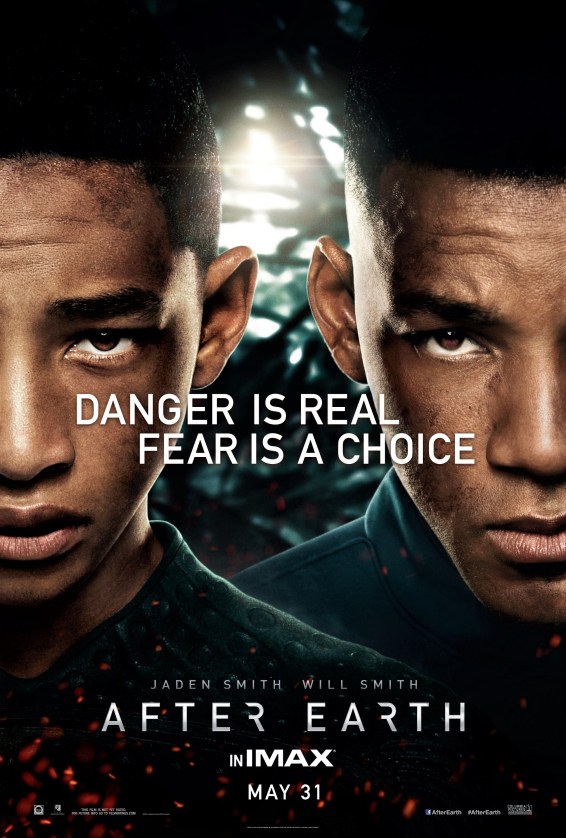
‘After Earth’ attempts to be a thrilling sci-fi adventure following a father and son as they crash on a hostile planet, surviving together, and bonding every step of the way, and with real-life father and son Will and Jaden Smith as the main two cast members, the film should be a recipe for success. But, due to its awful CG effects along with plenty unexplored story ideas and even some surprisingly poor performances, ‘After Earth’ is far more of a comedy than it is the exciting science fiction flick it set-out to be.

Plot Summary: In the far future, a crash landing leaves ‘Kitai Raige’ and his father, ‘Cypher,’ stranded on Earth, a millennium after catastrophic events forced humanity to abandon the planet, with ‘Cypher’ injured, ‘Kitai’ must embark on a perilous journey alone to signal for help. Little do they know, ‘Kitai’ is being hunted by a deadly creature every step of the way…

Co-written and directed by the once great M. Night Shyamalan (The Sixth Sense, Unbreakable, Signs), ‘After Earth’ is just another one of the many duds Shyamalan has directed in recent memory, as while many scenes throughout ‘The Sixth Sense’ will always be iconic and beautifully crafted alongside some of his other work, many feel that this director has simply had his day as aside from the semi-sequel to ‘Unbreakable,’ ‘Split,’ back in 2016. Shyamalan has directed nothing but dreadful attempts at horrors and thrillers, before now turning his eye towards the sci-fi genre.

Unfortunately, the majority of the performances throughout ‘After Earth’ range from very bland to simply laughable, as although not quite as bad as some of the unintentionally hilarious performances in director M. Night Shyamalan’s other film; ‘The Happening,’ the film isn’t far off this standard, with one scene in particular where ‘Kitai’ is bitten by a poisonous insect coming off as purely comedic. What makes this so surprising, however, is that this acting duo have worked well together previously in ‘The Pursuit of Happyness.’ Yet, this time around, the two seem to have very little chemistry with each other throughout most of the film’s runtime in addition to feeling very miscast in their respective roles, as Will Smith who is usually known for being incredibly charismatic and funny portrays ‘Cypher Raige’ as a cold, emotionless warrior, completely going against his best qualities as an actor.

Throughout ‘After Earth,’ the cinematography by Peter Suschitzky is just serviceable, as whilst the film doesn’t really contain many inventive or memorable shots, the cinematography does make great use of many of the film’s spectacular natural locations, as the large variety of wide-shots do effectively display the true scale of the newly formed forests, waterfalls, and mountains that now inhabit this new era of Earth.

The original score by James Newton Howard is another dull aspect of the film, as the film’s score is barely recognisable from any other action or sci-fi film, despite this composer actually crafting many wonderful soundtracks in the past, including the original score for ‘The Sixth Sense.’ The film’s problems even extend into its narrative structure, as during the early stages of the film, ‘After Earth’ bombards the audience with information regarding the story’s world, cutting rapidly between an enormous array of different clips, often leaving the audience with far more questions than answers as the film forces exposition down the audiences’ throat through one overly long scene.

The film’s CG effects sadly don’t show much improvement either, as the huge variety of creatures within the story ranging from tigers to birds, to savage monkeys, all look less than mediocre. However, to give the film credit, the film’s main antagonist known as the ‘Ursa,’ does have a pretty interesting design, as although the creature does share some weak CG visuals similar to many of the other creatures, the ‘Ursa’ simply has more of a presence within the film, and does feel somewhat intimidating and unique despite barley being utilised or developed. The film’s underdeveloped ideas are even more bizarre considering originally, the film wasn’t even supposed to be a sci-fi, as Will Smith’s first concept for the film focused on a farther and son on a camping trip in modern-day, which I personally think sounds far more interesting and enjoyable as opposed to viciously morphing the project into a science fiction story.

In summary, ‘After Earth’ is a complete disaster of a science fiction blockbuster, as the film’s terrible performances alongside its abysmal CG effects and mostly bland filmmaking, all result in the film being extremely boring and even sometimes laughably bad. Another unfortunate flop for director M. Night Shyamalan, and definitely a huge dent in Jaden Smith’s acting career, as the young actor hasn’t appeared on-screen since. Despite some great ideas here and there, ‘After Earth’ is certainly a low-point in Will Smith’s film catalogue, Final Rating: high 2/10.

after_earth_xxlg

Kong: Skull Island (2017) – Film Review

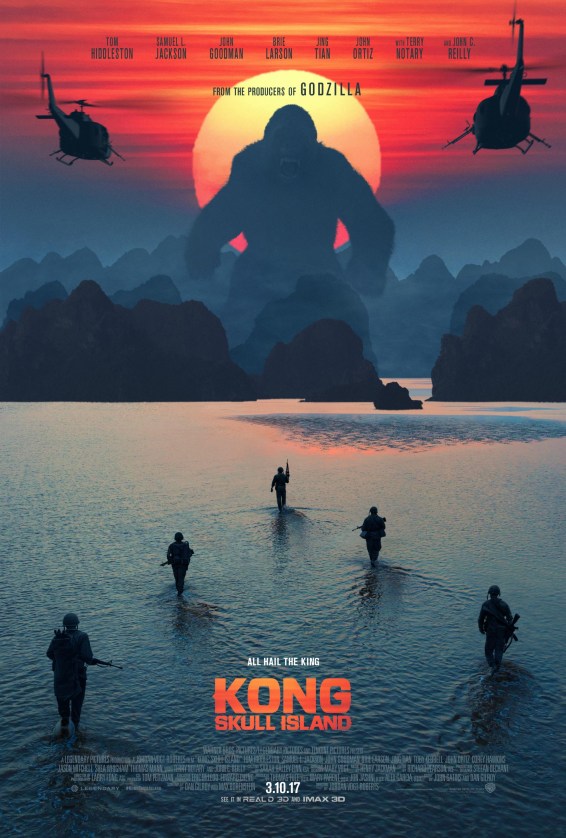
Jordan Vogt-Roberts directs his first major film with ‘Kong: Skull Island,’ another reboot of the iconic monster this time set within a different time-period and featuring plenty of vibrant visuals. Resulting in ‘Kong: Skull Island’ being a relatively entertaining monster flick, despite the film still being plagued with a range of issues throughout its two-hour runtime.

Plot Summary: Shortly after the Vietnam war in 1973, a team of scientists explore an uncharted, tropical island in the Pacific, without knowing it, they soon venture into the domain of the mighty ‘Kong,’ and must fight their way through an onslaught of dangerous creatures to escape the deadly island…

Just from a quick glance at the film, it’s obvious that the film takes heavy inspiration from the war epic; ‘Apocalypse Now,’ when it comes to its visuals, which is by no means a bad thing as ‘Kong: Skull Island’ truly embraces its 1970s time-period. Making every set, costume, and piece of military equipment fit well within the world the film builds on, which really gives some style to what could’ve just been your standard action blockbuster.

The all-star cast of Thomas Hiddleston, Brie Larson, Samuel L. Jackson, John Goodman, Corey Hawkins, Tian Jing, Thomas Mann, Toby Kebbell and my personal favourite, John C. Reilly, are all decent in their respective roles despite their characters not being given much depth beyond a few short scenes, as due to the enormous size of the cast, many characters end up becoming nothing more than clichés through their rushed introductions. Aside from Samuel L. Jackson and John C. Reilly as ‘Preston Packard’ and ‘Hank Marlow,’ however, as both of their characters receive the most development and play into the film’s main theme of the damage war can have on the mind, which I personally found very interesting and wish the film explored further, rather than focusing so much on many of the awful comedic moments the film crams into the story, which aside from a few improvised lines from John C. Reilly, fall mostly flat.

The cinematography by Larry Fong is fairly creative throughout the runtime as, in addition the film’s ranged colour palette, ‘Kong: Skull Island’ does have an array of visually interesting shots, many of which contain plenty of movement and give the audience some stunning views of the titular island. The cinematography also lacks many of the shots that made the ‘Godzilla’ remake from 2014 so impressive as a creature-feature, that being shots that display the true scale of ‘Kong,’ yet the lack of these shots may also be due to the ‘Kong’s ever-changing size, which did begin to irritate me after a while, despite ‘Kong’ still managing to feel pretty imposing and powerful throughout the film.

The original score by Henry Jackman does help to make up for this, however, it being of his better scores, in my opinion. As, throughout the narrative, the soundtrack always adds to the adventurous tone of the film, utilising large tribal drums to give each character’s confrontation with ‘Kong’ genuine weight. The film also uses a number of classic songs from the ’70s to further push the film’s time-period, and whilst this does sometimes work effectively, with an early helicopter scene featuring the iconic; ‘Fortunate Son,’ being the most memorable. It can also feel very forced at points, mostly due to the sheer amount of songs featured within the film.

One of the best aspects of ‘Kong: Skull Island’ is its action scenes as, throughout the story, the film constantly throws its characters into plenty of intense encounters with the terrifying (and equalling unique) creatures of the island, and whilst the film does have a few too many scenes which feel overly cheesy due to an overreliance on slow-motion. Each action set piece is entertaining in its own way, usually making effective use of each monster’s various abilities and their surrounding locations, with my personal favourites being the sinister and brilliantly designed; ‘Skullcrawlers,’ ‘Kong’s main adversaries. All of these creatures are obviously displayed through the film’s CG effects, which are decent enough throughout the runtime, yet certainly aren’t flawless.

In summary, ‘Kong: Skull Island’ is enjoyable, as whilst the film is undeniably filled with a number of problems, mainly in regards to the film’s weak characterisation and fairly simplistic story, the film still manages to be exciting through its fantastic use of CG effects and thrilling action scenes, all backed up by a great original score and a constructive use of the 1970s time-period. So, although its in need of some improvements, I feel you can still get something out of this big-budget creature-feature. Final Rating: high 6/10.

kong_skull_island_ver2_xxlg

Rise of the Planet of the Apes (2011) – Film Review

Many years after the original ‘Planet of the Apes’ franchise ended, the series was rebooted in its entirety with a new ‘Planet of the Apes’ trilogy, with these films almost serving as prequels to the original films, as well as being set within their own timeline. ‘Rise of the Planet of the Apes’ was the first of this new series, and surprised many people upon its initial release in 2011.

Plot Summary: When a substance designed to help the brain repair itself and cure Alzheimer’s gives advanced intelligence to a chimpanzee, named; ‘Caesar,’ he soon begins to enhance other apes in order to lead an ape uprising through the city of San Francisco…

Although I was never overly invested in the original ‘Planet of the Apes’ film from 1968, as I was always familiar with the sci-fi classic purely through its iconic plot twist near the end of its narrative, I personally feel that director Rupert Wyatt (The Escapist, The Gambler, Captive State) did a pretty great job revamping the science fiction series, as despite the film having plenty of sci-fi elements throughout its story, the film is mostly grounded in reality, focusing more on being a tense thriller with small elements of science fiction scattered throughout the runtime.

Andy Serkis takes on the difficult role of portraying the completely CG protagonist; ‘Caesar,’ and does a superb job of it, as he manages to capture the movements and mannerisms of an ape perfectly through motion capture (which is even more impressive when considering that the film was one of the earliest to use a motion capture setup on location), all whilst ensuring the audience sympathises with ‘Caesar.’ In addition to Andy Serkis, the rest of the cast of James Franco, Freida Pinto, John Lithgow and Brian Cox, are all decent in their roles, despite the film having the occasional cliché line of dialogue for most characters.

The cinematography by Andrew Lesnie is visually pleasing for the most part, having a variety of attractive shots as well as having plenty of movement especially when following the apes sprinting or climbing. The way many of the shots are also framed further feeds into the theme of man controlling nature (which is present throughout the film). Many of the scenes set within the ape sanctuary also link back to this theme, including my personal favourite scene of the film; ‘Caesar Speaks,’ which is executed perfectly.

Despite the later films in the trilogy being composed by the fantastic Michael Giacchino, the original score by Patrick Doyle is decent throughout the film, as while it definitely doesn’t have a variety of memorable tracks, the soundtrack does back up many of the action scenes and more emotional moments quite well. I also felt the sound design throughout the film helped add to the film’s realism, mostly through the enormous amount of ape roars, squeals and grunts, whenever the animals interacted with humans or each other.

The CG effects throughout the film still hold up surprisingly well, as although the visual effects have definitely aged since the film’s release in 2011, and the CG visuals are for sure the weakest when it comes to the entire trilogy. The visuals effects are still heavily detailed and feel very real when placed into their locations, which is lucky, as if not, I do feel the weak CG effects could’ve possibly derailed some of the excellent performances from the cast. Aside from the flaws already mentioned with the visual effects, however, the action scenes throughout the film are handled pretty well, as many would probably know this film mostly for its huge action set piece on San Francisco’s iconic Golden Gate Bridge.

In summary, ‘Rise of the Planet of the Apes’ may not be the best film within the new trilogy, but it definitely is a very strong start, as although the visual effects may be lacking at points, the great cinematography, decent original score, and brilliant motion capture all backing up Andy Serkis’ outstanding performance, all leads this initial entry to have plenty of entertainment value throughout its runtime, and I’d be very surprised if this first film doesn’t make many viewers want to continue on with this sci-fi series. Final Rating: 8/10.

rise_of_the_planet_of_the_apes-p595307

Clash of the Titans (2010) – Film Review

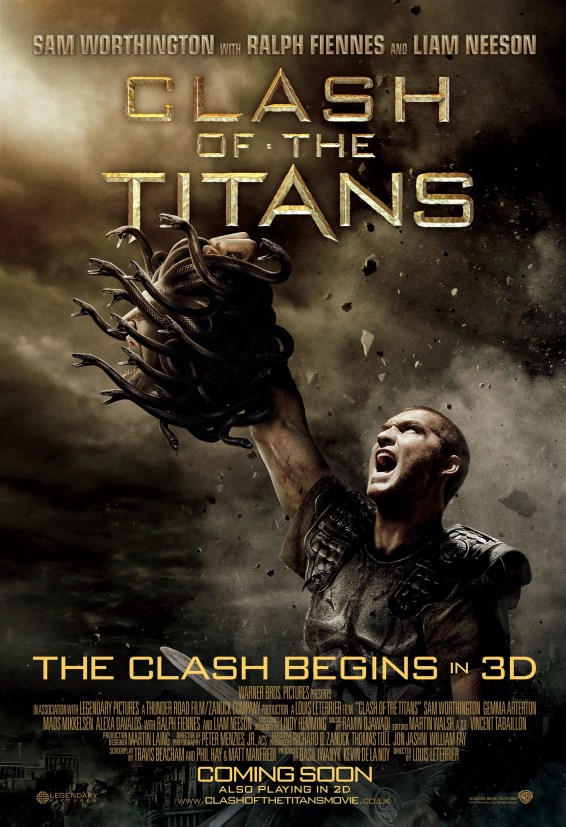
In this modern remake of the 1981 classic, ‘Perseus’ takes on a variety of gods and monsters in this somewhat fun, yet still very generic and sometimes even over-the-top reimagining of the original story. As, this time around, director Louis Leterrier (The Transporter, The Incredible Hulk, Now You See Me) focuses more on action set pieces and enormous CG spectacle than ever before.

Plot Summary: When ‘Perseus,’ the demigod son of ‘Zeus,’ finds himself caught in the middle of a war between gods and mortals, in which, his mortal family are killed, he gathers a war band to help him conquer the mighty ‘Kraken,’ ‘Medusa,’ and ‘Hades,’ malevolent God of the underworld…

Going off of the negative reviews from both critics and audiences, I wasn’t expecting much from ‘Clash of the Titans’ on my initial watch. However, I was surprised to find the film is mostly entertaining, as although there isn’t much substance to this remake, I still find it to be a somewhat exciting action flick, having plenty of creatures and adventure throughout its runtime, despite its various flaws. But, this may also be due to my fondness for Greek mythology, as I’ve had an interest in this area of fantastical legends/history since I was very young.

Although there aren’t any particular stand outs when it comes to the cast, Gemma Arterton, Liam Neeson, Ralph Fiennes, Mads Mikkelsen, and Jason Flemyng all do a decent job throughout the film. Sam Worthington, who, portrays the protagonist ‘Perseus,’ I personally found to be one of the weakest elements of the film, however, as despite him having a number of large roles in huge blockbusters, such as ‘Avatar’ and ‘Terminator: Salvation,’ in the past, he has always seemed extremely bland to me, never really coming across as anything other than a generic action hero with minimal charisma, and ‘Clash of the Titans’ is, unfortunately, no exception to this. 

The cinematography by Peter Menzies Jr. is also quite bland, as although I do appreciate the lack of incredibly shaky hand-held shots during many of the action scenes. Many of the shots throughout the film are usually very standard, as the cinematography never really attempts to enhance the visuals or make use of the story’s impressive and unique locations (aside from the occasional wide shot).

One very bizarre element of the film is definitely the original score by Ramin Djawadi, as although some tracks sound perfect for a fantasy epic such as this one. Other tracks almost sound as if they’ve been performed by a rock band, making them feel incredibly out-of-place within the film’s time-period. Yet, the film’s soundtrack actually does work quite well in my personal favourite scene of the film, as the scene set within ‘Medusa’s lair uses the score to build tension and atmosphere surprisingly well.

The CG effects throughout ‘Clash of the Titans’ are definitely one of the film’s better aspects, as regardless of whether it’s being used for creatures, Gods or locations, the visual effects always look great. However, this is also partially due to the designs of many of the creatures within the film, as the designs manage to perfectly blend the appearance of modern-day monsters mixed with classic Greek mythology. This also lends itself effectively to many of the various action scenes throughout the film (this obviously being the film’s main draw) as the action throughout the narrative is mostly pretty solid, making great use of the various different creatures abilities and always placing ‘Perseus’ in different dangerous scenarios.

In summary, I personally found ‘Clash of the Titans’ fairly entertaining for what it was, which is essentially is nothing more than your usual action blockbuster with some Greek mythology thrown in for good measure, as while the film is successful for what it sets out to do, the film does fall flat in many other areas, from Sam Worthington’s rather dull performance, to some of the weak writing and occasionally unusual original score, I feel only people truly interested in Greek mythology could get something out of this one. But, with all that in mind, ‘Clash of the Titans’ still isn’t the worst remake I’ve ever seen. Final Rating: 5/10.

clash_of_the_titans_ver4_xxlg

Jurassic Park (1993) – Film Review

One of Steven Spielberg’s most iconic and beloved films of all time, ‘Jurassic Park’ based on the science fiction novel of the same name by Michael Crichton, is a classic from many people’s childhoods, including my own. From its incredible practical and CG effects which still hold up today, through to its memorable characters and a beautiful original score by John Williams. ‘Jurassic Park’ has made a gigantic impact on pop culture and is a true joy to experience for all ages.

Plot Summary: On the tropical island of ‘Isla Nublar,’ three-hundred and sixty-five miles off the coast of Costa Rica, billionaire, ‘John Hammond,’ has become the first man in history to bring back an extinct species with genetically engineered dinosaurs. But, when a tropical storm wipes out the island’s main security systems, his newly invited guests are thrown into peril amongst the prehistoric creatures…

Not only does ‘Jurassic Park’ have an extremely fun and original narrative when compared to many films before it, but the film is also very important when it comes to CG effects, as Spielberg and his team we some of the earliest filmmakers to explore the idea of computer-generated imagery and implement it into the film as Spielberg initially wasn’t impressed with many of the stop-motion effects which had been shown to him up to that point, and surprisingly, many of the visual effects throughout the film are still quite impressive, even by today’s standards for CG effects.

The entire cast of ‘Jurassic Park’ are truly brilliant, as Sam Neill, Laura Dern, Richard Attenborough, Bob Peck and, of course, the outstanding Jeff Goldblum who portrays ‘Dr. Ian Malcolm’ (possibly his best character), is all excellent in their respective roles, and despite each character not getting an enormous amount of development throughout the story, all the characters still manage to feel very varied and memorable. However, my only real issue with the film does relate to the characters, as there has always been a few scenes throughout the film where characters seem to make ridiculous decisions for no apparent reason, and while this isn’t a major problem, it can be a little irritating on rewatches.

The cinematography by Dean Cundey is unfortunately, one of the weaker aspects of the film as although the film isn’t lacking in attractive or iconic shots. The camerawork is largely serviceable for the majority of the film’s runtime, with many of the film’s most memorable shots being mostly due to the film’s practical dinosaur effects. However, the film also makes excellent use of its sets, as every location from the iconic ‘Visitor Centre’ through to the ‘T-Rex and Raptor Paddocks,’ are always very eccentric and memorable.

Probably one of the most recognisable soundtracks in history for film lovers, the original score by John Williams is simply incredible throughout the entire film. Having a great blend of beautiful calming tracks in addition to many tracks that help build tension, the soundtrack is truly something to be admired, with the tracks; ‘Welcome to Jurassic Park,’ ‘Journey to the Island’ and ‘Hatching Baby Raptor,’ being my three personal favourites.

In addition to the CG visual effects, Stan Winston, best known for his effects work on iconic films, like ‘Predator,’ ‘Terminator 2: Judgment Day’ and ‘Aliens,’ Created a variety of practical effects for the film, as Spielberg wanted every close-up with the prehistoric creatures to be a practical animatronic, all of which, of course, is completely life-size and look outstanding, this is even more impressive when considering some of the issues the filmmakers ran into when it came to the rain during the scene, ‘The T-Rex Paddock’ (my personal favourite scene of the film), as the Tyrannosaurus Rex animatronic would constantly break down due to the enormous amount of water its rubber skin absorbed, usually having to be wiped down in between takes.

In summary, I personally don’t have many issues with the original ‘Jurassic Park,’ as the film is nearly perfect in many ways for me, as, in my opinion, a few unbelievable character choices and some minor continuity errors don’t take away from what is still an exciting adventure filled with great performances, some fantastic practical and visual effects as well as so much more. ‘Jurassic Park’ is a film for the ages, and I definitely believe it deserves its place among the most iconic films of all time. Final Rating: low 9/10.

jurassic_park_ver2_xxlg

Halloween (2018) – Film Review

Confusingly titled; ‘Halloween,’ despite not being a remake, this direct sequel to John Carpenter’s 1978 classic ignores all the other entries in the franchise in favour of telling a completely new story set forty years later, with Jamie Lee Curtis even returning to her iconic character of ‘Laurie Strode,’ now much older and much wiser. Yet, while definitely a decent attempt at continuing the ‘Halloween’ series, the film is still far from perfect.

Plot Summary: ‘Laurie Strode’ confronts her long-time foe, ‘Michael Myers,’ once again, as the masked figure who has haunted her since she narrowly escaped his killing spree on Halloween night four decades ago, now begins a new massacre after his recent prison escape…

Although the film’s narrative does have some interesting ideas, the film always felt a little too familiar to me, as I usually found myself correctly predicting what was around the next corner, leaving little to be surprised by. Under the direction of David Gordon Green, best known for his 2017 drama; ‘Stronger.’ The film does pay plenty of respect to the original film, as can always tell whilst watching that Green does have a passion for this horror franchise (as he clearly understands what made the original work so well). I still feel a better director could’ve been chosen, as at points, the story does seem to be slightly lacking in direction, and with his previous work in mind, it’s clear that he doesn’t specialise in horror.

It is great, however, to see Jamie Lee Curtis back as her classic character once again, as she really excels in showing how ‘Laurie Strode’ has been affected by those horrific events many years ago. Alongside the rest of the great cast of Judy Greer, Andi Matichak, Will Patton and especially Haluk Bilginer as ‘Dr. Sartain,’ who I was initially concerned would be nothing more than another ‘Dr. Loomis’ type character, but did actually end up going in a very different direction.

The cinematography by Michael Simmonds is nothing outstanding for the majority of the film, yet is still attractive when combined with the dark lighting throughout, particularly anytime ‘Michael’ is on-screen. Another strong element of the film is the wonderful original score by John Carpenter, his son Cody Carpenter and Daniel A. Davies, as although the soundtrack does slightly rely on tracks from the original film, there is plenty of new tracks here as well. Proving John Carpenter is brilliant at his craft once again, with the tracks; ‘The Shape Hunts Allyson’ and ‘The Shape Burns,’ being some of Carpenter’s best work in a long time, in my opinion.

One of the strongest elements of the film for me are definitely the kills, as it’s clear the filmmakers got very creative with the ways ‘Michael Myers’ disposes of his victims, usually creating very memorable scenes with some fantastic practical gore effects included. I also felt the film represented the iconic slasher very well, as ‘Michael Myers’ is always intimidating through his movements, ‘Michael’ even manages to steal the film for me by being the main focus of my personal favourite scene of the film, as ‘The Shape’ stalks his way through Haddonfield’ with murderous intent, all completed within a single take.

Being produced by Blumhouse Pictures, ‘Halloween’ also, unfortunately, features the company’s usual pandering to younger audiences you’d come to expect by now, as the film is littered with jump-scares throughout the runtime, with little attempt to create an eerie atmosphere or build large amounts of tension. In addition to this, the writing throughout the film is decent when it comes to the characters but usually is very lacking when the film attempts comedy, resulting in plenty of cringey lines of dialogue and out-of-place jokes.

In summary, 2018’s ‘Halloween’ is mostly enjoyable, but with a lack of originality, some cheesy lines and forced comedy (not to mention its strong overreliance on jump-scares) the film doesn’t even come close to replicating the classic horror’s best qualities. I do hold the original film in high regard, of course (it being one of my personal favourite horrors), but with plenty of entertaining moments throughout, this latest entry in the ‘Halloween’ series is definitely on the higher end of classic horror sequels. Final Rating: low 7/10.

halloween_xxlg.jpg

Ready Player One (2018) – Film Review

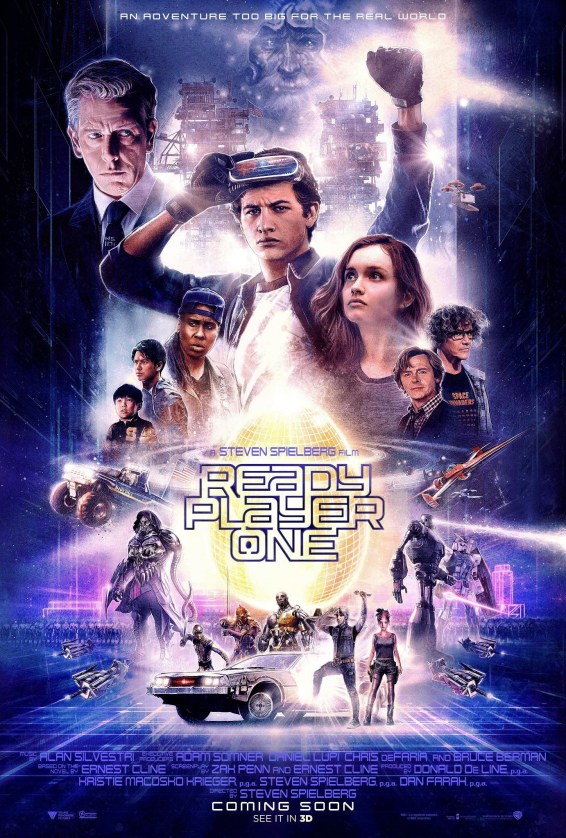
A triumphant return back to the silver screen for legendary director Steven Spielberg (Jurassic Park, Schindler’s List, Raiders of the Lost Ark), this time taking on an adaptation of a beloved science fiction novel by Ernest Cline. 2018’s ‘Ready Player One’ not only manages to capture that classic Spielberg whimsy all these years later, along with having plenty of breathtaking visuals and thrilling action sequences to boot. But, through its many, many references and appearances to/from iconic properties and characters from all types of media, ‘Ready Player One’ soon becomes a sweetly nostalgic adventure for any age.

Plot Summary: In the dystopian future of 2045, humanity spends their days inside ‘The OASIS,’ a virtual world where the only limits are your own imagination. Until on his deathbed, the original creator of ‘The OASIS’ makes a posthumous challenge, promising his entire fortune as well as complete control over his virtual world to the lucky ‘OASIS’ user that finds his ‘Golden Easter Egg.’

As its story may imply, ‘Ready Player One’ follows its novel counterpart closely by structuring its narrative half in the real world, and half within ‘The OASIS.’ Having all of the scenes set within the virtual world be comprised entirely of CGI, whilst reality is presented through live-action. While many viewers may initially be quite cautious of this (myself included), fearing a barrage of phoney-looking CG set pieces, Spielberg actually pulls this idea off very well, as the film never feels as if its CG visuals are being overused despite them taking-up most of the runtime. Interestingly, Spielberg teamed-up with effects company Industrial Light & Magic for most of ‘Ready Player One’s imagery, the company that previously worked with him for the first ‘Jurassic Park,’ so the Tyrannosaurus Rex that appears in the film is recreated using the same base-model made for the original film.

Best known as ‘Cyclops’ in the new incarnation of the ‘X-Men’ series, Tye Sheridan does a decent job at portraying the film’s likeable protagonist; ‘Wade Watts.’ Alongside Sheridan, Olivia Cooke as ‘Wade’s love interest; ‘Samantha,’ as well as Mark Rylance as ‘Halliday’ and Ben Mendelsohn and T.J. Miller as the film’s antagonists are all fine throughout the film. Yet, whilst every member of the cast is trying here, the performances in ‘Ready Player One’ are made more impressive considering the film’s extremely weak characters, as, unfortunately, nearly every character we meet within the story is mostly one-note, being nothing more than your traditional hero, companion or villain, etc.

Although an enormous amount of the cinematography by Janusz Kaminski is visually striking, having a large number of moving shots where the camera soars through the limitless world of ‘The OASIS.’ It’s difficult to judge it in its entirety, as a good majority of the camerawork is obviously CG due to half of the film’s story being set within a virtual world, and whenever we cut back to reality, the cinematography usually feels quite bland. However, I do appreciate the gloomy colour palette that’s utilised when the film returns to the real world, as it contrasts well against the incredibly colourful visuals of ‘The OASIS.’

Even though the film’s original score by Alan Silvestri is a serviceable and uplifting score in its own right, sounding subtlety like a Steven Spielberg classic. The film’s score was originally going to be composed by longtime Spielberg collaborator John Williams, but as a result of a scheduling conflict with another Spielberg film, Williams left the project to Alan Silvestri. Making ‘Ready Player One’ the third of only three films where Spielberg didn’t collaborate with Williams.

Many of the main problems I find hard to ignore with ‘Ready Player One’ mostly revolve around its weak writing, as although not continually noticeable, the film has a number of cheesy moments/clichés scattered throughout its story, in addition to many moments of humour which fall completely flat. Some critics have also taken issue with the enormous amount of characters from other media appearing in the film, seeing it as pandering and meaningless. I don’t agree with this criticism, however, as the original novel is full of many of its own (unique) references. Personally, I also feel many of the film’s flaws are made up for by its brilliant action scenes, from the opening race to the explosive final battle, to even a scene where the characters travel into the classic 1980 horror; ‘The Shining,’ every set piece is both creative, and enjoyable to watch.

In summary, ‘Ready Player One’ definitely has its faults, in particular, when it comes to its screenplay. But, even with its problematic writing in mind, I’d still say the film is a great addition to Spielberg’s huge line up of family flicks, as while it may not be on the same level of classics like ‘E.T. the Extra-Terrestrial’ or ‘Hook,’ for example, ‘Ready Player One’ overcomes its weak characterisation and occasional corny dialogue to become an exciting sci-fi/fantasy odyssey, and a film I’d recommend a trip into ‘The OASIS’ for. Final Rating: low 7/10.

ready_player_one_ver2_xxlg

World War Z (2013) – Film Review

Very loosely based on the novel of the same name by Max Brooks, ‘World War Z,’ directed by Marc Forster, attempts to tell an enormous globe-trotting story of a spreading virus, and although it does have a few entertaining elements here and there, so much so that it was one of the highest grossing films of 2013. I personally found the film to be extremely messy, and, in general, rather forgettable.

Plot Summary: After narrowly escaping an attack in Philadelphia, former United Nations employee, ‘Gerry Lane,’ traverses the world in a race against time to stop a deadly pandemic that is toppling armies and governments, soon threatening the survival of humanity itself…

Even with a pretty standard plot for a zombie flick, the film is, unfortunately, still brimming with plenty of cliché moments and jump-scares throughout, in addition, of course, to the film’s overall lack of style. Making the entire experience really struggle to stand on its own amongst the many other films within its genre, which I do feel can be mostly put down to director Marc Forster (Finding Neverland, Stranger Than Fiction, Christopher Robin).

Brad Pitt, Mireille Enos both do a decent job as ‘Gerry’ and ‘Karin Lane’ within the film, despite their characters having pretty much no characterisation outside of them being a loving family. Their children, however, portrayed by Sterling Jerins and Abigail Hargrove. I found very irritating, as aside from their constant screaming and crying, their child performances weren’t very convincing to me at all. Strangely, Peter Capaldi also has a small role within the film, despite barley adding anything to the narrative.

Ben Seresin handles the cinematography throughout the film, and aside from a few scenes were hand-held camera techniques are used to reflect the chaos we see during many of the infected’s attacks, many of the visuals are extremely flat, as the cinematography is very bland and uninspired, usually sticking to very standard shots and never really experimenting with anything incredibly interesting. The CG effects throughout the film’s runtime are also very inconsistent, as in some scenes the visual effects work perfectly fine. Whereas in others, they look truly awful, with many of the infected bouncing around as if they were made out of rubber. I do appreciate the various aerial shots which are used during many of these scenes, however, as I feel these shots really incapsulate the enormous scale of the film’s devastating pandemic.

The film’s original score by Marco Beltrami is decent overall, it works within the film to increase what tension and drama there is on-screen. But, outside of the film, it isn’t memorable in the slightest. Coming off as your standard blockbuster soundtrack with the occasional ‘Inception’ noise thrown in for good measure, it is very possible the score was rushed, as for those who may not know, ‘World War Z’ actually went through a very troubled production process, as multiple different directors, writers and producers were brought onboard and then dropped off constantly. This is mostly why the film sometimes feels very unconnected and messy (which also isn’t helped by its quick pacing). Taking this into account, the film definitely could’ve been far worse, but I still found it very noticeable.

Despite all of this, the film does still have some elements I enjoy, as it is simply fun to watch the madness ensue at various points during the film, as the hordes of infected bring chaos to the streets of whatever city the film finds itself in. My favourite scene within the film is definitely near it’s ending, as the film takes a very different direction in choosing to focus on a small tension-filled scenario, which I thought was decently well-executed for the most part. That said, most of the climax is remarkably dull, grinding the film’s pacing to a halt to focus on a small group of infected over an exciting, climatic set-piece.

In summary, ‘World War Z’ isn’t the worst big-budget film you could spend your time watching, it definitely has a variety of problems. From the predictable and generic plot, to the boring characters and the mix of poor CG effects and writing. Which all ensured that I wasn’t such a huge fan, but if you enjoy a mindless zombie blockbuster every so often, then there may be some enjoyment in this for you. But, for me personally, ‘World War Z’ simply felt like a hollow experience, and is nothing more than a generic zombie flick when it’s at it’s best. Final Rating: 3/10.

world_war_z_ver3_xlg

Geostorm (2017) – Film Review

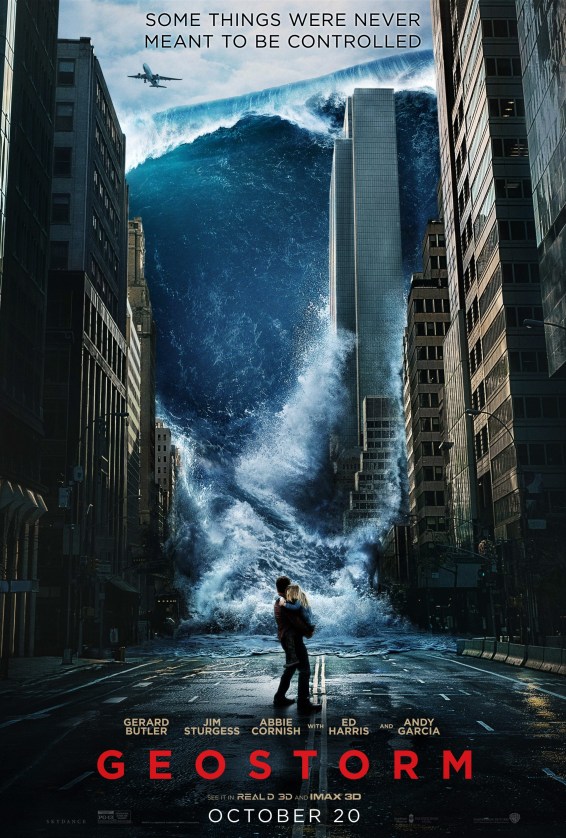
Directed by Dean Devlin, best known for producing the original ‘Independence Day,’ as well as the first (infamous) American ‘Godzilla’ remake from 1998. ‘Geostorm’ takes a much more traditional disaster route for Devlin’s directorial debut, attempting to capture the usual scale and destruction associated with the genre, along with a few elements of international terrorism and sleek science fiction thrown in for good measure. Unfortunately, however, this still isn’t enough to save the film from its many, many faults.

Plot Summary: When a network of satellites designed to control the global climate begins to attack Earth, it’s a race against time for its original creator to uncover the real threat before a worldwide ‘Geostorm’ wipes out everything and everyone…

From the first scene all the way through to the very last, the film felt incredibly cliché to me, as the film definitely follows a very similar structure to the majority of other disaster flicks, as well as also carrying over much of the cheesiness and terrible comedy from many of them, as although the film does have a few exciting action scenes and some entertaining weather-related chaos throughout its runtime, the film never really manages to break-out of its predictability.

Gerard Butler, Jim Sturgess, and Abbie Cornish are all decent throughout the film, as while they still suffer from having the usual generic characters for a blockbuster. They do the best they can to keep the audience engaged throughout the story (for the most part). However, the film also has a few side characters which left we more than often questioning their inclusion in the film, as most of them added very little to the plot and only appeared in a few short scenes.

Roberto Schaefer handles the cinematography within ‘Geostorm,’ which aside from the occasional attractive shot is mostly bland and uninspired, with many scenes throughout the film also seeming to have far too many different shots, as a simple scene of two people talking could have anywhere from three to seven different shots. The CGI within the film is also another unusual aspect, as although it’s decent throughout most of the film, there are quite a few shots where I felt it dipped massively in quality. Some of the NASA scenes during the film were actually filmed at a NASA facility in New Orleans, however, which I did feel added to the film’s story despite the location’s limited appearances.

There are also multiple points where the film attempts to be very emotional and dramatic, yet usually falls completely flat, with the film putting a large amount of focus on the original score by Lorne Balfe, which is your standard action film score, coming off as an almost entirely forgettable and bland soundtrack.

Whilst watching the film I also couldn’t help but think that there were many missed opportunities throughout, as due to the film’s mostly serious and grounded tone, the film never takes any of its weather attacks to any truly creative places, with the film usually just going for a decently entertaining, (if not very experimental) action set piece. Although I understand the lack of disaster films in modern cinema is a great way to make the film stand out, I still feel a more absurdist tone, along with over-the-top action sequences, could’ve at the very least, made the film more memorable and unique.

In summary, whilst I didn’t really have high expectations when I first sat down to watch ‘Geostorm’ going off the mostly inexperienced director and the poor reviews from both critics and audiences alike, the was a genuinely dull experience, which I’d say isn’t really worth a watch, being a mostly bland and boring disaster flick, despite some original aspects. There is the odd entertaining action scene or interesting visual for any massive fans of the disaster genre, but for me, I don’t feel any desire to return to ‘Geostorm,’ especially not anytime soon. Final Rating: low 3/10.

geostorm_xxlg