Seven Psychopaths (2012) – Film Review

This slick self-aware crime-comedy from writer and director Martin McDonagh (In Bruges, Three Billboards Outside Ebbing, Missouri) may not appeal to everyone as a result of its over-the-top violence and occasionally absurdist tone. Yet, for me, due to its great cast, fantastic writing, and endless list of quotable lines, ‘Seven Psychopaths’ is certainly worth its runtime, and then some, as the film always remains just as entertaining as it is unconventional, even if ‘Seven Psychopaths’ isn’t quite as pristinely crafted as the rest of McDonagh’s work.

Plot Summary: Struggling alcoholic screenwriter, Marty, in the process of writing a screenplay based around seven separate psychopaths, soon becomes inadvertently entangled in the Los Angeles criminal underworld after his oddball friends accidently kidnap a psychopathic gangster’s beloved Shih Tzu…

Filled with plenty of sly, witty, and memorable dialogue throughout, ‘Seven Psychopaths’ constantly uses its clever writing to create an array of stories within the main narrative, as the screenplay writing protagonist; ‘Marty,’ reels off many of his early ideas for different psychos to get his friend’s opinions on them before implementing them into his latest screenplay. The film also uses this structure to engage in plenty of meta humour, as the characters continuously list off various tropes and clichés of similar action and crime flicks, which the film itself actively avoids, resulting in a well-written film. In fact, the screenplay for ‘Seven Psychopaths’ was actually featured in a 2006 blacklist of the ‘most liked’ unmade screenplays of that year, before it was greenlit many years later.

One of the best elements of the film is undeniably its cast, as Colin Farrell, Sam Rockwell and Christopher Walken as ‘Marty,’ ‘Billy,’ and ‘Hans,’ never fail to be hilarious together, as all three of them share some excellent chemistry, portraying their characters as if they’ve been friends for many years before the current story begins. Woody Harrelson and musician Tom Waits both also make an appearance within the film as the mostly intimidating criminal; ‘Charlie,’ and ‘Zachariah,’ one of the psychopaths that inspires ‘Marty’s screenplay, who is constantly creepy and bizarre whenever he is on-screen. Yet, despite the film’s admirable performances and writing, the female characters within the film are noticeably quite poor, as while the main cast do point this out through some sarcastic dialogue, the few female characters that do appear receive barley any development and feel mostly pointless in the long run.

Although ‘Seven Psychopaths’ cinematography is nowhere near as impressive as the camerawork throughout ‘Three Billboards Outside Ebbing, Missouri,’ for example. The cinematography by Ben Davis is serviceable, with the occasional pleasing shot in between many of the more average ones. However, this is where another one of my criticisms comes into play, this being the story’s setting, as whilst I understand the film’s protagonist is a screenplay writer so it links to the idea of building a career in Hollywood. McDonagh’s other films both manage to make exceptional use of their beautiful and distinct locations, which makes the city of Los Angeles, where ‘Seven Psychopaths’ takes place, feel fairly dull in comparison.

The original score by Carter Burwell isn’t overly memorable yet does suitably fit the film, adding tension to scenes where necessary in addition to feeling quite subtle when in contrast to the film’s outrageous self-aware humour, as according to composer Carter Burwell, his intent with the soundtrack revolved more around wanting to create an emphatic ambience for the film rather than just being your standard, generic action score, this is most obvious in the tracks; ‘Zachariah’ and ‘Billy’s Diary,’ my personal favourite tracks.

Personally, although the story works fine without, I would have desired a little more style when it comes to the film’s visual presentation, in particular, in the editing and title graphics, as with the exception of the typewriter text that is utilised to inform the audience of each psychopath from one through to seven, the filmmaking actually displays barley any style throughout. That being said, ‘Seven Psychopaths’ does still feature a number of dark comedic moments similar to the rest of McDonagh’s filmography, displaying a couple of dramatic scenes alongside plenty of extremely graphic deaths.

In summary, ‘Seven Psychopaths’ definitely isn’t the best director Martin McDonagh has to offer, with both ‘In Bruges’ and ‘Three Billboards Outside Ebbing, Missouri’ being far superior films, in my opinion. ‘Seven Psychopaths’ still delivers on a creative plot and some tremendous writing and performances, even in spite of its lack of style and weak female characters. If you’re a fan of this director’s other films, I’d say ‘Seven Psychopaths’ is worth a watch, just don’t have your expectations too high when going in for the first time. Final Rating: 7/10.

seven_psychopaths_xxlg

Crazy, Stupid, Love (2011) – Film Review

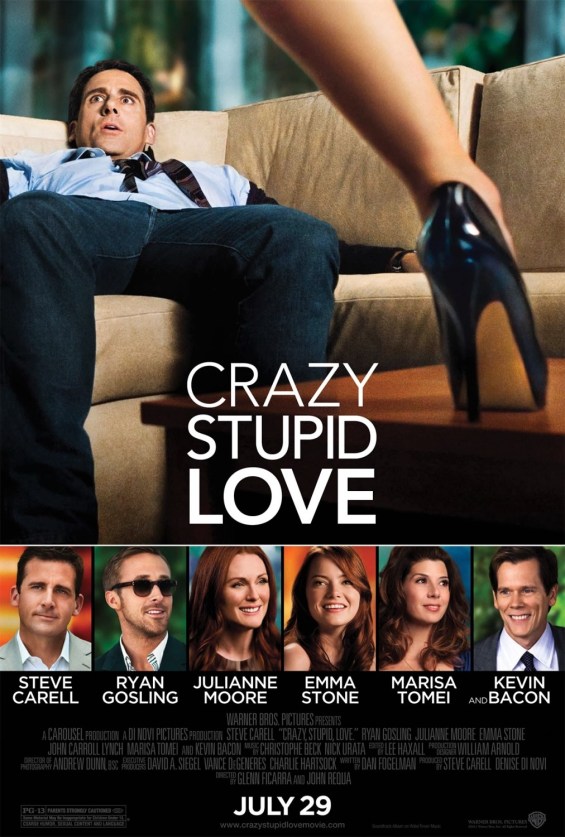
An unexpectedly memorable romantic-comedy from 2011, ‘Crazy, Stupid, Love’ tells an engaging and touching story of a selection of good-hearted people finding love in their lives and experiencing the many hardships that come along with it, and although romance has always been one of the lesser-interesting genres of film for me personally, ‘Crazy, Stupid, Love’ almost acknowledges what kind of film it is. Always taking a simple yet effective approach to its filmmaking and placing its well-written characters and narrative before anything else.

Plot Summary: When middle-aged husband; ‘Cal Weaver,’ discovers that his wife has had an affair with one of her co-workers, his perfect life quickly begins to unravel. But, after encountering the handsome womaniser; ‘Jacob,’ in a bar, ‘Cal’ is soon taken on as his wingman and protégé as he opens ‘Cal’s eyes to the many opportunities that lie before him…

Directed by Glenn Ficarra and John Requa (I Love You Phillip Morris, Focus, Whiskey Tango Foxtrot) and written by Dan Fogelman, ‘Crazy, Stupid, Love’ actually has a fairly strong screenplay for a rom-com, and although this shouldn’t be too surprising considering Fogelman has written a number of superb animated Disney/Pixar flicks in the past, such as ‘Bolt,’ ‘Cars’ and ‘Tangled,’ before later moving on to more adult-focused comedies with ‘Last Vegas’ and ‘The Guilt Trip.’ ‘Crazy, Stupid, Love’ only features a handful of characters, with everyone of them receiving a decent amount of characterisation and becoming quite likeable over the course of the runtime. The film even manages to feature a couple of unexpected reveals later on within the story, which only further elevates the film’s screenplay.

The all-star cast of Ryan Gosling, Julianne Moore, Emma Stone and Marisa Tomei are all brilliant in their respective roles, but of course, with three Oscar-winners as well as two Oscar-nominees among them, this isn’t much of a shock. It’s the film’s protagonist; ‘Cal,’ portrayed by Steve Carell that is the obvious stand out though, as ‘Crazy, Stupid, Love’ was actually one of the first films that Carell put aside his usual goofball schtick in exchange for a more grounded character, as he portrays a miserable divorcee now with little direction in his life, before his eventual transformation into an ego-driven womaniser similar to ‘Jason’ himself. However, on the opposite side of this, Kevin Bacon as ‘David Lindhagen’ (a.k.a. The romantic rival) is the obvious weak link of the cast, as aside from only two shorts scenes, his character and the threat that he poses to ‘Cal’s ruptured marriage is barely utilised, making his inclusion in the story feel quite pointless.

The cinematography by Andrew Dunn never displays anything that will leave the viewer in awe, yet does still feel like a slight step-up from the usual bland camera work of many other romantic-comedies. The cinematography truly reaches its peak in the scene: ‘Great Dress,’ however, in which, ‘Cal’ (now with his newly found manhood) flirts with various different women on a number of different nights, all the while the camera gently glides through the bar displaying the passage of time through ‘Cal’s large wardrobe of stylish outfits.

Christophe Beck and Nick Urata take on the original score for the film, which, for the most part, does suitably back up the film’s story and displays a large amount of range in regards to instruments that are used, despite the score overall being far from astonishing. Yet, bizarrely, the film’s soundtrack was never officially released by production company Warner Bros. Pictures, resulting in many fans of the film having to create their own playlists on Spotify/Apple Music, etc., to bring together the film’s many recognisable songs once again.

Although ‘Crazy, Stupid, Love’ does primarily focus on its aspects of romance and comedy, the film also handles its drama fairly well. Never interrupting any of its more serious moments with scenes of over-the-top humour, most of which usually coming from the film’s main subplot which focuses on ‘Cal’s son; ‘Robbie,’ as he lusts after his older babysitter. Occasionally, the film also indulges in a variety of more self-aware jokes, as the film references some of the many overdone clichés that infest films, like ‘Notting Hill’ and ‘Love Actually,’ through its dialogue, e.g. an immediate rainstorm after a heartbreaking argument/break up.

In summary, ‘Crazy, Stupid, Love’ is more than successful in its attempt to craft an emotional and amusing story even in spite of the little innovation the film displays when it comes to its cinematography or original score, as the film’s upbeat approach to its tight plot leaves it an enjoyable flick that fully embraces what genre it’s only a small piece of, serving as somewhat of a homage alongside remaining quite a leisurely watch itself. So, whether you usually drift towards this genre or not, I feel most viewers would struggle to dislike ‘Crazy, Stupid, Love’, as simply put, the film is just a delightful experience to sit through. Final Rating: 8/10.

crazy_stupid_love_xlg

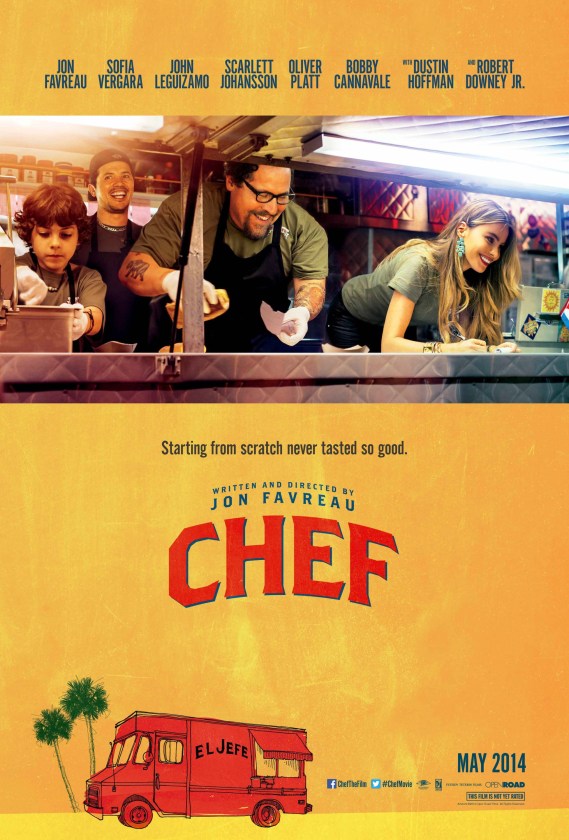
Chef (2014) – Film Review

Even after working in blockbuster franchises, such as ‘Star Wars’ and the Marvel Cinematic Universe, director Jon Favreau (Zathura, Iron Man, The Lion King) crafts one of his finest films to date with this clear passion project. Being obsessed with food and cooking in his spare time, Favreau puts his kitchen knowledge to perfect use as his film ‘Chef’ focuses on the story of a middle-aged man taking his wonderful tastes across America, and whilst fairly simplistic, this lower-budget flick still manages to remain a charming comedy-drama from beginning to end.

Plot Summary: ‘Carl Casper,’ an acclaimed chef with a family life that seems as decaying as his artistic freedom. But, after being fired from his restaurant job due to an aggressive confrontation with a snarky food critic, ‘Carl’ decides to travel across America selling his own dishes in a second-hand taco truck…

Although not directly based on a true story per se, ‘Chef’ does take inspiration from plenty of real-world figures, in addition to Jon Favreau’s own history in cuisine. The main source of inspiration for the film, however, was the professional food truck chef Roy Choi. Who, actually agreed to give Favreau further chef training for the film under the exception he agreed to present a truly authentic portrayal of the life of a chef, and considering the film’s focus on ‘Carl’s struggling funds and the impact the cynical words of food critics can have, I feel the director certainly succeeded.

Jon Favreau portrays ‘Carl’ superbly throughout the film, giving the protagonist a decent amount of range despite him never receiving an enormous amount of characterisation. The rest of the cast of John Leguizamo, Emjay Anthony, and Sofía Vergara, as well as Scarlett Johansson and Dustin Hoffman for a short period, are all decent within their respective roles, with Robert Downey Jr. even making a short appearance in the film as ‘Marvin’, which interestingly he agreed to do for free as a favour to Favreau for the decision he made to cast him as ‘Tony Stark,’ a.k.a. ‘Iron Man,’ years earlier, which most now believe to be his most iconic role.

While ‘Chef’ does have a fairly bright colour palette, the cinematography by Kramer Morgenthau is ultimately nothing above average, as while the film does have some interesting shots, they’re fairly infrequent throughout. However, this is with the exception of the many close-ups of the food itself, as ‘Chef’ does a superb job at making the audience’s mouth water through the delicious food it presents, as the film features a variety of both very creative and tasty-looking dishes. The film even manages to contain a little stylistic flair with Twitter being represented by animated blue birds which flutter into the sky whenever a character tweets, which actually plays into the story quite well.

The original score by Lyle Workman isn’t anything overly memorable, but the soundtrack’s Mexican feel does back up the film’s story effectively and really fits with many of the locations the food truck stops at as ‘Carl’ travels across the states of America. ‘Chef’ also utilises a huge range of iconic songs throughout its runtime, most of which also stick to the film’s Mexican aesthetic. From ‘I Like It Like That’ to ‘Lucky Man’ and even ‘Sexual Healing,’ the film’s lengthy list of songs really adds to its predominantly upbeat tone.

Unfortunately, ‘Chef’ is mostly dragged down by its overall emotional depth, as although the film is usually entertaining and engaging throughout, the film sometimes lacks the real emotional weight a drama needs, as ‘Carl’s rough relationship with his ex-wife receives little-to-no development, with most of the narrative’s focus being placed on ‘Carl’ reconnecting with his son, ‘Percy,’ which mostly makes for amusing and somewhat relatable scenes rather than any real dramatic moments. Whilst it doesn’t hurt the film really, some characters throughout ‘Chef’ also seem to disappear without a trace, in particular, the character; ‘Jen,’ portrayed by Amy Sedaris, who on ly appears in a single scene and has virtually no impact on the plot, which comes across as a little odd.

In summary, while there are definitely more memorable comedy-dramas out there, ‘Chef’ delivers on what it sets out to do, featuring some likeable characters portrayed by its great cast, alongside its fantastic soundtrack and scrumptious-looking food, the film is truly a treat whether your an expert in the kitchen yourself or not. It is a shame the film’s more dramatic side doesn’t fully deliver, as I do genuinely feel ‘Chef’ is a perfect example of Favreau’s filmmaking/acting talent outside of any franchise. Final Rating: low 8/10.

chef_xxlg

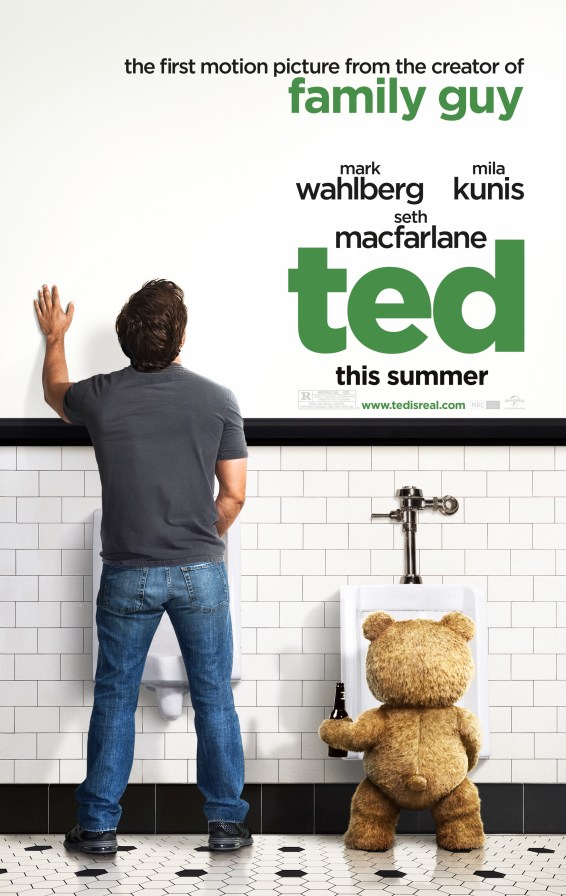
Ted (2012) – Film Review

Written and directed by Seth MacFarlane, the creator of ‘Family Guy,’ ‘American Dad,’ and ‘The Cleveland Show,’ ‘Ted’ is a modern comedy, which takes the childhood desire many had of wishing their teddy bear was alive and gives it an adult comedy spin, and while the film does miss a large number of its jokes. ‘Ted’ is a mostly enjoyable watch through its fun story and entertaining cast, alongside being a pretty strong first outing for MacFarlane’s transition to live-action entertainment.

Plot Summary: When ‘John Bennett’ makes a Christmas miracle occur by bringing his stuffed teddy bear to life, the two grow up together and form a lifelong bond. But, after ‘John’ moves in with his girlfriend; ‘Lori,’ a few years later, he’s forced to choose between them as their relationship is tested…

Though its story is very simple, ‘Ted’ actually balances its comedy and drama surprisingly well, as the film focuses heavily on the rift ‘Ted’ causes between ‘John’ and his girlfriend. Considering MacFarlane’s other work rarely takes itself seriously, the majority of the drama is actually quite effective, as the film does a decent job of keeping the audience invested in its characters. Similar to most modern comedies, the jokes throughout the film do range, however, with some scenes featuring plenty of humorous moments, whilst other scenes can come across as if they are trying far too hard, sometimes even having lines of dialogue which could be seen as a little ‘risky’ (especially if you’re watching the unrated version), but this is pretty familiar ground for MacFarlane.

Mark Wahlberg and Mila Kunis portray the main couple of the film, who do share some decent chemistry and funny moments together, with Mark Wahlberg also doing an excellent job interacting with ‘Ted’ throughout the film considering he is a fully CG character, as ‘Ted’ was brought to life through various teddy bears props on set, in addition to Seth MacFarlane’s movements being mirrored through motion capture. Joel McHale and Giovanni Ribisi also make appearances within the film as ‘Lori’s obnoxious and inappropriate boss; ‘Rex,’ and the film’s antagonist; ‘Donny,’ a shady father who intends to kidnap ‘Ted’ for his son. Both of these characters do have their moments for sure, yet they also both share the same issue of their characters completely disappearing after their purpose to the story is served, which does make the narrative feel a little inconsistent.

The cinematography by Michael Barrett is mostly bland throughout, with film’s focus being placed nearly entirely on its comedic dialogue. Although there is still the occasional appealing shot here and there, it’s nothing overly interesting. However, the CG effects used to create ‘Ted’ are solid for the most part, as despite the few shots where the film is beginning to show its age, the combination of the film’s visual effects and Seth Macfarlane’s very entertaining vocal performance do result in ‘Ted’ becoming a crude yet likeable character.

One of the biggest issues ‘Ted’ suffers from in my opinion is the film’s lack of personality, as a result of the film having little-to-no style, ‘Ted’ sometimes feels too similar to MacFarlane’s other works. This is most noticeable in the original score by Walter Murphy, as the score feels almost identical to the score used throughout FOX’s ‘Family Guy’ series. Whilst this is most likely due to director Seth MacFarlane wanting to work with the same composer as his animated shows, the original score just doesn’t feel even remotely memorable or unique to the film it’s part of.

For me, some of ‘Ted’s funniest moments come from its more absurdist humour, as although the film has plenty of obscure references to celebrities and present-day events similar to kind of humour that’s become rather standard in ‘Family Guy.’ ‘Ted’ is truly at its best in scenes, such as ‘Ted’s Party,’ in which, Sam J. Jones, the actor who portrayed ‘Flash Gordon’ in the 1980 sci-fi classic, begins envisioning ‘Ted’s next door neighbour as the supervillain; ‘Ming the Merciless,’ whilst high on cocaine, or when ‘Ted’ engages in a fist fight with a duck named after actor James Franco, as these moments are usually hilarious simply because of their outlandish nature.

In summary, I think ‘Ted’ is a decently fun comedy flick, as whilst there is definitely room for improvement, Seth Macfarlane does a pretty great job considering this was his directorial debut. And, while I could see many not enjoying ‘Ted’ mostly due to their preference when it comes to humour (or because of its admittedly average filmmaking). I personally feel that ‘Ted’ is Macfarlane’s best film to date, as ‘A Million Ways to Die in the West’ and even this film’s sequel; ‘Ted 2,’ were both very disappointing for me. Although it needs work, I’m sure most will find ‘Ted’ amusing over the course of its runtime. Final Rating: 7/10.

Ted-movie-poster

Moonrise Kingdom (2012) – Film Review

Although it may not quite reach the heights of some of his other work, director Wes Anderson (The Royal Tenenbaums, Fantastic Mr. Fox, The Grand Budapest Hotel) crafts another wonderful story with ‘Moonrise Kingdom,’ as throughout its tight runtime, the film is filled with plenty of heartfelt moments and mature humour all backed up by an effective original score by Alexandre Desplat. Resulting in a very enjoyable comedy/drama, despite Anderson not utilising his style to its best extent.

Plot Summary: On a small island off the coast of New England in the 1960s, a young boy-scout and the eldest daughter of unhappy household fall in love after a few weeks of back and forward letters. Soon inspiring them to run away together, leading various factions of the island to mobilise in search of them…

The story itself is definitely one of the best aspects of ‘Moonrise Kingdom,’ as although the film is brimming with plenty of the usual Wes Anderson style. The film’s story is always so enjoyable to watch, as the film’s two protagonists carry the narrative with great comedic charm and an almost childlike innocence. The dialogue throughout the film is also very well-written, as every character is usually extremely specific about everything they say, leading to many quirky moments.

Initially, the thought of a film lead by two very young actors did concern me, as there has been plenty of films throughout history that have been severely let down when it comes to child actors in important roles. ‘Moonrise Kingdom’ is certainly an exception to this, however, as Jared Gilman and Kara Hayward are both brilliant as the young couple; ‘Sam’ and ‘Suzy,’ as the two have excellent chemistry and perfectly fit the hilarious awkwardness of usual Wes Anderson stories. In addition to the two leads, the supporting cast of Bruce Willis, Edward Norton, Bill Murray, Frances McDormand, Tilda Swinton and Jason Schwartzman, are all fantastic within their various roles. Yet, even with these brilliant performances, the film still does suffer from a mostly pointless adultery subplot, whilst this does provide some characterisation at points, it felt mostly meaningless to me by the time the film’s credits rolled.

The cinematography by Robert D. Yeoman is your standard affair for a Wes Anderson film, having the usual array of very appealing shots, most of which make great use of some of the beautiful natural locations the film’s story takes place within. Also featuring a variety of panning shots and perfect symmetry wherever possible, the cinematography even manages to make an ordinary room look far more interesting purely through it’s framing and use of colour. In spite of this, however, ‘Moonrise Kingdom’ did actually have a smaller budget than some of Anderson’s other flicks, which does result in the film feeling slightly held-back from taking its visuals all of the way.

Whilst fairly simplistic when compared to some of his other scores, the original score by Alexandre Desplat is somewhat unique and does suitably fit the tone of the film pretty well, as ‘Moonrise Kingdom’ attempts to add a more scout-troop feel to further add to the film’s narrative. In particular, with the track; ‘The Heroic Weather-Conditions of the Universe Parts 4-6: Thunder, Lightning and Rain’ (what a mouthful), as this track uses trumpets and horns throughout, almost reflecting how the scouts are woken up by their scoutmaster each morning.

One of the most striking elements of ‘Moonrise Kingdom’ certainly has to be it’s bright colour palette, as the film is constantly dripping with beautifully bright colours. From greens to yellows, to blues, the film is always incredibly vibrant and extremely visually appealing to the eye and, of course, as the film’s tone is already fairly fun and light-hearted, the colour palette doesn’t feel even remotely out-of-place. However, I do feel the film could’ve indulged further into the 1960s time-period, as aside from the occasional mention of the date, or piece of technology, the film never really makes use of the ’60s era its set within.

In summary, ‘Moonrise Kingdom’ is definitely an underappreciated gem in director Wes Anderson’s collection, as although the film does have phenomenal reviews from critics and audiences, alike. I can’t help but the feel the film never gets talked about enough, as ‘Moonrise Kingdom’ has all the unique style of Anderson’s other films alongside a heartfelt story and plenty of memorable scenes/dialogue. Despite not being my personal favourite flick from Wes Anderson, the film is undeniably worth a watch, if you’re a fan of the talented director. Final Rating: 8/10.

moonrise_kingdom_xxlg

The Nice Guys (2016) – Film Review

This ’70s throwback to classic buddy-cop comedy films hits all the right marks, as the fantastic chemistry between Russell Crowe and Ryan Gosling alongside the film’s great visuals and hilarious comedic moments, all make ‘The Nice Guys’ certainly worth a watch, whether you are incredibly fond of action-comedies or not, as I feel this humorous flick definitely deserves more attention.

Plot Summary: In 1970s Los Angeles, bumbling private eye; ‘Holland March,’ and muscle-for-hire; ‘Jackson Healy,’ become unlikely partners when they find themselves both looking for a missing woman, named; ‘Amelia,’ following the death of a high-profile porn star. ‘Amelia’s ties to the deceased actress are unclear, but as other members of the porn industry turn up dead, ‘March’ and ‘Healy’s investigation reveals a much bigger conspiracy than the duo could have ever anticipated…

Heavily inspired by action/comedy classics, such as ‘Lethal Weapon’ and ‘Rush Hour,’ ‘The Nice Guys’ is directed by Shane Black (Kiss Kiss Bang Bang, Iron Man 3, The Predator), who clearly brings all his love for this genre to the forefront. As, despite the film doing quite poorly in cinemas upon its initial release, the film is clearly a true passion project for Shane Black, being filled with the director’s usual style and classic witty dialogue from start-to-finish.

Russell Crowe and Ryan Gosling make an excellent pairing as ‘Jackson Healy’ and ‘Holland March’ throughout the film’s story, as both actors have an enormous amount of chemistry with each other and add plenty of humour into the plot through their interactions with their opposite, as well as ‘Holland’s daughter; ‘Holly March,’ portrayed by Angourie Rice, who is very sarcastic and angsty towards many of the other characters (which can become a little irritating after a while). Matthew Bomer, Margaret Qualley, Yaya DaCosta and Keith David also have small roles within the film, and are all decent, despite not being given much screen-time.

Philippe Rousselot handles the cinematography throughout ‘The Nice Guys,’ and although attractive throughout most of the runtime, the variety of shots is probably the weakest aspect of the film just down to elimination. Still, the cinematography does back-up the story very effectively, never taking the audience’s attention away from the mystery unravelling throughout the narrative. I also feel the film’s colour palette could’ve really added to the film’s visual flair more, as the colour palette doesn’t really delve much into the 1970s style aside from the occasional vibrant shot. However, the film does integrate ’70s style in its opening titles which I appreciated, as the Warner Brothers’ logo seen in the beginning of the film is the actual graphic Warner Bros. Pictures used during the 1970s for their films.

The original score by John Ottman and David Buckley fits the film’s style and time-period perfectly, as the soundtrack attempts to replicate the music of the time through its use of trumpets and a drum kit to add to many of the comedic moments and establishing shots, with the tracks; ‘Cars That Drive Themselves’ and ‘P.I. Life,’ being my two personal favourites (in addition to the film’s main theme). Many of the film’s action scenes do slightly weaken the score, however, as anytime the screen is filled with bullets and fist fights, the original score suddenly becomes a lot more generic.

The majority of the jokes throughout the film do land very successfully, in my opinion, as ‘The Nice Guys’ has a pretty wide range of comedy throughout its runtime. From the hilarious and quippy dialogue between the two main protagonists to the parodying of classic action tropes and even a little bit of slapstick thrown in for good measure, all of the comedy throughout the film is pretty inventive and ensures that the film is filled with humour for every kind of viewer.

Despite the film’s main focus being its humour, however, the action throughout the film is actually very well-executed, from a high-speed car chase through to chaotic shoot outs and bare-fist scuffles. ‘The Nice Guys’ nails it’s action scenes just as well as it’s jokes, as each action set piece is always exciting and brilliantly choreographed. My only real criticism of the film is probably it’s length, as I feel the film does go on for slightly too long nearing end of its story.

In summary, it’s a real shame many that audiences had no interest in ‘The Nice Guys,’ as although many would consider buddy-cop action flicks a dead genre similar to westerns. I personally feel we need more films like this, as bringing back these old kinds of stories really makes the film stand out amongst the complete onslaught of modern superhero blockbusters and generic horror scare-fests. So, although I feel a sequel to ‘The Nice Guys’ is very unlikely to ever be made, the mere mention of one as even a possibility still gets me excited to this day, as I would love to see these characters return to the silver screen. Final Rating: 8/10.

nice_guys_ver2_xlg

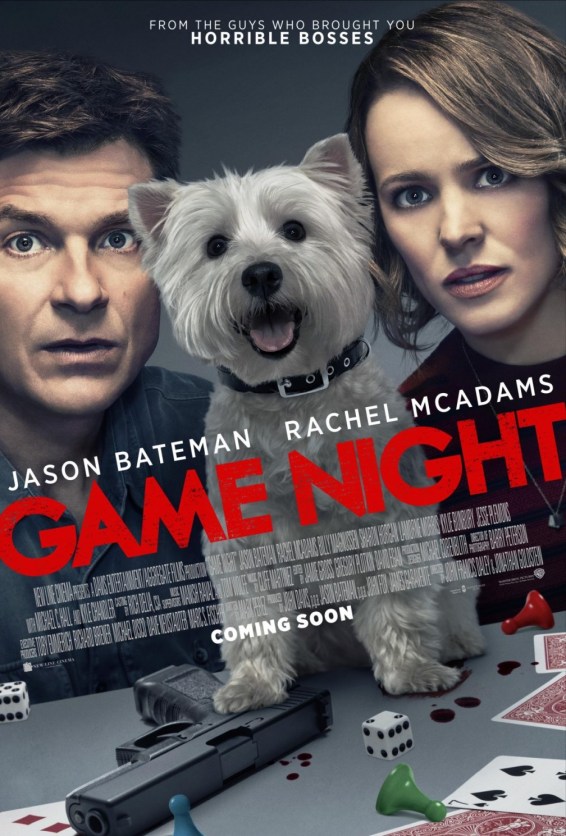
Game Night (2018) – Film Review

Going in initially, I had very little expectations for ‘Game Night,’ as although I mostly enjoyed ‘Horrible Bosses’ (which was written by this film’s directors), I’ve always found most modern comedies to be very hit-or-miss. However, as the runtime continued on, I soon realised ‘Game Night’ was far more than just your disposable comedy flick, as the great cinematography by Barry Peterson and the excellent original score by Cliff Martinez made the film just as stylish as it was entertaining.

Plot Summary: A group of friends who meet regularly for game nights soon find themselves entangled in a real-life mystery when the shady brother of one of them is kidnapped by a group of dangerous criminals…

Right from the opening titles, which are displayed through various falling board game pieces, through to the end credits, which entirely cover a pinboard with names of both the cast and crew (as well as an array of jokes). ‘Game Night’ is constantly brimming with style throughout its story, despite first appearing as nothing more than a straightforward comedy as the film uses its terrific editing to add to the humour at many different points, giving the impression that no corners were cut by the filmmakers when it comes to the filmmaking itself.

Jason Bateman, Rachel McAdams, Kyle Chandler as well as the large supporting cast are all fantastic within their roles, with each member of the cast having decent chemistry with each other and plenty of great comedic moments between them (which is most likely a result of the cast actually taking-part in their own game night prior to filming). Jesse Plemons has without a doubt the film’s best character, in my opinion, as he portrays the game night-obsessed police officer; ‘Gary,’ who is just as creepy as he is hilarious every time he is on-screen. Unlike most modern comedies, the characters throughout the film also get a surprising amount of characterisation, as there are plenty of scenes throughout the story in which the pacing slows down to develop each one of the characters individually, which makes the film more engaging, and is a complete breath of fresh air after so many bland comedies with over-acted goofballs as their protagonists.

The cinematography by Barry Peterson is very creative throughout the film, as in addition to a variety of visually appealing shots, ‘Game Night’ also frames many of its locations as if they are pieces on a game board, almost as if every time the characters arrive at a building, it’s as if they are arriving at a stop whilst playing ‘The Game of Life,’ which is exceedingly inventive. As well as this, the film features a variety of interesting transitions between scenes and even a moment which is filmed entirely within a single-take, both of which I felt really added to the film’s overall visual presentation and enjoyable flow.

Although it doesn’t quite fit every scene, the original score by Cliff Martez is both unique and memorable, as the soundtrack uses a minimalist techno feel to mesh-well alongside the film’s stylistic editing and cinematography. Whether a light-hearted comedic scene or even one of the more tense moments nearing the end of the film, the score itself is brilliant. I’m too surprised by this, however, as this composer has done some phenomenal scores in his past, such as ‘Drive,’ ‘Contagion’ and ‘The Neon Demon,’ to name a few. So, ‘Game Night’ is simply just another great soundtrack to add to his sublime catalogue of work.

The film really only has one major issue for me, which it’s the song choice, as although I understand the film is mostly light-hearted fun, the use of iconic songs, such as ‘Don’t Stop Me Now’ and ‘Quando, Quando, Quando,’ don’t really fit with the film’s tone, and can make the film feel a little cheesy at points. Of course, as the film is a comedy, there is also plenty of jokes that don’t quite hit the mark, but I’d say there are definitely far more that do than don’t in this case, as the film avoids the lazily written gross-out jokes and shock humour that infests a large number of modern comedies.

In summary, it’s fair to say that ‘Game Night’ was definitely a pleasant surprise for me on my initial watch, as I never expected this comedy to be as memorable or as well-crafted as it actually is. Although it’s not perfect due to its unusual song choices and a couple of overly long jokes, ‘Game Night’ is possibly one of the best comedies of the last few years, and while there are better displays of great filmmaking out there, I do feel this film should be higher on many cinephile’s watchlists. Final Rating: 8/10.

game_night_ver4_xlg

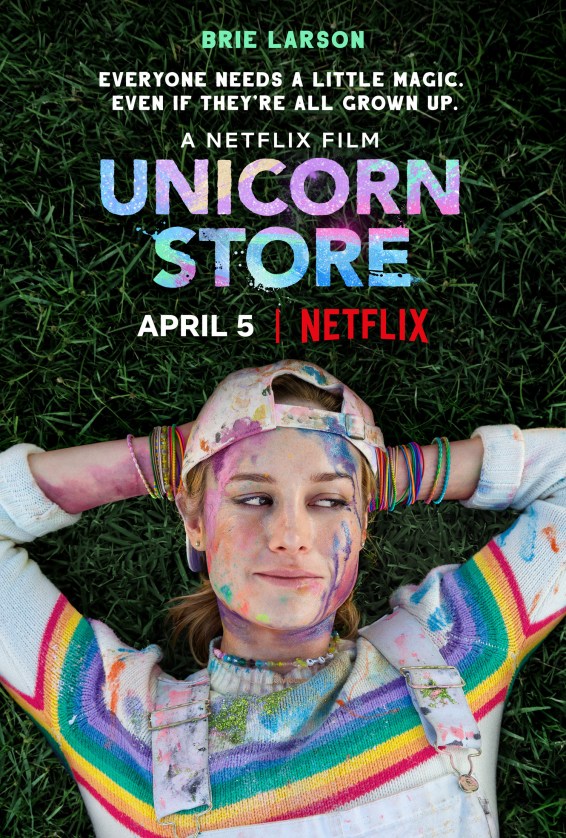
Unicorn Store (2019) – Film Review

Both starring and directed by Oscar-winner Brie Larson, ‘Unicorn Store’ is a light-hearted comedy-drama which attempts to delve into those childhood dreams many people have, but seems to fall very short in more aspects than one. As, aside from a pretty great original score by Alex Greenwald, the film is mostly very bland and forgettable, usually flopping most of the emotional moments and attempts at humour within its fantastical story.

Plot Summary: When ‘Kit’ is forced to move back in with her parents after being kicked out of art school, she takes on a boring office job in an attempt to finally grow up. But, when a mysterious stranger sends her an invitation, she is welcomed into a magical store with the promise of owning her own pet unicorn, her greatest desire as a child…

Personally, I do feel this is one of those films where the lack of experience from the director is a big part in what makes it fail, as although the writing throughout the film is fairly decent. The film’s visuals as well as the weak performances from the cast, leave the film feeling almost as if it’s presentation doesn’t match with the story itself, and whilst I’m definitely not this film’s main target audience, I don’t imagine even young girls could get much out of this less-than-imaginative experience.

Although Brie Larson has given a variety of excellent performances throughout her career, with ‘Room’ and ‘Scott Pilgrim vs. The World’ being the first two that come to mind. Her performance is extremely mixed throughout ‘Unicorn Store,’ as in some scenes she fairly decent, whilst in others, she is quite bland. This could also be due to her character, however, as ‘Kit’ is very irritating throughout the majority of the film, portraying the character as childish and loud in all the wrong ways. The supporting cast of Mamoudou Athie, Samuel L. Jackson, Bradley Whitford and Joan Cusack are serviceable, yet do have their weak moments similar to Larson.

Aside from the bright colour palette which does somewhat help to improve the film’s visuals despite not being as overly colourful as I initially expected. The cinematography by Brett Pawlak is mostly very dull, as the film is overflowing with a variety of boring shots, all displayed through soft hand-held camera techniques, which I actually found quite distracting throughout. This is also the case when it comes to the lighting, as aside from one visually pleasing scene with the unicorn itself nearing the end of the runtime, every scene is usually very white and pale, which is essentially the complete opposite of the story’s underlying theme(s).

Alex Greenwald handles the original score for the film, as already mentioned, and although not an incredible soundtrack by any means, the score is probably the best element of the film for me, as the original score succeeds where the film’s visuals fail, as the soundtrack embraces the more magical childlike tone of the film, utilising what almost sounds like wind chimes and harps to fit effectively alongside the film’s narrative.

Despite the story not quite reaching the heights it could in terms of humour and emotion, I do really like many of the film’s ideas, as the film’s themes of letting go of your childhood and growing up are interesting, and have been explored well before in a variety of Pixar and DreamWorks animated classics. However, ‘Unicorn Store’ seems to not place much emphasis on these ideas aside from a few lines of dialogue from ‘Kit’ herself. Initially, ‘Unicorn Store’ was supposed to be directed by Miguel Arteta, best known for his romantic drama; ‘The Good Girl,’ from 2002, and although I don’t think this director would’ve done an exceptional job with the film. I do feel he could’ve explored these themes better, and possibly even made the film more engaging when it comes to its characters, as this was always one of the stronger aspects of his previous works.

In summary, ‘Unicorn Store’ was pretty much what I expected it to be, whilst I could be a little biased due to my distaste of Brie Larson (mostly as a person rather than as an actress). The film simply isn’t that entertaining throughout, with its bland cinematography and lighting, in addition to some of its irritating characters and mediocre story. ‘Unicorn Store’ just isn’t worth it’s time when there’s plenty of other fantastic films currently available to watch on Netflix. Final Rating: low 4/10.

unicorn_store_xxlg

The Christmas Chronicles (2018) – Film Review

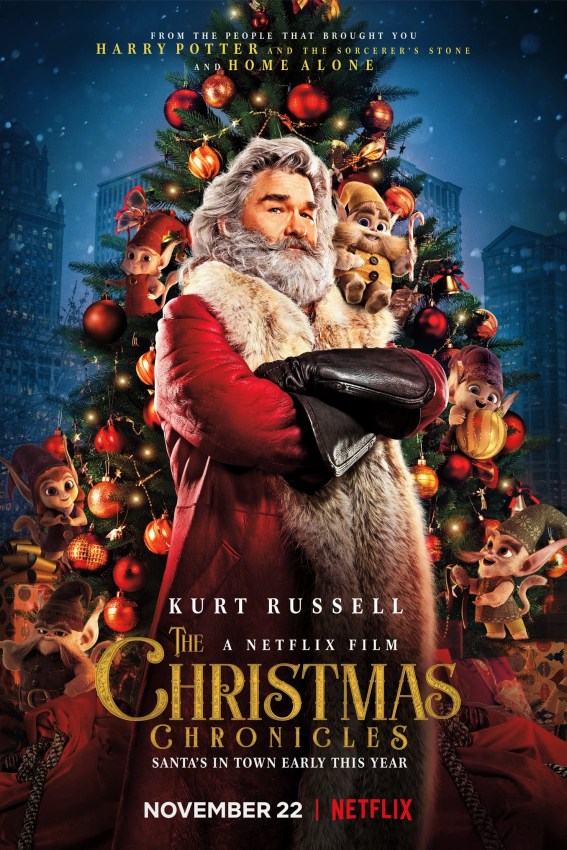
From director Clay Kaytis (The Angry Birds Movie) and producer Chris Columbus comes another Christmas family adventure with ‘The Christmas Chronicles,’ and while the film may be nowhere near as memorable as many other festive classics. I can still see the film being a mostly entertaining ride for families and younger viewers alike.

Plot Summary: When brother and sister; ‘Teddy’ and ‘Kate Pierce,’ are left alone on Christmas Eve, they devise a plan to catch ‘Santa Claus’ on camera, which soon turns into an unexpected journey that most children could only dream of, as they manage to hop aboard ‘Santa’s sleigh and join him on his task of delivering presents all over the world…

Although the two films do differ from each other in many ways, I couldn’t help but notice the similarities between this film and ‘The Santa Clause’ from 1994. As both Christmas flicks focus on characters going on a magical adventure with ‘Santa Claus,’ with them usually having strong themes of family and belief throughout. However, ‘The Christmas Chronicles’ also seems to focus more on exciting set pieces.

Whilst Judah Lewis and Darby Camp portray the siblings decently well throughout the film (aside from the occasional line of dialogue) Kurt Russell is without a doubt the stand out of the cast, as he brings his usual charisma and talent to create a fresh and memorable portrayal of ‘Saint Nick’ himself. This is dragged down by the film’s characterisation, however, as both of the siblings are pretty bland and dull from start-to-finish, as a pleasant little detail, ‘Santa’s list even includes several of Kurt Russell’s real-life grandchildren.

The cinematography by Don Burgess is also mostly generic throughout the film, usually serving its purpose without drawing the audience’s attention away from the action on-screen. Speaking of which, the action sequences throughout the film are handled surprisingly well, from the fast car chase through the streets of Chicago, to ‘Santa’s sleigh soaring through the night sky. The weak CGI throughout the film can detract from some these scenes, however, with ‘Santa’s elves in particular having some very distracting CG effects at points.

The original score by Christophe Beck is decent overall, as while not incredibly memorable, and many could see it as slightly weaker when compared to many of his other soundtracks, such as ‘The Muppets,’ ‘Frozen’ or ‘Ant-Man,’ the score does have a festive and pretty upbeat tone throughout the film’s runtime. ‘The Christmas Chronicles’ even gives us a new spin on the classic song; ‘Santa Claus is Coming to Town,’ as ‘Santa’ shows off some of his style as he sings; ‘Santa Claus is Back in Town,’ in an attempt to add some cheer to those around him.

My main issue with the film is the story’s general cheesiness, as although the film does avoid the occasional Christmas film cliché, the film is still brimming with cheesy lines and scenes throughout the film’s narrative. However, I found this to be a problem mostly around ‘Santa’s elves, as not only did these characters have an awful new redesign, but they seemed to be purely used for the sake of being cute. I also couldn’t help but think the film could’ve been improved if directed by Chris Columbus, as although director Clay Kaytis doesn’t do a terrible job by any means, I feel the director of ‘Home Alone’ (a true Christmas classic for many) could’ve definitely made the film better for what it was.

In summary, ‘The Christmas Chronicles’ is a mostly fun adventure for a film night on Christmas Eve, as while the story isn’t anything we haven’t seen before. Kurt Russell’s memorable performance mixed with some entertaining action scenes and a very festive atmosphere all result in the film being a decent watch. So, maybe check this one out one year if you’re in the need for a festive fantasy adventure, just don’t have your expectations too high. Final Rating: 6/10.

3xGoeE32Dk3KlDADbb8DkYDx1Y7

We’re the Millers (2013) – Film Review

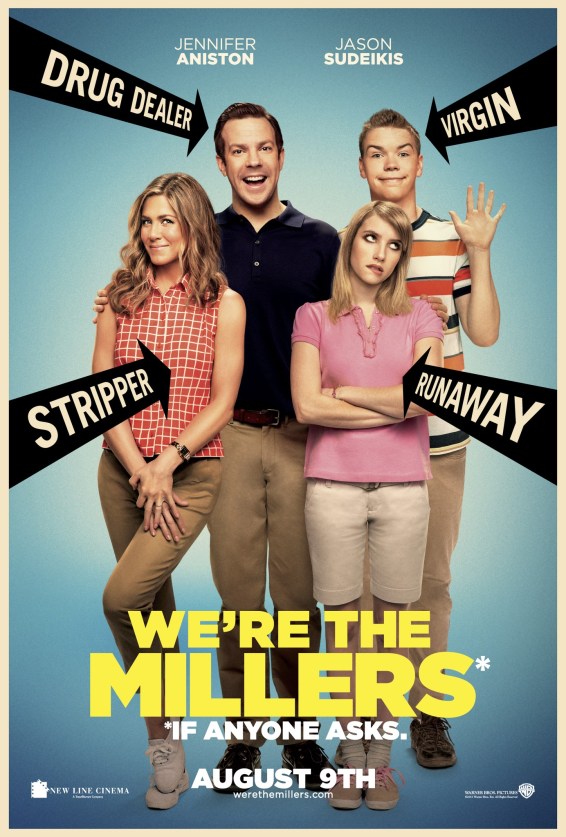
Even with a mostly standard plot for a comedy flick, I ended up enjoying ‘We’re the Millers’ more than I initially expected, as the entire cast (especially Jason Sudeikis and Jennifer Aniston) have excellent chemistry with each other, resulting in the majority of the humour throughout the story working quite well, despite the film having a few noticeable flaws throughout its runtime.

Plot Summary: When a middle-aged pot dealer is tasked with moving a huge shipment of weed into the United States from Mexico for a large pay packet, he puts together a fake family of various people he knows from his flat in an attempt to make it over the border…

Comedy as a genre has always been subjective, as everyone obviously has their own taste when it comes to what they find amusing. But, for the most part, I would say enjoyed the humour throughout the runtime, as aside from a few moments where the joke was simply one character saying something disgusting or incredibly stupid out loud to another group of characters (as I personally find this kind of comedy a little lazy), I think most of the jokes land. However, I also feel a few more jokes hidden within the background of shots would’ve also added to the film in more ways than one.

Jennifer Aniston, Jason Sudeikis, Emma Roberts and Will Poulter all portray random people thrown together in the hope of creating this false family, and I would say they work well together throughout the film. Always coming across as a very dysfunctional yet still likeable group, with all of the cast portraying very different personalities without losing any comedic timing. Interestingly, ‘We’re the Millers’ is actually the second film in which Jennifer Aniston plays a character who is recruited to create a fake family, the first being the comedy flick; ‘Just Go With It,’ in 2011.

Whilst the film does have the occasional appealing shot, the cinematography by Barry Peterson isn’t anything spectacular, as the film has mostly generic cinematography for a comedy. However, the original score by Ludwig Göransson and Theodore Shapiro is definitely one of the better elements of the film, as the soundtrack fits the tone of the film perfectly, utilising an acoustic guitar which always manages to make the film feel interesting enough to be somewhat memorable. Considering the first composer has worked on films, such as ‘Creed’ and ‘Black Panther,’ however, this shouldn’t be that much of a surprise.

My main criticism of the film is the overall lack of jokes or comedy set pieces based around the idea of the characters being a fake family, as although there are a few jokes throughout the narrative based around this idea, I never quite felt the film made full use of this concept, and usually just fell back onto your usual comedy writing. I also personally felt the film’s pacing is far too quick, as the film almost rushes through scenes within the story in order to quickly get to another gag, rather than having them happen alongside each other. In addition to this, I also felt more focus on some of the more emotional or serious scenes could’ve really helped build up tension and make the story more engaging.

In summary, ‘We’re the Millers’ is a serviceable comedy, as while I don’t think the film is fantastic by any means. I enjoyed myself with this simple comedy for what it attempted to be, as although I still think the cinematography and some of the humour could be improved, I found the film to be a mostly entertaining ride and a pretty easy watch due to its fun story and brilliant cast. Final Rating: low 6/10.

were_the_millers_xxlg