Adult Life Skills (2016) – Film Review

“I Think We Should Get Badges for Adult Life Skills; Changing a Car Tyre, Sewing, Sending Something Back at a Restaurant, Knitting…” – Brendan

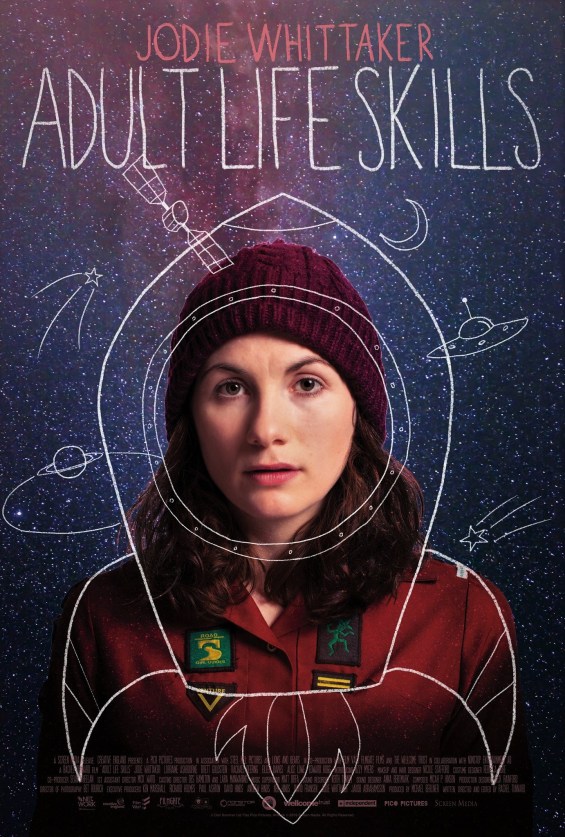
Based on the BAFTA-nominated short; Emotional Fusebox, which premiered at the London Film Festival in 2014. 2016’s Adult Life Skills is the directorial debut of writer and director Rachel Tunnard, who was primarily an editor before writing and directing the original short film. And, while Tunnard’s lack of experience in these dual roles is evident, this low-budget coming-of-age comedy-drama hardly breaks new ground in its respective genres. The endearingly quirky story, distinct British charm, and tremendous performance from Jodie Whittaker all make Adult Life Skills well worth a watch.

Plot Summary: Deeply grieving from the death of her twin brother, twenty-nine-year-old Anna spends her days living in her mother’s shed, retreating into herself as she makes videos using homemade props and her thumbs as actors. But, on the eve of her 30th birthday, Anna meets a troubled little boy going through the same life-altering experience she did, a boy who may be the answer to getting her out of her year-long slump…

Originally titled; How to Live Yours (which has a reference in the film via the name of Anna’s website), Adult Life Skills first appeared at a film festival, just as its predecessor did. Only this time around, it was the 2016 Tribeca Film Festival, where Rachel Tunnard quickly won one of the top awards, the Nora Ephron Prize for Best Female Director. Yet, in my opinion, much of the allure of Adult Life Skills comes from its screenplay rather than Tunnard’s direction, as the dialogue is continuously both witty and dramatic, balancing moments of laughs and tears without ever feeling disjointed or unnatural, amplifying the film’s feeling of solace and upbeat tone thanks to its homespun, playful aesthetic.

Jodie Whittaker, who reprises her role from Emotional Fusebox, portrays Anna magnificently, rapidly jumping from one emotion to another as Anna’s method of grieving often manifests in her hiding away from her own life, locking herself inside her mother’s shed as she cherishes her brother’s old clothes and watches videos the pair made together during their younger days. Essentially, Anna is a character whose growth has been stunted by grief, and the story explores this concept of a person growing into adulthood with a piece of their identity personified in a lost sibling. This brilliant idea is only enhanced by Whittaker’s sublime performance. Needless to say, it takes her mother’s grumbling, her grandmother’s wisdom, and her best friend’s guidance to help bring her back into the real world, restoring her life to what it once was, and the supporting cast of Lorraine Ashbourne, Eileen Davies and Rachael Deering all do a great job of bringing these characters to life, despite some of the side characters being woefully underdeveloped.

One advantage Adult Life Skills has over many other British stories is its setting, as the film truly feels as if it couldn’t be set anywhere else. Breaking away from the typical locations where stories within the United Kingdom tend to be set, such as London, or less commonly, Manchester or Birmingham, in exchange for the remote Yorkshire countryside, a unique location that even helps to redeem the film’s overreliance on hand-held techniques when it comes to the cinematography by Bet Rourich, as Yorkshire has more than its fair share of natural beauty, even when the weather is rather gloomy.

Although there is no original score for the film (most likely due to budgetary restrictions), Adult Life Skills features several songs, both well-known and obscure. From Jesus Came to My Birthday Party to You Lost Sight of Me, Champions of the River Nile and Here I Go Again, every song that can be heard throughout the runtime fits the tone remarkably well, never once feeling inappropriate or unsuitable to the specific scene they are featured within.

In addition to being a comedy-drama, Adult Life Skills makes a few (unsuccessful) attempts towards being a romantic-comedy, as one of Anna’s close friends, the soft-spoken estate agent, Brendan, portrayed by Brett Goldstein, persistently speaks to Anna, trying to impress her with his comforting charm and handmade gifts. His efforts are ultimately pointless, however, as Anna’s jaded reactions to his kind gestures are due to Anna believing Brendan is homosexual. And, whilst this misunderstanding does result in a winsome relationship, this subplot suffers due to not being given enough attention, as the story instead places far more emphasis on Anna’s relationship with her mother and the young boy, Clint, who is surprisingly well-portrayed by the then-eight-year-old Ozzy Myers.

In summary, Adult Life Skills is a film that wears its oddball eccentricities on its sleeve, tackling weighty themes of grief, loneliness, and dealing with one’s emotions, while simultaneously maintaining its optimistic outlook. In many ways, Adult Life Skills is an undemanding film for those in need of something ‘comforting’ to watch. An easily watchable comedy-drama that is sure to put a smile on most viewers’ faces, despite its overly familiar ideas. Still, there’s no denying that Jodie Whittaker is the best thing about Adult Life Skills, as whenever the screenplay is lacking, Whittaker appears on-screen with confidence, fleshing out Anna as a sympathetic character and ensuring the audience remains emotionally invested in what is occurring narratively. Rating: low 7/10.
adult_life_skills_ver2_xxlg

Please Stand By (2017) – Film Review

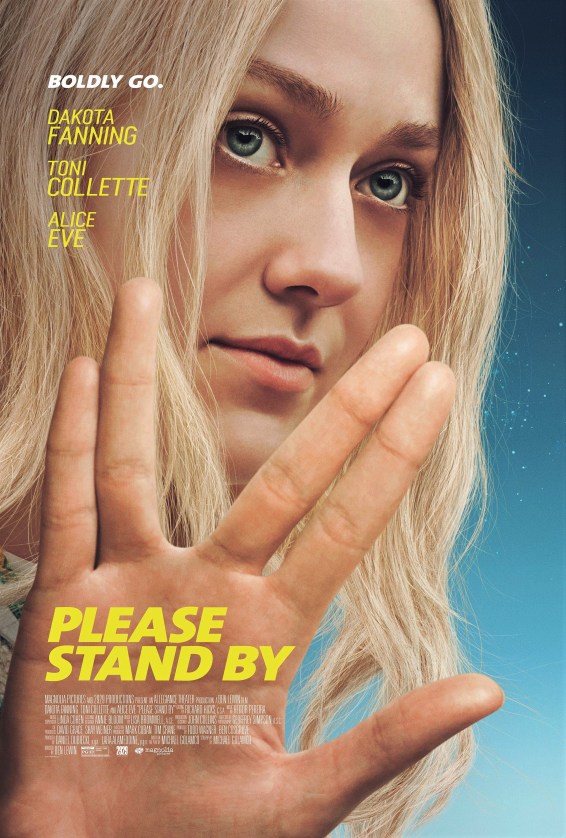
While in years gone by many films surrounding the subject of autism have been seen as overly simplistic or even offensive, with Hollywood often treating characters with ASD like an immeasurable burden upon their entire family, every now and then we receive a film, which presents its autistic character (or characters) with respect and authenticity, 2017’s ‘Please Stand By,’ being one such example. Directed by Ben Lewin (Georgia, The Sessions, Falling for Figaro) and based on the 2008 play of the same name by Michael Golamco, ‘Please Stand By’ may hit many familiar beats for a coming-of-age comedy-drama, but with an excellent cast and a subtle sci-fi twist, thanks to its focus around all things ‘Star Trek,’ ‘Please Stand By’ manages to keep its story diverting throughout its brief runtime.

Plot Summary: When ‘Wendy Welcott,’ a young autistic woman with a gift for writing, learns that Paramount Pictures is holding a screenwriting competition to celebrate ‘Star Trek’s 50th anniversary, she swiftly writes her own screenplay for submission. But, on account of her condition and a great deal of ignorance from those around her, ‘Wendy’ is unable to submit her screenplay in time. So, seeing no other option, ‘Wendy’ decides to leave her group home in Oakland and travel to Los Angeles to deliver her screenplay in person…

Although the film’s screenplay (which is actually written by Michael Golamco) rarely breaks the mould of your typical coming-of-age narrative, ‘Please Stand By’ still has more than its fair share of heartwarming moments. And, whilst some may argue that the film’s continuously upbeat tone robs the story of any real stakes, ‘Please Stand By’ isn’t really a film that aims to paint an incredibly dramatic tale of self-realisation, family and belonging, but instead a film that effectively balances all of those themes through a charming and light-hearted story of a woman embarking on a journey across California in dedication of her favourite science fiction franchise.

In what would’ve been the film’s most criticised performance should it have been executed poorly, Dakota Fanning’s performance as ‘Wendy’ is one of the more thoughtful and accurate portrayals of on-screen autism in quite some time. From her social awkwardness to her flailing arm movements and stiff dialogue readings, Fanning successfully captures the functional spectrum of autism in a delightful and intriguing expression of independence and passion, as due to ‘Wendy’ having few experiences outside of her sheltered routine, the road-trip she embarks upon makes her feel truly unconstrained for the first time in her entire life, both for better and for worse. Meanwhile, her caregiver and older sister wonderfully portrayed by Toni Collette and Alice Eve, respectively, attempt to track her down and bring her home, fearing for her safety and greatly doubting her abilities.

When it comes to visuals, despite the ceaselessly vibrant colour palette, the cinematography by Geoffrey Simpson hardly ever veers away from immobile close-ups and/or mid-shots. But, where the camerawork truly shines is during the scenes where the film attempts to recreate shots from classic ‘Star Trek’ episodes, as the Mediterranean climate of Los Angeles is quickly swapped out for the strange alien worlds of ‘Wendy’s imagination, all the while we hear ‘Wendy’ as she reads excerpts from her ‘Star Trek’ screenplay through calming voice-over.

In a similar sense to the visuals, the original score by Heitor Pereira rarely does anything exceedingly innovative as far as soundtracks go, with the majority of the runtime relying more on the use of lesser-known indie songs, such as ‘Take Me as I Am,’ ‘All or Nothing’ and ‘Waves.’ Yet, the score once again becomes much more interesting once we are transported into ‘Wendy’s screenplay, as the original score morphs into something that wouldn’t seem out-of-place in an actual ‘Star Trek’ episode.

Along with recreating shots, ‘Please Stand By’ also pays homage to ‘Star Trek’ history in nearly every aspect of its production. Firstly, the name tags of ‘Wendy’s work colleagues use the same font as the opening titles of ‘Star Trek: The Original Series.’ Secondly, the mountain ranges seen in the background of the screenplay sequence are the Vasquez Rocks located in Agua Dulce, California, this area has been an extensively used location for many ‘Star Trek’ films and series, but, most notably, for the 1966 episode; ‘Arena.’ Lastly, the suits worn by ‘Captain Kirk’ and ‘Spock’ during this same sequence are similar to suits worn by the characters in the 1968 episode; ‘The Tholian Web,’ visibly proving that the filmmakers did their research when it came to the franchise and its ardent followers.

In summary, whilst Golamco’s admittedly predictable screenplay does place the film more in the mid-range of coming-of-age comedy-dramas, by letting the talented actors simply do what they do best, director Ben Lewin does make ‘Please Stand By’ palatable, even in its most commonplace moments. And, although I obviously can’t speak for everyone in regard to how well the film truly portrays autism, given my position, in my eyes, this low-budget flick handles the potentially challenging concept adroitly, displaying the challenges of a life with ASD without ever devolving into a exaggerated collection of tics and quirks, insulting those who may be on the spectrum. Final Rating: 7/10.

please_stand_by_xxlg

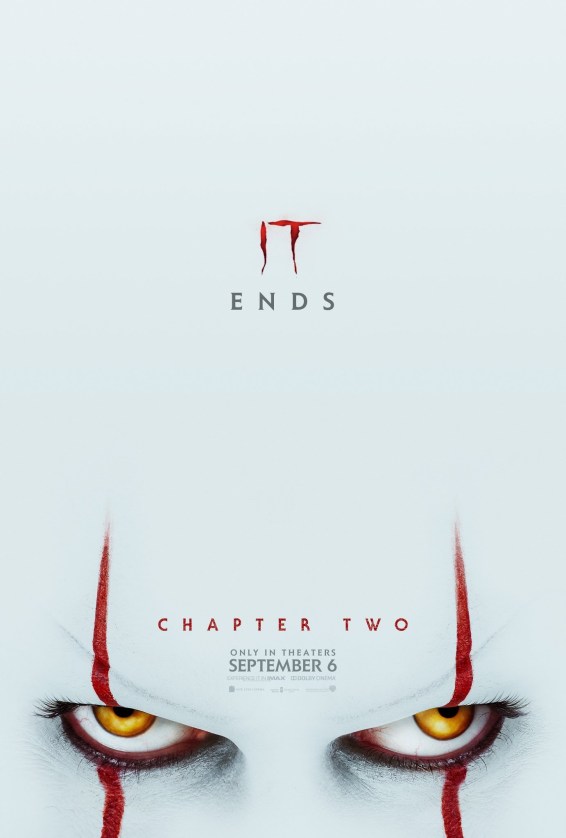
It: Chapter Two (2019) – Film Review

Once again directed by Andy Muschietti, and once again based on the iconic novel by Stephen King (only this time, the adult portions of the story). ‘It: Chapter Two’ is, unfortunately, somewhat of a downgrade from chapter one, as in spite of its excellent cast and continuously impressive visuals, ‘It: Chapter Two’ proves that bigger doesn’t always mean better when it comes to sequels, as the film’s overreliance on giant CG monsters along with its inconsistent tone and unreasonably long runtime of two hours and fifty minutes demonstrate how this spine-chilling follow-up frequently overindulges in its source material.

Plot Summary: After being defeated by ‘The Losers Club’ many years ago, the demonic clown, ‘Pennywise,’ returns twenty-seven years later to terrorise the town of ‘Derry’ once again. And, with the childhood friends who have long since gone their separate ways, ‘Mike Hanlon,’ the only member of the group to remain in ‘Derry,’ calls his friends home for one final stand…

Jumping from character to character, location to location, many of ‘It: Chapter Two’s biggest faults appear within its screenplay, as rather than focusing on a straightforward narrative like the original film, this time around the film revolves most of its plot around a bootless errand of a story where ‘The Losers’ search all over ‘Derry’ to acquire various artefacts from their youth to perform ‘The Ritual of Chud,’ which will supposedly destroy ‘Pennywise.’ The problem is that much of this setup is, ultimately, meaningless, as almost every character receives their own segment in which they simply recall moments from their childhood, which often just recap scenes from the first film or leave the audience bloated as a result of the huge amount of exposition they have to digest.

Yet, it has to be said that James McAvoy, Jessica Chastain, Bill Hader, Isaiah Mustafa, Jay Ryan, James Ranson and Andy Bean all portray the older versions of their characters remarkably, as despite the characters now being much older, each actor/actress recreates the younger actors’ body moments and manner of speaking flawlessly. ‘It: Chapter Two’ also never forgets to reinforce the characters’ trauma, as even though ‘Bill’ is a successful writer and ‘Ben’ has remodelled himself into a muscular architect, etc. Each member of the group is still haunted by their past, or at least, what they can remember from it. Of course, Bill Skarsgård also returns as ‘Pennywise.’ While his performance does occasionally venture into goofy territory due to how over-the-top he becomes, Skarsgård is still endlessly entertaining as the malevolent clown.

This time around, the cinematography is handled by Checco Varese. Still, you’d be forgiven for not knowing that ‘It: Chapter Two’ had a different cinematographer, as the film is just as visually pleasing as its predecessor, with some elegantly orchestrated transitions between the characters’ incarnations thrown in for good measure. The huge increase in the budget also comes across through the film’s visuals, as ‘It: Chapter Two’ feels much grander in scale and presentation alike. However, where the sequel stumbles is with its scares, as instead of utilising ‘Pennywise’s mimicking ability to transform into every character’s greatest fear, the film lazily depends on towering CG creatures, which usually have little relation to the characters or the story at large, and although a number of the monsters are interesting design-wise, it doesn’t stop them from feeling out of place.

Benjamin Wallfisch’s original score effectively continues on from that of the first film, as tracks, such as ‘Losers Reunited,’ ‘Nothing Lasts Forever,’ and ‘Stan’s Letter,’ are calming and beautiful, whereas tracks, like ‘Hall of Mirrors’ and ‘Very Scary,’ are loud and intense to add to the film’s horror. The main issue with the soundtrack is in its lack of distinction from the first film’s score, and while I understand ‘It: Chapter Two’ is essentially just the second part of a larger story, the original score does little to set itself apart, with some tracks sounding near-identical to others.

Even though ‘It: Chapter Two’ is trying to accomplish a great deal within its lengthy runtime, spending a large portion of its story in flashbacks and dream sequences as it attempts to adapt everything not already covered in the first film. The sequel is saddled with an even bigger obstacle; constructing a suitable climax for the story, as although its well-known by this point that Stephen King often has difficulty writing satisfying endings for his novels (a criticism that the film repeatedly mocks), ‘It: Chapter Two’ is faced with this exact task, and even if the story doesn’t completely collapse under the weight of its disappointing finale, its admittedly still lacklustre, especially when the final act veers into metaphysical surrealism.

In summary, ‘It: Chapter Two’ is unquestionably an ambitious horror sequel, with a renowned cast, spectacular set pieces and numerous exciting moments; the film truly goes all out. But, does it work? Well, not entirely, but it’s a diverting horror blockbuster, nonetheless. And, whilst I feel that by splitting the story of ‘It’ into two films, Muschietti has done a gratifying job of commanding the massive blimp that is King’s extensive novel, most of the issues with ‘It: Chapter Two’ boil down to its story and structure, which end up leaving the film a mere pleasurable romp rather than the ghoulish denouement it could have been. Final Rating: 6/10.

it_chapter_two_ver3_xxlg

Easy A (2010) – Film Review

Taking inspiration from romantic coming-of-age comedies, like ‘Sixteen Candles,’ ‘Clueless,’ and ‘Mean Girls,’ ‘Easy A’ released in 2010, certainly has its ups and downs, as despite Emma Stone leading the film with an extremely lively and charismatic performance, it’s hard to ignore the film’s immensely corny tone and many, many moments of humour that fall completely flat. Still, for those looking for a light-hearted morality tale about how a small lie can ramify out of control, ‘Easy A’ should suffice.

Plot Summary: After being prompted by her best friend to spill details of her boring weekend, ‘Olive Penderghast,’ a clean-cut seventeen-year-old high-schooler, decides to spice things up by telling a little white lie about losing her virginity. But, when the high school busybody overhears their conversation and spreads it all over campus, ‘Olive’ suddenly becomes popular for all the wrong reasons…

Written by Bert V. Royal and directed by Will Gluck (Friends with Benefits, Annie, Peter Rabbit), ‘Easy A’ doesn’t strive too far from what we usually expect to see in our teenage romantic-comedies, taking place primarily in high school and focusing on the rippling effects of ‘Olive’s constant lies and her growing popularity after she fully embraces her new persona as the school tart. And, while I wouldn’t call ‘Easy A’s portrayal of an American high school realistic per se, many of the teenage characters we meet throughout the story are purposely represented as over-the-top stereotypes or even just one-note jokes through the film’s witty writing, which does vary from being hilarious to tiresome, depending on the scene.

Possibly being the biggest role of her career at the time of the film’s release, Emma Stone’s performance is undoubtedly the film’s finest aspect, as Stone truly brings her all to the role, portraying ‘Olive’ with such self-assurance that she elevates the game of every actor/actress around her. Harbouring perfect comic timing and a strong yet not irritating playful attitude that ensures ‘Olive’ will remain a likeable and intelligent character for audience members to follow. Then there is the supporting cast of Amanda Bynes, Penn Badgley, Stanley Tucci, Patricia Clarkson, Thomas Haden Church and Lisa Kudrow, who all attain at least one or two amusing moments even if many of their characters serve little-to-no purpose within the actual narrative.

With its story being set in California, ‘Easy A’ does utilise it’s West Coast setting for a handful of attractive wide shots. But, aside from these few shots, nearly all of the film’s cinematography by Michael Grady fails to display anything overly interesting or creative. However, with that said, the film does flaunt its opening titles in a pretty imaginative fashion, having every cast/crew credit placed inside the shots themselves, whether that’s on the ground where characters are walking or placed on signs above the character’s heads, which is a fairly inventive way to avoid having each piece of text simply appear at the bottom of the screen.

Although the original score by Brad Segal is barely noticeable, ‘Easy A’ fills a large majority of its short runtime with a huge assortment of various pop songs, from ‘Change of Seasons’ to ‘Cupid Shoot Me,’ ‘Trouble Is a Friend,’ ‘Bad Reputation,’ and, of course, ‘Pocketful of Sunshine’ by Natasha Bedingfield, which essentially becomes a running joke within the film as a result of the song’s catchy nature. Yet, regardless of how widespread or beloved many of these songs may be, the sheer amount of licensed music that appears in the film is almost overwhelming, and when combined with the film’s editing, soon begins to feel quite choppy when rushing from song to song.

While the plot of ‘Easy A’ does parallel the romantic novel; ‘The Scarlet Letter,’ in more ways than one, ‘Easy A’ isn’t exactly a film that’s subtle about its influences. So, just as the film embraces its similarities to that story with ‘Olive’ continuously mentioning both the novel and film in addition to wearing the scarlet letter; ‘A,’ on her clothes, ‘Easy A’ also takes clips from many of the films it is directly inspired by. In particular, when it comes to John Hughes’ iconic filmography, as everything from ‘The Breakfast Club’ to ‘Ferris Bueller’s Day Off,’ to the previously mentioned; ‘Sixteen Candles,’ is not only referenced but eventually, even sampled into the film during a clip montage, which, while unique, I couldn’t but think is a just a clever tactic of escaping criticisms regarding the film’s lack of originality in some areas.

In summary, whilst ‘Easy A’ owes an enormous debt to older (and in all honesty, better) teenage romantic-comedies, it is enjoyable in bit-size chunks, particularly for those who are fond of Emma Stone. As, in many ways, ‘Easy A’ was unknowingly a showcase for the actress, alluding to her future career in Oscar-winning films, such as ‘La La Land’ and ‘The Favourite.’ And, even though I’m certain it’s underlying cheesiness and subplots that feel like afterthoughts will annoy some, in my opinion, ‘Easy A’ has its moments, but it’s unlikely to leave a strong impression. Final Rating: low 6/10.

easy_a_xxlg

Moonlight (2016) – Film Review

Directed by Barry Jenkins (Medicine for Melancholy, If Beale Street Could Talk) and based on the unproduced stage play; ‘In Moonlight Black Boys Look Blue’ by Tarell Alvin McCraney. ‘Moonlight’ has been heavily praised since its initial release in 2016, being just one of the films from adored production company A24, who also brought us modern indie classics, like ‘Hereditary,’ ‘Waves,’ ‘Eighth Grade,’ ‘The Witch’ and ‘A Ghost Story,’ just to name a few. And, although ‘Moonlight’ may not be the company’s greatest film to date, it is certainly one of the finest examples of visual storytelling and subtle characterisation in recent memory.

Plot Summary: Through three different time periods, young adolescence, mid-teen and young adult, African-American; Chiron, grapples with his identity and sexuality as he grows up in Miami, his journey to manhood being guided by the kindness, support and love of the community that helped raise him…

In addition to receiving almost universally positive reviews, ‘Moonlight’ also won three Oscars for Best Picture, Best Screenplay and Best Supporting Actor in 2017. And, with the film only having a budget of around £1.1 million, ‘Moonlight’ has the lowest budget of any Best Picture winner since ‘Rocky’ in 1976, which cost only £820,000. However, even with this smaller budget, director Barry Jenkins and writer Tarell Alvin McCraney always had a clear vision as to what the film would be, as both men had similar childhood experiences living in Miami, with mothers who had both struggled with drug addiction. So, it was decided early on to replicate those experiences, with roughly 80% of the film being shot in the same neighbourhood the pair originally grew up.

Alex R. Hibbert, Ashton Sanders and Trevante Rhodes portray ‘Chiron’ across the three different time periods of his life, and all do a great job in spite of them not sharing many of the same mannerisms outside of ‘Chiron’s manner of speaking, yet this doesn’t stop the trio from still making ‘Chiron’s quiet and sheepish personality shine. The supporting cast of Mahershala Ali, Naomie Harris, Janelle Monáe and André Holland, are all also fantastic, but with all four being such skilled actors who have given few bad performances throughout their careers, it was unlikely this indie drama would ever be an exception, it’s just a shame their characters aren’t featured more within the narrative.

Despite a large amount of James Laxton’s cinematography consisting of shaky hand-held shots, the film’s camerawork does allow for plenty of movement, as the camera rarely remains still during conversations between characters, making many of the story’s dramatic moments far more visually interesting and giving each scene a consistent flow through the many revolving shots. Additionally, the film also utilises its cinematography to reflect ‘Chiron’s emotional state at many points, combining with the film’s original score for some very impactful story beats. All of this working in synch with the film’s bright colour palette and smooth editing, which both make superb use of the beautiful setting of Miami.

Another masterful and memorable aspect of ‘Moonlight’ is its original score by Nicholas Britell, as the film has a very diverse yet gentle score with tracks ranging from orchestral to more piano-focused, as Britell decided to ‘Chop and Screw’ the orchestra to create a new kind of sound, this technique can be seen throughout the tracks; ‘The Middle of the World,’ ‘Chiron’s Theme’ and ‘Chef’s Special,’ with director Barry Jenkins stating that he always wanted the film’s score to be distinctive, as he actively tried to avoid the cliché of Black-lead films featuring exclusively hip-hop soundtracks.

Much of ‘Moonlight’s story was also inspired by Barry Jenkins’ own childhood in Miami, where he was surrounded by lush green grass and stunning golden sunsets, yet also lived in a neighbourhood where some tragic events took place, declaring his childhood; “A Beautiful Struggle.” And, whilst the film’s slow pacing allows this story to be fully explored, this shouldn’t put viewers off, as the narrative doesn’t move along at a brutally slow pace, only slow enough to fully immerse its events/characters in realism. Then, of course, there is the film’s visual/minimalist storytelling, which is some of the best executed I’ve seen in a long-time, as the film hides many small visual/audio details for those paying close attention, presenting its themes of embracing yourself, addiction and masculinity in such a fashion that I feel different audience members will interpret the story in their own way.

In summary, ‘Moonlight’ is a prepossessing coming-of-age story, even if it isn’t one of the best films A24 has to offer, as while the film is still an incredibly entertaining and well-written drama with an equally well-crafted original score and some creative cinematography to boot. A24 simply has such a vast and exceptional range of indie films to choose from, as the production company is never hindered by genre, style or tone for projects they green-light. But, if you enjoy dramas or are a lover of Barry Jenkins’ other work, then ‘Moonlight’ will surely be a captivating watch followed by a fascinating discussion, just be sure to give the film your full attention. Rating: 8/10.

moonlight_ver2_xxlg

The Perks of Being a Wallflower (2012) – Film Review

Dealing with heavy themes of loneliness, mental health and suicide, ‘The Perks of Being a Wallflower’ may not astonish when it comes to its visuals. Yet, through its strong performances, heartfelt story and well-written screenplay (aside from one or two cliché lines), the film soon becomes a very sincere and captivating adaptation of the acclaimed coming-of-age novel many grew up with when it released in 1999, now being seen as one of the best teenage dramas in recent years.

Plot Summary: Fifteen-year-old; ‘Charlie,’ a socially awkward teenager heading into his first year of high school, used to watching life from the sidelines, ‘Charlie’ soon discovers the joys of friendship, love and music as the free-spirited; ‘Sam,’ and her stepbrother; ‘Patrick,’ open his eyes to the real world. But, when his friends prepare to leave for college after graduating high school, ‘Charlie’s inner sadness threatens to shatter his newly-found confidence…

In a rare scenario, the film adaptation of ‘The Perks of Being a Wallflower’ is not only based on the novel of the same name by Stephen Chbosky, but is actually written and directed by Chbosky himself. As, originally, beloved writer-director John Hughes, the comic genius behind; ‘The Breakfast Club’ and ‘Sixteen Candles,’ amongst many other ’80s teen flicks, was intended to direct the adaptation, initially wanting to make the film into more of a dark comedy with Shia LaBeouf set to play ‘Charlie,’ Kirsten Dunst as ‘Sam,’ and Patrick Fugit as ‘Patrick.’ But, with Hughes sudden death in 2009 stalling the project, his screenplay was eventually scrapped as he’d not completed it before his passing, leaving Chbosky to take the reins.

Throughout the entirety of the film, the central trio of friends are portrayed wonderfully by Logan Lerman, Ezra Miller and Emma Watson, in one of her first roles following the end of the ‘Harry Potter’ series, as each member of the young cast display plenty of range with their respective characters receiving an almost absurd amount of characterisation alongside, resulting in all three of the central protagonists soon forming a real bond with the audience through their lovable yet realistic portrayals of high school teenagers. Well-known comedy actor Paul Rudd also appears within the film as ‘Mr. Anderson,’ using his natural charisma to portray a genuinely kind-hearted teacher, guiding ‘Charlie’ to what he believes is his future career as a writer.

The film’s cinematography by Andrew Dunn is noticeably where the filmmaking dips in quality, as despite the camerawork occasionally allowing for some interesting framing, such as when ‘Charlie’ is framed alone with only bare walls surrounding him, visually presenting him as an outcast due to his anxiety when interacting with others. Most of the film’s cinematography feels fairly mundane, with the colour palette, in particular, seeming very confined, always utilising quite warm/calming colours regardless of what’s happening within the narrative. With that said, near the end of the runtime, the film does manage to impress with its editing as ‘Charlie’ begins to suffer from a panic-attack, represented through the film cutting rapidly between an array of previous scenes, ensuring a feeling of being overwhelmed within any viewer whilst watching. 

From iconic songs, such as: ‘Heroes’ and ‘Come on Eileen,’ to the beautifully somber original score by Michael Brook. The entire soundtrack for ‘The Perks of Being a Wallflower’ is both graceful and immensely underappreciated, capturing the film’s many alternating tones, whether that’s its unrelenting isolation, or its upbeat bliss. But, my personal two favourite tracks have to be ‘Charlie’s First Kiss’ and ‘Shard,’ a pair of tracks that are both truly touching pieces of music, evoking emotion in any listener in spite of their simplicity.

Another aspect of the film I adore is how it represents high school, as while many coming-of-age flicks usually lean into the idea of high school being an often chaotic, but satisfying experience, ‘The Perks of Being a Wallflower’ never glorifies school, refusing to represent it as either a positive or negative place. This all backed up, of course, by the story’s interesting themes which the film handles with care, never overemphasising it’s concepts in a similar fashion to the source material. Also, in line with the original novel is the film’s nostalgic 1990s setting. Yet, with the exception of the numerous mix-tapes the characters listen to, you’d be forgiven for being unaware that the film even takes place within this time-period, as it’s never mentioned nor plays into the film’s style.

In summary, ‘The Perks of Being a Wallflower’ is deserving of the praise it receives, as while the film’s uninspired cinematography does leave some room for improvement, for a directorial debut, Stephen Chbosky really knocks it out of the park here, with some brilliant performances and very underrated original score, the film is truly an adaptation to be admired. And, regardless of whatever time-period its story is set within, many of its themes/messages are timeless, and I personally believe this is what any other films focusing on troubled teenage characters should strive to be. Final Rating: 8/10.

perks_of_being_a_wallflower_xxlg

Super 8 (2011) – Film Review

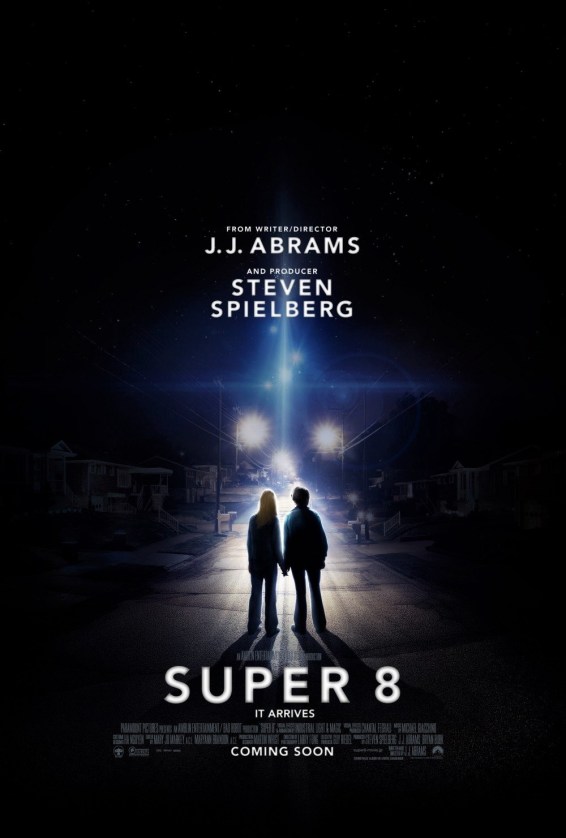
Five years before ‘Stranger Things’ hit our Netflix accounts, director J. J. Abrams (Mission Impossible III, Star Trek, Star Wars: Episode VII – The Force Awakens), tried his hand at creating an ’80s sci-fi throwback with ‘Super 8.’ While the film did get mostly positive reviews from both critics and audiences alike upon its initial release, I’ve never been a huge fan of this science fiction flick, with many strange decisions at play in addition to its overreliance on borrowing story elements from classic films of the 1980s. ‘Super 8’ has always seemed more like simple pandering rather than an enjoyable and nostalgic throwback.

Plot Summary: During the summer of 1979, a group of young friends making a short zombie film with their Super-8 film camera are witnesses to a devastating train crash. Soon after, the group find themselves investigating the subsequent unexplained events throughout their small town…

Even with legendary director Steven Spielberg on board as a producer, ‘Super 8’ mostly lacks the fun tone many of Spielberg’s classics usually overflow with, taking itself pretty seriously aside from a few short moments. Although ‘Super 8’ may not feature this aspect of Spielberg’s work, however, the film does utilise many different ideas from his filmography, as while most throwbacks do usually contain a few story elements taken from the films they are inspired by, ‘Super 8’ begins to feel a little derivative at points, eventually developing a plot which feels almost identical to ‘E. T. the Extra-Terrestrial’ and ‘Close Encounters of the Third Kind,’ without much experimentation.

Although Joel Courtney, Elle Fanning, Gabriel Basso, Riley Griffiths, Ryan Lee and Zach Mills all do a great job at portraying their young characters, the writing throughout the film definitely has room for improvement, as many of the younger characters never quite manage to become incredibly amusing or likeable, with most of them receiving barely any development at all. Following this, as the film’s narrative becomes more tense and dangerous nearing its end, the group’s frustration and panic begins to surface, which although realistic, does result in them becoming rather irritating after a while due to their constant screaming and arguing. Kyle Chandler also makes an appearance within the film as ‘Jackson Lamb’ one of the group’s parents, who does give a decent performance as a strict yet caring father, even with his limited screen-time.

The cinematography by Larry Fong is visually pleasing for the most part, creating many different and attractive shots throughout the film. But, due to its colour palette and lighting, the film’s visuals are dragged down by simply how dark the film is, as a large majority of the story takes place at night, ‘Super 8′ relies heavily on dim lighting and shadows (alongside Abrams’ continued obsession with lens flares). The film’s CG effects are also serviceable, with many of the film’s more CGI-heavy moments taking place at night, meaning any of the CG effects that may be lacking are saved as a result of them being shrouded in darkness.

Michael Giacchino is a composer I usually adore, from his astonishing work on films such as ‘The Incredibles,’ ‘Doctor Strange’ and ‘Jojo Rabbit,’ Giacchino normally succeeds far beyond expectations. However, in the case of ‘Super 8,’ his score is simply ‘okay,’ as although it does serve the film’s story decently well, the film’s soundtrack isn’t very unique or memorable. Being a traditional orchestral like many other modern blockbusters, I couldn’t help but feel a classic ’80s synth score more along the lines of ‘Stranger Things’ would’ve worked extremely well for this kind of film, even with the film’s narrative technically being set in the 1970s.

An aspect of ‘Super 8’ I do truly enjoy is the film’s sound design, an aspect of filmmaking that I rarely mention, ‘Super 8’ actually does a fairly brilliant job of building tension or mystery through its eerie sci-fi noises. In particular, in the scene in which the young group of friends are attacked by an otherworldly creature whilst aboard a military transport, as mostly in part to its sound design, this is, in my opinion, one of the most effective and memorable scenes of the film.

In summary, ‘Super 8’ feels like a huge waste of potential, as whilst the film is far from awful and does have some interesting aspects scattered throughout its runtime. The film’s weak writing and forgettable original score make the film feel a little bland in areas, in addition to its lack of anything truly original (which I feel is the film’s biggest flaw). As, unlike ‘Stranger Things’ where the show’s story at least introduces concepts, like ‘The Upside-Down’ and ‘The Demogorgon,’ which are rather creative, ‘Super 8′ lacks much of anything that hasn’t be explored in sci-fi before. While this film is still a perfect example of J. J. Abrams’ talent for visuals, ‘Super 8’ never really manages to elevate itself beyond being just a simple nostalgia fest. Final Rating: high 5/10.

super_eight_ver2_xlg

It (2017) – Film Review

After many years of waiting, horror and literature fans alike got their wishes granted in mid 2015 as director Andy Muschietti (Mama, It: Chapter Two) signed on to direct a reboot (or readaptation) of one of Stephen King’s most iconic and beloved horror stories, this, of course, being ‘It.’ And, due to its excellent cinematography by Chung-hoon Chung and incredibly memorable performance from Bill Skarsgård as the demonic clown ‘Pennywise,’ ‘It’ is certainly one of the better Stephen King adaptations in recent years, even with the array issues the film still suffers from.

Plot Summary: In the summer of 1989, a group of unpopular kids known as ‘The Losers’ Club,’ band together in order to destroy a shapeshifting monster known only as ‘Pennywise,’ a creature which has been terrorising their home town of ‘Derry’ for decades and can disguise itself as whatever it’s victim fears most…

Following the film’s incredibly successful release in 2017, ‘Pennywise’ has quickly become a modern horror icon despite only having about four minutes of dialogue in the entire film. But, it’s easy to see why this is, as not only does ‘It’ share the familiar fun tone of classic films of the 1980s, such as ‘The Goonies,’ ‘The Gate’ and ‘The Monster Squad,’ yet ‘It’ also manages to adapt the novel’s antagonist; ‘Pennywise,’ fairly closely from the original source material, resulting in a mostly entertaining novel-to-screen transition.

The main cast of ‘The Losers’ Club’ features Jaeden Martell, Sophia Lillis, Finn Wolfhard, Jeremy Ray Taylor, Jack Dylan Grazer, Chosen Jacobs and Wyatt Oleff, who all share pretty great chemistry with each other, as alongside the film’s terrific writing, the children truly feel like an actual group of kids, with the group constantly cursing and sharing in plenty of quippy banter with each other. In addition to the younger cast, ‘Pennywise’ is this time around portrayed by Bill Skarsgård, and while I have always loved Tim Curry’s cheesy yet menacing portrayal of the iconic clown. Bill Skarsgård is a stand out aspect of the film for sure. Capturing the eerie qualities of the character as well as his unworldly nature perfectly, truly embracing the idea that ‘Pennywise’ isn’t just a psychotic murderer dressed as a clown, but something far stranger…

The cinematography by Chung-hoon Chung is surprisingly brilliant for a modern horror, featuring a number of attractive shots which blend extremely well with the film’s story. The film does have one recurring shot which is quite irritating, however, as during many of the scenes where ‘Pennywise’ appears to his victims, the film utilises a shot in which the sinister clown approaches the camera straight on, sprinting directly towards the screen, and while I understand what the filmmakers were trying to accomplish with this shot, I feel it only comes off as fatuous and appears extremely out-of-place when compared to the rest of the film’s visually enthralling camerawork.

Admirable yet flawed, the original score by Benjamin Wallfisch ranges from being your typical horror soundtrack to eventually becoming more emotional for the more character-focused scenes. The main issue I take with the original score are some of the tracks which feature deep bass-like sounds, as I feel these tracks really don’t fit with the film’s tone or time-period. Regardless, the tracks; ‘Paper Boat’ and ‘Derry,’ do serve the film’s story delightfully well, with one of the film’s final tracks; ‘Blood Oath,’ also being a beautiful send-off for these characters before their inevitable return.

From ‘Pennywise’s uncanny appearance to the abandoned house ‘It’ lives within on ‘Neibolt Street,’ many of the film’s designs are also pretty memorable despite their limited screen-time. These fantastic designs are dragged down by the film’s poor CG effects, however, as the film always seems to resort to CG visuals during many of its more tense moments, which can take away from their impact. This is also where ‘It’s most substantial problem comes into play, as ‘It’ has really split audiences down the middle when it comes to its focus on horror, as while the film does have a few eerie scenes and creepy visuals, this adaptation seems to be more focused on being the coming-of-age story the novel mostly is. Although some viewers may be disappointed by this, desiring a narrative based more around the story’s darker elements, I feel the film’s distracting CG effects and constant barrage of jump-scares are made up for by its interesting delve into its themes of childhood fears and growing up.

In summary, 2017’s ‘It’ is a solid Stephen King adaptation, as while certainly let down by its weak CG visuals, overreliance on jump-scares and occasionally inconsistent tone, the film still is a pretty enjoyable watch throughout its two hour runtime, mostly due to the film’s great performances and general memorability, and with ‘It: Chapter Two’ turning out to be an underwhelming experience for most. I’d say it further proves that this film is the direction to go when it comes to adapting King’s work. Final Rating: low 7/10.

it_xxlg

Moonrise Kingdom (2012) – Film Review

Although it may not quite reach the heights of some of his other work, director Wes Anderson (The Royal Tenenbaums, Fantastic Mr. Fox, The Grand Budapest Hotel) crafts another wonderful story with ‘Moonrise Kingdom,’ as throughout its tight runtime, the film is filled with plenty of heartfelt moments and mature humour all backed up by an effective original score by Alexandre Desplat. Resulting in a very enjoyable comedy/drama, despite Anderson not utilising his style to its best extent.

Plot Summary: On a small island off the coast of New England in the 1960s, a young boy-scout and the eldest daughter of unhappy household fall in love after a few weeks of back and forward letters. Soon inspiring them to run away together, leading various factions of the island to mobilise in search of them…

The story itself is definitely one of the best aspects of ‘Moonrise Kingdom,’ as although the film is brimming with plenty of the usual Wes Anderson style. The film’s story is always so enjoyable to watch, as the film’s two protagonists carry the narrative with great comedic charm and an almost childlike innocence. The dialogue throughout the film is also very well-written, as every character is usually extremely specific about everything they say, leading to many quirky moments.

Initially, the thought of a film lead by two very young actors did concern me, as there has been plenty of films throughout history that have been severely let down when it comes to child actors in important roles. ‘Moonrise Kingdom’ is certainly an exception to this, however, as Jared Gilman and Kara Hayward are both brilliant as the young couple; ‘Sam’ and ‘Suzy,’ as the two have excellent chemistry and perfectly fit the hilarious awkwardness of usual Wes Anderson stories. In addition to the two leads, the supporting cast of Bruce Willis, Edward Norton, Bill Murray, Frances McDormand, Tilda Swinton and Jason Schwartzman, are all fantastic within their various roles. Yet, even with these brilliant performances, the film still does suffer from a mostly pointless adultery subplot, whilst this does provide some characterisation at points, it felt mostly meaningless to me by the time the film’s credits rolled.

The cinematography by Robert D. Yeoman is your standard affair for a Wes Anderson film, having the usual array of very appealing shots, most of which make great use of some of the beautiful natural locations the film’s story takes place within. Also featuring a variety of panning shots and perfect symmetry wherever possible, the cinematography even manages to make an ordinary room look far more interesting purely through it’s framing and use of colour. In spite of this, however, ‘Moonrise Kingdom’ did actually have a smaller budget than some of Anderson’s other flicks, which does result in the film feeling slightly held-back from taking its visuals all of the way.

Whilst fairly simplistic when compared to some of his other scores, the original score by Alexandre Desplat is somewhat unique and does suitably fit the tone of the film pretty well, as ‘Moonrise Kingdom’ attempts to add a more scout-troop feel to further add to the film’s narrative. In particular, with the track; ‘The Heroic Weather-Conditions of the Universe Parts 4-6: Thunder, Lightning and Rain’ (what a mouthful), as this track uses trumpets and horns throughout, almost reflecting how the scouts are woken up by their scoutmaster each morning.

One of the most striking elements of ‘Moonrise Kingdom’ certainly has to be it’s bright colour palette, as the film is constantly dripping with beautifully bright colours. From greens to yellows, to blues, the film is always incredibly vibrant and extremely visually appealing to the eye and, of course, as the film’s tone is already fairly fun and light-hearted, the colour palette doesn’t feel even remotely out-of-place. However, I do feel the film could’ve indulged further into the 1960s time-period, as aside from the occasional mention of the date, or piece of technology, the film never really makes use of the ’60s era its set within.

In summary, ‘Moonrise Kingdom’ is definitely an underappreciated gem in director Wes Anderson’s collection, as although the film does have phenomenal reviews from critics and audiences, alike. I can’t help but the feel the film never gets talked about enough, as ‘Moonrise Kingdom’ has all the unique style of Anderson’s other films alongside a heartfelt story and plenty of memorable scenes/dialogue. Despite not being my personal favourite flick from Wes Anderson, the film is undeniably worth a watch, if you’re a fan of the talented director. Final Rating: 8/10.

moonrise_kingdom_xxlg

Adventureland (2009) – Film Review

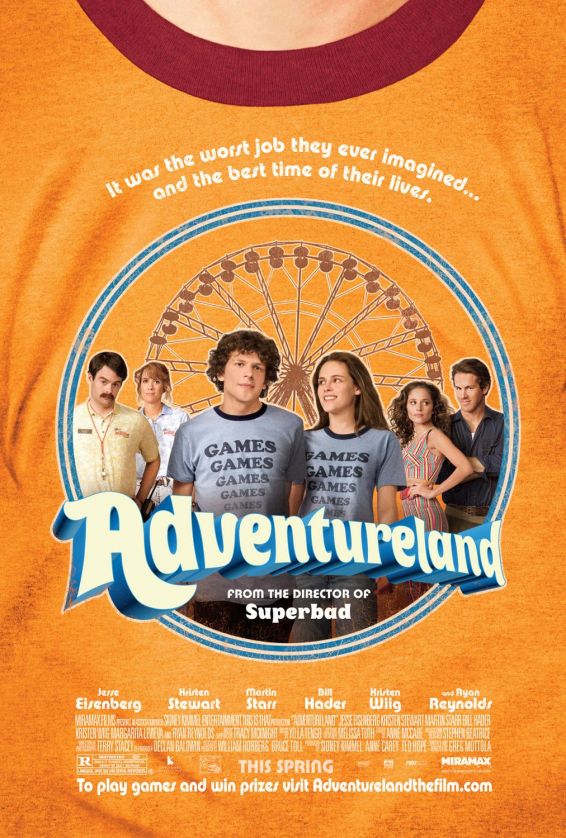
This comedy-drama from 2009 is an underrated classic, in my opinion, as director Greg Mottola (Superbad, Paul, Keeping Up with the Joneses) brings us a simple yet effective story of two young people from different worlds meeting over one memorable summer, and while it may not be as hilarious as some of his other films. I do feel Mottola has brought us a much more emotional story this time around, with the comedy not too far behind.

Plot Summary: In the summer of 1987, teenage college graduate, James Brennan, takes a ‘nowhere’ job at his local theme park as he awaits to leave his hometown. Only for him to soon find it’s the perfect course to get him prepared for the real world, meeting new friends and sending him down a different life path…

For a film like this, it’s crucial that the characters are likeable and are given plenty of development as, in my opinion, drama really only works within film if the characters are developed enough to be invested in. Luckily, the film does succeed here, crafting some very funny and (mostly) realistic characters within only a short amount of time, as the film doesn’t waste screen-time setting up its narrative and characters, but always does so in a way that doesn’t feel too fast-paced.

All of the cast are also pretty great here, as Jesse Eisenberg, Kristen Stewart, Kristen Wiig and Ryan Reynolds all have decent chemistry with each other, and don’t simply treat their characters as joke machines. Despite Bill Hader as the park manager, ‘Bobby,’ definitely being my personal favourite, however, purely through his hilarious dialogue leading to many brilliant moments throughout the runtime.

Being set in a theme park local to the home of the protagonist, this is where the cinematography by Terry Stacey really shines, as the film really uses the different rides, games and attractions as well as the colourful lighting as a beautiful backdrop for many great scenes, as the film is always very inventive with the different locations of the park, exploring new areas in each scene, with some locations even being used to reflect a character’s personality. The film also uses a bright orange, yellow and blue colour palette throughout the story, which really helps to enhance the film’s visuals, and meshes perfectly with the film’s more light-hearted tone.

The original score by Yo La Tengo also helps add to the 1980s atmosphere, being mostly subtle yet still effective in many scenes in spite of its general lack of memorability. Various songs from the ’80s are also used throughout the film, everything from iconic classics to more unknown songs get a short appearance, with all of it eventually adding up to a pretty fantastic soundtrack, as well as another link back to the time period.

The main issue with the film for me is its comedy, as already mentioned. Although the film does have plenty of comedic moments throughout. I simply feel the film has far more in regard to drama than comedy, as the majority of its memorable moments are for more emotional purposes. There was also a subplot between two characters which I personally felt was a little rushed over, but as this was near the end of the film, this may have been done to avoid a lack of focus and conclusion.

In summary, even though ‘Adventureland’ is nothing incredible in relation to its filmmaking, I personally really enjoy the film, as I’ll always find myself turning back to it when in need of a more upbeat comedy-drama, as with a unique location and a great cast of characters, there isn’t really much to dislike here. Although some of the film’s comedy could be improved, I wouldn’t say this drags the entire film down. Check this one out, if you can, as I feel it really deserves more attention from audiences. Final Rating: low 8/10.

adventureland_xlg