Jurassic Park (1993) – Film Review

One of Steven Spielberg’s most iconic and beloved films of all time, ‘Jurassic Park’ based on the science fiction novel of the same name by Michael Crichton, is a classic from many people’s childhoods, including my own. From its incredible practical and CG effects which still hold up today, through to its memorable characters and a beautiful original score by John Williams. ‘Jurassic Park’ has made a gigantic impact on pop culture and is a true joy to experience for all ages.

Plot Summary: On the tropical island of ‘Isla Nublar,’ three-hundred and sixty-five miles off the coast of Costa Rica, billionaire, ‘John Hammond,’ has become the first man in history to bring back an extinct species with genetically engineered dinosaurs. But, when a tropical storm wipes out the island’s main security systems, his newly invited guests are thrown into peril amongst the prehistoric creatures…

Not only does ‘Jurassic Park’ have an extremely fun and original narrative when compared to many films before it, but the film is also very important when it comes to CG effects, as Spielberg and his team we some of the earliest filmmakers to explore the idea of computer-generated imagery and implement it into the film as Spielberg initially wasn’t impressed with many of the stop-motion effects which had been shown to him up to that point, and surprisingly, many of the visual effects throughout the film are still quite impressive, even by today’s standards for CG effects.

The entire cast of ‘Jurassic Park’ are truly brilliant, as Sam Neill, Laura Dern, Richard Attenborough, Bob Peck and, of course, the outstanding Jeff Goldblum who portrays ‘Dr. Ian Malcolm’ (possibly his best character), is all excellent in their respective roles, and despite each character not getting an enormous amount of development throughout the story, all the characters still manage to feel very varied and memorable. However, my only real issue with the film does relate to the characters, as there has always been a few scenes throughout the film where characters seem to make ridiculous decisions for no apparent reason, and while this isn’t a major problem, it can be a little irritating on rewatches.

The cinematography by Dean Cundey is unfortunately, one of the weaker aspects of the film as although the film isn’t lacking in attractive or iconic shots. The camerawork is largely serviceable for the majority of the film’s runtime, with many of the film’s most memorable shots being mostly due to the film’s practical dinosaur effects. However, the film also makes excellent use of its sets, as every location from the iconic ‘Visitor Centre’ through to the ‘T-Rex and Raptor Paddocks,’ are always very eccentric and memorable.

Probably one of the most recognisable soundtracks in history for film lovers, the original score by John Williams is simply incredible throughout the entire film. Having a great blend of beautiful calming tracks in addition to many tracks that help build tension, the soundtrack is truly something to be admired, with the tracks; ‘Welcome to Jurassic Park,’ ‘Journey to the Island’ and ‘Hatching Baby Raptor,’ being my three personal favourites.

In addition to the CG visual effects, Stan Winston, best known for his effects work on iconic films, like ‘Predator,’ ‘Terminator 2: Judgment Day’ and ‘Aliens,’ Created a variety of practical effects for the film, as Spielberg wanted every close-up with the prehistoric creatures to be a practical animatronic, all of which, of course, is completely life-size and look outstanding, this is even more impressive when considering some of the issues the filmmakers ran into when it came to the rain during the scene, ‘The T-Rex Paddock’ (my personal favourite scene of the film), as the Tyrannosaurus Rex animatronic would constantly break down due to the enormous amount of water its rubber skin absorbed, usually having to be wiped down in between takes.

In summary, I personally don’t have many issues with the original ‘Jurassic Park,’ as the film is nearly perfect in many ways for me, as, in my opinion, a few unbelievable character choices and some minor continuity errors don’t take away from what is still an exciting adventure filled with great performances, some fantastic practical and visual effects as well as so much more. ‘Jurassic Park’ is a film for the ages, and I definitely believe it deserves its place among the most iconic films of all time. Final Rating: low 9/10.

jurassic_park_ver2_xxlg

Ex_Machina (2014) – Film Review

One of my all-time favourite science fiction films, and a truly incredible A.I.-centric story, ‘Ex_Machina’ is directed by Alex Garland, the director of ‘Annihilation,’ another sci-fi film that I absolutely adore, as the film combines some stunning cinematography and visual effects alongside a smart, original and thought-provoking story that any film fan is sure to adore from beginning to end.

Plot Summary: After the young programmer, Caleb, is invited to participate in a groundbreaking experiment involving artificial intelligence by evaluating human qualities in the subject, he soon discovers not everything is as it first appears…

The majority of the film takes place within ‘Nathan’s home, and the film uses this to its best advantage, as every set for each room of the house always feels as if it’s attempting to be comforting, yet always feels very isolated, cold and sleek at the same time. The entire film also has a great flair for feeling futuristic yet still grounded. However, easily one of the best elements of the film for me has to be the visual effects, as the film actually won an Oscar for its effects back in 2016, and it’s easy to see why, as there are so many amazing shots within the film that are very well-crafted, combining sets with CG effects and blending them brilliantly.

Whilst all the style is great throughout the film, it shouldn’t take your attention from the excellent performances on display here, as Domhnall Gleeson, Alicia Vikander, and especially Oscar Isaac, all bring their ‘A’ game to the film as the entire cast has a lot of chemistry with each other, and their performances only elevate the tension-filled scenes throughout the film, not to mention their characters are given a decent amount of depth or thought they definitely could be explored further.

The stunning cinematography by Rob Hardy makes use of a variety of different shots, having the camera constantly in motion at various points throughout the runtime. Always being quite slow yet still very appealing to the eye, with the original score by Geoff Barrow and Ben Salisbury also contributing to the film, as the score manages to be both extremely eerie yet also very beautiful, all whilst sticking to a classic science fiction-type soundtrack.

The writing is also another element of the film that cannot be ignored, as each line of dialogue feels both real and fits the film perfectly. Without ever losing the audience along the way, if I had to give any criticisms of the film, however, as already mentioned it would be the character writing. Although the characters do get some development as the film goes on, we are never given anything that truly makes us invested in them, only bits and pieces. If the characters were developed further throughout the story, I do feel this would’ve made the film a little more engaging.

In summary, I still adore ‘Ex_Machina,’ as not only is the film gorgeous to look at as well as being a smart sci-fi-thriller, which really isn’t afraid to delve further into the world of A.I. no matter how dark it may become. If I had to express my criticisms of the film, it’s simply the overall lack of characterisation, and perhaps the conclusion to the film (although this may be just my personal opinion) as I personally found it slightly unsatisfying and a little out of character for some of them. Still, I highly recommend this one, and I really can’t wait to see what Alex Garland does for his next project. Final Rating: 9/10.

ex_machina_xxlg

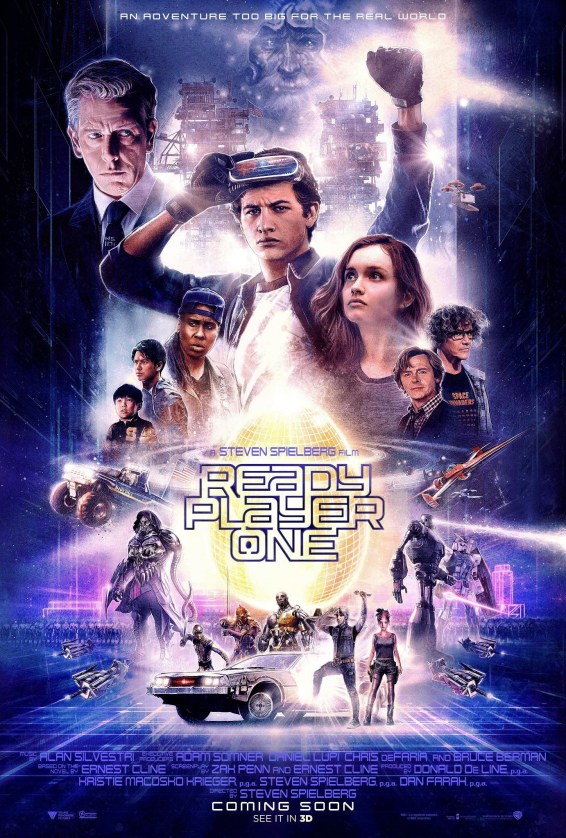
Ready Player One (2018) – Film Review

A triumphant return back to the silver screen for legendary director Steven Spielberg (Jurassic Park, Schindler’s List, Raiders of the Lost Ark), this time taking on an adaptation of a beloved science fiction novel by Ernest Cline. 2018’s ‘Ready Player One’ not only manages to capture that classic Spielberg whimsy all these years later, along with having plenty of breathtaking visuals and thrilling action sequences to boot. But, through its many, many references and appearances to/from iconic properties and characters from all types of media, ‘Ready Player One’ soon becomes a sweetly nostalgic adventure for any age.

Plot Summary: In the dystopian future of 2045, humanity spends their days inside ‘The OASIS,’ a virtual world where the only limits are your own imagination. Until on his deathbed, the original creator of ‘The OASIS’ makes a posthumous challenge, promising his entire fortune as well as complete control over his virtual world to the lucky ‘OASIS’ user that finds his ‘Golden Easter Egg.’

As its story may imply, ‘Ready Player One’ follows its novel counterpart closely by structuring its narrative half in the real world, and half within ‘The OASIS.’ Having all of the scenes set within the virtual world be comprised entirely of CGI, whilst reality is presented through live-action. While many viewers may initially be quite cautious of this (myself included), fearing a barrage of phoney-looking CG set pieces, Spielberg actually pulls this idea off very well, as the film never feels as if its CG visuals are being overused despite them taking-up most of the runtime. Interestingly, Spielberg teamed-up with effects company Industrial Light & Magic for most of ‘Ready Player One’s imagery, the company that previously worked with him for the first ‘Jurassic Park,’ so the Tyrannosaurus Rex that appears in the film is recreated using the same base-model made for the original film.

Best known as ‘Cyclops’ in the new incarnation of the ‘X-Men’ series, Tye Sheridan does a decent job at portraying the film’s likeable protagonist; ‘Wade Watts.’ Alongside Sheridan, Olivia Cooke as ‘Wade’s love interest; ‘Samantha,’ as well as Mark Rylance as ‘Halliday’ and Ben Mendelsohn and T.J. Miller as the film’s antagonists are all fine throughout the film. Yet, whilst every member of the cast is trying here, the performances in ‘Ready Player One’ are made more impressive considering the film’s extremely weak characters, as, unfortunately, nearly every character we meet within the story is mostly one-note, being nothing more than your traditional hero, companion or villain, etc.

Although an enormous amount of the cinematography by Janusz Kaminski is visually striking, having a large number of moving shots where the camera soars through the limitless world of ‘The OASIS.’ It’s difficult to judge it in its entirety, as a good majority of the camerawork is obviously CG due to half of the film’s story being set within a virtual world, and whenever we cut back to reality, the cinematography usually feels quite bland. However, I do appreciate the gloomy colour palette that’s utilised when the film returns to the real world, as it contrasts well against the incredibly colourful visuals of ‘The OASIS.’

Even though the film’s original score by Alan Silvestri is a serviceable and uplifting score in its own right, sounding subtlety like a Steven Spielberg classic. The film’s score was originally going to be composed by longtime Spielberg collaborator John Williams, but as a result of a scheduling conflict with another Spielberg film, Williams left the project to Alan Silvestri. Making ‘Ready Player One’ the third of only three films where Spielberg didn’t collaborate with Williams.

Many of the main problems I find hard to ignore with ‘Ready Player One’ mostly revolve around its weak writing, as although not continually noticeable, the film has a number of cheesy moments/clichés scattered throughout its story, in addition to many moments of humour which fall completely flat. Some critics have also taken issue with the enormous amount of characters from other media appearing in the film, seeing it as pandering and meaningless. I don’t agree with this criticism, however, as the original novel is full of many of its own (unique) references. Personally, I also feel many of the film’s flaws are made up for by its brilliant action scenes, from the opening race to the explosive final battle, to even a scene where the characters travel into the classic 1980 horror; ‘The Shining,’ every set piece is both creative, and enjoyable to watch.

In summary, ‘Ready Player One’ definitely has its faults, in particular, when it comes to its screenplay. But, even with its problematic writing in mind, I’d still say the film is a great addition to Spielberg’s huge line up of family flicks, as while it may not be on the same level of classics like ‘E.T. the Extra-Terrestrial’ or ‘Hook,’ for example, ‘Ready Player One’ overcomes its weak characterisation and occasional corny dialogue to become an exciting sci-fi/fantasy odyssey, and a film I’d recommend a trip into ‘The OASIS’ for. Final Rating: low 7/10.

ready_player_one_ver2_xxlg

Children of Men (2006) – Film Review

An intelligent, dark, and grounded sci-fi film, with ‘Children of Men’ director Alfonso Cuaron (Harry Potter and the Prisoner of Azkaban, Gravity, Roma) crafts a truly memorable experience, as the film’s fresh take on the science fiction genre combines some great performances, alongside decent writing and some absolutely incredible cinematography by Emmanuel Lubezki, alongside many scenes throughout the film being done within a single take.

Plot Summary: In a world in which women have somehow become infertile, former activist; ‘Theo Faron,’ agrees to help transport a miraculously pregnant woman across a war-ridden country out to a sanctuary at sea in order to save the human race…

Based on the acclaimed novel; ‘The Children of Men’ by P. D. James, the film adaptation begins its narrative in a similar fashion to its source material, as the story kicks off with a quick peek into the grim world of the film, as the protagonist; ‘Theo,’ makes his way into a small café to grab a coffee. This soon leading onto a very shocking moment, which instantly establishes the tone of the film, and really helps give the audience a clear understanding of how these characters are coping with this reality. This soon leads onto the opening becoming very iconic in its own right (as well as my personal favourite scene of the film) and still feels effective, even today.

When it comes to the characters, all the performances throughout the film are pretty great, as every actor is really giving their all here regardless of the importance of their roles within the story as Clive Owen, Clare-Hope Ashitey, Chiwetel Ejiofor and Michael Caine are all terrific. Julianne Moore as ‘Julian,’ in particular, was a stand out for me, however, having some very memorable moments within only a short amount of screen-time. This is also one of the few films where I must really praise the extras, as many of the continuous takes are done using enormous amounts of extras, and from the foreground through to the background, there isn’t one out-of-place extra.

Every piece of the cinematography by Emmanuel Lubezki throughout the film is nothing short of phenomenal, using hand-held shots to the best of their advantage. Many scenes are filmed from the perspective of the characters, placing the audience in their own tense scenarios. Furthermore, the dark grey colour palette of the film also lends itself well to the war-ridden country setting, as every location always feels rustic, dirty, and lived-in. The original score by John Tavener is also effective, despite being used sparingly throughout the film to further add to the bleak atmosphere.

My only real criticisms with the film are related to the lack of character depth and the film’s overall pacing, as the pacing throughout the film is extremely slow, leading to many scenes feeling a little drawn out at points. Despite this slow pace sometimes adding to the building of tension, it feels mostly unnecessary for most of the film’s runtime. The lack of characterisation throughout the film is also a problem, as although a few characters do get some development, it’s usually few and far between, as I found myself finding more information about the characters online than within the film itself, luckily, however, the decent writing does save this from being a huge issue.

In summary, ‘Children of Men’ is an exceptional piece of the sci-fi genre. Coming across as a very different approach than what you’d usually expect from a film such as this one, the film almost feels like more of an apocalyptic drama at points. But, with a thought-provoking narrative, some amazing cinematography, and a fantastic cast, ‘Children of Men’ truly is a very captivating (if not a very bleak) piece of entertainment, which never fails to impress me every time I revisit it. Final Rating: 8/10.

kinopoisk.ru

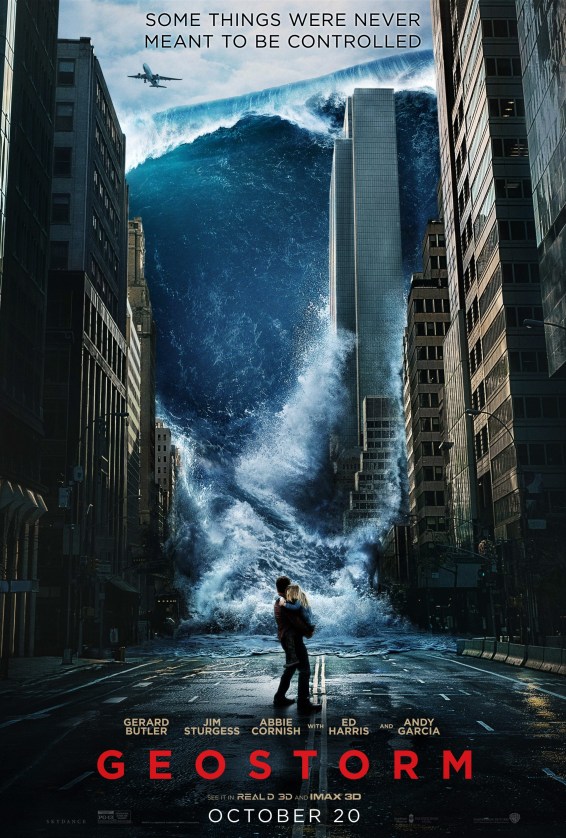
Geostorm (2017) – Film Review

Directed by Dean Devlin, best known for producing the original ‘Independence Day,’ as well as the first (infamous) American ‘Godzilla’ remake from 1998. ‘Geostorm’ takes a much more traditional disaster route for Devlin’s directorial debut, attempting to capture the usual scale and destruction associated with the genre, along with a few elements of international terrorism and sleek science fiction thrown in for good measure. Unfortunately, however, this still isn’t enough to save the film from its many, many faults.

Plot Summary: When a network of satellites designed to control the global climate begins to attack Earth, it’s a race against time for its original creator to uncover the real threat before a worldwide ‘Geostorm’ wipes out everything and everyone…

From the first scene all the way through to the very last, the film felt incredibly cliché to me, as the film definitely follows a very similar structure to the majority of other disaster flicks, as well as also carrying over much of the cheesiness and terrible comedy from many of them, as although the film does have a few exciting action scenes and some entertaining weather-related chaos throughout its runtime, the film never really manages to break-out of its predictability.

Gerard Butler, Jim Sturgess, and Abbie Cornish are all decent throughout the film, as while they still suffer from having the usual generic characters for a blockbuster. They do the best they can to keep the audience engaged throughout the story (for the most part). However, the film also has a few side characters which left we more than often questioning their inclusion in the film, as most of them added very little to the plot and only appeared in a few short scenes.

Roberto Schaefer handles the cinematography within ‘Geostorm,’ which aside from the occasional attractive shot is mostly bland and uninspired, with many scenes throughout the film also seeming to have far too many different shots, as a simple scene of two people talking could have anywhere from three to seven different shots. The CGI within the film is also another unusual aspect, as although it’s decent throughout most of the film, there are quite a few shots where I felt it dipped massively in quality. Some of the NASA scenes during the film were actually filmed at a NASA facility in New Orleans, however, which I did feel added to the film’s story despite the location’s limited appearances.

There are also multiple points where the film attempts to be very emotional and dramatic, yet usually falls completely flat, with the film putting a large amount of focus on the original score by Lorne Balfe, which is your standard action film score, coming off as an almost entirely forgettable and bland soundtrack.

Whilst watching the film I also couldn’t help but think that there were many missed opportunities throughout, as due to the film’s mostly serious and grounded tone, the film never takes any of its weather attacks to any truly creative places, with the film usually just going for a decently entertaining, (if not very experimental) action set piece. Although I understand the lack of disaster films in modern cinema is a great way to make the film stand out, I still feel a more absurdist tone, along with over-the-top action sequences, could’ve at the very least, made the film more memorable and unique.

In summary, whilst I didn’t really have high expectations when I first sat down to watch ‘Geostorm’ going off the mostly inexperienced director and the poor reviews from both critics and audiences alike, the was a genuinely dull experience, which I’d say isn’t really worth a watch, being a mostly bland and boring disaster flick, despite some original aspects. There is the odd entertaining action scene or interesting visual for any massive fans of the disaster genre, but for me, I don’t feel any desire to return to ‘Geostorm,’ especially not anytime soon. Final Rating: low 3/10.

geostorm_xxlg

Source Code (2011) – Film Review

Talented science fiction director Duncan Jones (Moon, Warcraft, Mute) brings us an original, engaging and fast-paced sci-fi thriller with ‘Source Code.’ Combining futuristic technology, human drama and a handful of brief action sequences, all equalling to a pretty enjoyable experience, which I personally believe still holds up today, aside from a few small issues here and there.

Plot Summary: When soldier, Colter Stevens, awakens in someone else’s body, he soon discovers he’s part of an experimental government program. Created in order to find the bomber of the commuter train he is aboard. A mission he has only eight minutes to complete…

Despite this time limit, however, the film always manages to deliver its story very effectively as this sci-fi flick builds up a decent layer of mystery and tension as to who is responsible for the bombing throughout giving the film an almost mystery-type structure alongside its science fiction elements, using the story’s original ideas to their best extent as we follow our protagonist; ‘Colter,’ as he searches for his target over the course of the film, encountering many different characters on board the train along the way.

The supporting cast of Vera Farmiga, Michelle Monaghan and Jeffrey Wright all do a pretty great job throughout the film. However, Jake Gyllenhaal as ‘Colter Stevens’ is obviously the stand out, proving that he can hold his own as a leading hero, regardless of whichever genre he finds himself in. But, unfortunately, the characters within the film definitely lack development, as aside from a few short scenes, the film never really seems interested in exploring its characters any further than it needs to. Yet, with the film’s tight runtime, I definitely feel this was a missed opportunity.

The cinematography by Don Burgess is decent for the most part, never really experimenting with anything incredibly creative, but staying at a fairly decent level for the majority of the film. The original score by Chris Bacon is without a doubt the worst element of the film, however, as I simply feel the score doesn’t suit this genre of film at all. Feeling more like a soundtrack from a generic action blockbuster, rather than a slick sci-fi, such as this one. In addition, I feel the train set (where a large majority of the film takes place), could do with some improvement as although this is only a small criticism, and won’t bother most, I personally found the set to look and feel a little too much like a set at points, with the green screen view from the windows not helping towards this. But, with most of the film being shot on a soundstage in Montréal, Canada, I suppose the film we received is the best result.

The film does manage to blend many of its more outlandish sci-fi aspects with the more grounded science fiction elements very well, however, cutting between the past and the present at various points throughout the film, always utilising the lighting as well as the different sets very effectively as a terrific visual indicator for the audience. I was also surprised on my initial viewing to find that the film contains quite a few comedic moments throughout as ‘Colter’ experiences the strange reality he now finds himself in through some of his funny interactions with the various people on board the train. However, this did lead me to wonder if the film could’ve been improved should the story have fully embraced a more absurd tone, perhaps this then would’ve made the film extremely unbelievable, but I personally feel this way the film could have explored some of its interesting ideas further.

In summary, ‘Source Code’ is an enjoyable ride, as while I personally find the film much more interesting for its story and ideas as the cinematography and original score throughout the film can sometimes be a little bland and uninspired (in addition to the film’s lack of characterisation). Regardless, I still find the majority of the filmmaking pretty decent and it results in a mostly entertaining sci-fi thriller, and a pretty easy watch on a Saturday night. Final Rating: 7/10.

Source Code Poster

Godzilla: King of the Monsters (2019) – Film Review

Serving as a sequel to the 2014 American ‘Godzilla’ remake, as well as standing as another chapter in this new franchise of monster films by Legendary Pictures. ‘Godzilla: King of the Monsters’ delivers more on of the exciting monster action and amazing visuals that the first film somewhat lacked, but the film does cut down on many other aspects to make this possible.

Plot Summary: When the world is threatened with extinction, the crypto-zoological agency; ‘Monarch,’ is forced to face off against a roster of God-sized monsters, including the mighty ‘Godzilla,’ who soon collides with the fearsome; ‘Mothra,’ ‘Rodan,’ and his ultimate nemesis, the three-headed titan; ‘King Ghidorah.’

As the runtime goes on, the narrative does go a little deeper, but I personally feel the plot gets a little absurd as it continues, becoming almost too layered at points for a simple monster flick. Of course, it can probably go without saying, that every action scene featuring the creatures is phenomenal as each monster is always given its own unique way to combat the others, and the film always finds time to give each creature at least one or two memorable scenes. The film also features a lot more action than the previous ‘Godzilla’ film, due to the film’s quick pacing and as it jumps from location-to-location constantly, always trying to increase the spectacle with each cut.

The three main members of the cast, that being Kyle M. Chandler, Vera Farmiga and Millie Bobby Brown, portray a broken family, forced apart by various responsibilities as well as the loss of one of their children in the past, and while their performances are decent throughout the film. I was disappointed by the lack of any further development for their characters, as I found the setup for their story very interesting and wish the film went more in depth with this idea rather than indulging in one more fight scene, this same issue unfortunately also applies to Charles Dance’s antagonist; ‘Alan Jonah,’ within the story.

The cinematography by Lawrence Sher is decent, as while there are many beautiful and simply awesome shots with the monsters themselves, many of the shots with human characters are rather bland, as there is definitely an overreliance on hand-held shots every time ‘Godzilla’ (or one of his counterparts) isn’t on-screen, despite the film’s colour palette actually being very ranged and pretty visually appealing. The original score by Bear McCreary is very different, however, as the composer crafts a score which captures the enormous scale of the monsters and their chaotic nature very well, with the soundtrack even going to the extent of giving each one of the creatures their own unique and intimidating theme.

The film’s best aspect, in my opinion, is definitely the creature designs, as each one is always very creatively designed, and is given many unique features to fit with its abilities and make it stand out from the rest of the monsters. Of course, the CG effects throughout the film also add to this, as although the film can sometimes be bombarded with far too many elements on-screen at once (becoming a little overwhelming at points). Despite this, everything visual effects we see is usually incredibly well-detailed and doesn’t feel at all out-of-place.

One element I felt didn’t reach the level of the first film from 2014 was how the film captured the true scale of the creatures, as while director Michael Dougherty clearly puts his all into pleasing fans and creating a fun experience, even having the classic theme for ‘Godzilla’ make a welcomed return. The film simply doesn’t capture the same feeling of being within the real-world as these massive creatures roam quite like the first film did.

In summary, ‘Godzilla: King of the Monsters’ is the definition of a mixed-bag for me, even with its explosive monster fights, some amazing visuals, and a great original score. It’s over-the-top story displayed through it’s extremely fast pacing and weak characterisation simply can’t be ignored, leaving the film a fun creature-feature with some serious flaws. Still, there is some enjoyment to be had with ‘Godzilla: King of the Monsters,’ so maybe check this one out if you’re a big fan of the iconic monster. Final Rating: 6/10.

godzilla_king_of_the_monsters_ver4_xxlg

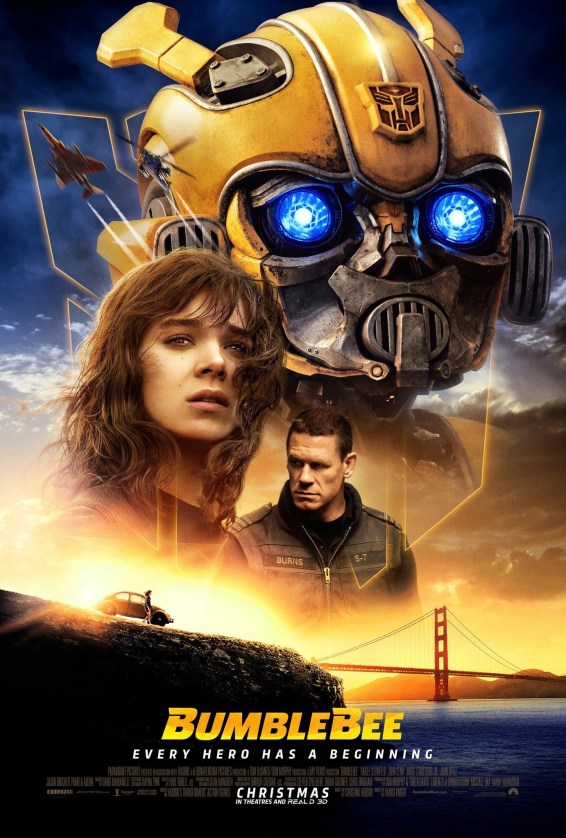
Bumblebee (2018) – Film Review

Serving as both a prequel and a reboot of the ‘Transformers’ series as a whole, 2018’s ‘Bumblebee’ is a fresh take on the sci-fi/action film series. But, going off the back of its outstanding reviews and director Travis Scott’s prior film; ‘Kubo and the Two Strings,’ on my initial watch, I was expecting a little more, both in terms of storytelling and filmmaking.

Plot Summary: On the run from his alien home-world of ‘Cybertron’ in 1987, ‘Bumblebee’ manages to find refuge through a junkyard in a small California beach town. Where ‘Charlie,’ on the edge of turning eighteen and trying to find her place in the world, discovers him, battle-scarred and broken…

Whilst the film is definitely an improvement over Michael Bay’s various attempts at the shape-shifting machines, ‘Bumblebee’ isn’t overall anything outstanding. Mostly been a very comedic sci-fi action-adventure with a few emotional moments thrown in. This version almost seems to be leaning more towards the iconic cartoon series from 1984 to 1987, as many of the ‘Transformer’s designs are ripped straight from the beloved television show, even featuring a few cameos from classic characters.

Hailee Steinfeld and Jorge Lendeborg Jr. both portray young characters who attempt to help ‘Bumblebee’ finish his mission throughout the film, and while their characters of ‘Charlie’ and ‘Memo’ only receive a basic amount of development. They are likeable and serve their purpose within the story. A member of the cast I wasn’t aware of at first, however, was the infamous John Cena. Who, actually portrays one of the main antagonists of the film, aside from the ‘Decepticons’ themselves, and despite his mostly decent performance throughout the film, I simply just couldn’t take seriously, mostly due to his ‘meme’ status and internet reputation.

Luckily, the colourful visuals throughout the film definitely add to the cinematography by Enrique Chediak, as although the cinematography isn’t bad by any means, the cinematography is mostly generic for an action flick like this. But, due to the great lighting and colour palette, ‘Bumblebee’ is easily the most visually appealing entry in the blockbuster franchise, ditching the ugly Michael Bay blue and orange colour palette in exchange for more of a summer-like feel for nearly the entirety of its runtime.

The original score by Dario Marianelli is your generic score for an action flick, with some heroic tones alongside it. The soundtrack isn’t really anything memorable, and despite also not being anything amazing, I think I still prefer the original score for the 2007 ‘Transformers’ film by Steve Jablonsky, which has since been regarded by many as the primary theme for the ‘Transformers’ on-screen.

The action throughout the film is fun for the most part, not simply being another constant barrage of explosions and actually trying to utilise the various ‘Transformers’ abilities in different ways. However, it still doesn’t quite reach the level of fun the original cartoon series had, always feeling a little toned down. One compliment I can give the film, however, is the comedy. As again whilst not landing every joke, the film does have its fair share of funny moments, which did give me a short chuckle at times, and not simply just a sigh or a cringe as many of Michael Bay’s extremely poor attempts at humour did.

In summary, it’s definitely a pleasant surprise to have an entry in the ‘Transformers’ franchise that isn’t just explosions and loud noises from start-to-finish, with a great visual appeal and plenty of humour throughout, I could see most having a lot of fun with this film, especially families. However, it might be that I simply don’t have a huge love for these characters, but I although I found it enjoyable whilst watching, it wasn’t super memorable for me. Final Rating: 6/10.

bumblebee_ver6_xxlg

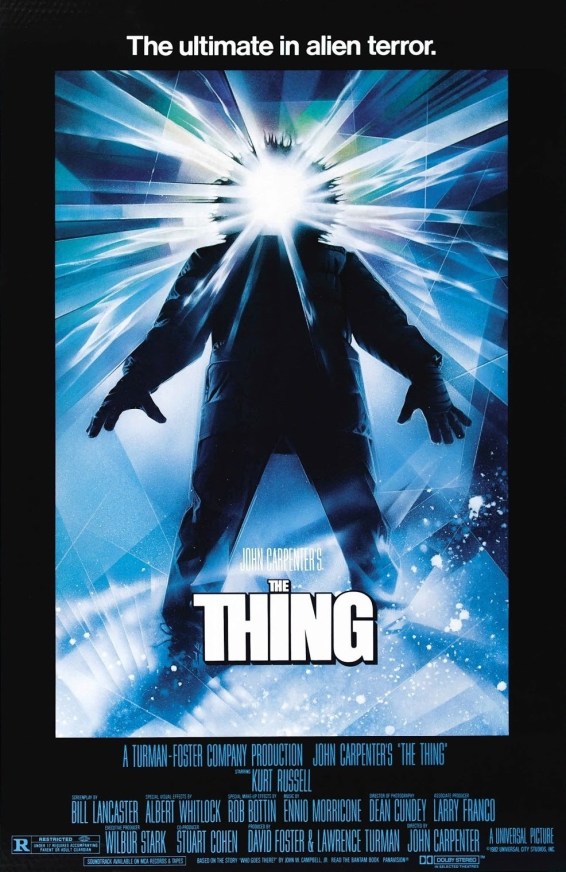
The Thing (1982) – Film Review

One of John Carpenter’s many horror classics, and one of my all-time favourites, ‘The Thing’ is a violent, eerie and creative sci-fi/body horror icon, as I personally adore this film and believe it’s one of Carpenter’s best, as the film always uses isolation and paranoia to its best extent, never failing to keep you on edge and invested throughout the entirety of its narrative and runtime.

Plot Summary: Members of an American research outpost in Antarctica find themselves battling a parasitic alien organism capable of perfectly imitating its victims. As time passes, they realise that killing the creature will be harder than they initially thought, as paranoia begins to sink in as to who has already been assimilated by the shape-shifting entity…

Although ‘The Thing’ is actually a remake of the classic; ‘The Thing from Another World,’ from 1957, I would say this is one of the rare times that a remake is better than the original as it’s constant tension building alongside the outstanding practical creature effects, make the film an incredible experience. Similar to films, such as ‘Alien’ or ‘The Fly,’ ‘The Thing’ also has a very slow opening, using its introduction to build tension and give the audience a great view of the location before the film descends into the gory, suspenseful chaos.

Kurt Russell, Keith David, Wilford Brimley, David Clennon and the rest of the cast are all decent, while Kurt Russell’s character, ‘MacReady,’ is easily my favourite simply due to his charisma, but none of the cast are terrible, by any means. However, I do feel there are too many characters within the story, as it can get confusing at many points as to which character is wrapped up within their large fluffy coats. And while I understand the need for a high body count for a film like this (which is the reason for the lack of development for many of the characters), I simply find it a little too easy to get lost at points.

Dean Cundey handles the cinematography within the film, which is decent throughout but nothing amazing, placing more of an emphasis on the practical effects within the shots, rather than the shots themselves. The cinematography, however, does still help to build tension effectivity through its many still shots and dark colour palette. Furthermore, all of the creature effects throughout the film are completely practical, giving the amazing creature designs true life by many of them being puppets or costumes rather than CGI, like most modern-day horror or sci-fi flicks. These effects truly create some very memorable scenes, as make-up effects artist, Rob Bottin, known for his work on ‘RoboCop’ and ‘Total Recall,’ truly did some of his best work on ‘The Thing.’

The original score (surprisingly not composed by John Carpenter himself) is by Ennio Morricone, but suitably does feel like a traditional Carpenter soundtrack and helps towards the eerie atmosphere as soon as the opening begins, as while maybe not as iconic as some of Carpenter’s other scores, such as ‘Halloween’ or ‘The Fog,’ etc. The original score is still brilliant in its own right and truly sets the tone for the film.

As the film takes place in an extremely isolated location and features a creature that can morph into any character, the film also never fails to keep the viewer on constant edge, as one of the best elements of the film is the paranoia the runtime continues, as any of the characters could be infected with the extraterrestrial creature. So, we never know who is going to be the next unfortunate victim, and who is their killer. Interestingly, during filming, John Carpenter didn’t even tell the actors who was the creature on set, only adding to the mystery.

In summary, ‘The Thing’ is a phenomenal entry into the genres of science fiction and horror, truly being an iconic staple of what to expect from an extraterrestrial film from then on. From its building of tension to the outstanding phenomenal practical effects as well as the constant threat, we feel whilst watching, almost placing us into the shoes of the characters themselves. Soon going on to be a true sci-fi/horror classic and becoming one of the best remakes to ever grace the silver screen. Final Rating: 9/10.

The Thing (1982) Original

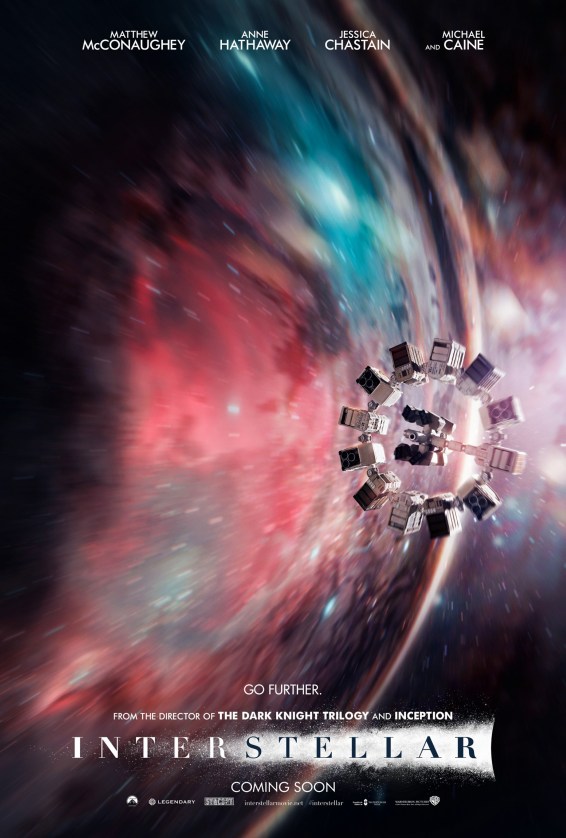
Interstellar (2014) – Film Review

Critically-acclaimed director Christopher Nolan (Inception, Memento, The Dark Knight) tries his hand at the sci-fi genre for the first time with ‘Interstellar,’ as the beautiful cinematography by Hoyte Van Hoytema and an incredible score by Hans Zimmer all lend themselves to this story of mankind venturing to another galaxy in search of a new world for our species, and although not perfect, the film is pretty entertaining overall.

Plot Summary: When Earth’s future is being riddled with disasters, famines, and droughts. There is only one way to ensure mankind’s survival, interstellar travel, as a newly discovered wormhole in the far reaches of our solar system allows a small crew to venture where no one has gone before…

Nearly every visual throughout the film is stunning, as along with the gorgeous cinematography, lighting and CG effects. The film really nails the shots within space perfectly, making many scenes look as if a majority of their shots had been taken straight from a NASA satellite, even integrating a great blend of colour and darkness. Many of the planets the crew visit throughout the narrative, however, although very cinematic, never really looked ‘otherworldly.’ Usually looking more like an attractive screen-saver, and although colours are used, it’s definitely a very contained colour palette when it comes to the planets. Many of the interior spaceship sets are also very striking in their appearance, hitting a great mix of modern-day and futuristic/high-tech technology.

Matthew McConaughey portrays ‘Cooper,’ the protagonist of the film, and as per usual, he does a great job within the film as a father who wants nothing but a great future for his children, and although none of the characters get much development throughout the story, Anne Hathaway, Jessica Chastain, Michael Caine (and even Matt Damon with his short appearance) all raise the bar high for the level of acting on display.

As already mentioned, the cinematography by Hoyte Van Hoytema is fantastic throughout, having slow-panning shots along with a variety of still shots for character scenes. All of this is being backed up by the unbelievable score by Hans Zimmer, legendary composer for films, such as ‘Pirates of the Caribbean,’ ‘Gladiator’ and ‘The Lion King,’ as well as a few other Christopher Nolan films alongside this one, his calming, unique and very science fiction-like soundtrack really lend themselves to many of the impressive shots within space. In particular, the track; ‘Cornfield Chase,’ a wonderful track which has since become one of the composer’s most beloved pieces of work.

Easily the best scene of the film for me was near the ending, as it’s around the conclusion of the film that we get some of the most amazing visuals combined with an extremely emotional moment, as a character undergoes a realisation and the film goes full circle, connecting itself back to some of the film’s early scenes. This climax really gives us some payoff for everything we’ve watched, it doesn’t quite make up for the long runtime, in my opinion, but it’s still somewhat satisfying.

One of my biggest issues with the story and the film in general really, is the extremely slow pacing, as although it’s not boring to watch it by any means. The film does move along at a very slow pace, as I found in particular the first thirty minutes of the film can really drag on a first watch, as the story gets development only in small pieces. This is when the writing by Christopher Nolan and his brother is put to great display, however, as we learn many small details about the characters and world of the film which come back into relevance later.

In summary, I wasn’t massively impressed with Christopher Nolan’s first sci-fi outing, although I was entertained for the most part whilst watching, and the visuals and music were a joy to experience. The long runtime and slow build-up stops the film from being super rewatchable for me, as it never becomes as memorable as ‘Inception,’ ‘The Prestige’ or ‘Dunkirk’ through its story and characters. The film was still very well made, and I do feel Nolan would benefit from a stronger story in the future should he chose to return to the sci-fi genre. Final Rating: low 7/10.

interstellar_ver4_xxlg