Spree (2020) – Film Review

The world of social media influencers vying for clicks, likes, views and retweets all to achieve viral fandom is a twisted one, and ‘Spree’ is far from the first film to delve into this subject matter with a satirical lens. What makes the film different is its secondary inspiration, being based on the true story of an Uber driver who went on a killing spree in early 2016, ‘Spree’ has plenty of comically violent scenes to accompany its social media commentary. Yet, even in spite of Joe Keery’s magnetic screen presence, ‘Spree’ is a film that always feels as if it’s on the verge of being something exceptional, but its reach far exceeds its grasp.

Plot Summary: Desperate for an online following, twenty-three-year-old wannabe influencer and rideshare driver; ‘Kurt Kunkle,’ devises a malicious scheme to go viral, installing a series of cameras inside his rideshare car in order to film his unsuspecting victims as they meet a gruesome end…

Co-written and directed by Eugene Kotlyarenko (A Wonderful Cloud, Wobble Palace, We Are), ‘Spree’ was initially envisioned as a claustrophobic horror based around the story of the previously mentioned serial killing Uber driver, who claimed a “Devil Figure” inside of the rideshare app was controlling his actions. And, although this terrifying true story would have certainly provided enough inspiration for an indie horror flick, Kotlyarenko and co-writer Gene McHugh soon began to swerve more into dark comedy after giving the killer an intense craving for attention. This eventually evolved into the film’s central theme of social media obsession, which while often used to great effect to mock online influencers, does frequently feel underdeveloped and retracts from the film’s tension, pushing ‘Kurt’s killing spree into the background in exchange for awkward character moments, which will inevitably disappoint those hoping to see plenty of grisly kills.

Joe Keery portrays the film’s psychotic protagonist; ‘Kurt Kunkle,’ who is suitably just as upbeat and inappropriate as many real-world influencers. This realism is most likely a result of Eugene Kotlyarenko and Joe Keery’s research, as the pair watched many cringe compilations of people online without a big following to help create the character, and this comes across through Keery’s body movements and relentless optimism, making for an occasionally irritating yet charismatic protagonist as ‘Kurt’ always remains hopeful his night of murder will increase his follower count after trying (and failing) for the past decade. It’s just unfortunate that ‘Kurt’ doesn’t receive much development over the course of the runtime aside from one or two scenes, with much of ‘Kurt’s life outside of the internet being left a mystery.

The cinematography by Jeff Leeds Cohn is obviously in the style of found-footage, but rather than simply having ‘Kurt’ film his every move similar to most found-footage flicks, the camera itself takes on numerous forms as the story is seemingly spliced together through iPhone cameras/screens, dash-cams, body-cams and even CCTV footage. Yet, despite this ever-changing camerawork ensuring ‘Spree’s visuals stay varied, there does come a point when it begins to feel as if the film is simply piling on footage, even sometimes having three shots displayed at once through a split-screen effect which does become slightly overwhelming, especially when combined with the film’s rapid editing.

Whilst there are a few found-footage films that have successfully integrated an original score without taking away the sense of realism the subgenre provides, ‘Spree’ is most definitely not one of those films, as although the pulsing electronic score composed by James Ferraro does help to build excitement, the film’s soundtrack repeatedly plays over scenes with no clear in-world source, which greatly dampens the illusion of the film being found-footage.

Of course, with ‘Spree’ having a heavy focus on all things social media, it would be crucial that the film stays truthful to what the internet is actually like (even through its cynical view). And, while the film does have many scenarios that feel as though they lack realism, whether that’s due to incredibly forced dialogue or ‘Kurt’s beyond moronic actions when trying to avoid the Los Angeles police force, anytime the film displays a phone screen there is a certainty that every app/website will be a real brand and will be overflowing with detail. For example, ‘Kurt’s constant live streaming never shies away from reality, meaning his stream’s comments are always rapidly unfurling with insults, jokes, and questions all from distinct usernames, which according to Eugene Kotlyarenko, took him over forty nights to type out.

In summary, Joe Keery’s entertaining performance can’t distract from ‘Spree’s shallow critique of social media, as whilst some may argue the story’s lack of depth is precisely the point as the film feels as if it’s unsure as to what to do with its concept, which is greatly disappointing. As, I personally think a dark comedy revolving around the obsessive culture of social media is ingenious, and films, like ‘Ingrid Goes West’ prove this idea can be executed well. ‘Spree,’ however, fails to deliver on this or its even promise of a violent and comedic thrill ride. So, while I do still believe the film will have a niche appeal, ‘Spree’s apparent flaws are likely to stop most from hitting the subscribe button. Final Rating: 4/10.

spree-p1102551

Gravity (2013) – Film Review

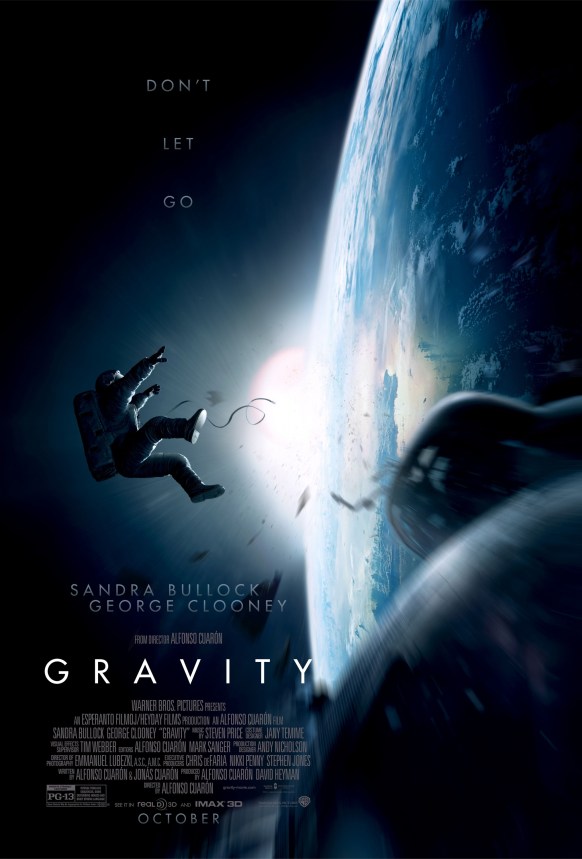
A survival drama set almost entirely in the unfathomable abyss of outer space, 2013’s ‘Gravity’ is equal parts tense and beautiful. Taking over four years to produce and winning numerous Oscars back in 2014 for everything from its effects to its cinematography to its sound editing, ‘Gravity’ serves as not only the long-awaited follow-up to director Alfonso Cuarón’s previous sci-fi film; ‘Children of Men,’ but also as one of the most immersive films to ever take place in the hostile, inhospitable vacuum of space.

Plot Summary: On her very first mission aboard the NASA space shuttle; ‘The Explorer,’ novice biomedical engineer; ‘Dr. Ryan Stone,’ and her accompanying seasoned astronaut; ‘Matt Kowalski,’ come face-to-face with an irrevocable disaster during a routine spacewalk when a barrage of debris from a crippled Russian satellite inflicts devastating damage to their shuttle, leaving them both stranded in orbit…

Co-written by Alfonso Cuarón and his son Jonás Cuarón, ‘Gravity’ is many ways less of a science fiction flick than it is a film grounded in real-world science, as it quickly becomes clear whilst watching ‘Gravity’ that the pair did their research into the fundamentals of space, presenting the narrative almost as if it’s based on a true story oppose to relying on flashy explosions to morph the film into a generic sci-fi blockbuster. Yet, interestingly, author Tess Gerritsen actually filed suit against Warner Bros. Pictures following ‘Gravity’s release, claiming the film was unofficially based on her novel and that she was entitled to a screen credit and a fair percentage of the film’s profits, but this was never proven to be true, even if both stories do share many similarities.

With around 80% of the film being shot on a green screen or consisting of CGI, there were plenty of opportunities for the performances throughout ‘Gravity’ to be underwhelming. And, yet, this is not the case, as Sandra Bullock and George Clooney both give brilliant performances here, with Bullock in particular impressing not only due to her acting chops, but also her memorisation skills, as with Alfonso Cuarón bringing his signature lengthy takes into ‘Gravity,’ Bullock had to memorise long combinations of precise movements in order to hit her marks for each shot, often even having to coordinate her movements with those of the wire rig and the camera, which is no easy task.

Brimming with many, many stunning shots, in addition to the previously mentioned one-takes. ‘Gravity’s cinematography by Emmanuel Lubezki rarely ceases to amaze, as the film wastes no time in capturing the audience’s attention by jumping straight into the story with its opening scene, which begins with the camera travelling from an establishing shot of Earth over to ‘Dr. Stone’ detaching from a structure all without a single cut, which in total, lasts around twelve and a half minutes. That being only one aspect of the impressive camerawork ‘Gravity’ displays, another being the film’s excellent use of P.O.V. shots which place the audience directly into ‘Dr. Stone’s space suit, further adding to the film’s tense atmosphere. Furthermore, all of the film’s cinematography is greatly elevated by the magnificent lighting, editing and CG effects, which back it up.

As a result of ‘Gravity’s realistic approach, for a large majority of the film’s ninety-nine-minute runtime there is little sound heard aside from dialogue, this places a lot of pressure on the film’s original score by Steven Price, which luckily, manages to strike the perfect balance between terror and wonder, as tracks, like ‘Above Earth,’ ‘Debris,’ and ‘Don’t Let Go,’ push the score into becoming a remarkable exploration of the absolute isolationism of outer space. Gradually building up with pulsing electronic beats and gloomy vocals, until it eventually expands in intensity and volume, capturing the fear of what lies beyond the stars just as it does with the beauty.

The most common criticism ‘Gravity’ has faced since its release is that the film is focused more on spectacle than anything else, as while all of ‘Gravity’s large-scale set pieces are usually beyond thrilling, some shots do feel as if they were implemented purely for the sake of 3D and IMAX screenings, which is difficult to ignore. This alongside the film’s lack of development in some areas does leave ‘Gravity’ a little devoid of memorability, when compared to some other iconic films set within the vast emptiness of space, e.g. ‘Ad Astra,’ ‘2001: A Space Odyssey’ and ‘Moon.’

In summary, whilst ‘Gravity’ may not live up to the immensely positive reviews it has received in recent years, it is still a captivating piece of science fiction and a true marvel of filmmaking. It’s just for me personally, I find the actual filmmaking process and behind-the-scenes material of ‘Gravity’ far more interesting than the story itself, perhaps that’s due to its underdeveloped characters or another element entirely. Regardless, I feel even with its issues, ‘Gravity’ will remain a testament to what can truly be achieved with modern technology when it comes to film. Final Rating: 7/10.

gravity_xxlg

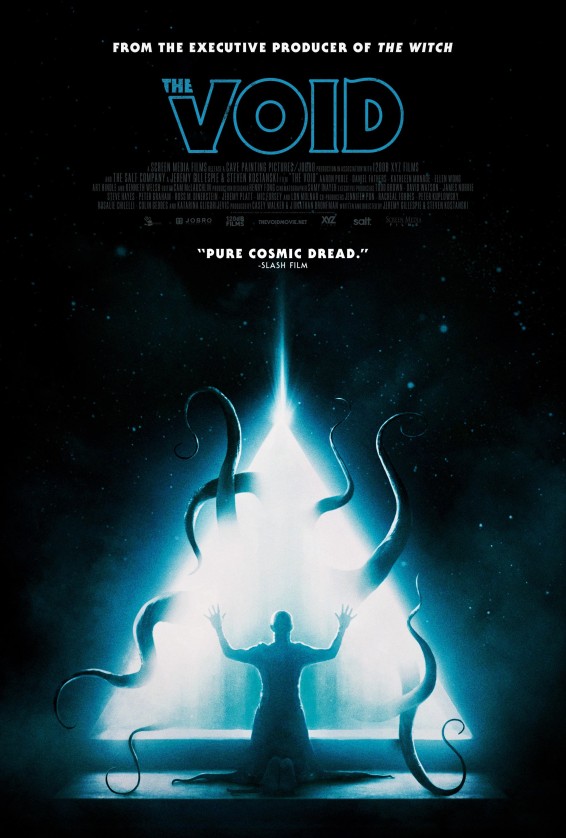
The Void (2016) – Film Review

An excellent throwback to 1980s sci-fi and horror; ‘The Void,’ released in 2016 and directed by duo Jeremy Gillespie and Steven Kostanski, first began its life as a simple idea with two passionate minds behind it, as this surprisingly crowdfunded project makes remarkable use out of its thin budget, especially when considering the film’s many expensive-looking set pieces, displaying its huge array of fantastic creature designs and effects, colourful lighting and creative cinematography with enough confidence and innovation to keep any genre enthusiast enthralled.

Plot Summary: After ‘Sheriff Deputy Carter’ stumbles across a blood-soaked man limping down a deserted road, he quickly rushes him to a local hospital with a barebones, night shift staff. But, when a series of strange events occur within the hospital, seemingly linked to a group of cloaked figures standing just outside the building, ‘Carter’ decides to lead a mission into the hospital’s basement to find an exit, only to discover something far more concerning…

Even though ‘The Void’ did have a handful of producers on board more familiar with the horror genre, as mentioned previously, the film was primarily a crowdfunded project, earning most of its budget in addition to a limited theatrical release in 2017 as a result of its online community of donors and fans. And, it’s not exactly difficult to understand why many fanatics of sci-fi and horror alike were so interested in supporting the film, as immediately from the stylised intro any fan of 1980s cinema can tell ‘The Void’ is truly a love letter to everything ’80s, with the film’s narrative clearly taking heavy inspiration from classics, like ‘From Beyond,’ ‘Re-Animator,’ and, of course, virtually all of John Carpenter’s filmography. Yet, despite all of these influences, ‘The Void’ also manages to never feel overly derivative, even with the film’s plot sharing many similarities to the cult horror; ‘Prince of Darkness,’ from 1987.

The cast of ‘The Void’ is primarily comprised of unknown actors, which is by no means a bad thing, as the cast give solid performances across the board, even in spite of their fairly one-note characters, with Aaron Poole, Kathleen Munroe, Daniel Fathers, Mik Byskov, Evan Stern and Ellen Wong portraying the main group of staff and survivors trapped within the hospital’s walls quite well. But, the real stand out of the film has to be Kenneth Welsh as ‘Dr. Richard Powell,’ easily the compelling character of the story, who undergoes some enormous changes over the course of the runtime.

Samy Inayeh handles the film’s cinematography and handles it well, as whilst there are plenty of moments where the camerawork is far too reliant on hand-held shots, the film manages to even itself out over time with plenty of visually appealing ones. However, it’s the lighting and colour palette that are certainly the most visually impressive elements of the film, as ‘The Void’ jumps from harsh reds to cold blues almost from scene-to-scene, not only to add to the film’s unearthly atmosphere of dread, but also to help hide some of the film’s budgetary shortcomings. Furthermore, the story’s signature location of an empty hospital is a very distinct setting for a horror such as this, as the building seemingly becomes more unnatural and dilapidated the further the characters explore it.

For its original score ‘The Void’ actually had quite a large group of composers (five in total), who expertly crafted a classic 1980s synth score with undertones of dark horror, which greatly adds to both the film’s style and atmosphere. And, although the film’s soundtrack is usually more atmospheric than cinematic, tracks such as ‘Starless Night’ and ‘A Hole in the World,’ prove the score does have some memorability amongst its many foreboding tracks.

Partly due to the film’s budget and partly due to Gillespie and Kostanski wanting to use as little CGI as possible, ‘The Void’ is a science fiction flick that delights in its practical effects. Ensuring every creature design and the costumes and/or prosthetics that bring them to life are nothing but flawless, from their skin to their teeth to their various tentacles (of which the film seems to relish in), nearly every aspect of each creature looks truly spectacular, and its these otherworldly designs alongside the film’s over-the-top gore and buckets of blood that help create some genuinely disturbing moments.

In summary, I feel ‘The Void’ succeeds in being an enjoyable throwback to many people’s favourite decade for sci-fi and horror, with its astounding filmmaking and many impressive practical effects all resulting in plenty of thrills and chills. And, although some may argue the film lacks much in the way of originality, I’d argue otherwise, as I feel ‘The Void’ is less of a capsule for nostalgia and references for all things ’80s, and more of a tribute to what came before it, never quite matching up to many of the films from the time-period its referencing, but still raising the bar for indie filmmaking and crowdfunded projects in its best moments. Final Rating: 7/10.

the_void-p1096924

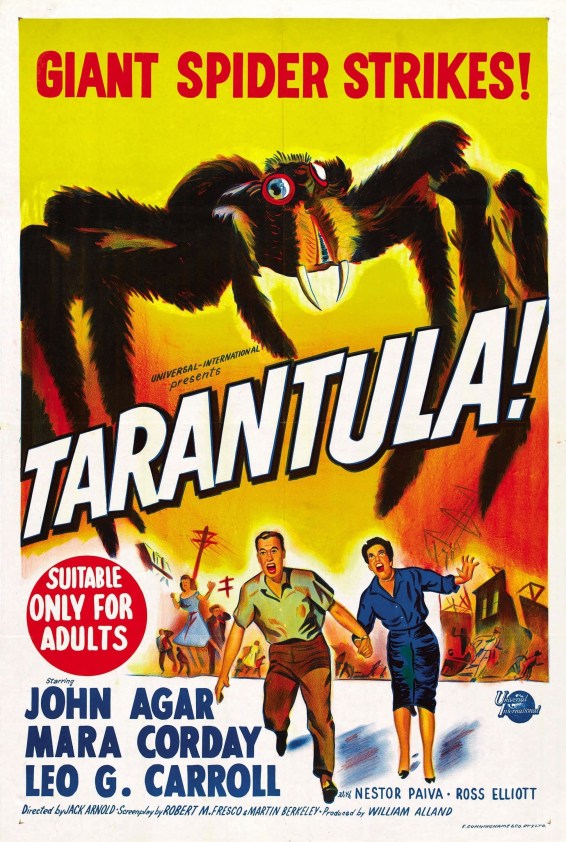
Tarantula (1955) – Film Review

Before the horror genre truly began capitalising on the common phobia of creepy crawlies with films like ‘Arachnophobia,’ ‘Itsy Bitsy,’ ‘Kingdom of the Spiders,’ and ‘Eight Legged Freaks,’ the 1955 sci-fi-horror classic; ‘Tarantula,’ terrified audiences with its marvellous creature effects and continuously unnerving atmosphere. Ensuring the film would go on to be the exemplary for future monster flicks, despite featuring many of the usual problems plaguing creature-features at the time.

Plot Summary: In a remote facility in the Arizona desert, ‘Professor Gerald Deemer’ is conducting a series of experiments in the hopes of finding a way to increase the world’s food supply, injecting growth hormones into various animals to greatly increase their size. But, when a tarantula escapes from the isolated laboratory, still growing at a exponential rate due to the formula, the giant arachnid begins to wreak havoc on a nearby town…

Directed by the late Jack Arnold (With These Hands, Creature from the Black Lagoon, The Incredible Shrinking Man), ‘Tarantula’ was just one of the many science fiction flicks Arnold undertook throughout his career, and in a similar fashion to many of his other stories revolving around horrifying creatures, ‘Tarantula’ was part of the 1950s wave of sci-fi and horror films crafted around the newfound fear of nuclear radiation following World War II. Yet, while we now know ‘Tarantula‘ did greatly help in creating the ‘giant animal’ subgenre, there is an argument to be made that if not for the release of ‘The Beast from 20,000 Fathoms’ just a year prior, ‘Tarantula’ may not even exist, as general audiences only gained interest in creature-features on account of that film’s success.

The late John Agar portrays the film’s square-jawed hero, ‘Dr. Matt Hastings,’ and just like a large majority of male protagonists in ’50s sci-fi, ‘Dr. Hastings’ is charismatic enough to carry the film in spite of the actual character receiving very little development over the course of the runtime. And, as expected, ‘Tarantula’ also includes a romantic subplot between ‘Dr. Hastings’ and secondary protagonist, ‘Stephanie Clayton,’ portrayed by Mara Corday, which although made palatable by Agar and Corday, still feels pretty forced. However, one of the film’s biggest missed opportunities is certainly ‘Professor Gerald Deemer’ portrayed by the late Leo G. Carroll, as whilst Carroll gives a decent performance here, the story sadly pushes his character into the background and nearly entirely ignores the suffering his character later endures after injecting himself with his formula, making his character’s inclusion seem quite superfluous.

Despite the many creature effects throughout ‘Tarantula’ clearly being the film’s main focus, the cinematography by the late George Robinson does have its share of attractive shots even with the film’s lack of colour and camera movement alike due to the technological restrictions of the time-period, as any wide-shots displaying the vast Arizona desert or the fictional town of ‘Desert Rock’ are fairly appealing, and occasionally, even add to the film’s tense atmosphere as the uneven rocky landscape alongside the film’s dim lighting allows the giant arachnid to often lurk unseen.

The original score by the late Herman Stein and the late Henry Mancini is a thunderous and sometimes overly dramatic score, feeling very much like a soundtrack taken from films of the 1950s for better, and for worse. And, while both composers are often uncredited for their work on the film, ‘Tarantula’ is far from the first time Herman Stein has collaborated with director Jack Arnold, providing scores (and having much of his music reused) for a number of his films.

But, of course, ‘Tarantula’ will always be best known for its effects, which are in all fairness the film’s best attribute, as whilst many fondly remembered science fiction and horror films of the 1950s relied on models, costumes and stop-motion to bring their strange creatures to life, many of these filmmaking techniques can feel very dated and tacky by today’s standards for films brimming with CGI. This isn’t the case with ‘Tarantula’s effects, however, as the way the film brings its signature creature to life is quite innovative, as the filmmakers actually used a real tarantula shot separately from the rest of the film, before it was then enlarged and composited/projected onto the desert locations. This clever technique allows the spider to move naturally, and was not only state-of-the-art for the era, but is still quite impressive now, as the matte effect is usually impeccable aside from one or two shots where some of the tarantula’s legs seem to phase through the environment.

In summary, just like many other films released around the time of the 1950s/1960s, ‘Tarantula’ does have its entertainment value, but is also much slower-paced and far more simplistic than many of the sci-fi blockbusters and epic creature-features we’d see released today. Yet, whilst its characters are a little uninspired and the film is more about spectacle than anything else, ‘Tarantula’ definitely has its moments, and, even if just for the effects alone, I think it deserves its place as a ’50s classic, flaws and all. Final Rating: 6/10.

tarantula_poster_05

Searching (2018) – Film Review

Although some may see ‘Searching’ as nothing more than a gimmick, as this hyper-modern found-footage thriller utilises (and in many ways refines) the same format as the low-budget 2015 horror; ‘Unfriended,’ and its 2018 sequel; ‘Unfriended: Dark Web.’ ‘Searching’ has much more to offer than just having its narrative play out over a computer screen, as first-time co-writer and director Aneesh Chaganty constructs an engrossing story around this seldom concept, focusing on the disappearance of a teenage girl and the unfolding drama that follows.

Plot Summary: When ‘David Kim’s sixteen-year-old daughter; ‘Margot,’ goes missing, a local investigation is opened and a detective is assigned to the case. But, after thirty-seven hours pass without a single lead, ‘David’ decides to search the one place he believes his daughter holds all her secrets, her laptop…

Shot in only thirteen days yet taking over two years to complete due to the large amount of prep, editing and animation work. The fundamental idea of ‘Searching’ may have already been attempted with the previously mentioned ‘Unfriended’ franchise among some other horror flicks, but what makes the film stand out is its story, as ‘Searching’ veers away from the usual paranormal scares of most found-footage films to focus on a missing persons case, which does better fit this style of filmmaking, in my opinion, a subgenre now commonly known as “Cyber-Horror.” Furthermore, the film’s protagonist being ‘Margot’s father provides ‘Searching’ with a strong emotional core, as nearly every parent can relate to the fear of their child going missing. On top of this, the film also manages to weave in an overarching theme about the dangers of social media, giving the film quite an impactful message in spite of how many times it’s been covered in cinema.

Considering John Cho is best known for his comedic roles, it has to be said that Cho does a phenomenal job throughout the film as ‘David Kim,’ portraying a realistic depiction of a panicked father’s online movements as he desperately tries to track down his daughter, and the film provides us with plenty of dramatic moments to really let us feel ‘David’s pain. This is an even greater achievement when taking into account that Cho spends the majority of his screen-time just sitting in front of a computer screen looking ever so slightly right of the camera. Unfortunately, ‘David’s daughter portrayed by Michelle La isn’t as impressive, but this may also be due to her dialogue, as many scenes involving ‘Margot’ seem to be quite trite in nature. Lastly, there is Debra Messing as ‘Detective Vick,’ who is serviceable in her role as a firm detective investigating ‘Margot’s disappearance.

The cinematography of ‘Searching’ is interesting enough in itself, even without the story’s central mystery, as the film’s camerawork was actually handled by three different cinematographers. The first being the film’s standard cinematographer Juan Sebastian Baron whenever the film is shot through iPhones and GoPro cameras, and the second being the film’s virtual cinematographers Nick Johnston and Will Merrick, who help give the film a more dynamic feel by controlling the movement of the camera whenever we are looking through a computer screen, drawing the eyes of the audiences to specific areas and details. But, of course, as the film is primarily on a screen or shot through a phone, beautiful shots are basically nonexistent. It’s also not uncommon for the film’s editing to feel overly intense at points, appearing as if it’s trying far too hard to build tension.

In a surprising turn for a found-footage flick, ‘Searching’ does actually have an original score composed by Torin Borrowdale, the film’s soundtrack heavily leans into the story’s technological focus, being an electronic score with a strong emphasis on building tension or a creating a calming window of relief. And, while the opening track; ‘New User,’ is immensely corny, later tracks, such as ‘No Reception,’ ‘San Jose Missing Persons,’ and ‘Search by Image,’ do greatly add to the impact of certain scenes.

Additionally, whilst all of the computer systems, programs, apps, and websites we see during the runtime aren’t the actual versions, but instead templates that were recreated from scratch and then animated. The sheer amount of detail and realism that goes into each second of screen-time we spend on the computer screen simply can’t be ignored, as ‘Searching’ never implements hilariously fake websites into its story, like “iGram,” “Search,” and other dreadful knock-offs we’ve seen in similar films. Instead, both ‘David’ and ‘Margot’s laptops feel like real devices, having their message/Email inboxes overflowing and many real-world apps and websites, like Google and YouTube, open at one time.

In summary, ‘Searching’ may still be a gimmick film in a multitude of ways, but I feel for those who can look past the film’s occasionally cheesy moments and, in all honesty, fairly bland characters beyond their basic motivations. ‘Searching’ is still an engaging thriller/mystery with enough propulsion and small clues to keep most viewers invested, further ironing out the kinks in this obscure subgenre so when it all comes together, it’s with a most pleasurable snap. Final Rating: 7/10.

searching_ver2_xxlg

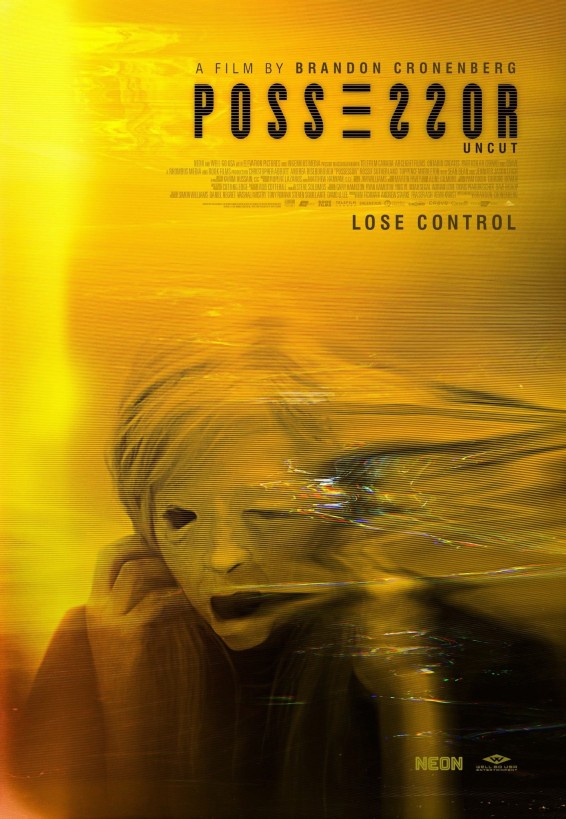
Possessor (2020) – Film Review

Following his 2012 directorial debut with ‘Antiviral,’ Brandon Cronenberg, son of legendary sci-fi-horror director David Cronenberg, crafts a captivating sci-fi thriller with 2020’s ‘Possessor,’ a film that deals with heavy underlying themes of identity loss and sexual discomfort, all whilst displaying its story through some truly spectacular cinematography and lighting. And, even though Brandon’s second sci-fi/arthouse outing doesn’t quite reach the high bar set by his father’s work, ‘Possessor’ is still more than successful as a surreal and layered science fiction flick with outbursts of strong, bloody violence.

Plot Summary: After many years of working as a corporate agent utilising brain-implanted technology to inhabit other people’s bodies and force them to commit assassinations for the benefit of the company. ‘Tasya Vos’ struggles to suppress her violent memories and urges, soon causing her to completely lose control when taking over the mind of a new subject, whose identity now threatens to destroy her own…

Debuting at Sundance Film Festival in early 2020, ‘Possessor’ has quickly gone down as one of the best low-budget releases of that year. Or, at least, this version of the film has, as according to writer-director Brandon Cronenberg, there was an alternate screenplay for ‘Possessor’ which drastically differed from the version that was released. So much so, that Brandon stated it could possibly become a second film later down the line, encompassing all of the material that didn’t quite make it into the first, which was primarily inspired by two pieces of media, the first being the 1971 novel; ‘Physical Control of the Mind: Toward a Psycho-Civilised Society’ by José Delgado, and the second being the short film; ‘Please Speak Continuously and Describe Your Experiences as They Come to You,’ written and directed by David Cronenberg.

Andrea Riseborough gives a fantastically cold performance throughout the film as ‘Tasya Vos,’ making it clear within only a few minutes that ‘Tasya’ is deeply suffering from the effects of her job, as each time she steps into the life of a new subject, she remerges different, finding it harder and harder to untangle her true identity from the one she just inhabited. And, it probably goes without saying that as a sci-fi focused on entering other people’s bodies, the story does explore sexual desire/sexual discomfort, never shying away from scenes of ‘Tasya’ being entranced with her new body after taking over the mind of ‘Colin Tate,’ portrayed by Christopher Abbott. Who, also gives a superb performance as the unfortunate host chosen to execute the company’s assassination, continuously switching between two personalities before eventually becoming devoid of all emotion as minds conflict.

‘Possessor’s cinematography by Karim Hussain also rarely ceases to impress, as nearly every shot is both attractive and memorable, with many shots leaning into the narrative’s themes in addition to providing a closer look at the heavily detailed gore effects through an array of extreme close-ups. The innovative camerawork is also enhanced by the film’s terrific use of colour, as the lighting and colour palette swiftly alters from bright yellows to dark blues to eye-piercing reds. But, this isn’t where ‘Possessor’s filmmaking peaks, as it can’t be denied that the film is at its best whenever it visualises ‘Tasya’ and ‘Colin’ mentally battling for control of ‘Colin’s body, as the film visually displays this interesting concept of a psychic battle on the astral plane through a range of editing techniques and creative yet strange practical effects. The scene in which ‘Tasya’ first enters ‘Colin’s mind is particularly astounding, as the film displays the fake bodies of the two main cast members, which then melt entirely into liquid flesh.

Many of the film’s bizarre visuals are also elevated to a great extent by Jim Williams’ original score, as ‘Possessor’s synth-esque soundtrack keeps the film’s eerie atmosphere present throughout the runtime, capturing the story’s surreal tone and constantly building tension through its atmospheric feel until we arrive at the story’s thrilling climax. My two personal favourite tracks; ‘Reborn in the Mind of Another’ and ‘A False Reputation,’ aren’t exactly distinctive, but both tracks do help tremendously in this regard.

The leading issue ‘Possessor’ suffers from is its lack of world-building, as supposedly the film takes place in an alternate version of the year 2008, but aside from one short scene where we see ‘Colin’s day-to-day job as a data miner, which does at least serve as a comment on the paranoia of corporate overlords and their nefarious activities, the world of ‘Possessor’ receives very little development and can often feel inconsistent when it comes to its technological advances.

In summary, ‘Possessor’ is the perfect hybrid of sci-fi, character study and body horror, as whilst its lack of world-building and compelling side characters do stop the film from reaching its true potential, ‘Possessor’ (along with Brandon’s previous film), definitely prove that Cronenberg’s son has a talent for telling harrowing and violent stories, all the while never forgetting to integrate intriguing concepts and ideas. And, with Brandon pushing for most of ‘Possessor’s effects to be completed in-camera rather than with CGI, the two directors may be even more alike than I first thought. Final Rating: low 8/10.

possessor_ver3_xxlg

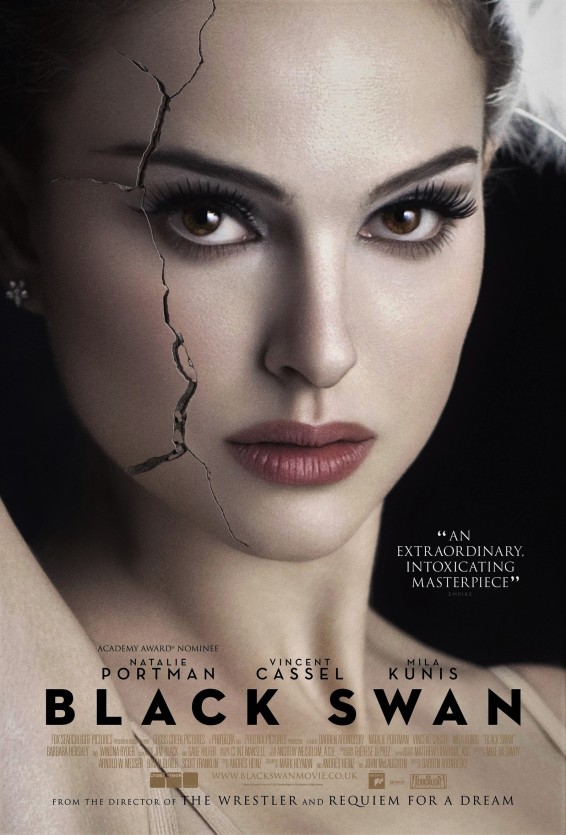
Black Swan (2010) – Film Review

Fantastically deranged at all times, ‘Black Swan,’ directed by Darren Aronofsky (Requiem for a Dream, The Wrestler, Mother!), is for many, the pinnacle of the director’s filmography, as the film’s combination of numerous genres soon evolves into an incredibly unique experience that leaps onto the stage in an effort to impress, with its gorgeous lighting, dreamlike atmosphere and occasionally grotesque visuals all elevating the film’s twisted tale of a dancer obsessed with achieving her dreams. And, whilst the film does trip over itself once or twice, its faults are few and far between.

Plot Summary: When ‘Nina,’ a ballerina for the New York ballet company discovers she has been chosen for the lead role in the company’s production of ‘Swan Lake,’ she struggles to maintain her sanity as her rival dancers, eccentric casting director and obsessive mother twist her perception of reality, forcing ‘Nina’ to prove herself worthy of the duel role and be the example for both the ‘White’ and ‘Black Swan.’

Although the film was never marketed as such, director Darren Aronofsky has always maintained that ‘Black Swan’ is first and foremost a psychological horror film, as the story delves into themes of mental illness and obsession, in addition to displaying many graphic sequences of what is essentially ‘body horror.’ And, yet, the film also somehow manages to never feel restrained to just one genre, which is what keeps it so compelling. This experimental nature might also explain why it took around ten years to be greenlit, as Aronofsky made many changes to the original screenplay in an attempt to get the film funded, with his original hopes for a budget of around £22 million being drastically lowered to roughly £9 million in the end.

The phenomenal lead performance from Natalie Portman nabbed the actress an Oscar back in 2010, and throughout the film, it quickly becomes clear as to why she won, as Portman flawlessly portrays ‘Nina’ as a committed and talented dancer being crushed by the pressure of the role she is undertaking. Portman even went to the extent of altering her voice (which had been continuously criticised by directors in the past for its childish qualities), as Aronofsky requested that for the role of ‘Nina,’ Portman would need to regress backwards and make her voice more childlike. Furthermore, Portman not only lost over twenty pounds for the role, but at least 95% of the dancing seen within the film was performed by Portman herself, with the professional ballerina Sarah Lane acting as her body/dance double for the complex en-pointe work. All of this is without mentioning the excellent supporting cast of Mila Kunis, Vincent Cassel, Barbara Hershey and Winona Ryder, whose performances all add to the film’s surrealist feel.

Matthew Libatique handles the cinematography, which despite relying far too heavily on hand-held shots during some scenes, also makes for some truly astonishing visuals, at points, as the film’s cinematic lighting alongside the grand gothic influence that the film borrows from cult horrors and other arthouse films, most notably, the stylised supernatural horror; ‘Suspiria,’ released in 1977, grant the film a very distinct and striking look. Aronofsky’s trademark of camerawork also creeps its way into the film, as there are a number of moments throughout the runtime where the camera tracks ‘Nina’ from behind as she walks through various locations, giving the cinematography a great sense of movement, not too dissimilar to leaping across a stage.

The original score by Clint Mansell also suitably feels like a score composed for a ballerina recital, as ‘Black Swan’s orchestral soundtrack is mostly a variation on Pyotr Ilyich Tchaikovsky’s ‘Swan Lake’ ballet, the only difference being that the notes are played backwards in a distorted manner. This makes the entire score feel very extravagant and almost overly dramatic, as tracks like ‘Nina’s Dream,’ ‘A Swan is Born’ and ‘Perfection,’ add to both the tragedy and beauty of the story.

As previously mentioned, due to its many scenes of graphic (and frankly disturbing) moments of mutilation, ‘Black Swan’ is far from an easy watch, as while the film doesn’t feature any ‘gore’ per se, all of the scenes of ‘Nina’s harmful acts towards herself feel more grounded in realism as a result of how minimal they are, with all of the skin-picking and dancing injuries she endures being reminiscent of a real disorder, known to medical professions as “Dermatillomania,” a disorder primarily related to skin scratching and/or skin picking.

In summary, even though many believe ‘Black Swan’ to be Aronofsky’s best effort, ‘Requiem for a Dream’ will always be my personal favourite film from the distinctive director as in spite of ‘Black Swan’s beautiful visuals and captivating narrative, the film also feels like it isn’t quite reaching its full potential, mostly due to its overuse of hand-held camerawork and unexplored characters and ideas. Regardless, this arthouse horror sustains its entertainment value, for the most part, and just like many other arthouse films, can be interpreted very differently from person to person. Final Rating: high 7/10.

black_swan_ver7_xxlg

The Invitation (2015) – Film Review

A fairly subdued but very effective thriller, ‘The Invitation,’ released in 2015, builds-up an almost absurd amount of tension over the course of its ninety-nine-minute runtime, maintaining the intrigue within its plot whilst also constantly defying the audience’s expectations. Although the film does eventually devolve into generic slasher territory for its final act, this indie thriller utilises its confined location and fantastic performances so effectively that it soon overcomes the majority of its flaws.

Plot Summary: After ‘Will’ and his girlfriend ‘Kira’ accept a formal invitation to a dinner party in the Hollywood Hills hosted by his ex-wife; ‘Eden,’ and her new husband, ‘Will’ begins to feel unsettled as his ex-wife seems overly eager to reunite with friends she lost contact with over two years ago. But, as the dinner party continues, ‘Will’ is presented with mounting evidence that their hosts have a more sinister agenda…

Directed by Karyn Kusama (Girlfight, Jennifer’s Body, Destroyer), ‘The Invitation’ is a low-budget film in the best possible way, as the director and writers had complete creative control over the project due to it being produced without any involvement from major production companies. This is more than likely why the film lacks any unnecessary jump-scares or a forced cliffhanger ending to serve as sequel/prequel bait. Instead, the story has strong underlying themes of past trauma, as the protagonist ‘Will,’ along with his ex-wife; ‘Eden,’ both share a dark past which looms over their present-day lives.

Logan Marshall-Green portrays ‘Will’ very well, as the excellent character-writing combined with Marshall-Green’s performance make ‘Will’ feel like not only a realistic character, but also somewhat of a stand-in for the audience themselves. As upon ‘Will’s arrival at the party, he immediately suspects that something is wrong, as he analyses the small yet strange details of their hosts. But, obviously, it’s also understandable as to why the other guests question or even just deny his claims, as his traumatic background makes him appear almost jealous that his ex-wife has moved on from their past in search of happiness. The rest of the cast of Tammy Blanchard, Emayatzy Corinealdi, John Carroll Lynch and Toby Huss (just to name a few), are all also stellar in their respective roles.

Everything from the film’s colour palette to its lighting to its cinematography by Bobby Shore, all visually display the contrast between the story’s cosy setting and the tension and discomfort that is building throughout the narrative, as the film’s visuals are intentionally quite dim and warm in order to relate to the idea of the lavish house being a safe environment, when, in reality, something far more ominous is at work, which in a way is also visually represented through the darkness of the night creeping its way into the house via the windows. Additionally, the film’s huge amount of variety when it comes to its camerawork helps to make ‘The Invitation’ a more engrossing experience, as with the film mostly relying on its structure of every combination of characters slinking away into the next room for a conversation, it manages to avoid becoming tiresome as a result of its cinematography and score.

Speaking of the soundtrack, the original score by Theodore Shapiro goes a long way to accentuate the feeling of foreboding that the story protrudes, as the soundtrack only utilises solitary stringed instruments. This minimalist approach works perfectly, as the subtlety is reflective of both the story itself and the dimmed-down visuals, really driving a knife through the viewer through the simple use of a violin. The two tracks; ‘Into the Canyon’ and ‘I’m Actually Early,’ are brilliant examples of this, but, in all honesty, the score features so many wonderful tracks, that its difficult to pick between them.

Spoilers ahead in this section for those who wish to go in blind. But, when it’s finally revealed that the goal of the dinner party is to murder all the guests present for the purpose of pleasing a malevolent cult, the film does lose much of its charm, as the short scene we see of the guests being shot one-by-one doesn’t feel like a truly rewarding payoff considering how long the build-up actually was. However, the film does still make an attempt to develop the cult, and it quickly becomes clear that the group share many similarities to real-world groups, with the two most obvious influences being ‘Heaven’s Gate,’ and, of course, Charles Manson and ‘The Manson Family.’

In summary, ‘The Invitation’ is quite the underappreciated gem, as the film makes great use of its thin budget to craft a slow-burning yet layered thriller. While there are a few minor plot threads left lingering, the film does give enough clues/hints for keen-eyed viewers to find, and aside from perhaps the lacklustre climax, I personally have very few gripes with ‘The Invitation,’ and I would recommend it to anyone in search of a tense and entrancing story with equally entrancing filmmaking. Final Rating: low 8/10.

invitation_ver2_xxlg

Hotel Artemis (2018) – Film Review

Easily one of the most overlooked and commercially underwhelming films of 2018, ‘Hotel Artemis’ is one of those rare releases that feels very unsuited to the genre it’s actually a part of, as whilst this enclosed story set within the walls of an illegal hospital is certainly interesting, ‘Hotel Artemis’ also bizarrely serves as a science fiction flick. Boasting plenty of futuristic technology alongside its snappy dialogue, charismatic performances and gorgeously designed central location, it’s just a shame that this neo-noir thriller doesn’t always know what to do with the above.

Plot Summary: In the riot-torn, near future of Los Angeles, 2028. Disgruntled thieves and criminals make their way to ‘Hotel Artemis,’ a secret members-only hospital operated by ‘The Nurse,’ a no-nonsense doctor who tends to their injuries under the condition that anyone who enters the hotel sticks to the set rules. But, after ‘The Nurse’ receives word the notorious crime lord; ‘The Wolf King,’ is in bound with a gunshot wound, ‘The Nurse’ is forced to break her own rules as the hotel is thrown into violent chaos…

Written and directed by Drew Pearce, ‘Hotel Artemis’ is actually Pearce’s directorial debut, as before this film Pearce had exclusively worked as a screenwriter, writing blockbusters, such as ‘Iron Man 3’ and ‘Mission Impossible: Rogue Nation,’ as well as the ‘Fast and Furious’ spin-off; ‘Hobbs & Shaw,’ later down the line. This might explain why ‘Hotel Artemis’ is as compellingly written as it is, as in spite of its quick pacing and very limited number of locations, the film manages to squeeze a fair amount into its extremely tight runtime, exploring some of the world outside of the hotel in addition to developing many of the hotel’s criminal inhabitants, all the while, the film remains tense as a result of the interactions between the characters and the impending arrival of ‘The Wolf King.’

Jodie Foster leads the cast as ‘The Nurse,’ her first acting role since the sci-fi film; ‘Elysium’ in 2013, and her all too rare screen presence is a pleasure to see again, as she gives a convincingly mournful performance, portraying ‘The Nurse’ as an elderly women refined to the sanctuary of her work following the tragic death of her son. Then there are also the criminals, assassins and thieves (and hotel security), portrayed by Sterling K. Brown, Sofia Boutella, Dave Bautista, Charlie Day, Zachary Quinto and Jeff Goldblum, who are all enjoyable to watch as the various scum of the futuristic Los Angeles, and all receive a fair amount of development although many characters don’t receive a payoff.

The film’s greatest strength is without a doubt its setting, as the penthouse floor of ‘The Artemis’ is rich with atmosphere as the hotel’s set design and set dressing is reminiscent of the art deco style of hotels of the 1930s, almost giving the impression its a building from day’s past. From the velvet cushions to the green slightly teared wallpaper, ‘Hotel Artemis’ is a very memorable location, it’s just unfortunate the film attempts to weave in sci-fi wires and screens, etc. The cinematography by Chung-hoon Chung also greatly adds to the film’s visuals, as the film keeps its shots and colourful lighting as diverse as possible and avoids utilising too much hand-held camerawork.

Cliff Martinez’s original score is another superb element of the film, as the soundtrack features plenty of noteworthy tracks, like ‘It Smells Like Somebody Died in Here,’ ‘Hands Off the Gooch,’ ‘I Only Kill Important People’ and ‘Don’t Cross My Line,’ all of which elevate both the tension and style of the film. ‘Hotel Artemis’ also integrates a few songs from the 1970s, such as ‘California Dreamin’ and ‘Helpless,’ which whilst catchy, further adds to the idea of the film seeming out-of-place as a science fiction flick, but then I suppose without the link to that genre we wouldn’t have the rest of this fantastically computerised score.

As mentioned many times before, the biggest flaw of ‘Hotel Artemis’ for me is its near future setting, as due to many of the film’s characters feeling like modern-day criminals in their actions and personalities, it soon becomes clear that with just a few small alterations the entire narrative could really be switched to fit within a modern time-period, making the sci-fi aspects ultimately pointless. However, with the idea of a hotel for criminals already being explored with the ‘Continental Hotel’ in the ‘John Wick’ series, it’s possible that these characteristics were introduced as a way of avoiding too many similarities with that franchise.

In summary, whilst some characters may not quite get the resolution they deserve and a number of concepts do feel undercooked, ‘Hotel Artemis’ is still a tense and engaging story with many exciting moments of action in-between. Although I personally would only recommend the film to viewers who specifically enjoy intense sci-fi-thrillers, it is a pity that ‘Hotel Artemis’ mostly received lukewarm reviews and was an utter box-office failure, because there is clearly a level of effort put into the film, and I do feel it’s worth a watch should it seem appealing. Final Rating: low 7/10.

hotel_artemis_xxlg

Escape Room (2019) – Film Review

Divertive yet still rather thrilling in parts, ‘Escape Room’ directed by Adam Robitel (The Taking of Deborah Logan, Insidious: The Last Key) fails to unlock much of the potential in its premise, eventually devolving into what is simply scene-after-scene of the film’s characters solving puzzles in a number of themed rooms whilst on a strict time-limit. Yet, depending on what you desire to see from a modern thriller, this may be enough to serve a passing diversion, as the film chooses to just ignore its lack of realism and originality in favour of distracting its audience through creative set design and tense fast-paced sequences.

Plot Summary: When six strangers are each sent a mysterious black puzzle box withholding an invitation to an immersive escape room, they all make their way to the ‘Minos’ facility on the promise of being able to win a fortune should they escape. But, after entering what seems to be the building’s waiting area, innocent fun soon turns into a deadly game as the group discover that each room thy enter is actually an elaborate trap…

From a mere mention of the film’s plot, the ‘Saw’ and ‘Cube’ franchises are understandably the first two things that come to mind. As, in many ways, ‘Escape Room’ is effectively just a far less violent version of those familiar setups, with a character heading into a room only to be greeted with a convoluted trap that will result in their death should they not escape it. And, while ‘Escape Room’ does contain at least a couple of sparks regarding something original, the film is also far from subtle in both its storytelling and dialogue, with plenty of cheesy lines, implausible events and characters’ backstories being shown through literal flashbacks.

Taylor Russell, Logan Miller, Jay Ellis, Tyler Labine, Deborah Ann Woll and Nik Dodani all give passable performances as the main group of characters forced into a twisted game. Their actual characters, however, are possibly the film’s biggest missed opportunity, as whilst a few of the characters do receive development early on in the narrative, its quickly becomes clear as to which characters the film is favouring, making it easy to predict who is going to live, and who is going to die. But, if the film would’ve managed to better balance its characterisation, then not only would the story have been more compelling, but this would’ve kept the viewer constantly guessing as to who could go next.

Aside from one or two wide shots when the group first enter a new room, the cinematography by Marc Spicer is mostly uninspired, never really attempting to integrate any incredibly innovative or unique shots. Still, the cinematography does serve its purpose for the most part, backing up the story without ever relying too heavily on the use of hand-held camerawork or overly choppy editing. Additionally, the film’s CG effects (as sparsely used as they may be), are serviceable but not much else beyond that.

Contrarily, the original score by Brian Tyler and John Carey is fairly inventive, as the pulsing and suspenseful electronic score utilises everything from ticking clocks to power tools, representing the time-pressed characters and the constantly changing environments from which they are trying to escape. This means tracks, such as ‘Coaster’ and ‘Testing Your Limits,’ massively help to build tension, whereas moody tracks, like ‘The King of Trading’ and ‘Let the Games Begin,’ feel more sci-fi and atmospheric in nature. The film’s main theme, simply titled; ‘Escape Room,’ even receives a dubstep-like remix by musicians ‘Madsonik’ and ‘Kill the Noise,’ which plays over the film’s stylised end credits.

The film’s set-design is possibly its best aspect, as rather than going for the bog-standard look of libraries and basements for the basis of each room, the film explores an array of diverse environments for its puzzles. From a snowy log cabin, complete with a grand mountain vista, to an upside-down billiards bar, the film’s ever-changing locations help keep the story’s signature concept feeling fresh. Many of the rooms also relate to the character’s traumatic backstories, the first room, for example, is essentially a giant oven which will burn the group alive should they not escape, this mimics ‘Amanda’s backstory, who was badly burned after she barely survived an IED explosion while serving her country.

In summary, not only is ‘Escape Room’ similar to the ‘Saw’ series in terms of its story and setup, but, unfortunately, also in terms of its franchise potential, as its pretty obvious from the film’s extremely forced ending that Sony Pictures wanted their own low-budget horror/thriller franchise as an easy way to gain profit, and riffing on an already iconic series is a trouble-free way to achieve this. So, although it’s set-design and original score are admirable, in addition to a large majority of the filmmaking ‘Escape Room’ has on display being above-average, if not better, the film definitely has its share of problems, and, in my opinion, isn’t worthy of an entire film series. Final Rating: 5/10.

escape_room_xxlg