Krampus (2015) – Film Review

Whilst most Christmas films get across their message about how family is the true meaning of the holiday in a wholesome and light-hearted fashion, ‘Krampus’ takes quite a different approach as director Michael Dougherty (Trick ‘r Treat, Godzilla: King of the Monsters) crafts a cynical and amusing horror-comedy based around ‘Krampus,’ a creature from European folklore with origins stretching back to the days before Christianity, serving as essentially the sinister twin of jolly ‘Saint Nicholas,’ punishing those who misbehave in various odious ways. And, while the film is far from perfect, ‘Krampus’ creative ideas and impressive practical effects make the film worth its runtime.

Plot Summary: When his dysfunctional family clash over the holidays, young ‘Max’ finally decides to turn his back on Christmas, tearing up his letter to ‘Santa Claus’ in a fit of rage. Little does he know, his lack of Christmas spirit has unleashed the wrath of ‘Krampus,’ an ancient demon who punishes those who don’t celebrate the festive season. Forcing ‘Max’ and the rest of his family to fight for one another if they hope to survive…

Although there are plenty of enjoyable films out there to watch over the festive season, I usually always find myself craving something new around the Christmas period, as the cliché narrative of children helping ‘Santa Claus’ save Christmas gets very old quick. ‘Krampus’, however, does certainly attempt something new, even if it isn’t always successful. While the original outline for the film was closer to a straightforward horror, focusing mostly on ‘Krampus’ picking people off throughout ‘Max’s town, it was eventually decided to make it more of a dark retelling of a traditional Christmas film. This is why the plot is kicked off with a letter to ‘Santa,’ and why the film’s first act begins much like a family film would before then having a drastic turn towards horror and dark fantasy.

The film’s large cast of Adam Scott, Toni Collette, Emjay Anthony, David Koechner, Allison Tolman, Stefania LaVie Owen, Conchata Ferrell and Krista Stadler are all serviceable in their roles, even though many of their characters aren’t developed nowhere near enough. Additionally, ‘Tom Engel,’ a.k.a. ‘Max’s father, also has many moments where he doesn’t seem to take their life-threatening situation that seriously, almost as if he is acknowledging how bizarre the story is, which diminishes the film’s tension at points. But, with ‘Krampus’ featuring moments of humour and fright alike, the film obviously has many shifts in tone between scenes.

Jules O’Loughlin’s cinematography is nothing amazing altogether, as in spite of the film having quite a few memorable and attractive shots, there are also a large number of bland shots whenever the camera is focusing on the actors themselves. What is far more admirable though is how the camerawork enhances the film’s set design, making the audience believe that the film was shot inside a real house and outside on a real wintry street. When, in reality, over 95% of the film was shot on a soundstage, with the snow covering the ground being made from a material that’s commonly used for making nappies.

Composer Douglas Pipes handles the film’s original score, and he described his soundtrack as “A Collection of Twisted Christmas Carols With Pagan Thrown in,” as the score incorporates everything from the sounds of chains, bells, bones and animal-skin drums in addition to having choirs chant and whisper in different tongues, making for a foreboding but suitably Christmassy score. The track; ‘A Cold Wind,’ also does a phenomenal job of reiterating ‘Krampus’ as the ominous shadow of ‘Santa Claus’ through its use of sleigh bells. However, the film’s actual sound design features some incredibly strange choices for horror, as many cartoonish sound effects can be heard within the film, feeling immensely out of place every time they are.

One of the finest aspects of ‘Krampus’ as a film has to be its effects, as rather than having an overreliance on CG visuals, ‘Krampus’ brings all of its uniquely creepy creatures to life through detailed costumes and animatronics, harkening back to classic ’80s horror-comedies, like ‘Gremlins’ and ‘Fright Night.’ Many of the film’s terrifying monsters also share wonderfully horrific designs, with the final design for ‘Krampus’ and his elves being distilled from various postcards and illustrations seen over time. Or, in the case of the malevolent toys, taking inspiration from the 1992 low-budget horror, ‘Demonic Toys,’ with the angel ornament, teddy bear, robot and Jack-in-a-box that attack the family sharing many similarities to the toys seen in that obscure horror flick.

In summary, ‘Krampus’ is a rollicking ride of a Christmas film even if it isn’t quite as polished as Dougherty’s Halloween flick; ‘Trick ‘r Treat,’ as the film’s excellent practical effects, menacing creature designs and great original score all lend themselves very well to the distinctive story, despite the narrative itself often feeling like wasted potential considering ‘Krampus’ doesn’t full appear until near the end of the runtime. Regardless, this horror-comedy is still, in my opinion, the best on-screen interpretation of ‘Krampus’ and his devilish minions as of yet. Final Rating: 7/10.

krampus_ver3_xxlg

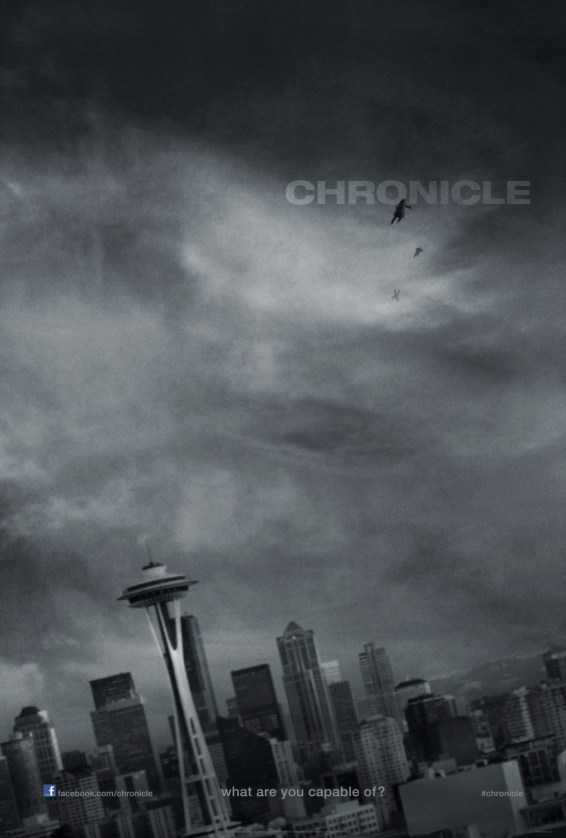
Chronicle (2012) – Film Review

In spite of its short runtime and novice director, ‘Chronicle’ is both a unique and refreshing take on the found-footage subgenre. Diverting from the usual teen horror stories that have completely overtaken the found-footage style for a more sci-fi-esque narrative, which overcomes its gimmicky camerawork and occasionally dated CG effects through riveting moments of action, fast-paced direction and charismatic performances from its young cast.

Plot Summary: After three high school friends venture into a mysterious hole which travels deep beneath the Earth, they reemerge with incredible telekinetic abilities, with introverted; ‘Andrew.’ becoming the most powerful of the three. But, as ‘Andrew’ struggles to cope with his mother’s terminal illness and his father’s alcoholic abuse towards him, his friends ‘Matt’ and ‘Steve’ soon realise ‘Andrew’s abilities are beginning to consume him…

Directed by the infamous Josh Trank (Fantastic Four, Capone) and written by Max Landis, best known for his work on Netflix’s ‘Bright’ and ‘Dirk Gently’s Holistic Detective Agency.’ ‘Chronicle’ takes a lot of inspiration from modern superhero blockbusters, which in a way is ironic, as cast members Dane DeHaan and Michael B. Jordan would later go on to star in big-budget superhero films, with DeHaan portraying ‘Harry Osborn/The Green Goblin’ in ‘The Amazing Spider-Man 2’ and Jordan going on to portray ‘Johnny Storm’ in the ‘Fantastic Four’ remake as well as the threatening antagonist; ‘Killmonger,’ in 2018’s ‘Black Panther.’ So, for DeHaan and Jordan, ‘Chronicle’ essentially served as the jumping off point for their future careers.

Before filming actually began on ‘Chronicle,’ director Josh Trank had actors Dane DeHaan, Alex Russell and Michael B. Jordan live in a house together for fifteen days, and it’s due to this (in addition to Landis’ teenage-accurate writing) that you do feel a genuine bond between the three, as the group of friends act like real teenagers, reckless and immature yet not totally unlikeable, which was an important area to succeed in as a large majority of the story early on leans on their antics as they share banter and test how far their abilities can truly go. However, even with all three characters having quite diverse personalities, it’s ‘Andrew’ who really steals the film as a character. As, his descent into hysteria serves as a compelling character arc within the story, and is well-executed aside from one or two lines nearing the end of the runtime, which are reminiscent of a cheesy supervillain quote from an early 2000s blockbuster.

While the film’s cinematography by Matthew Jensen does begin as your standard affair for a found-footage flick, when it comes to the film’s final act it can be quite difficult to tell where (or what) the camera is actually supposed to be, as its during the final act the characters fully embrace their abilities, allowing them to fly, tear through buildings, make objects float with ease and even throw vehicles, with many of their impowered actions being seen through various CCTV footage or onlookers’ floating phones and tablets, resulting in a fairly chaotic conclusion in spite of its creativity.

Also, as a result of its found-footage style, ‘Chronicle’ lacks an original score, yet the film still features many songs through sources within the world of the film itself like radios and phones. And, while the film does have a more realistic feel because of this, the film’s constant overreliance on glitchy transitions have the complete opposite effect, as the overuse of glitches soon becomes just as irritating as it is distracting considering ‘Andrew’ is often filming through a contemporary camera.

Sadly, in the years since it’s release, much of the CGI throughout ‘Chronicle’ hasn’t aged well, as while some of the CG effects still hold up, there is such a huge number of effects seen within the film that it would’ve been difficult for all of them to remain unblemished. These dated CG visuals might also relate to the film’s budget of £8.9 million, which may seem like a large amount, but is actually quite thin when taking into account what is required of it. The film’s budget also played a part in where it was filmed, as ‘Chronicle’ was primarily shot in Cape Town, South Africa, with American designed vehicles needing to be shipped over for the production, even though the story takes place in Seattle.

In summary, whilst the film has its issues like many other found-footage flicks, ‘Chronicle’ is certainly an underappreciated entry in the subgenre, excelling in many different ways. And, since the film’s initial release, there have been plenty of rumours regarding a sequel, with Max Landis constantly being attached and then unattached as its writer. But, I think it’s pretty evident now that we’ll probably never see a sequel to this underrated science fiction story, which I believe is a good thing, as although the film does have some concepts which could be further explored, I feel the story of ‘Andrew’s psychotic downfall will always be the main focus of ‘Chronicle,’ and without his character, it would seem incomplete. Final Rating: 7/10.

chronicle-teaser-poster

Non-Stop (2014) – Film Review

Although ‘Non-Stop’ has been heavily overshadowed by a number of other films within the thriller genre, being mostly forgotten amongst the strew of critically acclaimed films that released in 2014. I personally feel this high-altitude thriller is one of the better stories set within the confines of an aircraft, utilising Liam Neeson’s action expertise to craft a compelling mystery with occasional moments of excitement, even if the film is noticeably lacking in both realism and memorability.

Plot Summary: While on a flight from New York to London, ‘Bill Marks,’ a worn and alcoholic air marshal, receives an anonymous text message, informing him that unless one hundred and fifty million dollars are transferred into an offshore account within the next twenty minutes, someone aboard the plane will die. Now, finding himself in the middle of a deadly cat-and-mouse game, ‘Bill’ desperately searches for the suspect, unintentionally implicating himself into a hostage crisis unfolding at thirty-thousand feet…

‘Non-Stop’ is actually the second of four films directed by Jaume Collet-Serra that feature Liam Neeson, beginning with ‘Unknown’ in 2011, then ‘Run All Night’ in 2015, and lastly ‘The Commuter’ in 2018. And, whilst Collet-Serra’s other films also contain a central mystery, ‘Non-Stop’ certainly has the most interesting location of the bunch, using its tight and claustrophobic setting of an aircraft to great effect as the film never cuts away from the plane itself, even when ‘Bill’s contacts his superiors we the audience remain inside the aircraft with the characters, adding to the suspense. The film also attempts to integrate themes of airline safety and security into its story, which are intriguing though they are never fully explored, nor is the terrorist’s motivation when it’s finally revealed.

Liam Neeson leads the cast as ‘Bill Marks,’ giving his standard action film performance as a mostly straight-faced action hero. But, just as he is in the ‘Taken’ franchise and every other explosive blockbuster, Neeson is an easy protagonist to root for, and ‘Bill’ is given a fair amount of development for what is required. Julianne Moore also makes an appearance in the film as ‘Jen Summers,’ who similar to the rest of the supporting cast of Michelle Dockery, Scoot McNairy, Corey Stoll, Jason Butler Harner, Nate Parker, Omar Metwally, and Lupita Nyong’o, is given limited characterisation and is mostly in the film to serve as a potential suspect, but I suppose considering this is the basis for the story, it would’ve been an enormous challenge to development the huge array of passengers and crew aboard the flight.

The cinematography by Flavio Martínez Labiano is serviceable for the most part, as whilst the film features a few attractive shots and focus pulls throughout its runtime, the majority of the film’s camerawork focuses on hand-held shots, which aside from lending themselves effectively to action sequences and scenes where the plane experiences turbulence, do become a little monotonous. ‘Non-Stop’ also features a couple of scenes that were filmed entirely within a single take, most notably, from the moment ‘Bill’ begins his announcement to the passengers about his phone inspection, through to the moment he duct-tapes a suspect’s hands together, there isn’t a single cut.

John Ottman’s original score does suit the film well, with tracks, like ‘Non-Stop,’ ‘Welcome to Aqualantic,’ and ‘Reluctant Passenger/Blue Ribbon,’ having a nice fusion of synth sounds, percussion, strings, and brass, adding up to simplistic yet competent soundtrack. Constantly pushing or creating the tension in a simple and confined environment while simultaneously fitting with the modern set design of the plane and ‘Bill’ as a reluctant hero forced into action.

With 95% of the film taking place within an aircraft, the set for the plane itself was certainly a crucial detail to get right. Luckily, ‘Non-Stop’ does succeed here, as despite the set having to be built slightly larger than a standard commercial airliner to accommodate for equipment and Liam Neeson’s 6’4′ height. The set does feel like a real plane, having both sleek business class and first class areas as well as lavatories and a crew rest compartment, all of which are very cramped and dimly lit, as the story takes place over the course of one night. This realism is even more impressive considering that the aircraft and airline are clearly fictional, as the aircraft type is never referred to yet its cabin interior and flight deck layout doesn’t match any real aircraft design.

In summary, even though films, like ‘Red Eye’ and ‘Flightplan,’ have taken the enclosed setting of an airplane and made it work before, I believe ‘Non-Stop’ has slightly more entertainment value, as whilst some viewers may find the story’s absence of realism quite frustrating at points, the film distracts from its over-the-top ideas and bland side characters through its tense and fast-paced narrative, making for a thrilling mystery for those that can suspend their disbelief for a few elements. And, with Liam Neeson and the rest of the cast helping ‘Non-Stop’ to collect plenty of air-miles for enjoyability, I’d say the film is worth a watch. Final Rating: low 7/10.

nonstop_xxlg

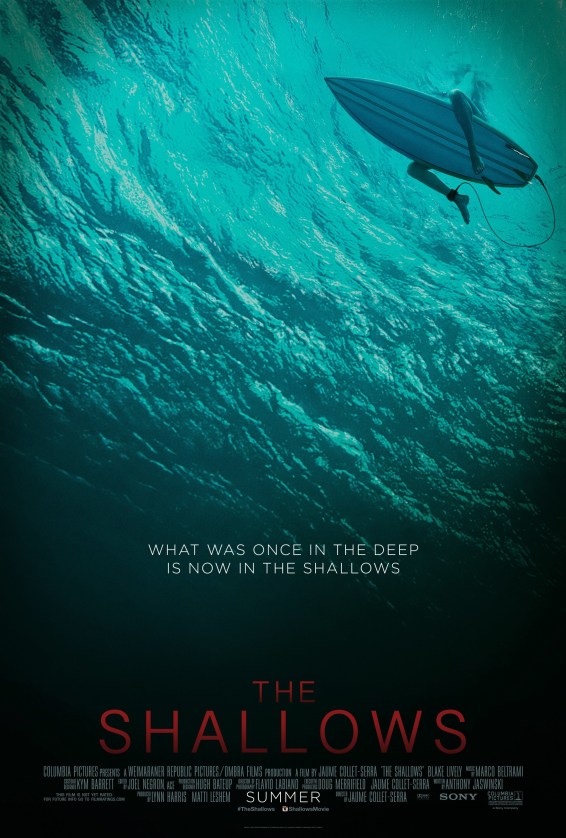
The Shallows (2016) – Film Review

Ever since the release of the original blockbuster; ‘Jaws,’ in the summer of 1975, shark films have never quite managed to reach the same heights, with flops such as ‘Deep Blue Sea,’ ‘Bait,’ ’47 Meters Down,’ and ‘Shark Night’ feeling quite distant from reality, as they present the animals as nothing but bloodthirsty monsters that devour brain dead characters. And, while ‘The Shallows’ does feel like a slight improvement over many of these other flicks (mostly in regards to its protagonist), the film still falters at many turns.

Plot Summary: After losing her mother in an accident, medical student; ‘Nancy,’ dumps her responsibilities in Galveston and travels to Mexico, hitchhiking a ride to a hidden beach that her mother loved when she was young. But, following her discovery of a whale carcass whilst surfing, ‘Nancy’ is attacked by a great white shark, leaving her tired, bleeding and stranded on a small rock, with no sign of rescue…

Releasing in 2016 to great success, ‘The Shallows’ was one of the first major shark films released into cinemas in quite some-time, but as well as being a creature-feature, ‘The Shallows’ also serves as a modern-day survival-thriller along the same lines of ‘127 Hours Later,’ as ‘Nancy’ has to face not only the great white shark stalking her, but also hunger, thirst, weather, and, of course, the severe leg injury she receives when she first encounters the apex-predator. Yet, despite this focus making for a far more engaging experience, the narrative simultaneously tries its hand at character development, with ‘Nancy’ receiving plenty of characterisation in the film’s first act, which is sadly made less interesting as its delivered through some immensely corny dialogue.

Blake Lively, who is by no means a renowned actress, with only two films throughout her career featuring her in the top-billed cast, carries the film solo, and her commitment to this role is certainly admirable, as Lively gives a very intense performance as a result of ‘Nancy’ being in agonising pain for most of the runtime. Furthermore, Lively did most of her own stunts for the film aside from her character’s surfing. In fact, in one particular scene where ‘Nancy’ crushes a crab and then proceeds to eat it raw, Lively is actually eating a real crab that the production crew found dead on a nearby beach that morning, so her reactions of disgust are genuine, even though the crab initially being crushed was achieved through CGI. This is all made even more impressive by the fact that Lively was pregnant with her second child at the time of filming. 

Flavio Martínez Labiano’s cinematography does provide a handful of attractive and memorable shots when not focusing on the characters, these usually being when the shots revolve more around the shark lurking beneath the water, or when the camerawork effectively uses framing to display how far ‘Nancy’ is from safety. And, of course, with the film being shot off the Gold Coast of Australia (excluding a few scenes which were shot in a large water-tank), the film’s signature beach and crystal clear waves are always an alluring sight, which is a superb visual clash with the horror that lies within.

The original score by Marco Beltrami serves the story well enough, as the film’s soundtrack drifts from beautiful calming tracks, like ‘Paddle In’ and ‘Nancy and Dad Facetime,’ to much more tense tracks, such as ‘Main Title’ and ‘Towards the Dead Whale.’ However, its when the story shifts into full on threat that the score begins to feel extremely generic, most notably, the track; ‘Underwater Attack,’ which is barely distinguishable from any other thriller soundtrack as it doesn’t encapsulate either the beauty or isolation of the ocean as many of the other tracks do.

Unlike ‘Jaws’ or even ‘Deep Blue Sea’ during a few moments, ‘The Shallows’ exclusively uses CGI to bring its shark to life, which is unfortunate, as while there is clearly a huge level of detail put into the shark as director Jaume Collet Serra (Orphan, Unknown, Non-Stop) worked closely with the film’s visual effects artists to ensure a sense of realism in the shark’s design, having the team do thousands of hours of research. This all sadly goes to waste though due to the demands of the film’s screenplay, as the shark in ‘The Shallows’ rarely acts like a real animal, often feeling like just a hulking murderous monster whose CG effects drastically vary depending on the shot.

In summary, ‘The Shallows’ is a step-up from a number of other shark flicks, but even with its above-average filmmaking and solid performance from Blake Lively. The film still falls into many of the common issues shark films do, as the story favours the idea of using its shark as a monster of the ocean and that alone, and this on top of the film’s occasionally strange stylistic choices, shoddy CG effects and cheesy dialogue, result in the film becoming just another poor attempt at revitalising the great white shark as a cinematically enthralling antagonist. Final Rating: 4/10.

shallows_xxlg

Now You See Me (2013) – Film Review

Quite a unique film within the crime genre, ‘Now You See Me’ is seemingly a magician’s rendition of ‘Ocean’s Eleven,’ as director Louis Leterrier crafts an entertaining film following the story of a group of four illusionists, all with different skill sets, robbing establishments across the globe before then vanishing without a trace. And although some viewers may have to suspend their disbelief for a few elements regarding the film’s plot, the film still manages to remain a mostly enjoyable affair throughout its two-hour runtime.

Plot Summary: After four small-time magicians are anonymously invited to attend a meeting in a run-down apartment. They reappear one year later as ‘The Four Horsemen,’ performing a live-show in Las Vegas in which they claim they are going to rob a bank in Paris from the stage and distribute the money to the audience. But after the French bank is found empty following the show, F.B.I. Agent, ‘Dylan Rhodes,’ is assigned to the case with his partner, ‘Alma Day,’ where the two begin to suspect that the heist was just a distraction for a bigger scheme…

Even though ‘Now You See Me’ prioritises its story over anything else, the film does still feature a couple of exciting action sequences including a car chase and a fistfight, respectively. Both of which stick with the idea of the magicians performing magic tricks, utilising many of the age-old illusions we know in creative ways, yet this shouldn’t be too surprising, considering director Louis Leterrier has worked on action flicks, like ‘The Transporter,’ in the past. However, ‘Now You See Me’ does miss a big opportunity to say anything interesting about the actual profession of magic, as with very few films focusing on characters with this skill set, it would make sense to delve further into figures with this expertise.

‘The Four Horseman,’ portrayed by Jesse Eisenberg, Woody Harrelson, Isla Fisher and Dave Franco are all splendid in their roles as the signature group of magicians. As despite Dave Franco’s ‘Jack Wilder’ feeling a little neglected at points as the fourth member of the group, all of the cast give very charismatic performances to where you could believe they perform live-shows most evenings. The group also spends most of the film being hunted by a F.B.I. detective duo portrayed by Mark Ruffalo and Mélanie Laurent, and although both actors are great within their roles, the film does attempt to build-up a romantic relationship between the two, which honestly comes across as forced and underdeveloped.

Mitchell Amundsen and Larry Fong’s cinematography is competent even if the film does have quite the overreliance on mid-shots to focus on the actors’ performances, first and foremost. But, when taking into account the film’s constant emphasis on eye-contact and slight of hand, I did feel the camerawork wasn’t used very effectively to display that trickery, which would’ve surely placed the film’s audience in the same position as ‘The Four Horsemen’s live-audience. The cinematography does still allow for plenty of stunning wide-shots during each live-show, however, as the camera glides over the huge crowd giving an impressive view of the massive audiences that attend each night.

The original score by Brian Tyler is a jazz-style soundtrack in the same vein as other crime/heist films such as the previously mentioned ‘Ocean’s Eleven.’ In particular, the tracks; ‘Now You See Me,’ ‘The Four Horseman’ and ‘Welcome to the Eye,’ are all deeply rooted in jazz, fitting a familiar tone to many real illusionist shows. So much so, that it soon becomes quite evident that Tyler has done his research as his score fully embraces its funky percussion and snappy brass motifs.

Throughout the film, there are also a number of magnificent effects, CG and practical alike. In fact, near the beginning of the film when ‘Daniel Atlas’ is performing an extraordinary card trick, we see the hands of Dan or Dave Buck digitally composited with Jesse Eisenberg’s face. These twin brothers are actually acclaimed sleight of hand artists, as well as pioneers in the art of cardistry, their skills have also been seen in the action flick; ‘Smokin’ Aces,’ from 2006, performing tricks for Jeremy Piven. Cardistry is an open display of skill with cards, similar to juggling, and the sequence of moves performed in ‘Now You See Me’ is called a ‘Pandora,’ which at the time of filming, was considered one of the hardest moves to perform in cardistry.

In summary, I feel ‘Now You See Me’ serves its purpose as a crime/mystery, telling an engaging and mostly well-written story that doesn’t take itself all too seriously. While the film does disguise many of its obvious flaws through smoke and mirrors, I believe the vast majority of viewers will enjoy this film for what it is. And, if you have already seen this flick and relished it, then I’d strongly recommend you watch ‘The Prestige,’ another magician-related film which I personally think surpasses ‘Now You See Me’ (and its uninspired sequel) in many ways. Final Rating: low 7/10.

NowYouSeeMePoster2

As Above, So Below (2014) – Film Review

Co-written and directed by John Erick Dowdle (The Poughkeepsie Tapes, Quarantine, Devil), ‘As Above, So Below’ is certainly an interesting found-footage flick, as while at a first mention the film may just sound like another a stereotypical horror, this claustrophobic delve into the caliginous Paris catacombs does actually have some depth hidden beneath its generic exterior. But, unfortunately, even with the story’s intriguing religious imagery/influences, the film soon plummets into clichéd mediocrity, mostly as a result of its bland characters and weak scares.

Plot Summary: When a team of explorers venture into the miles of twisting catacombs that lie beneath the streets of Paris, all in search of the historical ‘Philosopher’s Stone,’ they encounter far more than they bargained for when they realise they have entered into the first of the nine rings of Hell, where visions of their past sins begin to relentlessly torment them…

From a quick glance at the film’s visuals, its understandable why many would see ‘As Above, So Below’ as just another found-footage horror, only this time capitalising on the daunting real-world location of the Paris catacombs, which hold the remains of more than six million people in the small part of a tunnel network built to consolidate Paris’ ancient stone quarries. But, the film’s setting does heavily relate to the story of ‘Inferno,’ a short poem written by Italian poet Dante Alighieri in the fourteenth century, focusing on the tale of man who journeys through Hell guided by the Roman poet Virgil. Even the film’s title plays into this central idea, as the words; “As Above, So Below,” are derived from “On Earth as it is in Heaven,” which is a line from the ‘Christian Lord’s Prayer,’ which begins with “Our Father, Who Art in Heaven…”

Even though their characters are immensely mundane, Ben Feldman, Edwin Hodge, François Civil, Marion Lambert, and Ali Marhyar are all serviceable in their respective roles, delivering the usual screaming, ventilating and panicking performances that occur in most found-footage films. However, while the film’s protagonist; ‘Scarlett,’ is portrayed well by Perdita Weeks, the character herself is noticeably very unlikeable, mostly due to her constant obsession with the ‘Philosopher’s Stone,’ which she places all of her friend’s lives at risk for without question, and its never made clear whether we should actually be rooting for her to survive or not.

The cinematography by Léo Hinstin is more of the usual for this subgenre, providing the viewer with plenty of shaky and out of focus shots as the characters make their way through the almost pitch-black burial ground. This doesn’t distract from what is easily the film’s most impressive (and most ambitious) filming tip-bit, however, which is that the film was actually shot in the Paris catacombs themselves, not in a soundstage. In fact, this was the first production ever to secure permission from the French government to film within the catacombs, which would have been quite a challenge as the series of narrow, winding tunnels with centuries-old skeletons arranged on the walls would’ve had little room for equipment and crew. Yet, this does payoff as the film utilises its location extremely well, always placing its characters in tight areas to insight a feeling of claustrophobia in the audience.

While the film doesn’t feature a complete original score for obvious reasons, one of the strongest aspects of found-footage flicks, sound design, is actually an area where ‘As Above, So Below’ is lacking, as despite the film’s many attempts to feel impactful when the characters dive into water or are nearly crushed by a collapsing ceiling, a vast majority of the sound effects don’t sound as if they are coming from within the catacombs, usually sounding quite evident they have been added in post-production on account of the absence of echo or density.

With a large portion of the film’s narrative being based on Dante’s ‘Inferno,’ the film’s basic structure revolves around the characters heading further and further into Hell, with each character facing a vision of a personal sin from their past. These rings (or levels) in order are ‘Limbo,’ ‘Lust,’ ‘Gluttony,’ ‘Greed,’ ‘Anger,’ ‘Heresy,’ ‘Violence,’ ‘Fraud,’ and ‘Treachery.’ But, outside of the film’s previously mentioned religious symbolism, after the characters leave the initial catacombs, each ring is represented purely through dark empty caverns, which become quite repetitive after a point.

In summary, despite the Paris catacombs being a very compelling setting for a modern horror film, in addition to much of the film’s religious influences making for quite a unique story. I’d still suggest other claustrophobic horrors, like ‘The Descent’ or ‘The Thing’ before ‘As Above, So Below,’ as not only does the film eventually devolve into the standard horror formula without much experimentation, but if you’re unaware of any of the religious context, then I could definitely see the film being fairly forgettable. In all honesty, I feel this film may have been better off as non-found-footage, as I think this would’ve allowed the film to better explore its story and religious subtext. Final Rating: 5/10.

as_above_so_below-p874968

Scary Stories to Tell in the Dark (2019) – Film Review

Based on the controversial 1980s children’s book series of the same name, written by Alvin Schwartz and nightmarishly illustrated by Stephen Gammell. The film adaptation of ‘Scary Stories to Tell in the Dark’ directed by André Øvredal and co-written/produced by Guillermo del Toro, takes a very different approach than what many may expect when considering its source material, as the film ditches the book’s original anthology structure in favour of a more interconnected story to mixed results.

Plot Summary: On Halloween night, 1968, a group of childhood friends daringly enter the abandoned home of ‘The Bellows’ family, whose shadow has loomed over the small town of Mill Valley for generations as a result of the notorious murder of ‘Sarah Bellows,’ who turned her tortured life into a book of scary stories many years ago. But, these terrifying tales soon have a way of becoming all too real when the reclusive ‘Stella’ decides to take ‘Sarah’s story-filled journal home…

Clearly inspired by Stephen King’s classic novel; ‘It,’ ‘Scary Stories to Tell in the Dark’ takes the now-popular route of focusing on a younger cast, capturing that classic spirit of childhood adventure mixed with plenty of light-horror, but rather than setting the film in the hackneyed time-period of the 1980s, the film actually chooses to set it’s story near the end of the 1960s, which I feel helped the film stand out amongst the ‘It’ remake and it’s many similar incarnations. However, since its release, ‘Scary Stories’ has received plenty of criticism for its underwhelming horror, despite this being a completely intentional decision on behalf of the filmmakers, ensuring the film as a first step into the horror genre for younger audiences, never displaying too much violence or overly intense scares, not too dissimilar to the book series itself.

Zoe Margaret Colletti, Michael Garza, Austin Zajur, Natalie Ganzhorn, Gabriel Rush, and Austin Abrams portray the main group of friends and all do a decent job, as while their individual characters don’t exactly break new ground, they are likeable enough and have their inklings of both personality and humour. Contortionist Troy James, who once appeared on ‘America’s Got Talent,’ also appears in the film as one of the monsters, known as ‘The Jangly Man.’ Who, aside from having some CGI-enhanced facial expressions, actually performed all of his impressively unnatural body movements himself, including walking backwards, twisting his torso and crawling upside-down.

Roman Osin’s cinematography does remain visually interesting for the majority of the runtime, having plenty of creative shots with an effective implementation of colour alongside. But, it’s the film’s monsters that are unquestionably the best aspect of this adaptation, as the film takes the horrifying and abstract illustrations of Stephen Gammell and melds them into live-action flawlessly. So much so, that even in spite of each creature’s very limited screen-time, every monster manages to be quite memorable in its own right, from ‘The Pale Lady’ to ‘The Big Toe’ to the dilapidated poster-child scarecrow; ‘Harold,’ all of which were brought to life through prosthetic make-up and convincing practical costumes, rather than just CGI.

The original score by Marco Beltrami and Anna Drubich is a fairly average horror score, yet does still serve the story well for what it has too, even if most of the tracks aren’t worth looking-up afterwards. But, it’s also within the main score that there a small nod towards the original book series, as one of the tracks that plays throughout the film is titled; ‘The Hearse Song,’ which is actually a short song from the book series’ first entry.

As previously mentioned, the main creative decision that seems very peculiar to me is that the film adaptation of ‘Scary Stories to Tell in the Dark’ is not an anthology film, despite the books the film is based on focusing entirely on different characters/monsters with each new story. Instead, the writers chose to create an original story based-around the depraved spirit of ‘Sarah Bellows’ bringing the stories within her book to life, which was apparently done in order to stop one of the stories from overshadowing the rest, according to Guillermo del Toro. Yet, I personally feel that this makes the film less entertaining, as many of the story’s concepts and creatures feel underutilised, due to this overarching (and occasionally corny) narrative, even if the main story does borrow some of its ideas from other unused tales within the books series.

In summary, ‘Scary Stories to Tell in the Dark’ does triumph in its goal of crafting a horror more accessible for younger audiences, as I could see this film appealing to many young audience members in search of a gateway into the horror genre. If you are already a veteran within the genre, however, then I feel ‘Scary Stories’ will more than likely disappoint, as the film’s many cliché story-beats and lack of any gore or truly tense moments does result in this adaptation becoming a mostly forgettable horror flick with the exception of its many unique creature designs. Final Rating: 5/10.

scary_stories_to_tell_in_the_dark_xxlg

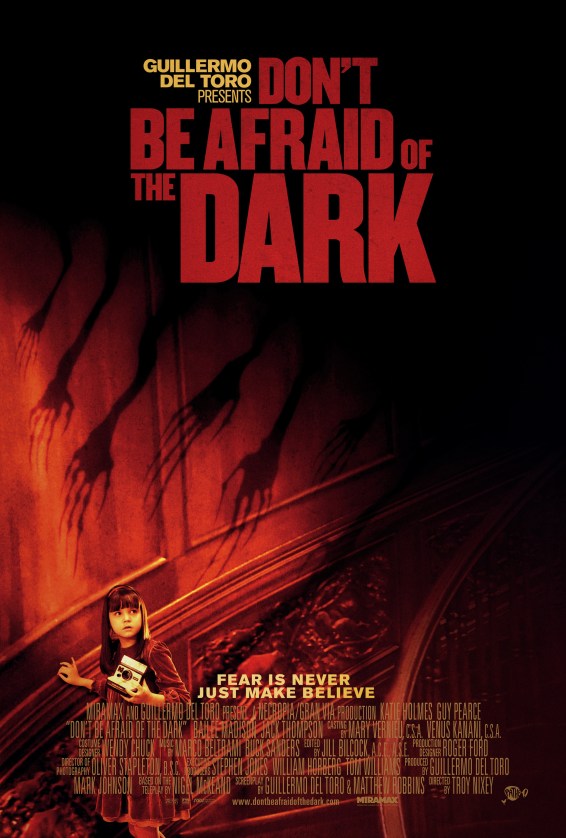
Don’t Be Afraid of the Dark (2010) – Film Review

Co-written/produced by Guillermo del Toro and directed by Troy Nixey, ‘Don’t Be Afraid of the Dark’ embraces many of the same elements as del Toro’s other films, crafting a narrative which combines both traditional gothic horror and childlike fantasy. But sadly, unlike a usual del Toro project, there is a noticeable absence in everything from captivating characters to memorising practical effects/creatures, resulting in a film that feels like a mostly copy-and-paste effort beyond one or two interesting ideas.

Plot Summary: After being sent to live with her father and his new girlfriend at their recently renovated manor, the previous home of the long-missing painter: ‘Emerson Blackwood’. Young ‘Sally’ begins to hear ominous voices emanating from the basement’s ash-pit, soon leading her to discover the cause of the painter’s disappearance…

Taking heavy inspiration from the classic H.P. Lovecraft short story: ‘The Rats in the Walls.’ ‘Don’t Be Afraid of the Dark’ is actually a remake of a low-budget 1973 TV film, as the now-iconic director Guillermo del Toro has stated in the past that he was terrified of the film when he first watched it as a child, later inspiring him to reimagine the mostly-unknown horror flick. Yet even with a much larger-budget and a more well-known cast, the film is still quite underwhelming when it comes to both its scares and story, as the film’s narrative follows a formula almost identical to many other modern horrors.

All of the performances throughout the film aren’t anything overly impressive, as whilst Katie Holmes does try her best to portray a young girl witnessing sights that no one else believes. Her character: ‘Sally’ (similar to the rest of the film’s characters) receives very limited characterisation, which does make many of the scenes revolving around the family-dynamic far less entertaining. Then there is also ‘Sally’s father and his girlfriend: ‘Kim’ portrayed by Guy Pearce and Bailee Madison respectively, and although Madison gives a serviceable performance, Pearce may give one of the weakest performances of his career here. As ‘Sally’s father: ‘Alex,’ always shows little concern or remorse when it comes to his daughter, making the character immensely difficult to resonate with.

The cinematography by Oliver Stapleton is very grand in its execution, allowing for a large number of wide-shots, some of which even flow smootly-around the various rooms of the manor. But it’s the film’s colour palette which is most worth noting, as the film utilises much more red and yellow than many other modern horrors, which is a pleasant change in terms of visuals as the more vibrant colours reflect the manor’s elegant design, which is probably one of the most visually striking ‘haunted houses’ in recent memory, with even the manor’s front entrance having a beautiful carving of an old oak tree merged into the multi-coloured glass.

Marco Beltrami and Buck Sanders provide the original score for the film, which similar to the film’s cinematography, gives the story a much more epic feel. As the heavy orchestral score could’ve easily been taken from any classic gothic horror, lending itself effectively to many scenes aside from a couple of generic tracks. The film often also features some fantastically creepy sound design, as the film’s creatures continuously speak to ‘Sally’ using their ghostly whispering voices, which seemingly echo throughout the usually empty corridors of the manor.

Although many of del Toro’s other outings do provide plenty of wonderful practical effects to gaze at, usually creating an array of unsettling and memorable creatures, ‘Don’t Be Afraid of the Dark’ takes another (less appealing) route to its monsters. As the film’s creatures are brought to life almost entirely though CG effects, which not only makes some shots appear slightly dated, but also manages to take away from nearly all of the film’s tense moments. Additionally, the film’s creature designs aren’t all that menacing, as despite the idea of evil fairytale monsters being quite unique (as the creatures are later revealed to be a sinister incarnation of tooth-fairies). The creature’s extremely small-size does make them feel very unthreatening even if it is a nice change-of-pace over having one large entity, as the film never does enough with its miniature antagonists regardless of what knives/tools they arm themselves with.

All in all, ‘Don’t Be Afraid of the Dark’ is a film that is regrettably just not worth its short runtime. As while I admire the effort to combine famed fairytale stories with a chilling atmosphere, the predominantly poor performances and numerous unexplored concepts leave the film simply another bland horror flick with a surprisingly weak screenplay by del Toro to-boot, especially when compared to much of his other work. Still, with all that said, I feel that Troy Nixey does deserve another shot in the director’s chair someday, as since this film’s initial release, he actually hasn’t worked on any other projects, which is unfortunate, as I do believe he does have some talent as a filmmaker when looking at this film’s merits. Final Rating: high 3/10.

Layout 1

The Blair Witch Project (1999) – Film Review

Upon its initial release, the original ‘Blair Witch Project’ blew many audiences away with its realistic depiction of found-footage horror, subsequently leading many audience members to believe that the events they were watching on-screen actually took place, making for a truly terrifying experience. However, now, many years after its first appearance, the film’s reputation has significantly altered with both critics and audiences alike, as ‘The Blair Witch Project’ is definitely a film that lies outside of the usual horror clichés.

Plot Summary: When three student filmmakers travel to Burkittsville, Maryland, in attempt to produce a documentary based around the local urban legend of ‘The Blair Witch,’ they mysteriously disappear after traveling into the nearby Black Hills Forest, leaving only their footage behind to be discovered one year later…

Whilst ‘The Blair Witch Project’ wasn’t the original found-footage horror film, with the infamous exploitation flick; ‘Cannibal Holocaust,’ first introducing the horror subgenre in 1980. ‘The Blair Witch Project’ was the first film to popularise the found-footage concept, as this film was at one point in time in the ‘Guinness Book of World Records’ for the largest box-office ratio, as the low-budget film only had a budget of around £45,000 and made back over £189 million, quickly spawning an inconsistent horror franchise despite the film’s only partially complete backstory for its creature and setting.

The three main cast members of Heather Donahue, Joshua Leonard, and Michael C. Williams (who all share their real names with their characters), are all tremendous throughout the film, as while their character’s don’t receive nowhere near as much development as they should considering how much screen-time we spend with them, each one of the actors do give the impression they are becoming more tormented and frustrated the longer they remain in the Black Hills Forest. The main reason the film’s protagonists don’t receive much characterisation, however, is actually due to the film’s production itself, as with the film not focusing very heavily on story, the actors were given no more than a thirty-five page outline of plot points rather than a full screenplay. So, as filming continued, the cast just played out various scenes, only having little knowledge of the mythology behind ‘The Blair Witch’ and improvising the vast majority of their lines.

Practically the entirety of the cinematography by Neal L. Fredericks is exactly what you’d expect from a found-footage horror, featuring an abundance of both shaky and out-of-focus shots, further adding to the idea that just behind the lens is a group of amateur student filmmakers (with some scenes even being shot by the cast themselves). In addition to the hand-held camerawork, the film’s visuals are also quite distinctive when it comes to its visual quality, as throughout the duration of the film, many shots remain incredibly grainy and occasionally even switch to a completely greyscale colour palette, which again, whilst adding to the realism of the film being a no-budget student documentary, does ensure the absence of any genuinely attractive shots.

Although it’s only heard during the film’s atmospheric end credits, ‘The Blair Witch Project’ does actually have an original score composed by Antonio Cora, but obviously being a found-footage horror, the film mostly aims to please with its sound design, as the sounds of crackling leaves and chirping birds are heard continuously. Interestingly, many of the eerie branch-cracking sounds heard at night even being made by the director and his friends simply walking up to the cast’s camp-perimeter and then tossing around twigs, rocks, and branches in various directions.

The main aspect that many will either admire or despise about ‘The Blair Witch Project,’ is its previously mentioned focus on realism and minimalist storytelling, as while the film does utilise its forest setting very effectively throughout the runtime, many who may be expecting a thrilling final act or possibly even a glimpse at ‘The Blair Witch’ herself will be greatly disappointed, as due to the story’s constant emphasis on realism, the film never actually provides any genuine evidence of the supernatural, with many of the film’s tense moments mostly relying on the darkness of the woods or the belligerent quarreling between the characters.

In summary, ‘The Blair Witch Project’ is certainly a fascinating horror film even if it isn’t always a successful one. As, to this day, this found-footage indie flick is a very divisive film for horror fans, with a 86% score on Rotten Tomatoes, the film has the highest-rating of any film that was also nominated for a Razzie Award for Worst Picture. So, even with the cast’s impactful performances and ‘The Blair Witch’ herself being an intriguing urban legend, this is one horror that really depends on your personal taste. For myself, while I find the film far from perfect and considerably less compelling than many other iconic horrors, I can appreciate what this experimental piece of filmmaking (and its marketing) was trying to accomplish, and for that, I feel it’s worth at least one viewing for any fan of the genre. Final Rating: 6/10.

blair_witch_project_ver3_xxlg

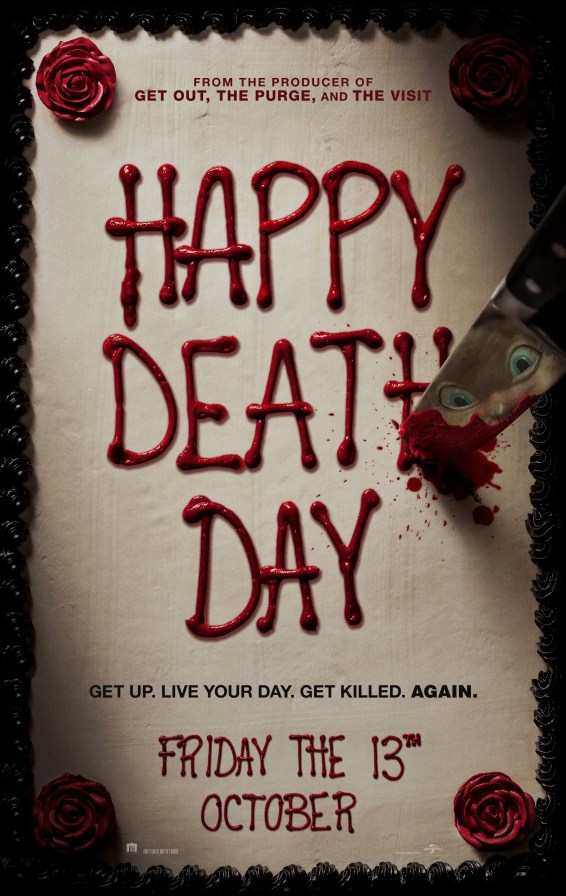
Happy Death Day (2017) – Film Review

Another horror flick from production company Blumhouse Pictures, ‘Happy Death Day,’ released in 2017, does at least extend out of the usual range of Blumhouse horrors to become more of a horror-comedy than just a straightforward teen slasher. But, similar to the rest of their associated franchises, e.g. ‘Insidious,’ ‘The Purge’ and ‘Paranormal Activity,’ both ‘Happy Death Day’ and it’s sequel, have their fair share of issues, with some being far more severe than others.

Plot Summary: Waking up in the dorm room of a boy whose name she can’t remember after a night of heavy drinking, self-centered college student; ‘Tree Gelbman,’ intends to continue her trend of avoiding her birthday, but little does she know that later that night on her way to another party, someone is waiting to murder her. Only after being killed, ‘Tree’ awakens in the same dorm room, soon realising she is being forced to relive her brutal night of murder over-and-over again until she discovers her killer’s identity…

‘Happy Death Day’ similar to many other day-repeating stories in the past, takes most of its inspiration from the comedy classic; ‘Groundhog Day,’ from 1993. Yet, unlike many of the other films that are inspired by this beloved comedy flick, it becomes clear over time that ‘Happy Death Day’ is quite derivative of ‘Groundhog Day,’ as the film’s story not only utilises the comedy’s plot without much innovation (only throwing a killer into the mix). But, the film even steals the main point of the narrative, that being its main character and their correlating character arc, using the time-looping concept to in a way punish the protagonist for their cruel behaviour towards others.

In spite of this, however, the protagonist; ‘Tree,’ portrayed by Jessica Rothe, is by far the best element of the film, as while ‘Tree’ does go through a character arc that is all-too-familiar as previously mentioned, Rothe makes a fantastic first outing as an actress through her very enjoyable performance. Then, of course, there is the killer, whose identity remains a mystery throughout most of the runtime, known as ‘The Babyface Killer,’ the killer’s outfit is actually the mascot of ‘Bayfield University,’ where the film takes place, and although the costume itself is far more goofy then intimidating, the mask/costume was actually designed by Tony Gardner. The costume designer behind the now-iconic; ‘Ghostface,’ costume from the ‘Scream’ series, which does help redeem to the killer’s undoubtedly petty motivation.

The film’s cinematography by Toby Oliver isn’t anything amazing, but does back up the story effectively in a variety of scenes. Whether that’s through its use of wide sweeping shots when the characters are in an intense chase, or when more shaky hand-held camerawork is used to reflect ‘Tree’s breakdown when she first realises she is stuck in her current crisis. Yet, similar to much of its story, the film never leans enough into a more outlandish/experimental nature when considering what the film could accomplish with its cinematography.

Talented composer Bear McCreary handles the film’s original score, which isn’t very distinctive from most of his other work within the horror genre. But, despite the score’s lack of memorability, it still does feel as if there is a decent amount of effort put into it, as the soundtrack actually has quite a lot of range even if some of the tracks don’t always fit with the tone of the film. This also goes for many of the songs used throughout ‘Happy Death Day,’ as nearly all of the film’s song choices massively differ in both genre and general popularity.

Still, the biggest problem ‘Happy Death Day’ suffers from is the inconsistency of its tone, as although the film does attempt to have scenes featuring both scares and humour, alike, many of the film’s jump-scares and jokes range in quality, and occasionally even cancel each other out. Additionally, the film also takes an unusual approach to its violence, as while ‘Tree’ dies countless times throughout the film in a number of different ways. The film never allows for any creative or darkly amusing deaths, due to its lack of any blood or gore. Yet, this wasn’t always the case, as the original screenplay for the film did actually include more violence, so much so, in fact, that it would have gained the film a higher age rating, with plenty of scenes having much grislier deaths that were later altered by director Christopher Landon (Paranormal Activity: The Marked Ones, Scouts Guide to the Zombie Apocalypse) during pre-production.

In summary, whilst the signature performance from Jessica Rothe does help to make ‘Happy Death Day’ a far more enjoyable viewing, in addition to the film’s idea of a protagonist being repeatedly murdered having plenty of potential for a horror-comedy. The film just doesn’t do enough with its story, feeling almost as if its a little restrictive on itself, never delving enough into being either funny or freighting respectively. So, if you desire an amusing horror-comedy to stick on one evening, maybe just go back to your more accustomed choices over this mediocre slasher. Final Rating: 5/10.

happy_death_day_xxlg