ParaNorman (2012) – Film Review

From Laika animation studios, the production company behind many beautifully animated stop-motion flicks, such as ‘Coraline,’ ‘The Boxtrolls’ and ‘Kubo and the Two Strings’ to name a few, comes another mostly enjoyable creepy family adventure, thanks mostly to some fantastic stop-motion animation as well as it’s great cast. Even if the film may not be as entertaining as some other films from Laika’s animated line-up.

Plot Summary: Norman Babcock’ is a misunderstood boy who can speak to the dead, but when ‘Norman’s estranged uncle tells him of an important ritual he must perform in order to protect his home town of ‘Blithe Hollow’ from a centuries-old witch’s curse. He must take on ghosts, zombies, and grown-ups in order to stop the curse from destroying everything he’s ever known…

The weakest element of the film for me is, unfortunately, the story, as although the idea of having a young boy who can see ghosts is a decent idea in itself, almost serving as ‘The Sixth Sense’ for families, in a way. The rest of the narrative never reaches the eerie tone of ‘Coraline’ or the fun of ‘Missing Link,’ with the film even attempting to have a few emotional scenes, but most of them fall a little flat, mostly due to never truly having the impact they need. However, the humour throughout the film is mostly decent as whilst not every joke lands, the majority of them do, and the film usually has a range of comedy for all ages, despite a few jokes going on for far too long.

Kodi Smit-McPhee gives a solid performance as ‘Norman Babcock,’ as well as Tucker Albrizzi, Christopher Mintz-Plasse, and John Goodman. However, my personal favourites of the cast have to be Anna Kendrick, and Casey Affleck as ‘Courtney’ and ‘Mitch’ without a doubt, as the two of them portray two weak-minded teenagers helping ‘Norman’ on his paranormal adventure, with ‘Courtney’ clearly having an interest in ‘Mitch’ which he is completely oblivious towards.

Tristan Oliver handles the cinematography throughout ‘ParaNorman,’ which is definitely a weaker element of the film, as the cinematography simply backs-up the animation rather than doing anything incredibly interesting with the shots, there still is the occasional pleasing shot, however, and the cinematography does display many of the miniature sets very well.

The original score by Jon Brion is very reminiscent of classic 1980’s horror flicks, which is suitable considering the film’s opening scene has ‘Norman’ watching an old zombie flick, and while the soundtrack isn’t incredibly memorable on itself, it works well enough in the film to increase some of the comedy and atmosphere when it can, with the track; ‘Zombie Attack in the Eighties,’ being my personal favourite for this exact reason.

Unsurprisingly, the stop-motion animation is phenomenal throughout the film, as every character and every miniature set looks incredible, having a creepy and exaggerated yet still appealing look. All with smooth motions similar to any other animated film, whether animated through CGI or not. In the few short instances where CGI is used within the film, however, it’s normally used to great effect, usually to simply improve the visuals rather than taking the emphasis away from the hand-crafted animation itself. And, in order to generate the film’s 3D effects, the camera was cleverly mounted on a rig, which would take one shot, then slide to a slightly different viewpoint to take another, allowing for more less movement in the figures themselves.

In summary, despite ‘ParaNorman’ not quite managing to craft an incredibly memorable story for the majority of its runtime, I would say I enjoyed myself. As although ‘ParaNorman’ still isn’t my favourite of Laika’s film catalogue, as I personally feel there isn’t many areas the film overly succeeds in. The film is decently entertaining for the most part. Final Rating: 7/10.

paranorman-p660191

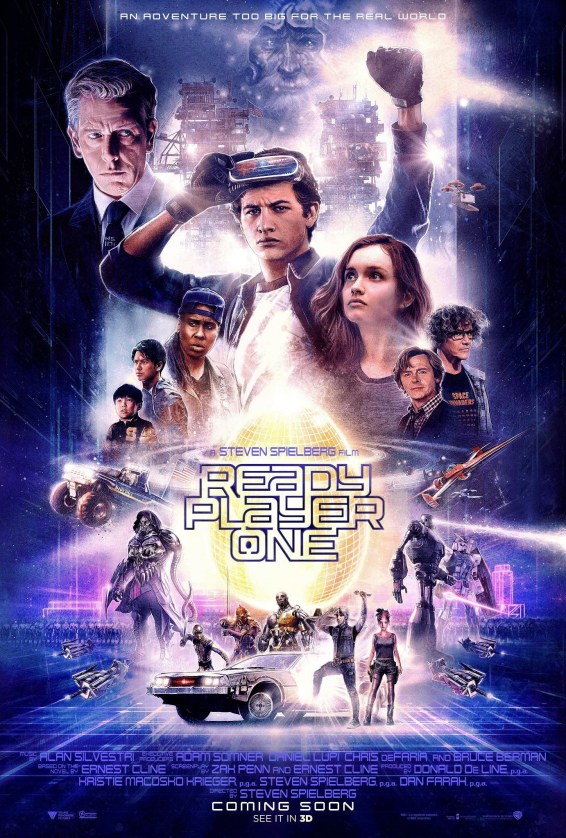
Ready Player One (2018) – Film Review

A triumphant return back to the silver screen for legendary director Steven Spielberg (Jurassic Park, Schindler’s List, Raiders of the Lost Ark), this time taking on an adaptation of a beloved science fiction novel by Ernest Cline. 2018’s ‘Ready Player One’ not only manages to capture that classic Spielberg whimsy all these years later, along with having plenty of breathtaking visuals and thrilling action sequences to boot. But, through its many, many references and appearances to/from iconic properties and characters from all types of media, ‘Ready Player One’ soon becomes a sweetly nostalgic adventure for any age.

Plot Summary: In the dystopian future of 2045, humanity spends their days inside ‘The OASIS,’ a virtual world where the only limits are your own imagination. Until on his deathbed, the original creator of ‘The OASIS’ makes a posthumous challenge, promising his entire fortune as well as complete control over his virtual world to the lucky ‘OASIS’ user that finds his ‘Golden Easter Egg.’

As its story may imply, ‘Ready Player One’ follows its novel counterpart closely by structuring its narrative half in the real world, and half within ‘The OASIS.’ Having all of the scenes set within the virtual world be comprised entirely of CGI, whilst reality is presented through live-action. While many viewers may initially be quite cautious of this (myself included), fearing a barrage of phoney-looking CG set pieces, Spielberg actually pulls this idea off very well, as the film never feels as if its CG visuals are being overused despite them taking-up most of the runtime. Interestingly, Spielberg teamed-up with effects company Industrial Light & Magic for most of ‘Ready Player One’s imagery, the company that previously worked with him for the first ‘Jurassic Park,’ so the Tyrannosaurus Rex that appears in the film is recreated using the same base-model made for the original film.

Best known as ‘Cyclops’ in the new incarnation of the ‘X-Men’ series, Tye Sheridan does a decent job at portraying the film’s likeable protagonist; ‘Wade Watts.’ Alongside Sheridan, Olivia Cooke as ‘Wade’s love interest; ‘Samantha,’ as well as Mark Rylance as ‘Halliday’ and Ben Mendelsohn and T.J. Miller as the film’s antagonists are all fine throughout the film. Yet, whilst every member of the cast is trying here, the performances in ‘Ready Player One’ are made more impressive considering the film’s extremely weak characters, as, unfortunately, nearly every character we meet within the story is mostly one-note, being nothing more than your traditional hero, companion or villain, etc.

Although an enormous amount of the cinematography by Janusz Kaminski is visually striking, having a large number of moving shots where the camera soars through the limitless world of ‘The OASIS.’ It’s difficult to judge it in its entirety, as a good majority of the camerawork is obviously CG due to half of the film’s story being set within a virtual world, and whenever we cut back to reality, the cinematography usually feels quite bland. However, I do appreciate the gloomy colour palette that’s utilised when the film returns to the real world, as it contrasts well against the incredibly colourful visuals of ‘The OASIS.’

Even though the film’s original score by Alan Silvestri is a serviceable and uplifting score in its own right, sounding subtlety like a Steven Spielberg classic. The film’s score was originally going to be composed by longtime Spielberg collaborator John Williams, but as a result of a scheduling conflict with another Spielberg film, Williams left the project to Alan Silvestri. Making ‘Ready Player One’ the third of only three films where Spielberg didn’t collaborate with Williams.

Many of the main problems I find hard to ignore with ‘Ready Player One’ mostly revolve around its weak writing, as although not continually noticeable, the film has a number of cheesy moments/clichés scattered throughout its story, in addition to many moments of humour which fall completely flat. Some critics have also taken issue with the enormous amount of characters from other media appearing in the film, seeing it as pandering and meaningless. I don’t agree with this criticism, however, as the original novel is full of many of its own (unique) references. Personally, I also feel many of the film’s flaws are made up for by its brilliant action scenes, from the opening race to the explosive final battle, to even a scene where the characters travel into the classic 1980 horror; ‘The Shining,’ every set piece is both creative, and enjoyable to watch.

In summary, ‘Ready Player One’ definitely has its faults, in particular, when it comes to its screenplay. But, even with its problematic writing in mind, I’d still say the film is a great addition to Spielberg’s huge line up of family flicks, as while it may not be on the same level of classics like ‘E.T. the Extra-Terrestrial’ or ‘Hook,’ for example, ‘Ready Player One’ overcomes its weak characterisation and occasional corny dialogue to become an exciting sci-fi/fantasy odyssey, and a film I’d recommend a trip into ‘The OASIS’ for. Final Rating: low 7/10.

ready_player_one_ver2_xxlg

Source Code (2011) – Film Review

Talented science fiction director Duncan Jones (Moon, Warcraft, Mute) brings us an original, engaging and fast-paced sci-fi thriller with ‘Source Code.’ Combining futuristic technology, human drama and a handful of brief action sequences, all equalling to a pretty enjoyable experience, which I personally believe still holds up today, aside from a few small issues here and there.

Plot Summary: When soldier, Colter Stevens, awakens in someone else’s body, he soon discovers he’s part of an experimental government program. Created in order to find the bomber of the commuter train he is aboard. A mission he has only eight minutes to complete…

Despite this time limit, however, the film always manages to deliver its story very effectively as this sci-fi flick builds up a decent layer of mystery and tension as to who is responsible for the bombing throughout giving the film an almost mystery-type structure alongside its science fiction elements, using the story’s original ideas to their best extent as we follow our protagonist; ‘Colter,’ as he searches for his target over the course of the film, encountering many different characters on board the train along the way.

The supporting cast of Vera Farmiga, Michelle Monaghan and Jeffrey Wright all do a pretty great job throughout the film. However, Jake Gyllenhaal as ‘Colter Stevens’ is obviously the stand out, proving that he can hold his own as a leading hero, regardless of whichever genre he finds himself in. But, unfortunately, the characters within the film definitely lack development, as aside from a few short scenes, the film never really seems interested in exploring its characters any further than it needs to. Yet, with the film’s tight runtime, I definitely feel this was a missed opportunity.

The cinematography by Don Burgess is decent for the most part, never really experimenting with anything incredibly creative, but staying at a fairly decent level for the majority of the film. The original score by Chris Bacon is without a doubt the worst element of the film, however, as I simply feel the score doesn’t suit this genre of film at all. Feeling more like a soundtrack from a generic action blockbuster, rather than a slick sci-fi, such as this one. In addition, I feel the train set (where a large majority of the film takes place), could do with some improvement as although this is only a small criticism, and won’t bother most, I personally found the set to look and feel a little too much like a set at points, with the green screen view from the windows not helping towards this. But, with most of the film being shot on a soundstage in Montréal, Canada, I suppose the film we received is the best result.

The film does manage to blend many of its more outlandish sci-fi aspects with the more grounded science fiction elements very well, however, cutting between the past and the present at various points throughout the film, always utilising the lighting as well as the different sets very effectively as a terrific visual indicator for the audience. I was also surprised on my initial viewing to find that the film contains quite a few comedic moments throughout as ‘Colter’ experiences the strange reality he now finds himself in through some of his funny interactions with the various people on board the train. However, this did lead me to wonder if the film could’ve been improved should the story have fully embraced a more absurd tone, perhaps this then would’ve made the film extremely unbelievable, but I personally feel this way the film could have explored some of its interesting ideas further.

In summary, ‘Source Code’ is an enjoyable ride, as while I personally find the film much more interesting for its story and ideas as the cinematography and original score throughout the film can sometimes be a little bland and uninspired (in addition to the film’s lack of characterisation). Regardless, I still find the majority of the filmmaking pretty decent and it results in a mostly entertaining sci-fi thriller, and a pretty easy watch on a Saturday night. Final Rating: 7/10.

Source Code Poster

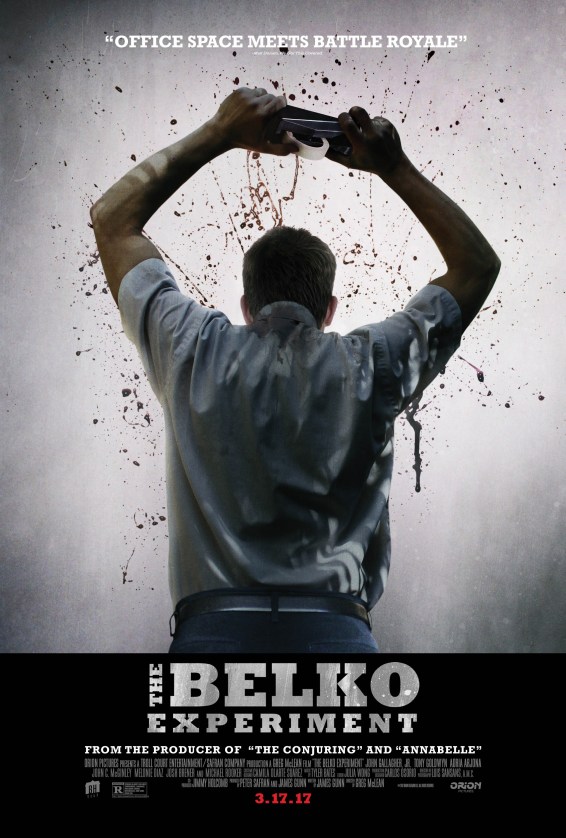
The Belko Experiment (2016) – Film Review

An intense thriller with elements of dark comedy thrown-in for good measure, ‘The Belko Experiment’ is written by ‘Guardians of the Galaxy’ and ‘Slither’ director James Gunn, and directed by Greg McLean (Wolf Creek, Rogue, Jungle). A strange combination which works surprisingly well, in my opinion, as it results in a tense, unique and fast-paced corporate thriller.

Plot Summary: In a twisted social experiment, eighty American employees are locked in their high-rise corporate office building in Bogotá, Colombia, and ordered by an unknown voice coming from the company’s intercom system to participate in a deadly game of kill or be killed. Throwing every employee into a state of panic and a question of morals…

As you can probably guess from a quick pitch of the plot, the film doesn’t hold back from throwing the audience straight into the gory chaos after only about ten to fifteen minutes of screen-time. From here, the film continues to build tension and a dreading atmosphere throughout the remainder of the film. At many points, ‘The Belko Experiment’ also dips its toes into the realm of dark comedy, not too surprising as writer James Gunn was originally set to direct as well. However, when it was time to begin filming, Gunn withdrew, deciding he didn’t want to spend several months working on such a violent film, leaving Greg McLean to bring his screenplay to the big screen.

John Gallagher Jr and Adria Arjona are the main two protagonists of the film, as well as Tony Goldwyn and John C. McGinley as the antagonists, who, are all great in their varied roles, due to there being an entire building worth of employees involved in the story, however, there’s an enormous amount of characters, which, of course, means barley any of characterisation for most of them aside from a couple of lines or the occasional scene.

Whilst the cinematography by Luis David Sansans isn’t any overly impressive, it is decently pleasing throughout the runtime and does manage to show off many of the practical gore effects within the film to their best extent. The same can not be said for the CG effects throughout the film, however, as despite not always being noticeable, there are a few moments where the CGI becomes extremely obvious due to the film’s smaller budget and can take the viewer out of the film for a moment or two. In addition to this, the original score by Tyler Bates is not very memorable or unique despite doing a decent job of building tension throughout the film, as the soundtrack rises and changes over time to fit the more tense and chaotic feel of the narrative. However, the score can also feel a little out-of-place when some of the more comedic scenes come into play, but this issue is also noticeable when it comes to the tone of the film, as despite much of the comedy actually working fairly well, the film sometimes changes from horrific imagery to humour a little too quickly.

One of the main elements of the film is obviously the gory deaths, as the story resolves pretty much completely around the deaths of the various characters, and while the film does have a few memorable moments and kills. I was a little dissatisfied with the variety, as the majority of the characters seem to die simply from gunshots, rather than the film getting creative and making better use of the office location it’s set in, perhaps by having characters use office/everyday equipment and supplies as improvised weapons.

As you may also expect with a violent setup such as this one, ‘The Belko Experiment’ also delivers on plenty of underlying themes and messages. Focusing mostly on how we react as humans to traumatic events and give in to our most primal instincts and selfish desires, and while I do wish these ideas were delved into a little further. They are present throughout the film regardless, and I did find the way the film explored the ideas of human survival pretty interesting. Even my personal favourite scene in the film (which takes place in the main reception of the building) excels at expressing these themes in pretty a brutal way.

In summary, if all you’re searching for on your Saturday night is a bit of gory, comedic excitement with a few underlying themes mixed in good measure. Then, ‘The Belko Experiment’ happily delivers, as the film is an enjoyable thrill-ride with some quick pacing and practical gore effects, regardless of some of its weak characters, CG effects and relatively simplistic story. Although it may not appeal to all, for me, I feel it’s a decent viewing experience. Final Rating: 7/10.

belko_experiment_xxlg

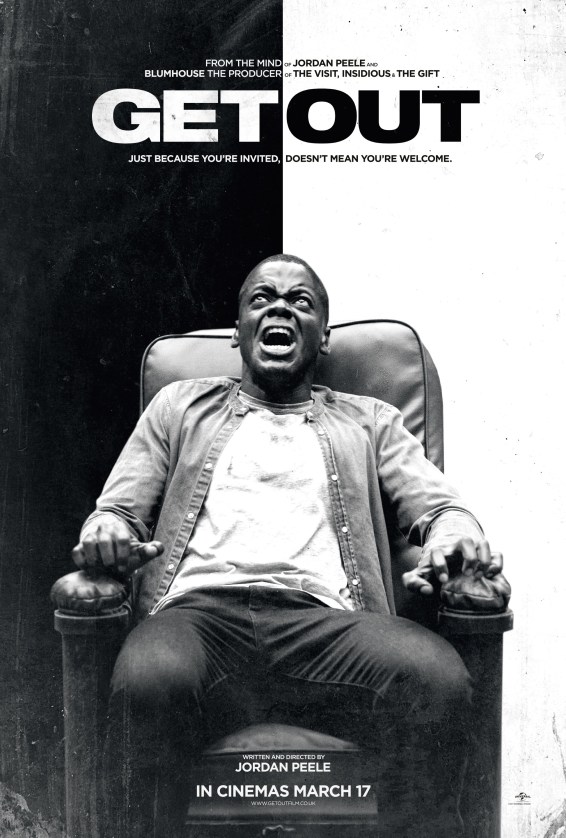
Get Out (2017) – Film Review

Actor and comedian Jordan Peele tests his hand at directing for the first time with this intelligent thriller, as ‘Get Out’ utilises its original story and some great performances to become a definite step-up from Blumhouse Productions’ usual standard for films. However, although many viewers think this film is phenomenal throughout it’s most of its runtime, I personally don’t agree, as I actually feel there is more than a few areas in need of some improvement.

Plot Summary: When a young African-American man visits his white girlfriend’s parents for the weekend, his simmering uneasiness about their reception of him eventually reaches an extreme boiling point. Leading ‘Chris’ to believe more sinister forces may be at work…

As already mentioned, the film’s narrative is original, and any regardless of quality, I always appreciate originality when it comes to storytelling. Despite ‘Get Out’ being initially pitched and advertised a horror, however, the film is really anything but, as the film actually has many inclines of comedy mixed-in with some tension-filled moments here and there, and although the film is entertaining, ‘Get Out’ never really manages to build-up an eerie atmosphere or becomes particularly creepy, which is why I believe that the film is now classed as a thriller rather than a horror by most.

The best aspect of the film for me is by far the performances by the cast, as Daniel Kaluuya, Allison Williams, Bradley Whitford, and Catherine Keener are all exceptional throughout, with Daniel Kaluuya as the protagonist; ‘Chris Washington,’ in particular, really keeping me engaged, as he delivers a very ranged performance, managing to portray a very likeable and realistic character within only a short period of time. Unfortunately, not all of the supporting cast quite level-up to this standard.

The cinematography by Toby Oliver is a decent throughout the film, as although there are plenty of attractive shots (most of which make great use of the large open spaces the majority of the story takes place in (especially in the opening scene of the film, which is executed perfectly). There are also a variety of fairly bland shots, this may also be due to the film’s colour palette, however, as throughout the film the use of a very restrictive colour palette results in the film feeling a little visually dull, rather than using its colours to play into its story or genre.

Personally, the weakest element of the film for me is the original score by Michael Abels, as the entire soundtrack itself feels very unusual, and although unique, it usually comes off as incredibly distracting throughout many scenes within the film. Using an orchestra as well as vocals, the score attempts to reflect some of the more surreal scenes nearing the end of the film, and although I appreciate the attempt, I simply don’t think it works, with the track; ‘Sikiliza Kwa Wahenga,’ feeling particularly out-of-place as a result of its bizarre lyrics.

Although the original score may be lacking, the writing throughout the film is brilliant throughout, as writer and director Jordan Peele balances the screenplay’s comedy and horror, in addition to building-up an engaging mystery throughout the story, as every piece of dialogue contains many subtle clues and hidden meanings which come into play later in the narrative. Of course, with a plot such as this one, there is also an enormous amount of themes and social commentary underneath the story itself, and while I did find the majority of the film’s ideas very interesting and thought-provoking, I also found that some of the themes of racism and social issues can often overshadow the film’s main story.

In summary, ‘Get Out’ is a decent thriller, as despite the fact that the performances and writing on display throughout the film is definitely impressive, I still feel the lack of an eerie atmosphere in addition to a suitable original score for the film’s tone really hurt the film. Regardless of this, ‘Get Out’ is still a thriller will plenty of entertainment value, while nothing absolutely amazing, the film definitely has its moments, and I would say the film is a solid watch if you enjoy the occasional thriller. Final Rating: 7/10.

get_out_ver4_xxlg

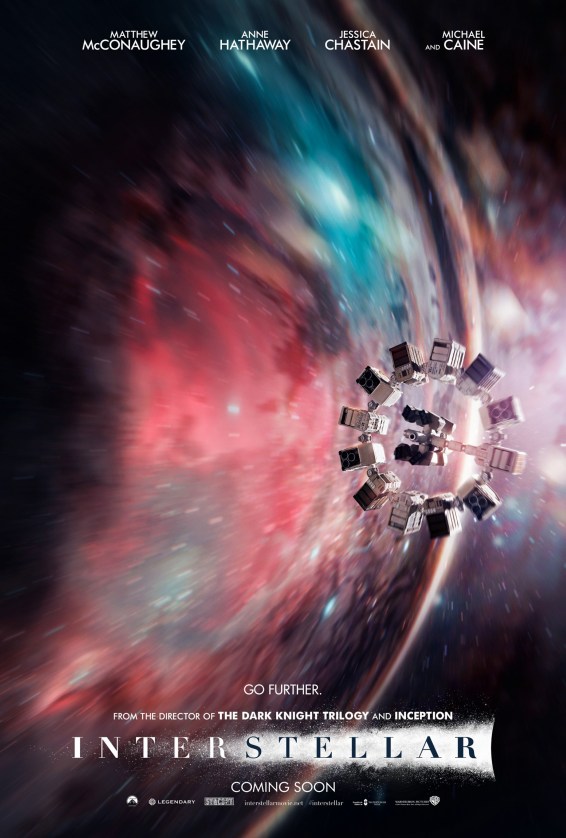
Interstellar (2014) – Film Review

Critically-acclaimed director Christopher Nolan (Inception, Memento, The Dark Knight) tries his hand at the sci-fi genre for the first time with ‘Interstellar,’ as the beautiful cinematography by Hoyte Van Hoytema and an incredible score by Hans Zimmer all lend themselves to this story of mankind venturing to another galaxy in search of a new world for our species, and although not perfect, the film is pretty entertaining overall.

Plot Summary: When Earth’s future is being riddled with disasters, famines, and droughts. There is only one way to ensure mankind’s survival, interstellar travel, as a newly discovered wormhole in the far reaches of our solar system allows a small crew to venture where no one has gone before…

Nearly every visual throughout the film is stunning, as along with the gorgeous cinematography, lighting and CG effects. The film really nails the shots within space perfectly, making many scenes look as if a majority of their shots had been taken straight from a NASA satellite, even integrating a great blend of colour and darkness. Many of the planets the crew visit throughout the narrative, however, although very cinematic, never really looked ‘otherworldly.’ Usually looking more like an attractive screen-saver, and although colours are used, it’s definitely a very contained colour palette when it comes to the planets. Many of the interior spaceship sets are also very striking in their appearance, hitting a great mix of modern-day and futuristic/high-tech technology.

Matthew McConaughey portrays ‘Cooper,’ the protagonist of the film, and as per usual, he does a great job within the film as a father who wants nothing but a great future for his children, and although none of the characters get much development throughout the story, Anne Hathaway, Jessica Chastain, Michael Caine (and even Matt Damon with his short appearance) all raise the bar high for the level of acting on display.

As already mentioned, the cinematography by Hoyte Van Hoytema is fantastic throughout, having slow-panning shots along with a variety of still shots for character scenes. All of this is being backed up by the unbelievable score by Hans Zimmer, legendary composer for films, such as ‘Pirates of the Caribbean,’ ‘Gladiator’ and ‘The Lion King,’ as well as a few other Christopher Nolan films alongside this one, his calming, unique and very science fiction-like soundtrack really lend themselves to many of the impressive shots within space. In particular, the track; ‘Cornfield Chase,’ a wonderful track which has since become one of the composer’s most beloved pieces of work.

Easily the best scene of the film for me was near the ending, as it’s around the conclusion of the film that we get some of the most amazing visuals combined with an extremely emotional moment, as a character undergoes a realisation and the film goes full circle, connecting itself back to some of the film’s early scenes. This climax really gives us some payoff for everything we’ve watched, it doesn’t quite make up for the long runtime, in my opinion, but it’s still somewhat satisfying.

One of my biggest issues with the story and the film in general really, is the extremely slow pacing, as although it’s not boring to watch it by any means. The film does move along at a very slow pace, as I found in particular the first thirty minutes of the film can really drag on a first watch, as the story gets development only in small pieces. This is when the writing by Christopher Nolan and his brother is put to great display, however, as we learn many small details about the characters and world of the film which come back into relevance later.

In summary, I wasn’t massively impressed with Christopher Nolan’s first sci-fi outing, although I was entertained for the most part whilst watching, and the visuals and music were a joy to experience. The long runtime and slow build-up stops the film from being super rewatchable for me, as it never becomes as memorable as ‘Inception,’ ‘The Prestige’ or ‘Dunkirk’ through its story and characters. The film was still very well made, and I do feel Nolan would benefit from a stronger story in the future should he chose to return to the sci-fi genre. Final Rating: low 7/10.

interstellar_ver4_xxlg

Cloverfield (2008) – Film Review

Personally, I’m not an enormous fan of found-footage horror films (especially when it comes to many modern horrors). However, ‘Cloverfield’ is a rare exception to this, as when this film was first announced, it was surrounded in mystery, as the images and clips that were released revealed literally nothing about the film’s plot. Now, years after its release, we know it’s a large-scale classic monster throwback, all brought-together with a dark atmosphere, clearly inspired by classic monster flicks, such as the original ‘Godzilla,’ ‘King Kong’ and ‘Gorgo.’

Plot Summary: After the U.S. Defense Department discover a videotape in the former Central Park, the located footage reveals a group of friends celebrating a surprise farewell party in the apartment of ‘Rob Hawkins’ in Lower Manhattan, that is until the footage continues on, and soon begins to show an event far more disturbing…

The film opens with a U.S. Defense Department logo, shortly followed by footage of our main protagonist and his girlfriend in bed. This blending of old footage mixed in with the new footage of the attack is a great way of giving some development to the characters, alongside breaking up the large amounts of chaotic action the film sometimes falls into. The film’s reasoning for this is explained early on in it’s runtime, as the current tape we are watching is recording over another.

Aside from Lizzy Caplan and T.J. Miller, the rest of the cast are mostly unknown. I would say they all did a decent job, as the majority of their screen-time is consisted of running and panicking as they make their way through the streets of New York, however. I really enjoyed Lizzy Caplan’s performance, in particular, as her character ‘Marlena’ gets thrown into an intense and painful situation later in the story. This also results in one of the most disturbing/memorable scenes of the film. Unfortunately, the characters aren’t given a huge amount of development, aside from a few short scenes throughout the film.

Being a found-footage film as it is, the cinematography within the film is almost entirely hand-held. Usually utilising a large amount of camera movement to block the audience’s view of the creature in the early stages of the film. Which does really help build tension and excitement, as well as add to the overall mystery that initially surrounded the film. However, the constant and aggressive shaking of the camera can sometimes become a little overwhelming, even if it does result in some thrilling action scenes. The film obviously also doesn’t have an original score due to its found-footage style.

Another element of the film I quite is the design of the monster, as the design seen throughout the film is very original and really gives off a powerful and intimidating feel, which does enhance the film’s visuals. However, one element of the visuals I don’t enjoy is the film’s colour palette, as it can make the film feel a little too much like a typical action blockbuster or cliché horror at points.

The film does also have plenty of memorable moments throughout, as the film’s narrative goes on, New York City becomes more and more destroyed. This allows our group of characters to make their way through the monster’s path of destruction, avoiding dangerous areas and making fantastic use of the large sets and CG effects the film presents on-screen.

In summary, I quite enjoy ‘Cloverfield,’ although it’s now become part of a strange almost anthology-like film franchise with the likes of ’10 Cloverfield Lane’ and ‘The Cloverfield Paradox.’ The initial idea of a simple found-footage monster film always intrigued me, and I’m happy to say director Matt Reeves, producer J.J. Abrams and writer Drew Goddard all did a decent job here, as even though weak characterisation and overly shaky cinematography do let the film down somewhat, great tension building as well as the film’s superb level of realism and some brilliant creature designs, keep the film interesting enough to enjoy. Final Rating: 7/10.

cloverfield_ver2_xlg

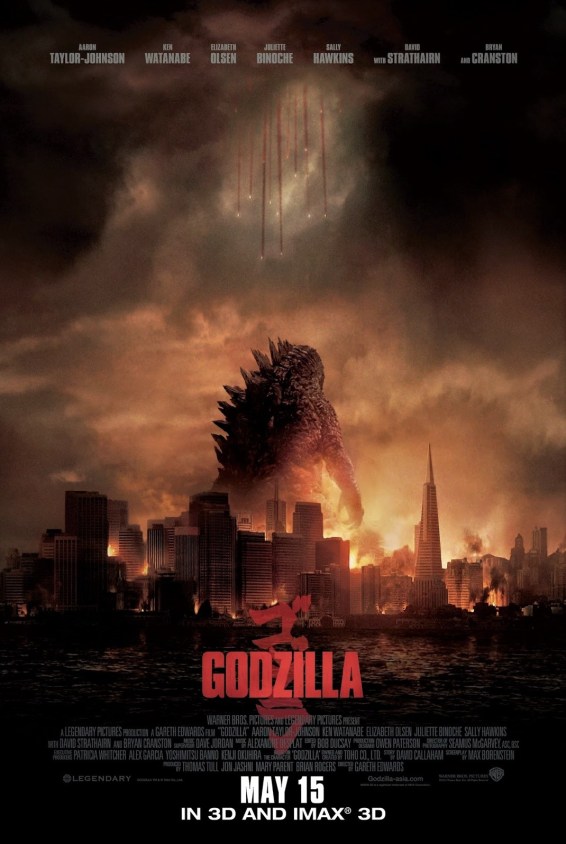
Godzilla (2014) – Film Review

‘Godzilla’ has always been an interesting franchise to me, with the Japanese film series spanning over sixty years and introducing new directors, new production teams and new foes for the gigantic lizard to face time after time, with the franchise even devolving into more of a self-parody nearing the end of it’s run, ‘The King of Monsters’ was still (and probably always will be) immensely popular. So, of course, it was only a matter of time until America decided to once again try their hand at the iconic monster franchise.

Plot Summary: When scientists discover a giant ancient spore underneath the Philippines, they decide to preserve it for research for fifteen years until it eventually hatches. Now, with malevolent creatures from the inside threatening the existence of all of mankind, another ancient creature known only as ‘Godzilla,’ rises from the depths of the ocean to restore balance to nature once again…

America first attempted a ‘Godzilla’ film back in 1998, with many feeling the film differed far too much from the original source material. Featuring an awful redesign for the classic monster and no actual antagonist for him to face. Now, returning back to the classic formula but with a more grounded tone and some fresh creature designs, director Gareth Edwards (Monsters, Rogue One: A Star Wars Story) does a mostly solid job with this remake, even if the film can sometimes focus far too much on the humans and other creatures within the story then ‘Godzilla’ himself.

Although much of the narrative focuses on the ‘Ford’ family, portrayed by Aaron-Taylor Johnson, Elizabeth Olsen, Carson Bolde, Bryan Cranston, and Juliette Binoche. With all the cast doing a decent job (Cranston being the obvious stand out with a few amazing scenes showcasing his true talent) their characters are given very little development, as although I do believe the human characters are an important element to break up the constant chaos from the massive monsters, the entire family of characters could have definitely used more characterisation when it comes to the writing.

However, in addition to the fantastic use of CGI throughout the film, the cinematography by Seamus McGarvey is actually pretty great, as while there are a few bland shots throughout the film, the majority of the shots involving the giant creatures are used to great effect, with an enormous amount of wide shots showcasing the creature’s true scale. Whilst the original score by Alexandre Desplat is also pretty effective, as although it’s nothing incredibly memorable by itself, it’s still very effective, backing up both the film’s exciting action, as well as some of its more unnerving, eerie and emotional scenes.

My primary issues are in relation to the film’s general pacing and diminutive amount of action set pieces throughout the runtime as although I usually have no issue with story or character moments over action when it comes to your average blockbuster, the film does build up a large amount of excitement towards the final battle between the monsters for a large portion of the narrative. Even cutting away from some action scenes to tease the audience early on in the film, and although the final confrontation is entertaining, I wouldn’t say it makes up for the amount of time it makes its audience wait.

In summary, despite its flaws, I actually quite enjoy ‘Godzilla,’ as although it’s by no means perfect and I do hope the inevitable sequel improves upon many of its flaws. The film is still engaging enough throughout to keep its audience engaged, despite its lack of action and rather weak characterisation. The film’s brilliant visuals and surprising grasp on realism during many scenes are probably enough to elevate this monster flick for most. Final Rating: 7/10.

Godzilla 2014 movie poster large malaysia release