The Lighthouse (2019) – Film Review

“Why’d Ya Spill Yer Beans?” – Thomas Wake

A psychological horror only in the vaguest sense, 2019’s The Lighthouse is a strange yet wondrous cinematic venture, incomparable to many other modern releases due to its distinct visual aesthetic and often genre-defying narrative. Led by an outstanding pair of performances from Robert Pattinson and Willem Dafoe, The Lighthouse is the type of film that relentlessly sears itself into its audience’s memory, employing striking visuals, Lovecraftian influences and ominous, atmospheric sound design to craft an unnerving flick that closely resembles the fever-induced night terrors many actual lighthouse keepers endured during their lonesome, off-shore excursions tending to a beacon.

Plot Summary: Off the coast of late 19th-century New England, two lighthouse keepers, the taciturn former lumberjack, Ephraim Winslow, and the elderly lighthouse caretaker, Thomas Wake, set foot on a remote island to begin their monthly duties. But, as the tight-lipped men spend more and more time in each other’s company, a mutual resentment begins to arise as their collective sanity unravels…

Co-written and directed by Robert Eggers (The Witch, The Northman), the story of The Lighthouse is loosely based on a real-life affair that occurred in 1801 known as the Smalls Lighthouse Tragedy, during which two Welsh lighthouse keepers, sharing the name Thomas, became trapped at their station during a storm. When one of the men died, it is said to have driven the other insane. The story also takes some influence from the seafaring literature of renowned authors, including Herman Melville, Robert Louis Stevenson and H.P. Lovecraft, all of which lends the film a sense of historical accuracy and unseen oceanic horror. According to Eggers, earlier versions of the screenplay were more coherent, however, this was later changed as Eggers’ felt the best way to approach the film was to make the audience feel like they were losing their minds alongside the characters. As a result, The Lighthouse can occasionally be quite difficult to follow, yet this ultimately works in the narrative’s favour as the audience, much like the characters, struggle to tell reality from delusion. Even the very concept of time gets thrown out the window by the end of the second act, as it becomes almost impossible to tell how much time has passed between certain scenes, forcing the characters (and the audience) to question exactly how long they have been on the secluded island.

As the only two cast members, Robert Pattinson and Willem Dafoe are superb throughout the runtime as fellow lighthouse keepers, Ephraim Winslow and Thomas Wake. Simultaneously appearing layered and accurate to the time period, both characters flourish on-screen thanks to Pattinson and Dafoe’s electric performances, which are only enhanced when combined with the continuously compelling dialogue. This period-accurate dialogue bleeds through every scene, with the screenplay’s emphasis on 19th-century terminology and expressions instantly transporting the audience to the time and setting of the story, enriching Ephraim and Thomas’ persistent back-and-forths as they become increasingly infuriated at their situation. What makes the characters even more interesting is that neither one can be sighted as a reliable point-of-view, no matter how much they claim the other to be untrustworthy or deranged under their boozy breath.

Shot on Double-X stock, which requires much more light to get exposure. So much so, that the crew had to use about fifteen to twenty times more lights on set when filming at night or indoors to successfully capture footage. The cinematography by Jarin Blaschke is imposing and hypnotic, exhaustively utilising the isolated location of the treeless, storm-susceptible island along with its adjoining greyscale colour palette to create an array of hauntingly beautiful shots. Many of the visuals almost seem like depictions of a sailor’s nightmare, with the dense black-and-white grain of 35mm capturing every shadow and contour, lending the visuals a sensation of 19th-century expressionist horror, where even the tight aspect ratio proves to be claustrophobic. Furthermore, The Lighthouse employs several exceptional practical effects to depict the story’s more fantastical elements, such as its visual references to Greek mythology and seafarer folklore, like mermaids, sirens and the mighty Kraken.

Moving onto the original score, composer Mark Korven adds to the film’s foreboding atmosphere through doomy tracks, like ArrivalCurse Your Name and Stranded. However, much of the unsettling atmosphere could also be attributed to the immersive sound design, central to which is a bellowing foghorn, which sound designer, Damian Volpe, turned to J.J. Jamieson to create; a craftsman in Shetland, Scotland, who makes YouTube tutorials on operating and maintaining foghorns. Using Jamieson’s samples, Volpe manipulated the sound to create a period-accurate foghorn that was suitably startling and memorable.

Another favourable aspect of The Lighthouse is its authenticity, not merely in relation to its time period, but in regard to its restraint to filming on-location, which allows the film to retain a consistent level of practicality throughout, similar to its sense of dread, both of which are only broken up by the handful of well-timed, darkly comedic moments.

In summary, disorientation is clearly the primary intent of The Lighthouse as Eggers offers hints towards a grander narrative, but never fully commits to a sweeping, readable story, even avoiding an easily discernible conclusion. As such, instead of being a straightforward psychological horror or a disturbing historic folk tale, The Lighthouse is more of a surreal exploration of masculinity, guilt and seclusion, in addition to standing as another impressive showcase of Robert Eggers’ screenwriting and filmmaking abilities. Rating: 9/10.

lighthouse_ver2_xxlg

Loving Vincent (2017) – Film Review

“You Want to Know So Much About His Death, but What Do You Know of His Life?” – Marguerite Gachet

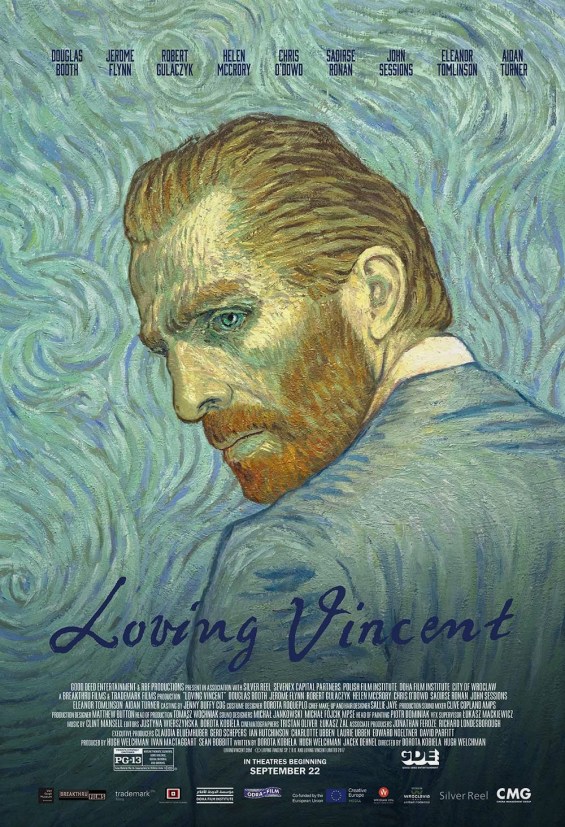
An arduous labour of love by a team of over one hundred professional artists, Loving Vincent, released in 2017, turns the renowned artwork and tragic life story of the celebrated post-impressionist artist, Vincent van Gogh, into an extraordinary biopic. Originally filmed in live-action before every frame was hand-painted over in the distinct style of van Gogh’s artwork, Loving Vincent impressively employs hundreds upon hundreds of oil paintings and transforms them into a hypnotic and ambitious animated biography, even if its story and characters are less effectively crafted than its dazzling visuals.

Plot Summary: In the summer of 1891, one year after the presumed suicide of unwonted artist, Vincent van Gogh. Postman, Joseph Roulin, tasks his reluctant son, Armand Roulin, with delivering one of the artist’s final letters to his brother, Theo van Gogh, in Paris. But, when Armand arrives in the French capital, learning that Theo has, too, met his demise, he pledges to investigate van Gogh’s untimely death by venturing to the scenic town of Auvers-sur-Oise…

Obtaining a large amount of attention after its nomination for an Academy Award for Best Animated Picture in 2018. Loving Vincent is one of the most unique films to emerge from the animation genre in recent years, as immediately from the hand-painted opening title sequence, preceded by van Gogh’s quote; “We Cannot Speak Other Than by Our Paintings.” The audience is pulled into van Gogh’s hyper-sensual worldview through the film’s striking aesthetic. Aside from the astonishing visuals, directors Dorota Kobiela and Hugh Welchman also provide an alternative take on the historic biopic by having the life of Vincent van Gogh viewed from the perspective of a young man, via the stories he is told by those who knew him. And even though this investigative storyline doesn’t quite match up to the amazing visuals on display, it’s an engaging story, nonetheless.

While the main cast of Douglas Booth, Eleanor Tomlinson, Saoirse Ronan, Robert Gulaczyk, Jerome Flynn, the late Helen McCrory and Chris O’Dowd, are all terrific in their performances, none of the characters possess a French accent. And considering that the story takes place in 1800s France, I feel the immersion of the time period/setting could’ve been greatly increased should the filmmakers have chosen to cast English-speaking French actors/actresses. Moreover, similar to the narrative, the characters of Loving Vincent are one of the film’s lesser impressive aspects. Whilst Armand Roulin is serviceable as a headstrong protagonist, eager to fight and drink before he is pulled out of his slump and instructed to deliver van Gogh’s final letter, subsequently becoming more and more invested in the alleged suicide of the gifted yet largely detested artist. The majority of the characters are given little characterisation and merely serve as plot devices to edge Armand towards his next acquaintance and/or eyewitness.

Moving onto the visuals, Loving Vincent was predominantly animated through the rotoscope technique; an animation process that consists of tracing over live-action footage frame-by-frame. This technique allowed the filmmakers to implement the characters into a number of visually stunning environments, along with numerous recreations of Vincent van Gogh’s paintings. However, only the sequences set in 1891 are animated in the style of van Gogh’s artwork, as flashback sequences are animated in the style of black and white photographs of the time period, providing a clear visual distinction. Additionally, details such as cigarette smoke, clouds or flowing rivers make for fantastic transitions between scenes. On the whole, the visuals of Loving Vincent almost appear like purified echoes of Vincent van Gogh’s artwork, as the cinematography by Tristan Oliver and Lukasz Zal, combined with the vibrant colour palette and beguiling art style, results in countless enchanting shots.

From the outset, the original score by Clint Mansell backs up the stylistic visuals with a sombre and atmospheric soundscape. Through tracks like The Night CaféThe Yellow HouseMarguerite Gachet at the Piano and Five Sunflowers in a Vase, the score creates a sense of sadness that parallels the difficult life Vincent van Gogh led. Furthermore, despite having a noticeable lack of movement in the background of certain scenes, the sound design goes a long way in fleshing out the environment around the characters, whether that be the bustling streets of Paris or a quaint farm in Auvers-sur-Oise.

According to Loving Vincent‘s official website, the collective effort of the many talented artists that worked on the project resulted in a total of eight hundred and fifty-three oil paintings, as each art piece was utilised multiple times, with succeeding frames being painted on top of the original paintings. In the final film, there are around fifty thousand hand-painted frames, which is truly an incredible feat of artsy when taking into account how much time went into just a single scene.

In summary, Loving Vincent is an outstanding achievement, not only in the genre of animation, but also in the world of filmmaking. While the story and characters do leave room for improvement, these minor issues hardly detract from Loving Vincent‘s main attribute; its ravishing visuals. From the phenomenal use of colour to the detailed backdrops and innumerable visual references to van Gogh’s most recognised artwork, Loving Vincent is a captivating tribute to one of history’s most influential artists. And, as such, I’d say Loving Vincent is a biopic well worth seeking out, even if it’s merely for the experience of witnessing the craftsmanship of hundreds of animated oil paintings on-screen. Rating: low 9/10.

loving_vincent_xlg

Gone Girl (2014) – Film Review

“Want to Test Your Marriage for Weak Spots? Add One Recession, Subtract Two Jobs. It’s Surprisingly Effective.” – Amy Dunne

An intricate and satisfying adaptation of the novel of the same name by Gillian Flynn, which went on to be a New York Times bestseller following its release in 2012, being hailed by many publications as a “Literary Masterpiece.” Gone Girl, released in 2014, flawlessly combines its maze-like plot with the distinct style of director David Fincher (SevenFight ClubThe Social Network) and a duet of astonishing performances from Ben Affleck and Rosamund Pike. Promptly resulting in an unmissable mystery-thriller that represents an exceptional pairing of filmmaker and source material, fully expressing Fincher’s cynicism regarding the current age of televised media and the darkness lurking just beneath the surface of contemporary life.

Plot Summary: On the occasion of his fifth wedding anniversary, former New York-based writer, Nick Dunne, returns home to find that his wife, Amy, has vanished. After reporting her disappearance to the authorities, the couple’s public portrait of a blissful marriage soon begins to crumble as the cases’ ever-growing media attention places Nick as the prime suspect, ultimately leading everyone to ask the same question; did Nick Dunne murder his wife?

Making her screenwriting debut, Gillian Flynn does an extraordinarily efficient job of streamlining her four-hundred-and-thirty-two-page novel, retaining its bifurcated structure and elaborate twists without significantly altering the story as a whole. Certainly, not an easy task as the very nature of Gone Girl‘s story requires the film to be constantly jumping through time, depicting the entire timeline of Nick and Amy’s marriage from their first encounter through to the total collapse of their love life, giving the audience a clear understanding of their individual personalities and relationship. And, through it all, Amy remains a consistent screen presence, continually popping up in flashbacks to her earlier, happier days living in New York City, where she led a life of luxury as a thriving children’s author. That is, until her relationship with Nick, a working-class Midwesterner, comes into focus, gradually draining Amy of her individuality, which is only worsened by the pair’s eventual layoffs and relocation to Nick’s hometown. Quickly spawning whispers of spousal neglect, infidelity and domestic violence, all of which are condensed for the sake of the film’s runtime yet never feel rushed.

Both Ben Affleck and Rosamund Pike are phenomenal throughout the film with not a single weak moment between them as Affleck, who has never been more ideally cast, delivers a captivating balancing act of a performance, fostering sympathy and the suspicion that his true self lies somewhere between shallow husband and heartless murderer. While Pike, who has actually had very few lead roles despite her extensive filmography, is continuously emphatic and commanding. What’s more, is that Gone Girl is a film that doesn’t aim to paint either of these two characters in a purely positive or negative light. Instead, Flynn frequently leaves it to the audience to decide which character (if any) they should be rooting for as the couple copes with the rapid decline of their marriage in dissimilar ways. The outstanding leads aside, Gone Girl also features a terrific supporting cast of Carrie Coon, Kim Dickens, Tyler Perry and Neil Patrick Harris, all of whom serve crucial roles within the story.

As ever, Fincher’s regular collaborators turn in work of an exceedingly high standard, with Jeff Cronenweth’s cinematography being unerringly well-placed in nearly every scene, bringing a drab, underlit look to Nick and Amy’s home, the police station and other North Carthage locations. And although Gone Girl does admittedly have quite the overreliance on mid-shots, Cronenweth’s intentionally controlled approach does lend itself well to creating many memorable shots, speaking less to visual flair and more to Fincher’s adroit style.

Along these same lines, the original score by Trent Reznor and Atticus Ross is a gloomy composition, invoking feelings of anxiety in the audience with subtle electronic pulses. Allegedly, Fincher’s musical brief to Reznor and Ross was based on a visit he took to a spa in which the accompanying melody was supposed to be relaxing, yet Fincher perceived it as unsettling. And, this undoubtedly comes across in Gone Girl‘s score, with tracks like What Have We Done to Each Other?With Suspicion and Technically, Missing, perfectly encapsulating this idea of a supposedly comforting soundtrack which, in truth, instills a sense of dread.

Similar to the novel it’s based upon, Gone Girl‘s story is also teeming with compelling underlying themes and social commentary covering a range of topics. On a broader level, however, the story is really about public perception and how televised media builds fabulations that quickly get subsumed as truth, as the American populace is willing to swallow whatever narrative is sold to them without question, a thought-provoking theme that the film never forgets to explore and build upon.

In summary, Gone Girl is a shining example of an adaptation that stays faithful to the source material whilst simultaneously injecting the narrative with its own style, not once letting the story drag or the suspense settle in its pursuit of transferring an acclaimed novel to the silver screen. Still, with a plethora of attractive visuals and tremendous performances (along with a handful of darkly comedic moments), I feel Gone Girl would’ve been a memorising film even in the absence of its engrossing central mystery. Rating: low 9/10.

gone_girl-p932779

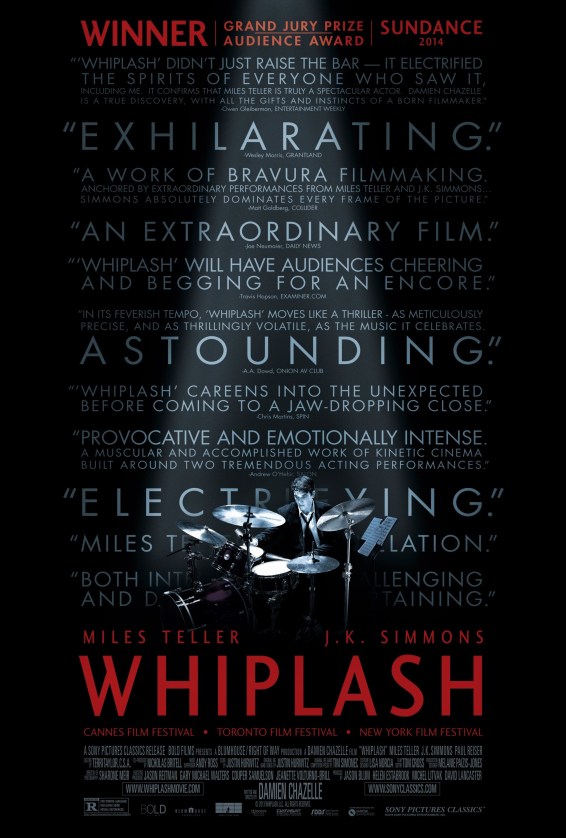
Whiplash (2014) – Film Review

Written and directed by Damien Chazelle (La La Land, First Man), this indie drama appeared almost out of nowhere to incredible reviews from both critics and audiences alike in 2014, featuring some unbelievable performances from Miles Teller and J.K. Simmons alongside an engaging narrative and well-written screenplay. ‘Whiplash’ truly raises the bar for quality when it comes to the independent film sector and small-budget filmmaking in general.

Plot Summary: A promising young drummer (Andrew) attending a prestigious music academy finds himself under the wing of the most respected professor the academy has to offer who has gained an infamous reputation over time due to his constant abuse towards students who aren’t reaching their full potential…

Being shot in only nineteen days, ‘Whiplash’ feels like a true passion project for director Damien Chazelle, with large portions of the film even being based on Chazelle’s own experiences of being part of a band during his high school days. Despite this promising inspiration, to even receive funding for ‘Whiplash’ Chazelle actually had to turn a small portion of the screenplay into a short film, which he then submitted to numerous different short film festivals. In which, J.K. Simmons played the same character whilst Miles Teller’s character was originally known as ‘Johnny Simmons’ before later being changed.

Miles Teller (who has actually played the drums since he was fifteen) portrays the film’s protagonist; ‘Andrew,’ very well. Presenting ‘Andrew’ as a likeable and talented drummer who soon becomes incredibly self-righteous as he begins to dismantle his own life after becoming more and more obsessed with trying to perfect his musical talent. However, it’s the criminally underrated J.K. Simmons who truly steals the film. Portraying ‘Andrew’s tutor, ‘Fletcher,’ as a strict and often intimidating presence, usually resulting in ‘Andrew’ (as well as his many other students) being eager to impress him despite his constant ridiculing of them, a large amount of which the writing actually manages to make quite humorous without taking away from the film’s drama. Melissa Benoist also makes a short appearance within the film as ‘Nicole,’ a young girl who ‘Andrew’ has an affection for, yet despite her decent performance, ‘Nicole’ ends up feeling very underutilised due to her extremely short screen-time.

The cinematography by Sharone Meir is fairly solid throughout the film, while nothing extraordinary, the film’s various close-ups of different drum kit pieces (as well as many other instruments) really gives the film an element of style, in addition to making for a number of memorable and visually pleasing shots. Alongside this is also the film’s colour palette, which mostly consists of dirty yellows and oranges, giving the film an almost rustic appeal, not too dissimilar to a drum kit cymbal itself.

Throughout the runtime, the original score by Justin Hurwitz is predominantly based around drums (obviously due to the story’s focus on such) aside from a few tracks which utilise various trumpets and pianos. Meaning all of the tracks feel very Jazz-like, which fits perfectly with the film as nearly every song that is performed by ‘Andrew’ and his fellow band members is always within this genre of music. My personal favourite from this long list of impressive work is more than likely the signature track; ‘Overture,’ simply due to the track’s enormous amount of range.

As mentioned previously, Miles Teller has played the drums since he was fifteen, and throughout the film, ‘Andrew’ receives numerous blisters on his hands due to his vigorous and unconventional style of jazz drumming. While most are aware of this, it may surprise some audience members to know that this style of drumming is Teller’s own. Meaning some of the blood that appears on his hands and drumsticks within the film’s more intense scenes is actually real. Despite this commitment, however, ‘Whiplash’ still suffers from one major flaw, this being the film’s overly fast pacing. Due to the film’s tight runtime, ‘Whiplash’ does sprint through its story without much hesitation. Although it doesn’t feel rushed per se, the film’s fast pacing does begin to make certain aspects of its story feel undeveloped as a result, e.g. ‘Andrew’s various relationships and his life outside of music.

In summary, ‘Whiplash’ may be a low-budget indie flick, but through its marvellous performances, brilliant writing and attractive cinematography. Chazelle manages to craft a very entertaining film focused on music that isn’t simply an adaptation of a classic theatre performance. Whilst it may not feature the vibrant and varied colour palette of ‘La La Land’ or the stunning CG visuals of ‘First Man,’ Damien Chazelle’s directorial debut is certainly an astounding effort and a memorable musical experience, to say the least. Final Rating: low 9/10.

whiplash_xxlg

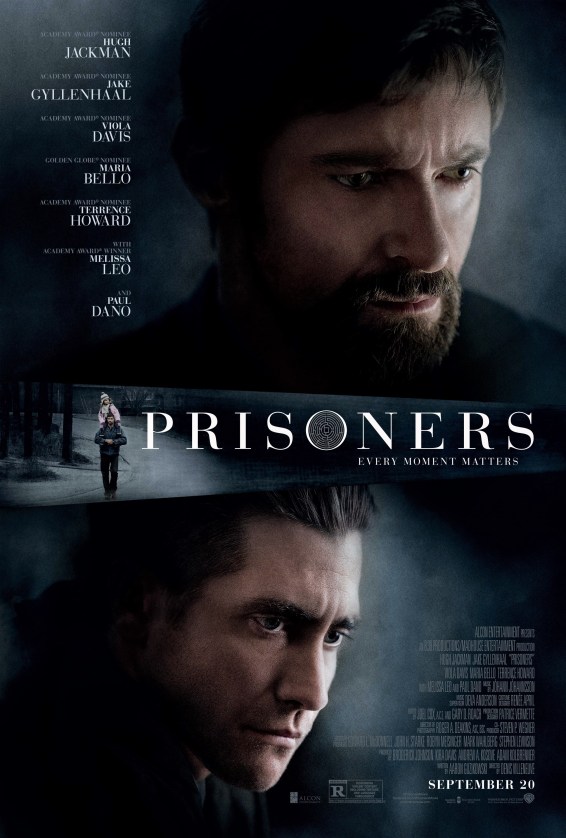
Prisoners (2013) – Film Review

Combining some incredible performances from Hugh Jackman and Jake Gyllenhaal with some phenomenal cinematography by the legendary Rodger Deakins alongside an effective original score by the late Jóhann Jóhannsson. ‘Prisoners’ is truly a masterclass in both filmmaking and storytelling. Although some audience members may be turned-off by the film’s depressing subject matter and few graphic scenes, this story of two family’s lives being turned upside-down is nevertheless an enthralling thriller/drama throughout.

Plot Summary: Shortly after their Thanksgiving dinner, parents: ‘Keller’ and ‘Grace Dover’ discover their six-year-old daughter and her best friend are missing. So after contacting the authorities, the driven: ‘Detective Loki’ is assigned to lead the case. But as hours turn into days, knowing his daughter’s life is at stake, frantic father: ‘Keller’ considers taking matters into his own hands…

Directed by Denis Villeneuve (Sicario, Arrival, Blade Runner: 2049), Villeneuve further proves here that he is one of the best filmmakers currently working. As every one of his films are always engaging and visually-breathtaking, with ‘Prisoners’ being no exception. As throughout the entirety of its lengthy runtime, ‘Prisoners’ manages to be a compelling, tense and emotional experience that will leave most viewers on the edge of their seats. Making the viewer long for the truth just as much as the film’s characters do, with the film’s main theme of parenthood even exploring the idea of how far a parent would truly go to protect their child, most notably through ‘Keller’s questionable actions later within the story.

The film’s main pairing of Hugh Jackman as ‘Keller Dover’ and Jake Gyllenhaal as ‘Detective Loki’ is the perfect combination of two talented actors, as both give brilliant performances as their respective characters with Hugh Jackman in particular, giving one of the best performances of his entire career. Especially in the scene: ‘The Interrogation’. In which, ‘Keller’ repeatedly tortures the potential kidnapper of his daughter, resulting in the scene soon becoming one of the film’s best moments mostly through Jackman’s incredibly intense performance. In addition to the two leads, the supporting cast of Terrence Howard, Viola Davis, Maria Bello, Dylan Minnette, Paul Dano and Melissa Leo are all excellent, with each member of the main cast adding to the film’s realistic portrayal of two concerned families, going days without rest as their thoughts dwell purely on their missing children.

From the opening shot through to the very last, the cinematography by Roger Deakins is nothing short of phenomenal. As ‘Prisoners’ elevates its already gripping narrative through its many stunning shots, alongside the film’s absolutely superb lighting, which makes fantastic use of darkness and silhouettes wherever possible (a staple of Roger Deakins’ cinematography) which only backs-up the film’s grim tone and tense atmosphere further. Another element of the film that also adds to its visual aesthetic is its use of weather. Being set in a small town in Pennsylvania, ‘Prisoners’ makes great use of the state’s dreary weather for a number of scenes, meaning many shots are enhanced due to the constant barrage of rain and snow within them.

The late Jóhann Jóhannsson handles the original score for the film, most known for his work on ‘The Theory of Everything’ along with plenty of other films from director Denis Villeneuve. The film’s score really adds to many of its dramatic moments, as the soundtrack mostly focuses on the story’s more emotional and tragic aspects, and while not overly memorable, the tracks: ‘I Can’t Find Them’ and ‘Through Falling Snow’ both fit the bleak tone of the film flawlessly. While the track: ‘The Keeper’ is also worth a quick mention simply due to its impactful feel.

Although it isn’t a major problem, my only real issue with the film is the lack of depth for some of its characters, as ‘Detective Loki’ and ‘Alex Jones’ both have many interesting traits, with ‘Detective Loki’ having a variety of tattoos, rings and facial ticks (many of which were actually Jake Gyllenhaal’s ideas). Whilst ‘Alex’ has the I.Q. of a ten-year-old due to his learning difficulties. Yet even with these unique traits, I never felt like either of these two characters were explored enough, even with the film’s many attempts at subtle characterisation through visual storytelling.

In short, ‘Prisoners’ is not only one of my favourite films from 2013, but one of all my all-time favourite thrillers in general. Through its spectacular cinematography, tense atmosphere and compelling plot among many, many other elements, ‘Prisoners’ is honestly unmissable. Being just another piece of the beyond-excellent filmography of director Denis Villeneuve, this thriller is certainly one I’d recommend to anyone in need of a memorising mystery. If you’ve never seen a film by Villeneuve, I’d say ‘Prisoners’ is a tremendous place to begin, despite the film not quite beating-out my personal favourite film of his, that being: ‘Blade Runner: 2049.’ Final Rating: 9/10.

prisoners_ver3_xxlg

Jurassic Park (1993) – Film Review

One of Steven Spielberg’s most iconic and beloved films of all time, ‘Jurassic Park’ based on the science fiction novel of the same name by Michael Crichton, is a classic from many people’s childhoods, including my own. From its incredible practical and CG effects which still hold up today, through to its memorable characters and a beautiful original score by John Williams. ‘Jurassic Park’ has made a gigantic impact on pop culture and is a true joy to experience for all ages.

Plot Summary: On the tropical island of ‘Isla Nublar,’ three-hundred and sixty-five miles off the coast of Costa Rica, billionaire, ‘John Hammond,’ has become the first man in history to bring back an extinct species with genetically engineered dinosaurs. But, when a tropical storm wipes out the island’s main security systems, his newly invited guests are thrown into peril amongst the prehistoric creatures…

Not only does ‘Jurassic Park’ have an extremely fun and original narrative when compared to many films before it, but the film is also very important when it comes to CG effects, as Spielberg and his team we some of the earliest filmmakers to explore the idea of computer-generated imagery and implement it into the film as Spielberg initially wasn’t impressed with many of the stop-motion effects which had been shown to him up to that point, and surprisingly, many of the visual effects throughout the film are still quite impressive, even by today’s standards for CG effects.

The entire cast of ‘Jurassic Park’ are truly brilliant, as Sam Neill, Laura Dern, Richard Attenborough, Bob Peck and, of course, the outstanding Jeff Goldblum who portrays ‘Dr. Ian Malcolm’ (possibly his best character), is all excellent in their respective roles, and despite each character not getting an enormous amount of development throughout the story, all the characters still manage to feel very varied and memorable. However, my only real issue with the film does relate to the characters, as there has always been a few scenes throughout the film where characters seem to make ridiculous decisions for no apparent reason, and while this isn’t a major problem, it can be a little irritating on rewatches.

The cinematography by Dean Cundey is unfortunately, one of the weaker aspects of the film as although the film isn’t lacking in attractive or iconic shots. The camerawork is largely serviceable for the majority of the film’s runtime, with many of the film’s most memorable shots being mostly due to the film’s practical dinosaur effects. However, the film also makes excellent use of its sets, as every location from the iconic ‘Visitor Centre’ through to the ‘T-Rex and Raptor Paddocks,’ are always very eccentric and memorable.

Probably one of the most recognisable soundtracks in history for film lovers, the original score by John Williams is simply incredible throughout the entire film. Having a great blend of beautiful calming tracks in addition to many tracks that help build tension, the soundtrack is truly something to be admired, with the tracks; ‘Welcome to Jurassic Park,’ ‘Journey to the Island’ and ‘Hatching Baby Raptor,’ being my three personal favourites.

In addition to the CG visual effects, Stan Winston, best known for his effects work on iconic films, like ‘Predator,’ ‘Terminator 2: Judgment Day’ and ‘Aliens,’ Created a variety of practical effects for the film, as Spielberg wanted every close-up with the prehistoric creatures to be a practical animatronic, all of which, of course, is completely life-size and look outstanding, this is even more impressive when considering some of the issues the filmmakers ran into when it came to the rain during the scene, ‘The T-Rex Paddock’ (my personal favourite scene of the film), as the Tyrannosaurus Rex animatronic would constantly break down due to the enormous amount of water its rubber skin absorbed, usually having to be wiped down in between takes.

In summary, I personally don’t have many issues with the original ‘Jurassic Park,’ as the film is nearly perfect in many ways for me, as, in my opinion, a few unbelievable character choices and some minor continuity errors don’t take away from what is still an exciting adventure filled with great performances, some fantastic practical and visual effects as well as so much more. ‘Jurassic Park’ is a film for the ages, and I definitely believe it deserves its place among the most iconic films of all time. Final Rating: low 9/10.

jurassic_park_ver2_xxlg

Ex_Machina (2014) – Film Review

One of my all-time favourite science fiction films, and a truly incredible A.I.-centric story, ‘Ex_Machina’ is directed by Alex Garland, the director of ‘Annihilation,’ another sci-fi film that I absolutely adore, as the film combines some stunning cinematography and visual effects alongside a smart, original and thought-provoking story that any film fan is sure to adore from beginning to end.

Plot Summary: After the young programmer, Caleb, is invited to participate in a groundbreaking experiment involving artificial intelligence by evaluating human qualities in the subject, he soon discovers not everything is as it first appears…

The majority of the film takes place within ‘Nathan’s home, and the film uses this to its best advantage, as every set for each room of the house always feels as if it’s attempting to be comforting, yet always feels very isolated, cold and sleek at the same time. The entire film also has a great flair for feeling futuristic yet still grounded. However, easily one of the best elements of the film for me has to be the visual effects, as the film actually won an Oscar for its effects back in 2016, and it’s easy to see why, as there are so many amazing shots within the film that are very well-crafted, combining sets with CG effects and blending them brilliantly.

Whilst all the style is great throughout the film, it shouldn’t take your attention from the excellent performances on display here, as Domhnall Gleeson, Alicia Vikander, and especially Oscar Isaac, all bring their ‘A’ game to the film as the entire cast has a lot of chemistry with each other, and their performances only elevate the tension-filled scenes throughout the film, not to mention their characters are given a decent amount of depth or thought they definitely could be explored further.

The stunning cinematography by Rob Hardy makes use of a variety of different shots, having the camera constantly in motion at various points throughout the runtime. Always being quite slow yet still very appealing to the eye, with the original score by Geoff Barrow and Ben Salisbury also contributing to the film, as the score manages to be both extremely eerie yet also very beautiful, all whilst sticking to a classic science fiction-type soundtrack.

The writing is also another element of the film that cannot be ignored, as each line of dialogue feels both real and fits the film perfectly. Without ever losing the audience along the way, if I had to give any criticisms of the film, however, as already mentioned it would be the character writing. Although the characters do get some development as the film goes on, we are never given anything that truly makes us invested in them, only bits and pieces. If the characters were developed further throughout the story, I do feel this would’ve made the film a little more engaging.

In summary, I still adore ‘Ex_Machina,’ as not only is the film gorgeous to look at as well as being a smart sci-fi-thriller, which really isn’t afraid to delve further into the world of A.I. no matter how dark it may become. If I had to express my criticisms of the film, it’s simply the overall lack of characterisation, and perhaps the conclusion to the film (although this may be just my personal opinion) as I personally found it slightly unsatisfying and a little out of character for some of them. Still, I highly recommend this one, and I really can’t wait to see what Alex Garland does for his next project. Final Rating: 9/10.

ex_machina_xxlg

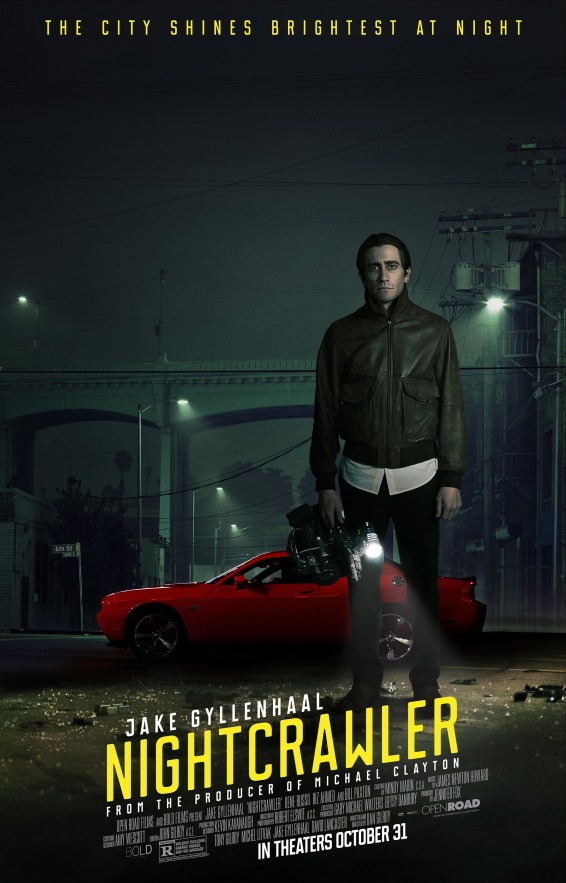
Nightcrawler (2014) – Film Review

Held up by an incredible performance from Jake Gyllenhaal, ‘Nightcrawler’ is a visually beautiful and very tense thriller from director Dan Gilroy (Roman J. Israel Esq, Velvet Buzzsaw), focusing on the dangerous life of a freelance journalist who ends up falling deeper and deeper into a world of greed and accomplishment. Gripping from start-to-finish (as well as being one of my personal all-time favourite films), ‘Nightcrawler’ is truly an amazing experience any film fan is sure to enjoy.

Plot Summary: When ‘Louis Bloom,’ a con-man desperate for work, muscles his way into the world of Los Angeles crime journalism, he blurs the line between observer and participant to become the star of his own story, determined to rise to the top regardless of competition, or even morals…

Being shot over the course of twenty-eight nights, the film does a brilliant job of blending a narrative of what the life for a freelance journalist is actually like, as well as focusing on the more personal story of ‘Louis’ at the same time, with both of them fitting the dark tone of the film extremely well. This alongside the exploration of the city of Los Angeles gives the film a great personality, as the film explores every seedy corner of the city, always using real locations over any visual effects, unlike many other films nowadays.

Jake Gyllenhaal also gives one of the best performances of his career here, portraying ‘Louis Bloom’ as a creepy, sly and selfish character who excels at his work, yet despite being mostly unlikeable. He still manages to be an engaging protagonist mostly through his charisma and intelligence, even as he descends further and further down the line. Gyllenhaal even went to the extent of losing over twenty-pounds for the role, which was actually Gyllenhaal’s own idea, as he visualised ‘Louis’ as a hungry coyote. Riz Ahmed also appears in the film as ‘Rick,’ ‘Louis’ underpaid and underappreciated partner who serves as almost his complete opposite in many different ways. These two alongside the supporting cast of Rene Russolate and the late Bill Paxton are all brilliant throughout the film, never failing to impress within their respective roles.

The cinematography by Robert Elswit is some of the best cinematography I’ve seen in a film in a long time, utilising an enormous amount of varied shots, including a large amount of wide and mid-shots, which are always a joy to see, with the film always using its cinematography to increase the amount of tension or drama that’s on-screen. The film also makes great use of it’s dark blue and orange colour palette as well as large amounts of street lighting, which both definitely help give the film a distinct visual flair and make many of the bright colours stand out amongst the darkness of Los Angeles late at night.

This is also backed up by the calming and yet also eerie original score by James Newton Howard, and while perhaps not incredibly memorable on itself, I do like this composer for much of his previous work (The Sixth Sense, King Kong, I Am Legend) and the soundtrack here does back up the film pretty well for the majority of its runtime, aside from the occasional track which can come across as slightly cliché.

Another element of the film I really enjoy is it’s grasp on realism, as although I’m no expert in regards to the world of crime journalism. The film never really seems to go beyond believability within its story, even when the story begins to enter more dangerous territory for its characters. One element of the film that didn’t really exceed my expectations, however, was the film’s editing, as although the editing throughout the film is decent, I was never overly impressed by it, as I always felt it was one of the few areas of the film which could’ve been slightly improved.

In summary, ‘Nightcrawler’ still retains it’s spot on my list of favourites, with its outstanding cinematography in addition to the pretty fantastic original score and performances throughout. The film has a lot to offer, and I’m still thrilled the film came out as well as I did, due to both its filmmaking and it’s appeal, I’d absolutely recommend anyone give ‘Nightcrawler’ a watch. Final Rating: 9/10.

nightcrawler_ver4_xxlg

Scott Pilgrim vs. The World (2010) – Film Review

One of my all-time favourite films, my favourite Edgar Wright flick, and a film I’d always recommend to any film fan. ‘Scott Pilgrim vs. The World’ is a super stylised, incredibly fun action-comedy, utilising some great CG effects along with brilliant editing and writing, I honestly can’t see anyone not enjoying this well-crafted piece of filmmaking.

Plot Summary: ‘Scott Pilgrim,’ an unemployed twenty-three-year-old gamer in a going nowhere garage rock band, while dating an underage seventeen-year-old high school girl; ‘Knives Chau,’ he comes across the girl of his dreams. That is, until he discovers that he must defeat her seven evil exes in order to win her heart…

This over-the-top concept for a narrative is taken from the comic book series of the same name, and provides an insanely fun, hilarious and surprisingly emotional story. Edgar Wright truly directs the film with all his creativity and charm, using the ‘comic book nature’ of the story to its full advantage, with every scene usually containing many visual jokes or comic book like effects, mostly inspired by ‘Scott’s eternal love for video games, music and comic books.

Speaking of ‘Scott Pilgrim,’ he is portrayed expertly here by Michael Cera, coming across as awkward, funny and charismatic from beginning to end. The rest of the cast are also fantastic, however, with Mary Elizabeth Winstead, Kieran Kyle Culkin, Ellen Wong and Jason Schwartzman all being great within their roles. Truly giving life to their characters, and bringing Edgar Wright’s dialogue to another level. I also personally enjoyed Chris Evans as ‘Lucas Lee’ (the second evil ex), as he always manages to get an enormous laugh out of me every watch, but this isn’t to say all of the evil exes aren’t given their own distinct personalities and fighting styles.

The cinematography by Bill Pope is very well done throughout the film’s runtime and greatly adds to the already impressive editing style. Once again similar to the CG effects, the cinematography and editing are also used for comedy many times throughout the film. Many techniques like these really help the film feel fresh and really fit with the tone, ‘Scott Pilgrim vs. The World’ also has the usual bright colour palette to be expected from this director, this also backs up the tone very well and feels reminiscent of the comic book series in a few shots.

Although the original score by Nigel Godrich is heavily overshadowed by a great choice of songs, very similar to Edgar Wright’s other film; ‘Baby Driver,’ every piece of music whether created by the band within the story or not, always seems to fit the scene very well and fits with ‘Scott’s passion for music.

The action scenes are also extremely well-executed throughout the film, utilising stunts very well mixed in with some nice effects. All alongside the interesting locations used throughout the story, as the film also does a great job of combining music with visuals, both in and out of the various action sequences during the runtime.

If I had to give any criticism of this film it would most likely be the reincorporation throughout the story, as some characters/ideas do sometimes appear and then never appear again within the story, can make the film feel a little jolted at times, this along with the pretty quick pacing, the film can sometimes feel a little overwhelming. However, as the story is based on multiple different comic book issues with a similar story structure, I wouldn’t say it’s an enormous problem and can be overlooked.

In summary, ‘Scott Pilgrim vs. The World’ is the pinnacle of a stylised film, in my opinion, making great use of all elements of filmmaking to create a truly incredible experience, along with the enjoyable story and likeable developed characters, there really isn’t much to dislike about ‘Scott Pilgrim.’ Personally, I adore this film to pieces and would always recommend giving it a watch. Final Rating: 9/10.

scott_pilgrim_vs_the_world_teaser_poster_01

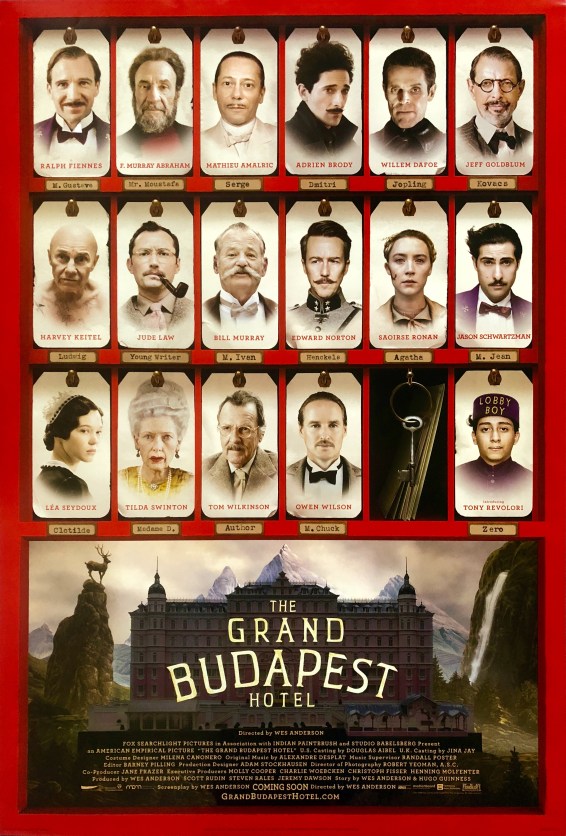
The Grand Budapest Hotel (2014) – Film Review

Wes Anderson’s visually spectacular tale of murder, elegance and crime is far more light-hearted than I was initially expecting. Utilising a bright colour palette, unique cinematography and a wonderful score by Alexandre Desplat, the film brings all the usual elements of Wes Anderson’s style that I adore, especially coming straight off the back of Anderson’s animated flicks.

Plot Summary: ‘Gustave H,’ a concierge of the legendary ‘Grand Budapest Hotel,’ alongside his new lobby boy, ‘Zero.’ Embark on a dangerous journey following a mysterious murder and the disappearance of a priceless Renaissance painting, soon leading them into the middle of a feud over an enormous family fortune…

The film definitely does have a particular artistic flair which his animated flicks do not carry, as in nearly every wide shot in the film we are greeted with what almost looks like a painting. These paintings are almost used as backdrops throughout the film, and blend seamlessly with the bright pale colour palette of the film. Even with this colour palette and mostly upbeat tone, however, the film is not afraid to dive into darker territory if needed in order to serve the story.

In addition to his style, Anderson also does a brilliant job when it comes to the writing, as the film is gushing with hilarious and memorable lines throughout. Many of the comedic lines caught me completely off-guard, with some of the humour being extremely dark. But, with a cast this large and talented, you’re almost guaranteed to get comedic gold. In particular, I really enjoyed the performances by Ralph Fiennes, Bill Murray and Willem Dafoe, who you could really tell they enjoyed their time on-set.

Robert D. Yeoman handles the cinematography within the film, which is, of course, brilliant, as not only does it contain the usual style expected from Anderson, but the cinematography even backs-up the narrative of the film, as many characters within the story feel isolated, and as a result are framed completely alone. But, pretty much all the cinematography throughout the runtime is fantastic. The original score by Alexandre Desplat is also a great aspect of the film, as he creates a very memorable soundtrack here which fits the tone of the film perfectly and really backs up many of the comedic scenes, with the tracks; ‘Mr. Moustafa’ and ‘The Cold-Blooded Murder of Deputy Vilmos Kovacs,’ being my personal favourites.

For the most part, the protagonists of the film are well-written, we understand who they are within the early stages of the story. Yet, as the story continues along, we continue to learn more about them. However, if I had to point out a flaw in the film it’s definitely the antagonists of the film, Willem Dafoe does an excellent job as the deadly hitman, whilst Adrien Brody also does a decent job as his boss. Beyond that, however, the characters are very flat and are given little to no development throughout the film.

Wes Anderson once again also pays serious attention to detail, as in many shots there’s always small hidden gags or visual references hidden away to spot. The filmmaking itself is also used for a lot of visual storytelling, e.g. the lonely characters and their framing within the shots, as already mentioned.

In summary, I was very impressed with ‘The Grand Budapest Hotel,’ as aside from the issue I have with the antagonists of the narrative, the film succeeds in nearly every category for me, and was a very enjoyable watch throughout. Combining Wes Anderson’s great visual style with a brilliant main and supporting cast as well as many comedic moments, the film is certainly worth a watch, and it’s fair to say that Wes Anderson will always have a viewer in me going forward in his career. Final Rating: 9/10.

IMG_3176