Non-Stop (2014) – Film Review

Although ‘Non-Stop’ has been heavily overshadowed by a number of other films within the thriller genre, being mostly forgotten amongst the strew of critically acclaimed films that released in 2014. I personally feel this high-altitude thriller is one of the better stories set within the confines of an aircraft, utilising Liam Neeson’s action expertise to craft a compelling mystery with occasional moments of excitement, even if the film is noticeably lacking in both realism and memorability.

Plot Summary: While on a flight from New York to London, ‘Bill Marks,’ a worn and alcoholic air marshal, receives an anonymous text message, informing him that unless one hundred and fifty million dollars are transferred into an offshore account within the next twenty minutes, someone aboard the plane will die. Now, finding himself in the middle of a deadly cat-and-mouse game, ‘Bill’ desperately searches for the suspect, unintentionally implicating himself into a hostage crisis unfolding at thirty-thousand feet…

‘Non-Stop’ is actually the second of four films directed by Jaume Collet-Serra that feature Liam Neeson, beginning with ‘Unknown’ in 2011, then ‘Run All Night’ in 2015, and lastly ‘The Commuter’ in 2018. And, whilst Collet-Serra’s other films also contain a central mystery, ‘Non-Stop’ certainly has the most interesting location of the bunch, using its tight and claustrophobic setting of an aircraft to great effect as the film never cuts away from the plane itself, even when ‘Bill’s contacts his superiors we the audience remain inside the aircraft with the characters, adding to the suspense. The film also attempts to integrate themes of airline safety and security into its story, which are intriguing though they are never fully explored, nor is the terrorist’s motivation when it’s finally revealed.

Liam Neeson leads the cast as ‘Bill Marks,’ giving his standard action film performance as a mostly straight-faced action hero. But, just as he is in the ‘Taken’ franchise and every other explosive blockbuster, Neeson is an easy protagonist to root for, and ‘Bill’ is given a fair amount of development for what is required. Julianne Moore also makes an appearance in the film as ‘Jen Summers,’ who similar to the rest of the supporting cast of Michelle Dockery, Scoot McNairy, Corey Stoll, Jason Butler Harner, Nate Parker, Omar Metwally, and Lupita Nyong’o, is given limited characterisation and is mostly in the film to serve as a potential suspect, but I suppose considering this is the basis for the story, it would’ve been an enormous challenge to development the huge array of passengers and crew aboard the flight.

The cinematography by Flavio Martínez Labiano is serviceable for the most part, as whilst the film features a few attractive shots and focus pulls throughout its runtime, the majority of the film’s camerawork focuses on hand-held shots, which aside from lending themselves effectively to action sequences and scenes where the plane experiences turbulence, do become a little monotonous. ‘Non-Stop’ also features a couple of scenes that were filmed entirely within a single take, most notably, from the moment ‘Bill’ begins his announcement to the passengers about his phone inspection, through to the moment he duct-tapes a suspect’s hands together, there isn’t a single cut.

John Ottman’s original score does suit the film well, with tracks, like ‘Non-Stop,’ ‘Welcome to Aqualantic,’ and ‘Reluctant Passenger/Blue Ribbon,’ having a nice fusion of synth sounds, percussion, strings, and brass, adding up to simplistic yet competent soundtrack. Constantly pushing or creating the tension in a simple and confined environment while simultaneously fitting with the modern set design of the plane and ‘Bill’ as a reluctant hero forced into action.

With 95% of the film taking place within an aircraft, the set for the plane itself was certainly a crucial detail to get right. Luckily, ‘Non-Stop’ does succeed here, as despite the set having to be built slightly larger than a standard commercial airliner to accommodate for equipment and Liam Neeson’s 6’4′ height. The set does feel like a real plane, having both sleek business class and first class areas as well as lavatories and a crew rest compartment, all of which are very cramped and dimly lit, as the story takes place over the course of one night. This realism is even more impressive considering that the aircraft and airline are clearly fictional, as the aircraft type is never referred to yet its cabin interior and flight deck layout doesn’t match any real aircraft design.

In summary, even though films, like ‘Red Eye’ and ‘Flightplan,’ have taken the enclosed setting of an airplane and made it work before, I believe ‘Non-Stop’ has slightly more entertainment value, as whilst some viewers may find the story’s absence of realism quite frustrating at points, the film distracts from its over-the-top ideas and bland side characters through its tense and fast-paced narrative, making for a thrilling mystery for those that can suspend their disbelief for a few elements. And, with Liam Neeson and the rest of the cast helping ‘Non-Stop’ to collect plenty of air-miles for enjoyability, I’d say the film is worth a watch. Final Rating: low 7/10.

nonstop_xxlg

The Man From U.N.C.L.E. (2015) – Film Review

Both a stylish Guy Ritchie comedy as well as a reimagining of the classic 1960s espionage show of the same name, ‘The Man From U.N.C.L.E.’ is a mostly successful modern take on the classic spy-caper. Capturing a familiar tone in spite of its unremarkable story, which the film tries to distract from through its charismatic cast and many exciting set pieces, equalling to a decently entertaining ’60s action/comedy even if it may be on the lower side of Ritchie’s filmography, with ‘Snatch’ and ‘The Gentlemen’ still being far superior films, in my opinion.

Plot Summary: In the early 1960s, CIA agent; ‘Napoleon Solo,’ successfully helps ‘Gaby Teller’ escape East Berlin despite the intimidating opposition of KGB agent, ‘Illya Kuryakin.’ Later, all three unexpectedly find themselves working together on a globe-trotting mission to stop a private criminal organisation that is working to proliferate nuclear weapons…

Being co-written and directed by Guy Ritchie (Snatch, Sherlock Holmes, The Gentlemen), ‘The Man From U.N.C.L.E.’ takes in much of the director’s usual style/humour, having an abundance of witty and amusing dialogue (much of which is brimming with innuendos), in addition to plenty of editing flair. But, ‘The Man From U.N.C.L.E.’ also serves as the first film interpretation of the ’60s espionage show, which Warner Bros. Pictures had actually been trying to adapt for over a decade, director Steven Soderbergh was once even attached to the project with George Clooney, Channing Tatum and Emily Blunt all set to play the three leading characters. The film’s story isn’t just a recreation of a specific episode from the show, however, as Ritchie and his story team actually decided to create an original narrative based around the origin of ‘U.N.C.L.E.’ A backstory that was only hinted at in the show.

Henry Cavill and Armie Hammer portray the film’s protagonist duo, and while neither of their characters are exactly memorable, they do both give great performances, sharing many comedic moments together and bouncing off each other very well, the film even gives its characters a sufficient amount of development early on in the story, though it is delivered through mission briefings and expositional dialogue. Yet, it’s the third member of the cast where some issues begin to arise, as Alicia Vikander as ‘Gaby’ is supposed to be the emotional centre of the story, as her father is being forced to make nuclear weapons, but the film makes it quite hard to resonate with her due to her lack of characterisation and inconsistent German accent, which seemingly disappears at random. Elizabeth Debicki also appears in the film as antagonist, ‘Victoria,’ but similar to Hugh Grant’s character, ‘Waverly,’ she has little impact on the viewer as a result of her very limited screen-time.

Aside from the occasional CGI-enhanced shot, the cinematography by John Mathieson is pretty creative throughout the film, having many unique shots alongside plenty of shots which feel like throwbacks to classic espionage flicks. The film also makes excellent use of Ritchie’s signature editing style, cutting between scenes in a variety of visually interesting ways as well as colourfully implementing the film’s Russian/German subtitles, all of which are displayed in a bright yellow text almost as if they are taken from a 1960s spy poster, not too dissimilar to the film’s opening and ending credits, which are reminiscent of the original show’s intro whilst also feeling fresh.

Daniel Pemberton’s original score is in keeping with the film’s tonal integrity, as Pemberton sought to capture a sound that combined the crispness and sophistication of today with a distinctly 1960s flavour. The first step of which was the venue, as ‘The Man From U.N.C.L.E.’s score was actually recorded in Studio 2 at Abbey Road, where even the most casual music fan likely knows that this is where ‘The Beatles’ recorded many of their iconic albums. Yet, apart from the tracks; ‘His Name is Napoleon Solo’ and ‘Escape from East Berlin,’ the soundtrack feels well-crafted but still falls short, being fairly forgettable in the long run.

However, the world of ‘The Man From U.N.C.L.E.’ isn’t as forgettable, as the film’s 1960s time period mixes together the elegant class of the era with more futuristic spy technology/gadgets. One of the reasons the film stayed in the ’60s time period was to allow the film to have its own reality, setting it apart from films like ‘The Bourne’ franchise and other recent spy thrillers, according to director Guy Ritchie. Obviously, this means that the film constantly revels in its period-accurate vehicles, set design and costumes, a few pieces of which were actually vintage.

In summary, ‘The Man From U.N.C.L.E.’ isn’t a film that will surpass expectations as the film delivers on what it sets out to, for the most part, displaying some fantastic action scenes and enjoyable gags. It’s hard to ignore the film’s uninteresting story, which simultaneously feels drawn out and dull, even branching into convoluted at points with the sheer amount of characters and locations mentioned. But, for myself, and any other classic espionage enthusiasts, ‘The Man From U.N.C.L.E.’ will suffice, even though it could’ve done with some refinement in certain areas. Final Rating: 6/10.

the-man-from-uncle-poster

Edge of Tomorrow (2014) – Film Review

Exceeding expectations in more ways than one and combining the star-power of both Tom Cruise and Emily Blunt, ‘Edge of Tomorrow’ is an explosive summer blockbuster which reimagines the comedy classic; ‘Groundhog Day,’ into a thrilling sci-fi flick to fantastic results. Directed by Doug Liman (Swingers, The Bourne Identity, American Made) and based on the Japanese manga; ‘All You Need is Kill’ by Hiroshi Sakurazaka, ‘Edge of Tomorrow’ or ‘Live Die Repeat,’ as it’s now commonly dubbed, manages to succeed in nearly every aspect an exciting science fiction film would need to.

Plot Summary: When an alien race invades Earth and releases an unrelenting assault unbeatable by any military unit in the world. ‘Major William Cage,’ an officer who has never seen a day of combat, is unceremoniously dropped into the frontline. Getting killed within minutes, ‘Cage’ now finds himself thrown into a time-loop forcing him to live out the same battle over-and-over again. But, with each reset, ‘Cage’ learns to defend himself with the help of Special Forces soldier; ‘Rita Vrataski,’ who, together, hatch a plan to defeat the creatures, permanently…

Taking inspiration from sci-fi war epics, such as ‘Aliens,’ ‘Starship Troopers,’ and ‘Independence Day,’ in addition to the previously mentioned; ‘Groundhog Day.’ ‘Edge of Tomorrow’ may have initially had disappointing box-office returns when it released in 2014, but mostly through word-of-mouth, the film has since continued on to become a modern science fiction classic, keeping itself distinct through its signature ‘resetting the day’ idea and couple of amusing moments in between its action-packed story.

For a large majority of the film, Tom Cruise actively plays against his usual type, as ‘Major William Cage’ is essentially the complete opposite of his character; ‘Ethan Hunt,’ from the ‘Mission Impossible’ franchise, with most of the character’s screen-time being spent dying continuously in horrific (yet also somewhat comedic) ways, alongside his genuinely cowardly and untrained demeanour. Cruise also bounces off his co-star Emily Blunt very well throughout the film, with Blunt portraying the complete opposite of Cruise’s character as ‘Rita Vrataski,’ a hard-as-nails soldier, who is a skilled as they come. And, whilst a romantic subplot can sometimes derail a film’s story, ‘Edge of Tomorrow’ manages to pull its off, mostly due to the chemistry between its heroic duo.

Although the film’s cinematography by Dion Beebe does heavily rely on hand-held camerawork, this hand-held approach does remarkably add to many scenes within the film. Replicating the chaos of the constant war that surrounds ‘Cage’ as he tries different tactics in an attempt to survive on the battlefront, not to say that the cinematography doesn’t still allow for the occasional attractive shot, however. Much of the film’s CG visuals are also up-to-par, excluding the ‘Exo-Suits,’ of course, which are actually practical costumes for the most part. This was done so the suits would appear more real to the audience, which does stop the film from feeling too CGI-heavy during many of the film’s action sequences, even if the suits did weigh between eighty-five to ninety-pounds on set.

The original score by Christophe Beck is certainly no where near as memorable as the film itself, being a mostly typical soundtrack for a action blockbuster with little charm or even a slight sci-fi twist to help the score stand out. This, unfortunately, even applies to the best track of the score; ‘Solo Flight,’ which does at least utilise what sounds like metal-clanging audio effects to add a little more impact wherever it can.

The film’s main issues mostly revolve around two particular areas, firstly, the designs of the alien creatures known as ‘Mimics,’ as whilst the CG effects that bring the creatures to life do look superb, the creatures feel a little too similar to video game enemies, as their different breeds are only distinct by colour, being either red or blue, with the remainder of their design being almost identical. While this is slightly redeemed by their unique sound design, it can become difficult to even tell the creatures apart when they are in large groups. My other complaint with the film is with its final act, as whilst the narrative throughout most of the runtime remains engaging and rousing. The film’s final portion ends up becoming a little more generic after losing its signature time-looping concept.

In summary, since even my first viewing of ‘Edge of Tomorrow’ I’ve always been impressed by this science fiction flick, as while the film isn’t flawless and does still suffer from its cloned creature designs and weak final act. ‘Edge of Tomorrow’ is still a far more enjoyable and enthralling sci-fi than many may initially think. Even though the film didn’t thrive at the box-office on its release, it seems with its recent change in marketing to “Live Die Repeat,” many more sci-fi fanatics have now stumbled across this underrated gem, and with a blockbuster as riveting and surprisingly clever as this one is, I feel it can always be praised further. Final Rating: low 8/10.

rFSStxPT5CBiDWUotReCvRXltQk

Dawn of the Planet of the Apes (2014) – Film Review

The second outing of the revamped ‘Planet of the Apes’ series and, in my opinion, the best of the most-recent trilogy. ‘Dawn of the Planet of the Apes’ takes place a decade after the previous film, now taking the story into an apocalyptic world where humans and intelligent apes co-exist. Featuring another spectacular performance from Andy Serkis as ‘Caesar’ as well as a much larger role for the vicious ape; ‘Koba,’ this time around (now portrayed by Toby Kebbell), this thrilling and propulsive sci-fi blockbuster is sure to keep its audience glued to the screen.

Plot Summary: Many years after ‘Caesar’s escape from captivity and the outbreak of ‘Simian Flu’ that followed, the clan of intelligent apes and chimps now resident within the Muir Woods just outside a derelict San Francisco. Living a peaceful existence amongst themselves until a group of human survivors journey into their territory in order to find a solution to their colonies’ lack of power, soon leading both sides to consider the possibility of war…

Giving directorial control over to Matt Reeves (The Pallbearer, Cloverfield, Let Me In), Reeves would write and direct both this film and the following entry in the series; ‘War for the Planet of the Apes,’ allowing Reeves to really give a sense of continuity within the story and style (not to say the sequel doesn’t retain continuity from the first film). Yet, what makes this sequel stand out when placed against the first entry in the trilogy is its narrative focus, as ‘Dawn of the Planet of the Apes’ continuously builds tension throughout its runtime, with much of the film leaning on the two species as they balance on the brink of a war that could desolate both parties.

Andy Serkis leads the motion capture cast of apes once again as ‘Caesar,‘ developing his character even further after the first film as ‘Caesar‘ now cares for the clan of apes alongside his newly-found family, and just like the first film, Serkis once again manages to make an animalistic ape a far more interesting and likeable character than would initially seem possible. It’s the criminally underrated actor Toby Kebbell who shines most within the film, however, as the sequel provides the war-mongering ape; ‘Koba,’ with a much larger role, having the ape serve as the film’s main antagonist. In addition to the apes, the film also features a number of human characters, portrayed by Jason Clarke, Keri Russell and Gary Oldman, who are all great in spite of their limited screen-time.

Whilst ‘Rise of the Planet of the Apes’ did feature plenty of attractive shots, Michael Seresin’s cinematography is actually an improvement over the previous entry, as the sequel manages to utilise its dim lighting and the overgrown/dilapidated cityscape of San Francisco to fantastic results. The cinematography also helps add too much of the film’s action, as despite the film only containing two action set pieces, both scenes manage to feel like an excellent payoff to the large amount of build up before them. Yet, personally, I believe one of the most impressive aspects of the film has to be its practical sets, from the overcrowded ‘Human Colony’ to the decrepit streets of San Francisco, nearly all of the film’s sets are breathtaking in both size and detail, with the ‘Ape Village’ being the clearest example of this superb craftsmanship.

Capturing the bleak and ominous tone of the story flawlessly, the original score by Michael Giacchino is also continuously brilliant, and personally, I feel it’s very underrated. As, immediately from the stylish opening sequence which informs the audience of all of the events that have taken place prior to this film, the backing track; ‘Level Plaguing Field,’ really elevates the scene’s emotional impact, with the later tracks; ‘Past Their Primates,’ ‘Along Simian Lines,’ and the 1968 country-rock song; ‘The Weight,’ continuing this trend. 

Although it could go without saying, the visual effects throughout are the film are fantastic, while still perhaps not as pristine as ‘War for the Planet of the Apes’s effects, the CG visuals do still hold up very well since 2014 and contain an immense amount of detail in areas. In fact, the company that created the apes, Weta Digital, were even brought back to bring to life a variety of other animals for the film including deers, horses, and even a grizzly bear, each sharing the same high level of detail.

In summary, ‘Dawn of the Planet of the Apes’ is another remarkable instalment in this new series, upping the stakes and visuals from the previous film alongside continuing the story in a meaningful and entertaining fashion. This science fiction sequel is certainly worth a watch, and whilst I would recommend watching the entire trilogy in order to experience the full story of ‘Caesar’ as a character, if you have limited time or perhaps don’t usually enjoy sci-fi, then I’d say the middle chapter of this ape-led trilogy is truly the most exciting and memorable of the three. Final Rating: 8/10.

dawn_of_the_planet_of_the_apes_ver6_xxlg

Kingsman: The Secret Service (2015) – Film Review

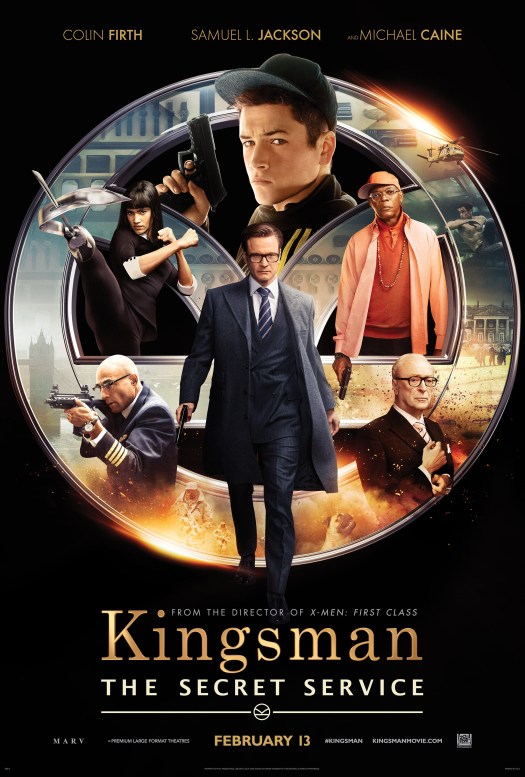
Matthew Vaughn, critically acclaimed director of ‘Layer Cake,’ ‘Kick-Ass’ and ‘X-Men: First Class,’ tries his hand at another comic book adaptation with ‘Kingsman: The Secret Service.’ Based on the comic book series of the same name by Mark Millar, and serving as a throwback to (and often parody of) classic spy/espionage films, such as the ‘James Bond’ series and ‘The Bourne Saga,’ ‘Kingsman’ very quickly became a beloved franchise after just its first instalment, mostly as a result of its hilarious self-aware moments of humour and exhilarating action set pieces.

Plot Summary: When the British spy organisation; ‘Kingsman,’ recruits an unrefined, but promising London street teen into the agency’s ultra-competitive training program. ‘Eggsy’ begins to follow in his father’s footsteps as he takes part in the organisation’s many dangerous training exercises. All the while, the twisted tech genius; ‘Valentine,’ begins to execute a master plan, which will potentially put the entire world at risk…

Violent, thrilling and fun, the first ‘Kingsman’ film was actually made partly in conjunction with the comic book itself, as director Matthew Vaughn and comic book writer Mark Millar have been good friends for many years since they collaborated previously on ‘Kick-Ass’ in 2010 to great success, prompting them to reunite for ‘Kingsman: The Secret Service.’ Which, aside from a few minor changes, is actually a mostly faithful adaptation of the first entry in the comic book series, alongside also being a superb gateway into the world for any non-fans of the comic series as the film establishes who the ‘Kingsman’ are and what they do, in little time.

Protagonist; ‘Gary Unwin,’ usually going by his nickname; ‘Eggsy,’ is portrayed by Taron Egerton in one of his earliest film roles, who portrays a reckless British teenager very well, becoming an instantly likeable character within only a short amount of screen-time. Its Colin Firth and Samuel L. Jackson, who, both steal the film with their fantastic characters, however, as both actors play completely against their usual type here, with Firth taking on the deadly spy; ‘Harry Hart,’ who rarely even smiles (creating quite a contrast from his usual romantic-comedies), and according to second unit director Bradley James Allan, even did 80% of his own stunts during filming. Whilst Jackson also gives one of his most memorable performances to date as the film’s antagonist; ‘Valentine,’ who, throughout the runtime, retains an aggressive lisp and occasionally childish demeanour, a big leap from much of his previous work.

Although not as outrageously creative as it could’ve been, in my opinion, the film’s cinematography by George Richmond does serve the story very effectively, as many of the film’s over-the-top and exciting action sequences are displayed proudly and clearly without too much use of hand-held camera or excessive editing. During a few scenes, the camera even begins to spin around the characters as they fight, providing the film with a real sense of movement.

The original score by both Henry Jackman and Matthew Margeson has quickly become very beloved, similar to the film itself, and it’s easy to see why, as the film utilises its trumpet-heavy orchestral score to create a soundtrack, which would fit perfectly within a classic espionage series, like ‘The Avengers,’ ‘The Ipcress File’ or ‘The Man From U.N.C.L.E.’ From ‘Manners Maketh Man’ and ‘To Become a Kingsman,’ to especially, ‘Valentine’s theme, which is noticeably more electronic to fit with the tech-savvy character. Nearly every track featured in the original score is both memorable, and usually, also cut in sync with the film’s stylish editing to great effect. 

Needless to say, the aspect that ‘Kingsman’ is most known for is certainly its variety of impressive action sequences, which as already mentioned, do away with the usual overly shaky and chaotic execution of most modern action flicks in favour of more fast-paced and exaggerated fight choreography with plenty of graphic violence to boot. Resulting in many entertaining action sequences, even if they aren’t completely flawless, as the majority of these scenes do, unfortunately, still suffer from their overly heavy usage of CG effects (usually for blood and severed limbs), which I feel does somewhat take away from many of these thrilling moments, even if they are still sure to impress most on their initial viewing.

In summary, while many spy films may be far more focused on delivering more grounded and gritty missions for their audiences these days, ‘Kingsman: The Secret Service’ truly revels in its absurdity. As, in spite of the problems this stirring espionage film faces, it still manages to remain an amusing and exciting experience throughout its runtime, combing its array of phenomenal action set pieces with some outstanding stunts and a now-iconic original score, the first instalment in ‘The Kingsman’ series may have now launched a blockbuster franchise, but for many, I feel it will always remain their favourite part of this continuing story. Final Rating: low 8/10.

kingsman_the_secret_service_ver7_xxlg

The Amazing Spider-Man 2 (2014) – Film Review

Overstuffed with plot lines, characters, and ideas alike, this sequel to the ‘Spider-Man’ reboot from 2012 lacks much of anything to truly get invested in. As, this time around, returning director Marc Webb alongside the long list of Sony producers seem to be far more focused on setting up future sequels and spin-offs for the franchise rather than the current story, resulting in a superhero flick that’s just as muddled and inconsistent as it is forgettable. And, while the film did receive fairly average reviews upon its initial release, I’ve personally always felt ‘The Amazing Spider-Man 2’ is anything but ‘Amazing.’

Plot Summary: Continuing the adventures of the wall-crawler, New York City’s hero is thrown into action once again as he faces his newest threat; ‘Electro,’ whilst also balancing his normal day-to-day life as ‘Peter Parker’ with that of being ‘Spider-Man.’

It’s easy to see that throughout its production, ‘The Amazing Spider-Man 2’ faced the problem of having far too many creative minds involved, as director Mark Webb fought against producers constantly as to what would be featured and explored within the superhero sequel. This is why the film eventually ended up having three separate antagonists, in addition to also focusing on ‘Peter’s various relationships and the surrounding mystery of his parents, which when all combined, make the film feel completely directionless, as the audience is given very little time to become invested in any specific aspect of the story before quickly moving on.

Andrew Garfield and Emma Stone return to their roles of ‘Peter Parker’ and ‘Gwen Stacey’ for the sequel, whos romantic chemistry is still one of the film’s best elements similar to the previous instalment. New to the cast this time, however, is Jamie Foxx, Dane DeHaan and Paul Giamatti, who, all take on various roles as villains from ‘Spider-Man’s iconic rogues’ gallery, with the three portraying ‘Electro,’ ‘Green Goblin’ and ‘The Rhino,’ respectively. Yet, despite all these actors giving some fantastic performances in the past, most of the cast give extremely over-the-top and sometimes even strange performances here, which is only made worse as a result of the film’s large amount of cringey dialogue and absence of a consistent tone.

The film’s decent yet not overly inventive cinematography by Dan Mindel is, unfortunately, also hurt by the erratic editing throughout the film, as whilst not always present, occasionally, the editing does result in quite rapid cuts, with some shots that utilise slow-motion even being cut to when the ones before/afterwards did not, stopping the film from ever obtaining a smooth flow. Of course, although it’s usually a no-brainer when it comes to modern superhero flicks, the film’s CG effects are one of its most impressive and visually pleasing aspects, with many of ‘Electro’s shocking abilities being visualised as if they were ripped straight from the source material.

One of the most bizarre original scores in Zimmer’s catalogue of work, the original score by both him and Pharrell Williams gives the impression it’s made up of a number of different tracks from other unrelated films. As, aside from the signature track; ‘I’m Spider-Man,’ which does suitably feel like a heroic and upbeat theme for the beloved superhero. Many of the other tracks simply don’t mesh together well when they manage to stray away from being generic. However, it’s the infamous track; ‘I’m Electro,’ which certainly feels the most out-of-place, as the track employs electronic dubstep with vocals underneath by Pharrell himself that give voice to ‘Electro’s compulsive thoughts.

‘The Amazing Spider-Man 2’ is even surprisingly poor when it comes to its action, as whilst the film does attempt to be very ‘large-scale’ with its action set pieces, having many of them take place within the centre of New York City (where nearly all of the sequel was actually filmed). Much of the action also heavily relies on slow-motion, cheesy quips/jokes, and CG effects, all of which give the film’s action scenes an insufficiency of tension due to their over-extravagance.

In summary, after ‘The Amazing Spider-Man 2’s release, it’s fair to say that Sony was put into a tough situation. As in spite of the film doing fairly well at the box-office, it was clear that fans had no further interest in seeing Sony’s many planned franchise instalments, eventually leading them to strike a deal with Disney to bring ‘Spider-Man’ into the Marvel Cinematic Universe, now portrayed by actor Tom Holland. Although some may be saddened this version of the iconic web-head will more than likely never return to our screens, other than the comic-accurate suit and great chemistry between Garfield and Stone, I feel this sequel (and rebooted series in general) had very little to offer to begin with, and I’m thankful Marvel is now taking the character in a different direction rather than just regurgitating the same narrative we’ve seen many times before. Final Rating: low 3/10.

amazing_spiderman_two_ver11_xxlg

The Magnificent Seven (2016) – Film Review

After taking on a number of successful action flicks in recent years, such as ‘Training Day,’ ‘Olympus Has Fallen’ and ‘The Equalizer,’ director Antonie Fuqua brings this remake of the original 1960s ensemble western to the silver screen. Combining a superb cast with some explosive moments of action and plenty of highly detailed costumes and sets, ‘The Magnificent Seven’ manages to remain an entertaining remake of the beloved western classic despite its few faults.

Plot Summary: In 1897, seven gunmen from a variety of different backgrounds are brought together by a vengeful young widow in an attempt to protect her hometown of ‘Rose Creek’ from the private army of the destructive industrialist, ‘Bartholomew Bogue,’ and his men…

Other than a few changes to the names of its characters, the remake of ‘The Magnificent Seven’ follows a very similar storyline to the original film, which was essentially just a retelling of the iconic Japanese drama; ‘Seven Samurai,’ only now set in the Wild West. As, the remake avoids making any definite changes to the narrative in favour of simply just updating the story for a more modern audience, meaning the film has much faster pacing and more of a focus on creating thrilling action set pieces than the original, which is both a good and a bad thing, as whilst the film does still pay homage to many classic westerns, the film occasionally also adopts many of the issues that plague plenty of modern blockbusters today, the most notable of which being the film’s overabundance of cheesy and predictable dialogue.

Denzel Washington, Chris Pratt, Ethan Hawk, Vincent D’Onofrio, Byung-hun Lee, Manuel Garcia-Rulfo and Martin Sensmeier all give splendid performances as the line-up of ‘The Seven,’ each portraying a different personality and skill set between them. But, of course, similar to many other films lead by a group of characters rather than just a single protagonist. ‘The Magnificent Seven’ suffers from a lack of equal development for its cast as a result of Denzel Washington and Chris Pratt as ‘Chisolm’ and ‘Josh Faraday’ hogging most of the screen-time, with the film’s antagonist; ‘Bartholomew Bogue,’ portrayed by Peter Sarsgaard, also having a deficient intimidating presence when on-screen due to this.

Whilst the film’s cinematography never falls into the category of being exceedingly bland, the cinematography by Mauro Fiore is only above-average, as although the film does feature an array of attractive close-ups and wide shots alongside its many suitably barren locations, the film also has quite a heavy overreliance on shot-reverse-shot for the many conversations between characters. However, a smaller detail that I felt added to the film’s visual appeal (and realism) is definitely its use of nature surrounding/within its various locations, as the film’s main setting of ‘Rose Creek’ is littered with trees and tall grass rather than just continuous desert similar to many other westerns, with some areas of Baton Rouge, Louisiana, where filming took place, even having to be relandscaped to further resemble the Old West.

Being the last film composer James Horner contributed towards before he sadly passed away in an accident in 2015, the original score by him and Simon Franglen does suitably feel like the score of a traditional western for the majority of the film’s runtime. Although there are still a few tracks that feel fairly generic, the soundtrack redeems itself through the great tracks; ‘Rose Creek Oppression’ and ‘Seven Riders,’ in addition to also bringing back the original film’s theme composed by the late Elmer Bernstein for its end credits.

As the remake of ‘The Magnificent Seven’ focuses more on action over anything else (with the entire final act of the film essentially being one long action sequence) a lot of pressure lies on the film to live-up to this intent, which thankfully, it does, as all of the stirring moments throughout the story make fantastic use of their impressive stunt work and subtle CG effects. That being said, nearly all of the action scenes are also distinctly missing an element of both grittiness and violence, which can be fairly distracting. As despite many of ‘Bartholomew Bogue’s guns-for-hire being shot, stabbed and blown-up, blood is barely ever seen, and whilst I understand classic westerns also didn’t really revel in violence, I’ve always seen that as more of a restriction of the time-period rather than just a skimp to lower the film’s age-rating.

In summary, while ‘The Magnificent Seven’ may not fully deliver on the ‘Magnificent’ part of its title, the film is still is an enjoyable throwback to the westerns of old with plenty of exhilarating action set pieces to boot, as even when taking into account all of the remake’s issues and general lack of memorability, I’d still say the film is on the better side of reimagined classics in recent memory and is worth a watch if you’re a true western enthusiast or perhaps just desire to see a remake that doesn’t attempt to simply recreate the original shot-for-shot. Final Rating: 7/10.

magnificent_seven_ver5_xlg

Tron: Legacy (2010) – Film Review

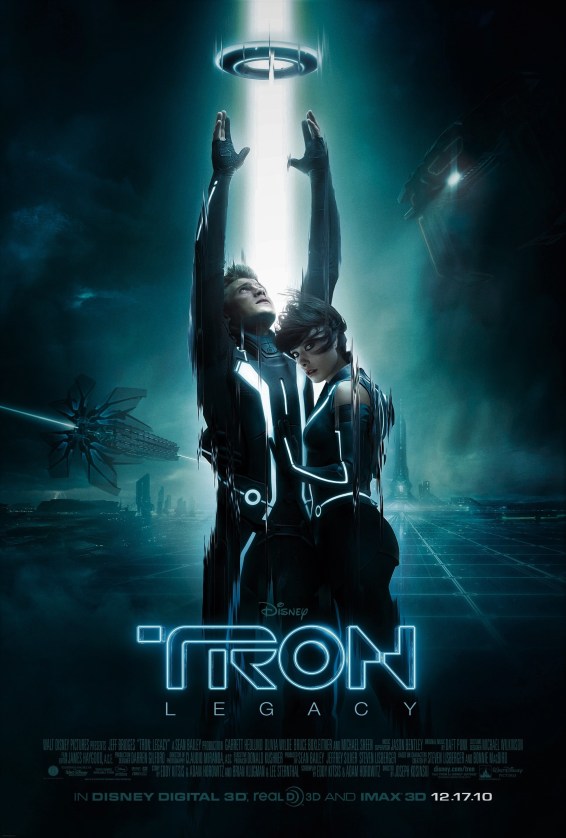
Although Disney has had more than enough success when it comes to its animated filmography, the iconic production company has seemingly always struggled with its live-action endeavours, as aside from the ‘Pirates of the Caribbean’ franchise, many of Disney’s attempts to kick off a live-action film series, such as ‘John Carter,’ ‘The Sorcerer’s Apprentice’ and ‘Tomorrowland,’ have all been relative flops (with the exception of their remakes of animated classics). ‘Tron: Legacy,’ the action-packed sequel to the groundbreaking cult sci-fi hit; ‘Tron,’ from 1982, is a slight improvement in this area, yet still results in a film more focused on style-over-substance.

Plot Summary: After the tech-savvy and rebellious; ‘Sam Flynn,’ begins looking into his father’s disappearance, he soon finds himself pulled into the digital world of ‘The Grid,’ where he discovers his father has been trapped for over twenty years. All the while, his father’s malevolent program; ‘CLU,’ who rules ‘The Grid,’ plans to prevent the pair’s escape and take the real world for himself…

Being set in a virtual world, nearly every scene within ‘Tron: Legacy’ takes place in fully CG locations, and although most of the film’s CG effects do hold up well and are visually appealing. The digital world of ‘The Grid’ does begin to feel quite unvaried after a point, as whilst it may look unique at first glance, the illuminated buildings and vehicles throughout the city of ‘Tron’ feel fairly repetitive, despite the film’s variety of different locations. In fact, it’s the film’s CG visuals that actually made ‘Tron: Legacy’ the most expensive film ever made by a first-time director at the time of its release, with the costume budget alone costing over £10 million.

Garrett Hudlund portrays the film’s protagonist; ‘Sam,’ alongside the supporting cast of Jeff Bridges, Olivia Wilde, and even Michael Sheen in a small role. They all give decent performances despite their dull characters, as ‘Tron: Legacy’s story and characters follow many of the same story beats as any other sci-fi adventure. However, easily the worst element of the film when it comes to its characters is the film’s antagonist. Known only as ‘CLU,’ a corrupt program created by Jeff Bridges’ character; ‘Kevin Flynn,’ as a digital copy of himself, this villain not only suffers from a barely developed motivation, but due to him being a program which doesn’t age, the film utilises CGI to make Jeff Bridges appear a similar age to that of his in the original film, which is one of the few CG effects that hasn’t aged well, appearing almost laughably bad at points.

Claudio Miranda handles the cinematography throughout ‘Tron: Legacy,’ and although the film definitely puts far more of an emphasis on its CG effects than its cinematography, there are still a fair amount of interesting shots including plenty of stunning wide shots to display the true scale of the digital world. The cinematography also makes great use of the film’s few sleek futuristic sets despite their very limited screen-time, most notably, ‘Flynn’s Safehouse,’ located on the edge of ‘The Grid.’

The original score for the film is actually composed by the techno band, ‘Daft Punk,’ whose type of music does suitably fit the sci-fi genre, and whilst some tracks do feel a little too similar to an actual techno album, in my opinion. For the most part, the soundtrack does back up the film’s narrative and adventurous tone very effectively. ‘Daft Punk’ themselves even make a short cameo within the film as a pair of DJs in the ‘End of Line’ nightclub, wearing their iconic helmets as they play one of the film’s most memorable tracks, which share the same title as the club itself.

Another great aspect of ‘Tron: Legacy’ is certainly its action set pieces, as although many of the action scenes throughout the film aren’t anything incredibly inventive. The original ‘Tron’ did introduce the creative concepts of ‘Identity/Light Disks’ and ‘Light Cycles,’ both of which return in the sequel and result in plenty of thrilling and fast-paced action sequences as ‘Sam’ is thrown into an array of gladiator-esque challenges near the beginning of the film. The various costumes worn by the characters who live within ‘The Grid’ are also worth a quick mention, as most of the characters wear a ‘Light Suit,’ which usually features fluorescent-like glowing strips that illuminate each suit in a range of colours, which never fails to be visually striking.

In summary, ‘Tron: Legacy’ is by no means a terrible film, and when it comes to Disney’s other ventures into live-action, ‘Tron: Legacy’ could even be seen as a success by some. But, with its fairly paint-by-numbers story, bland characters and an onslaught of over-done clichés, this sci-fi sequel ends up becoming more of a display for its impressive CG visuals and electronic original score rather than an exhilarating sci-fi odyssey. If you’re a fan of the original ‘Tron’ I feel you will surely enjoy this follow-up. If not, maybe look elsewhere for your fill of original science fiction. Final Rating: 6/10.

tron_legacy_ver11_xxlg

Venom (2018) – Film Review

Directed by Ruben Fleischer (Zombieland, Gangster Squad, Zombieland: Double Tap), ‘Venom’ follows in the footsteps of many other mature superhero flicks before it, such as ‘Deadpool’ and ‘Kiss-Ass.’ Attempting to focus more on the story of an anti-hero than the usual heroically noble protagonist we expect from this genre, all alongside some dark comedy and plenty of action scenes for good measure. Just from the first half an hour alone, however, it’s clear that ‘Venom’ bites off far more than it can chew.

Plot Summary: When investigative journalist; ‘Eddie Brock,’ attempts a comeback by investigating recent illegal experiments in San Francisco, he soon end ups accidentally becoming the host of an alien symbiote that gives him a violent super alter-ego known as ‘Venom.’ But, after a shadowy organisation begins looking for a symbiote of their own, ‘Eddie’ must use his newfound powers to protect his planet…

Although it may surprise many, ‘Venom’ has actually an age rating of twelve in the United Kingdom, which is very bizarre as the film clearly tries to appeal to an older audience throughout its runtime, with ‘Venom’ constantly committing horrific acts like biting people’s heads off, yet, of course, in a completely bloodless manor, as ‘Venom’ has always been one of ‘Spider-Man’s most violent and sinister foes, the film feels incredibly inconsistent as a result of this rating, and could’ve been so much more if it indulged further into its dark central character.

Tom Hardy sadly gives one of his weakest performances to date here, as throughout nearly the entirety of the film, Tom Hardy’s portrayal of ‘Eddie’ is very over-the-top, with his overly nervous reactions becoming a obnoxious after a while. This is also due in part to the large amount of improvising Tom Hardy did on set, usually from items he noticed in various filming locations, including the now infamous ‘Lobster Tank’ scene, in which, ‘Eddie’ publicly climbs into a restaurant’s lobster aquarium after claiming he’s burning-up from a fever. The cast also features Michelle Williams as ‘Anne Weying’ and Riz Ahmed as the film’s antagonist, who give fairly underwhelming performances. Unfortunately, the characterisation isn’t much of an improvement either, as every character is nothing more than a cardboard cut-out, with the antagonist; ‘Carlton Drake,’ in particular, having a confusing and undeveloped motivation for his malevolent schemes.

The cinematography by Matthew Libatique is actually quite chaotic during a number of scenes, as the shots attempt to keep-up with ‘Venom’ as he tears his way through various buildings and security guards, yet when the film goes back to its more character-focused scenes, the cinematography is relatively bland, mostly relying on shot-reverse-shot for the majority of these moments. The writing throughout the narrative is also severely lacking, as aside from a couple of humorous conversations between ‘Eddie’ and ‘Venom,’ the film is truly dripping with line-after-line of cheesy dialogue, much of which has been heard time-and-again in other superhero flicks.

Even though there are a number of forgettable superhero scores out there, the original score by Ludwig Göransson is pretty dull, as aside from working decently during some of the more heroic moments within the story, the soundtrack is really nothing more than a straightforward superhero affair with a few inklings of horror thrown in to fit more with the character of ‘Venom.’ However, a few of these tracks do back up the film’s action scenes well, as ‘Venom’ does have its fair share of exciting moments despite its predictable story, many of which make great use of ‘Venom’s unique symbiote abilities.

Without a doubt, the worst aspect of ‘Venom’ is it’s CG effects, as throughout the film both ‘Venom’ and his silver symbiote antagonist; ‘Riot,’ are far too shiny and continuously bounce around the screen as if they are animated cartoon characters, with nearly every visual effect feeling as if it has virtually no weight or density. Although it could probably go without saying, the lack of any kind appearance/reference from/to ‘Spider-Man’ himself is also quite distracting, as Sony didn’t actually obtain the rights to use the character within this film, nor have this film take place within the Marvel Cinematic Universe alongside films, like ‘The Avengers’ and ‘Guardians of the Galaxy,’ despite the Sony’s many attempts at tricking its audience into believing it does.

In summary, while ‘Venom’ is nowhere near as awful as some other superhero blockbusters, with ‘Catwoman,’ ‘Fantastic Four’ and ‘Suicide Squad’ all being far worse in terms of filmmaking. ‘Venom’ is simply a decent idea ruined by its poor execution, as aside from the film’s accuracy to the comic books it’s based on as well as it’s memorable action set pieces, the film feels like nothing more than a cliché superhero story we’ve seen many times before, and I personally don’t feel it deserves the huge amount of praise it’s received from most audiences. Unless you’re an enormous fan of this iconic anti-hero, I’d probably recommend you give this character’s first individual cinematic outing a miss. Final Rating: 3/10.

venom_ver2_xxlg

Lucy (2014) – Film Review

Luc Besson, the iconic director behind ‘Léon: The Professional,’ ‘The Fifth Element’ and ‘Valerian and the City of a Thousand Planets,’ returns to the sci-fi genre with ‘Lucy,’ a very strange and original science fiction thriller focusing on a young woman whose intellect begins to evolve after being kidnapped, eventually transforming her into something more than human. Although this interesting plot does feel like a departure from what we usually expect within this genre, I personally feel this doesn’t always work within the film’s favour.

Plot Summary: After a young woman (Lucy) gets accidentally caught in a drug deal, she is captured and taken to the feet of a powerful drug lord. Before long, she finds herself a victim of illegal drug trafficking, in which an experimental synthetic drug is implanted inside her lower abdomen to transport it into Europe. But, when the blue chemical leaks into her bloodstream, she turns the tables on her captors and transforms into a merciless creature that has evolved beyond human logic…

Even though the narrative of ‘Lucy’ is definitely a unique one, I personally feel the film doesn’t explore its various ideas and concepts as effectively as it could, as ‘Lucy’ introduces a number of interesting elements when it comes to human evolution, usually without ever fully releasing them. The film does still manage to contain plenty of astonishing and colourful visuals as well as a few memorable scenes throughout its runtime, yet it simply isn’t enough to save the film from the issues that litter its story, despite the film’s screenplay being in development for over nine years.

The film’s protagonist ‘Lucy’ is portrayed fairly well by Scarlett Johansson, as she gives a very robotic and cold performance throughout the film the more intelligent her character becomes. However, the character of ‘Lucy’ is actually one of the film’s biggest missteps, as throughout the narrative, ‘Lucy’ always feels incredibly underdeveloped, as we barely spend any time with her before she begins to evolve after being contaminated with the chemical. Meaning she quickly turns into a calculating killing machine without emotion, as a result of this, it’s extremely difficult to connect with her, or even like her, as we are given very little characterisation before her change. The supporting cast of Morgan Freeman, Amr Waked, and Pilou Asbæk are all decent, with the exception of Min-sik Choi as the film’s antagonist, ‘Mr. Jang,’ who actually gives the brutal drug lord a very intimidating presence despite his limited screen-time.

Thierry Arbogast’s cinematography unfortunately, doesn’t really reflect the film’s many creative CG effects, as although the film does contain the occasional pleasing shot, they are simply too few and far between, with an strong overreliance on shot-reverse-shot during many scenes. ‘Lucy’ also contains some fairly unusual editing, as the film constantly cuts away to symbolic images of animals, the environment, populated cities and cells materialising, etc. And, even though this does give the film some style, it also makes some scenes come across as unintentionally comedic.

The original score by Eric Serra, plays very well into the film’s story, as this fitting techno score alters over the course of the film, with tracks such as ‘First Cells’ and ‘Taipei Airport,’ feeling very unique, not too different from the film’s story itself. My personal favourite track has to be ‘Flickering Through Time,’ however, as this beautiful yet haunting piece plays over one of the film’s most memorable and effective scenes as ‘Lucy’ soars through time.

Although the CG effects do range in quality throughout the film, ‘Lucy’ does get very inventive with its visuals when it comes to its CGI, as the film features an array of colourful and trippy CG effects the further ‘Lucy’ evolves, which does help redeem ‘Lucy’s lack of scientific accuracy (which the film has actually been heavily criticised for since its release). As whilst I personally don’t feel being less-accurate to real-world science is a problem when it comes to science fiction. ‘Lucy’ rests a large amount of its story on the idea that humans only use 10% of their brains, which has actually been debunked by neurological scientists many times over, as humans typically use about 10%-12% of their brains at a time.

In summary, whilst I’m sure ‘Lucy’ had the potential to be an eccentric and original sci-fi flick at one point in time, the film’s cons simply outweigh its pros, in my opinion. From its cheesy dialogue through to its poor editing choices and flawed story, ‘Lucy’ feels almost as if it gets bogged-down by itself, almost becoming a little too pretentious for its own good. While I do appreciate the film’s more ‘out there’ story and great original score, I’d recommend you stick to ‘The Fifth Element’ for your fill of a Luc Besson sci-fi. Final Rating: 4/10.

lucy_xxlg