Venom (2018) – Film Review

Directed by Ruben Fleischer (Zombieland, Gangster Squad, Zombieland: Double Tap), ‘Venom’ follows in the footsteps of many other mature superhero flicks before it, such as ‘Deadpool’ and ‘Kiss-Ass.’ Attempting to focus more on the story of an anti-hero than the usual heroically noble protagonist we expect from this genre, all alongside some dark comedy and plenty of action scenes for good measure. Just from the first half an hour alone, however, it’s clear that ‘Venom’ bites off far more than it can chew.

Plot Summary: When investigative journalist; ‘Eddie Brock,’ attempts a comeback by investigating recent illegal experiments in San Francisco, he soon end ups accidentally becoming the host of an alien symbiote that gives him a violent super alter-ego known as ‘Venom.’ But, after a shadowy organisation begins looking for a symbiote of their own, ‘Eddie’ must use his newfound powers to protect his planet…

Although it may surprise many, ‘Venom’ has actually an age rating of twelve in the United Kingdom, which is very bizarre as the film clearly tries to appeal to an older audience throughout its runtime, with ‘Venom’ constantly committing horrific acts like biting people’s heads off, yet, of course, in a completely bloodless manor, as ‘Venom’ has always been one of ‘Spider-Man’s most violent and sinister foes, the film feels incredibly inconsistent as a result of this rating, and could’ve been so much more if it indulged further into its dark central character.

Tom Hardy sadly gives one of his weakest performances to date here, as throughout nearly the entirety of the film, Tom Hardy’s portrayal of ‘Eddie’ is very over-the-top, with his overly nervous reactions becoming a obnoxious after a while. This is also due in part to the large amount of improvising Tom Hardy did on set, usually from items he noticed in various filming locations, including the now infamous ‘Lobster Tank’ scene, in which, ‘Eddie’ publicly climbs into a restaurant’s lobster aquarium after claiming he’s burning-up from a fever. The cast also features Michelle Williams as ‘Anne Weying’ and Riz Ahmed as the film’s antagonist, who give fairly underwhelming performances. Unfortunately, the characterisation isn’t much of an improvement either, as every character is nothing more than a cardboard cut-out, with the antagonist; ‘Carlton Drake,’ in particular, having a confusing and undeveloped motivation for his malevolent schemes.

The cinematography by Matthew Libatique is actually quite chaotic during a number of scenes, as the shots attempt to keep-up with ‘Venom’ as he tears his way through various buildings and security guards, yet when the film goes back to its more character-focused scenes, the cinematography is relatively bland, mostly relying on shot-reverse-shot for the majority of these moments. The writing throughout the narrative is also severely lacking, as aside from a couple of humorous conversations between ‘Eddie’ and ‘Venom,’ the film is truly dripping with line-after-line of cheesy dialogue, much of which has been heard time-and-again in other superhero flicks.

Even though there are a number of forgettable superhero scores out there, the original score by Ludwig Göransson is pretty dull, as aside from working decently during some of the more heroic moments within the story, the soundtrack is really nothing more than a straightforward superhero affair with a few inklings of horror thrown in to fit more with the character of ‘Venom.’ However, a few of these tracks do back up the film’s action scenes well, as ‘Venom’ does have its fair share of exciting moments despite its predictable story, many of which make great use of ‘Venom’s unique symbiote abilities.

Without a doubt, the worst aspect of ‘Venom’ is it’s CG effects, as throughout the film both ‘Venom’ and his silver symbiote antagonist; ‘Riot,’ are far too shiny and continuously bounce around the screen as if they are animated cartoon characters, with nearly every visual effect feeling as if it has virtually no weight or density. Although it could probably go without saying, the lack of any kind appearance/reference from/to ‘Spider-Man’ himself is also quite distracting, as Sony didn’t actually obtain the rights to use the character within this film, nor have this film take place within the Marvel Cinematic Universe alongside films, like ‘The Avengers’ and ‘Guardians of the Galaxy,’ despite the Sony’s many attempts at tricking its audience into believing it does.

In summary, while ‘Venom’ is nowhere near as awful as some other superhero blockbusters, with ‘Catwoman,’ ‘Fantastic Four’ and ‘Suicide Squad’ all being far worse in terms of filmmaking. ‘Venom’ is simply a decent idea ruined by its poor execution, as aside from the film’s accuracy to the comic books it’s based on as well as it’s memorable action set pieces, the film feels like nothing more than a cliché superhero story we’ve seen many times before, and I personally don’t feel it deserves the huge amount of praise it’s received from most audiences. Unless you’re an enormous fan of this iconic anti-hero, I’d probably recommend you give this character’s first individual cinematic outing a miss. Final Rating: 3/10.

venom_ver2_xxlg

Joker (2019) – Film Review

Since even the first day of its release, ‘Joker’ has seemingly split audiences straight down the middle, being hit with numerous reviews all with varied ratings. Everything from the film’s violence to its intricate themes to especially its Oscar-nominations, have all been brought up in recent conversation, as this film’s character-driven narrative focuses on the origins of ‘The Joker,’ arch-nemesis of the ‘Caped Crusader,’ ‘Batman.’ Yet, ultimately, becomes far more of an affecting and compelling drama/thriller rather than your standard superhero affair.

Plot Summary: In ‘Gotham City’ during the 1980s, mentally troubled comedian ‘Arthur Fleck,’ is disregarded and mistreated by society. Over time, this leads him to embark on a downward spiral of revolution and bloody crime, eventually bringing him face-to-face with his chaotic alter-ego; ‘The Joker.’

Being directed by Todd Phillips (Old School, The Hangover, War Dogs), throughout ‘Joker’ you really get the sense that Phillips truly puts his all into it, pretty much leaving behind the realm of comedy flicks entirely to craft a film which puts more of an emphasis on character and filmmaking. As every aspect of the film from its performances to it’s writing, cinematography and even original score, all feel as if they’ve been thought over profusely. ‘Joker’ also attempts to back-up its story with plenty of thought-provoking themes of mental health and the cruel nature of modern-day society, which I feel are represented very well throughout the film, giving Phillip’s version of this iconic character more depth beyond him being a mysterious and lawless antagonist.

From ‘Joker’s laugh to his broken mental state, Joaquin Phoenix gives a true powerhouse performance as the classic comic book villain. Making the character sadistic and dangerous yet also sympathetic wherever possible, as even though ‘Arthur’ commits many horrible acts as the runtime continues on. You can’t help but feel sorry for him, being beaten relentlessly by the world he lives within. In my opinion, Joaquin Phoenix’s portrayal of this iconic character truly elevates the film as a whole, and I’d even argue is up there with Heath Ledger’s beloved performance in ‘The Dark Knight’ many years earlier. The supporting cast of Robert De Niro, Zazie Beetz, Frances Conroy and Brett Cullen are all also great within the film, with Robert De Niro’s character, ‘Murray Franklin,’ being an obvious throwback to his character from the classic Martin Scorsese film; ‘The King of Comedy,’ from 1982.

All of the cinematography by Lawrence Sher throughout the film is very impressive, which is actually quite surprising considering ‘Joker’ is shot by the same cinematographer as the rest of Phillip’s work (which all contain mostly bland shots due to their focus on comedic writing). Featuring a variety of both stunning and memorable shots throughout, ‘Joker’s cinematography does serve its narrative and dark tone very well, with the now-iconic scene; ‘Staircase Dance,’ since becoming one of the most recognised and celebrated moments of 2019 pop culture. Additionally, ‘Joker’ continues to steer away from becoming an average superhero flick through its implementation of bloody violence, never shining away from displaying scenes of visceral murder.

Despite feeling a little unfitting during some scenes, the original score by Hildur Guðnadóttir is both very beautiful and also quite tragic, as the score really enhances the audience’s journey into ‘Arthur’s depressing and broken state of mind. However, that being said, some of the tracks can begin to feel a little too similar over time, with the signature track; ‘Bathroom Dance,’ almost beginning to feel replicated later within the film, despite the soundtrack’s many attempts to do otherwise.

The main criticism ‘Joker’ has faced since its release has been its overreliance on borrowing elements from other films, most notably classic Martin Scorsese films, such as ‘Taxi Driver’ and the previously mentioned ‘The King of Comedy.’ As, ‘Joker’ utilises a style very reminiscent of ‘Taxi Driver’ whilst also featuring a protagonist not too dissimilar to the protagonist from ‘The King of Comedy,’ and while I definitely understand these complaints, I also feel many films throughout history have always borrowed elements from others, and in addition to having Martin Scorsese himself on board as an executive producer, ‘Joker’ does include some aspects of its own making to help it stand out.

In summary, ‘Joker’ isn’t perfect, but I do feel the film is successful enough, as while its occasional cheesy dialogue and derivative aspects may drag the film down, its stunning cinematography and haunting original score really lend themselves effectively to the already gripping story. Not to mention Joaquin Phoenix’s captivating performance, all of which leave ‘Joker’ an impactful and refreshing origin story for this cherished comic book character. So, if you’re a huge fan of this iconic antagonist or just have a fondness for character studies/intense dramas, I’d recommend you give ‘Joker’ a watch in spite of its mixed reception. Final Rating: low 8/10.

joker_ver2_xxlg

It (2017) – Film Review

After many years of waiting, horror and literature fans alike got their wishes granted in mid 2015 as director Andy Muschietti (Mama, It: Chapter Two) signed on to direct a reboot (or readaptation) of one of Stephen King’s most iconic and beloved horror stories, this, of course, being ‘It.’ And, due to its excellent cinematography by Chung-hoon Chung and incredibly memorable performance from Bill Skarsgård as the demonic clown ‘Pennywise,’ ‘It’ is certainly one of the better Stephen King adaptations in recent years, even with the array issues the film still suffers from.

Plot Summary: In the summer of 1989, a group of unpopular kids known as ‘The Losers’ Club,’ band together in order to destroy a shapeshifting monster known only as ‘Pennywise,’ a creature which has been terrorising their home town of ‘Derry’ for decades and can disguise itself as whatever it’s victim fears most…

Following the film’s incredibly successful release in 2017, ‘Pennywise’ has quickly become a modern horror icon despite only having about four minutes of dialogue in the entire film. But, it’s easy to see why this is, as not only does ‘It’ share the familiar fun tone of classic films of the 1980s, such as ‘The Goonies,’ ‘The Gate’ and ‘The Monster Squad,’ yet ‘It’ also manages to adapt the novel’s antagonist; ‘Pennywise,’ fairly closely from the original source material, resulting in a mostly entertaining novel-to-screen transition.

The main cast of ‘The Losers’ Club’ features Jaeden Martell, Sophia Lillis, Finn Wolfhard, Jeremy Ray Taylor, Jack Dylan Grazer, Chosen Jacobs and Wyatt Oleff, who all share pretty great chemistry with each other, as alongside the film’s terrific writing, the children truly feel like an actual group of kids, with the group constantly cursing and sharing in plenty of quippy banter with each other. In addition to the younger cast, ‘Pennywise’ is this time around portrayed by Bill Skarsgård, and while I have always loved Tim Curry’s cheesy yet menacing portrayal of the iconic clown. Bill Skarsgård is a stand out aspect of the film for sure. Capturing the eerie qualities of the character as well as his unworldly nature perfectly, truly embracing the idea that ‘Pennywise’ isn’t just a psychotic murderer dressed as a clown, but something far stranger…

The cinematography by Chung-hoon Chung is surprisingly brilliant for a modern horror, featuring a number of attractive shots which blend extremely well with the film’s story. The film does have one recurring shot which is quite irritating, however, as during many of the scenes where ‘Pennywise’ appears to his victims, the film utilises a shot in which the sinister clown approaches the camera straight on, sprinting directly towards the screen, and while I understand what the filmmakers were trying to accomplish with this shot, I feel it only comes off as fatuous and appears extremely out-of-place when compared to the rest of the film’s visually enthralling camerawork.

Admirable yet flawed, the original score by Benjamin Wallfisch ranges from being your typical horror soundtrack to eventually becoming more emotional for the more character-focused scenes. The main issue I take with the original score are some of the tracks which feature deep bass-like sounds, as I feel these tracks really don’t fit with the film’s tone or time-period. Regardless, the tracks; ‘Paper Boat’ and ‘Derry,’ do serve the film’s story delightfully well, with one of the film’s final tracks; ‘Blood Oath,’ also being a beautiful send-off for these characters before their inevitable return.

From ‘Pennywise’s uncanny appearance to the abandoned house ‘It’ lives within on ‘Neibolt Street,’ many of the film’s designs are also pretty memorable despite their limited screen-time. These fantastic designs are dragged down by the film’s poor CG effects, however, as the film always seems to resort to CG visuals during many of its more tense moments, which can take away from their impact. This is also where ‘It’s most substantial problem comes into play, as ‘It’ has really split audiences down the middle when it comes to its focus on horror, as while the film does have a few eerie scenes and creepy visuals, this adaptation seems to be more focused on being the coming-of-age story the novel mostly is. Although some viewers may be disappointed by this, desiring a narrative based more around the story’s darker elements, I feel the film’s distracting CG effects and constant barrage of jump-scares are made up for by its interesting delve into its themes of childhood fears and growing up.

In summary, 2017’s ‘It’ is a solid Stephen King adaptation, as while certainly let down by its weak CG visuals, overreliance on jump-scares and occasionally inconsistent tone, the film still is a pretty enjoyable watch throughout its two hour runtime, mostly due to the film’s great performances and general memorability, and with ‘It: Chapter Two’ turning out to be an underwhelming experience for most. I’d say it further proves that this film is the direction to go when it comes to adapting King’s work. Final Rating: low 7/10.

it_xxlg

Iron Man (2008) – Film Review

Before ‘The Avengers’ or the ‘Guardians of the Galaxy’ hit the silver screen, director Jon Favreau began the Marvel Cinematic Universe with its first character; ‘Iron Man.’ Blowing audiences away with some incredible visual effects, thrilling action scenes and a very charismatic lead performance by Robert Downey Jr. as the egotistical; ‘Tony Stark.’ And, considering the film was self-financed by Marvel and had a mostly improvised screenplay, it’s incredibly impressive that ‘Iron Man’ is as entertaining and as exhilarating as it is by today’s standards.

Plot Summary: After being held captive by terrorists in an Afghan cave for months, billionaire and weapons engineer: ‘Tony Stark’ builds a weaponised suit of armour to fight his way out after discovering his weapons are being used for a more sinister purpose. Yet even after safely returning home, ‘Tony’ soon uncovers a nefarious plot with global implications, forcing him to don his new suit once again and vow to protect the world as ‘Iron Man.’

Although most now know ‘Iron Man’ as a superhero icon, at the time in 2008, ‘Tony Stark’ was a relatively unknown character. Similar to ‘Thor’ and ‘Captain America,’ many of Marvel’s ‘B’ listers truly owe their now enormous fan-bases and iconic statuses mostly to their first appearances in Marvel’s live-action universe, with the first ‘Iron Man,’ in particular, adapting the character’s comic book origins fairly closely into a hugely successful action blockbuster.

The supporting cast of Gwyneth Paltrow, Jeff Bridges, Terrence Howard, Clark Gregg and Shaun Toub are great throughout the film, despite only serving small roles within the story. However, it should go without saying that Robert Downey Jr. as ‘Iron Man’ himself absolutely nails the role, as he delivers every line of dialogue as an arrogant, pretentious genius. ‘Tony Stark’ even gives the narrative an engaging thread with his character arc throughout the film, becoming more likeable as the plot continues on, and although done many times before, it still feels pretty satisfying by the end of the runtime. Unfortunately, the biggest problem with Iron Man’ is the same issue that most Marvel flicks suffer from, this being the film’s weak antagonist. Although Jeff Bridges attempts to give his character; ‘Obadiah Stane,’ as much depth as possible, his transformation from a greedy executive to murderous psychopath feels extremely rushed and undeveloped.

Matthew Libatique’s cinematography is fairly creative throughout the film, however, from the various tracking shots of ‘Tony’ soaring through the sky in his suit, through to shots of ‘Iron Man’ taking down groups of terrorists, the majority of the cinematography backs up the quick pacing and utilises movement very effectively. Whilst the film isn’t ever overly focused on its science fiction elements aside from the suit itself, the CG effects throughout the film still hold up very well to say that was it was released in 2008, aside from the occasional shot of ‘Tony Stark’s head being placed atop of the suit.

The original score by Ramin Djawadi is a soundtrack which perfectly fits, alongside the character of ‘Iron Man,’ as the score makes excellent use of electric guitars and a drum kit to match ‘Tony’s young rock-star-like personality and taste in music, as there are multiple scenes of ‘Tony Stark’ listening to rock songs, such as ‘Back in Black’ and ‘Institutionalised,’ throughout the runtime. Not to mention ‘Black Sabbath’s now-iconic; ‘Iron Man,’ played over the end credits.

Even though all of the action scenes throughout the film are quite short, each action set piece is always exciting from start-to-finish, as ‘Iron Man’ takes down his enemies with style every time, utilising an array of different weapons and gadgets the film manages to still represent ‘Tony Stark’s cocky personality through these suited-up action sequences. ‘Iron Man’ was also the first film that kicked off Marvel’s typical style of humour, and while not as noticeable as some of Marvel’s other films, the film still contains plenty of scenes, in which, ‘Tony’ makes sarcastic comments or degrades those around him, and while many of these moments do make for some decent comic relief, I could see many of these scenes becoming irritating for those who don’t enjoy this type of comedy.

In summary, despite its few flaws, ‘Iron Man’ was one hell of an opener for the Marvel Cinematic Universe, as without this film, we truly wouldn’t have what is now considered one of the most successful franchises in cinematic history, even with this ignored, however, the film is still exceedingly fun and is filled with plenty of memorable moments on its own, all of this, of course, held up by the brilliant performance from Robert Downey Jr. If you finally want to get around to watching this long-running film series, I’d say the original ‘Iron Man’ will definitely prepare you for what’s to come. Final Rating: 8/10.

iron_man_ver3_xxlg

Nocturnal Animals (2016) – Film Review

Part thriller, part drama and part literature fever dream, 2016’s ‘Nocturnal Animals’ may not appeal to every viewer, but those it will, it will certainly leave an impression, as this extremely underrated thriller led by some sublime performances from Amy Adams and Jake Gyllenhaal is incredibly dark and compelling from start-to-finish. Directed by former fashion designer turned director Tom Ford (A Single Man) and based on the novel; ‘Tony and Susan’ by Austin Wright, ‘Nocturnal Animals’ may not be flawless in its execution, but it is definitely worth a watch.

Plot Summary: An unhappy and lamenting art curator (Susan Morrow) begins to imagine herself within the pages of a novel manuscript sent to her by her former husband, whose negative associations of their relationship take on a fictionalised violent direction in a symbolic tale of revenge…

Split between two different storylines, one set in the real world and one set within the pages of the fictional crime novel. ‘Nocturnal Animals’ definitely has some changes in tone, as every scene with ‘Susan’ usually focuses on her broken marriage and current lifestyle, which feels very different when compared to the tense revenge story of the novel, and yet, neither of these stories ever feel dull, as they both are engaging for different reasons. Tom Ford also makes brilliant use of this structure, as for those more keen-eyed viewers, there are a variety of visual links between the two narratives, the most obvious of which being how ‘Susan’ imagines her ex-husband; ‘Edward,’ as the father character within the novel, meaning Jake Gyllenhaal takes on two separate roles.

The central cast of Amy Adams, Jake Gyllenhaal, Michael Shannon, Aaron Taylor-Johnson, Isla Fisher, Ellie Bamber and Armie Hammer, are all brilliant throughout the film as everyone one of the film’s characters gets plenty of development, usually all playing a crucial role within the film regardless of whichever storyline they are in. Although Jake Gyllenhaal does a pretty great job taking on two separate roles, the plot of the novel primarily takes place within the Texas desert, meaning the father character, ‘Tony Hastings,’ possesses a Texas accent, and whilst not terrible, it is a little inconsistent. This is quickly redeemed by the stand out performance from Aaron Taylor-Johnson as ‘Ray Marcus,’ however, as this usually vapid actor gives an amazing performance as a redneck delinquent, who is just as intimidating as he is erratic.

Although the cinematography by Seamus McGarvey is nothing extraordinary, there are still plenty of attractive shots throughout the runtime as the film uses its cinematography fairly effectively to create a contrast between the two stories, using an array of wide shots when focusing on the story within the novel adding too many of its tense moments, whereas the majority of the scenes within the real world mostly use a large number of close-ups and mid-shots to add to the film’s drama.

Without a doubt, however, my personal favourite aspect of the film is the original score by Abel Korzeniowski. Utilising an ensemble of violins, the score for ‘Nocturnal Animals’ is very memorable and excellently builds tension throughout the runtime as the soundtrack always remains very beautiful despite also feeling quite haunting. The original score even manages to capture the feeling of loneliness and sadness from ‘Susan’s storyline, with the tracks; ‘A Solitary Women’ and ‘City Lights,’ fitting this idea perfectly, yet neither of these two tracks beat out my personal favourite; ‘Revenge,’ referred to by most as the film’s signature track.

Throughout either of the two plots, the film is also filled with plenty of themes and underlying messages, many of which relate to the idea of expression through art, which does help distract slightly from the main issue I have with ‘Nocturnal Animals,’ this being the editing, although it may be intentional. At points, the editing throughout the film is rather fast-paced, cutting between shots rapidly, sometimes even using jump-cuts during some of the more drawn-out shots. If this style of editing was present continuously throughout the film, then perhaps it wouldn’t have been as noticeable, but as it was only occasionally, I personally found it quite distracting.

In summary, while ‘Nocturnal Animals’ may not be a shining masterpiece, but I do believe this film is very overlooked when it comes to thrillers, as the outstanding performances from the cast mixed in with the array of very tense moments and wonderful original score make for a genuinely gripping and interesting experience. So, whilst some audience members may not completely understand the themes and messages behind the story, I do feel this film will leave an impact on those it does appeal to. Final Rating: 8/10.

nocturnal_animals_ver5_xlg

The Snowman (2017) – Film Review

Despite being directed by Tomas Alfredson, head of some great films in the past, such as ‘Let the Right One In’ and ‘Tinker Tailor Soldier Spy,’ ‘The Snowman’ is a complete mess of a thriller from start-to-finish. Mostly as a result of the variety of issues it faced during its production, from a rushed filming schedule to plenty of scenes and story elements being left on the cutting-room floor. Although the film’s isolated location alongside the visually pleasing cinematography by Dion Beebe may be very effective at points, they simply aren’t enough to save the film from its weak writing and boring/confusing narrative, even with the film’s decent source material.

Plot Summary: As rough detective, Harry Hole, investigates the disappearance of a woman whose scarf is found wrapped around an ominous-looking snowman, he begins to fear an elusive serial killer may be active again. So, with the help of a brilliant recruit, ‘Harry’ must now connect decades-old cold cases in the hopes of outwitting this threat before the next snowfall…

‘The Snowman’ is based on the novel of the same name by Jo Nesbø, also known as: ‘Snømannen’ in Norwegian. However, although this is the first time audiences are seeing the character of: ‘Harry Hole’ portrayed on-screen, ‘The Snowman’ is actually the seventh entry in the character’s novel series. Making the narrative itself feel very underdeveloped and even a little out-of-place, almost as if the viewer hasn’t been informed of any of the film’s in-world events before the current story begins (this may also be why the film is brimming with overly long flashbacks).

Michael Fassbender portrays the protagonist; ‘Harry Hole,’ which is, unfortunately, one of his weakest performances to date, not only due to his poorly-written character (who is incredibly cliché as an uncaring alcoholic detective) but also as a result of his fairly bland line delivery. The rest of the cast featuring Rebecca Ferguson, Charlotte Gainsbourg, Jonas Karlsson and even a short appearance from J.K. Simmons, are all decent with what they are given, although they also suffer from similar poorly-written characters. Many of the characters throughout the film also never seem to react very realistically to situations, as characters usually just shrug off horrific sights with ease, never delving into how traumatic these experiences would actually be for a person to witness.

The cinematography by Dion Beebe is undoubtedly the best aspect of the film, however, as the beautiful yet isolated locations of the story really add to the film’s enormous array of wide shots and uncomfortable close-ups. Needlessly to say, this doesn’t really help with the lack of tension within the film, as although the film makes more than a few attempts at crafting tension-filled moments when ‘Harry’ investigates various crime scenes, the film never quite manages it, usually failing to build-up much of an eerie atmosphere.

Marco Beltrami handles the original score for the film, and although this composer usually does terrific work, his score for ‘The Snowman’ is mostly very dull. As with the exception of the tracks; ‘Main Titles’ and ‘Down the Harry Hole,’ the entire soundtrack feels as of it could’ve been taken from almost any other generic thriller, which is a huge shame, as I personally feel a more impactful score could’ve really helped with the film’s total lack of tension.

The film’s location probably intrigued a large number of viewers just on itself, clearly taking inspiration from films, such as ‘Deadfall’ and the dark comedy classic; ‘Fargo,’ from 1996, the film’s snowy Norway setting really gives the film a distinct look, with the bright red blood from many of the killer’s victims standing-out immensely amongst the white snow. These visuals also help to distract from the film’s slow pacing, as the film’s main mystery usually feels like quite a drag, with clues only being revealed very slowly over the course of the film.

In summary, ‘The Snowman’ definitely fails in more categories than one, as despite its interesting location and pretty fantastic cinematography, the film’s messy story and bland performances make the film pretty unappealing when considering it’s over two-hour runtime. Whilst I’m sure ‘The Snowman’ had the potential to be a great semi-Noir thriller at some-point in time, especially considering it was initially going to be directed by the legendary Martin Scorsese, who, eventually left the film to pursue other projects. ‘The Snowman’ is still far from the chilling crime tale it attempted to be and is a complete disappointment. Final Rating: 3/10.

snowman_ver3_xlg

Snowpiercer (2014) – Film Review

One of my favourite sci-fi films from this past decade, 2014’s ‘Snowpiercer’ is constantly engaging, rousing and gritty throughout both its original plot and exploration of the interesting world its story takes place within, as the film chooses to explore the worst of humanity through some gorgeous cinematography by Kyung-pyo Hong and some truly brilliant writing. Making ‘Snowpiercer,’ a superb science fiction thriller, all under the genius hand of director Bong Joon-Ho, who, recently gained a large amount of traction through his Oscar-winning flick; ‘Parasite.’

Plot Summary: In a future where a failed climate change experiment has killed all life except for the lucky few who boarded the ‘Snowpiercer,’ a train that travels around the globe, a new class system begins to emerge on board as ‘Curtis’ leads a revolution with the train’s lower-class citizens…

Despite director Bong Joon-Ho (Memories of Murder, The Host, Okja) usually sticking to this style, the very bleak tone of ‘Snowpiercer’ may leave many audience members in a depressing mindset long after their initial viewing, as the film deals with a variety of themes such as poverty, social class and survivalism, all portrayed in a dark and negative fashion. However, in spite of this, the film never fails to still be very entertaining and thrilling, mostly as a result of its fairly quick pacing and exhilarating action sequences. Although it may surprise many, ‘Snowpiercer’ also takes heavy inspiration from the French graphic novel; ‘Le Transperceneige’ by Jacques Lob, with the two stories sharing many similarities and many differences throughout their respective mediums.

Chris Evans, Jamie Bell, Tilda Swinton, Song Kang-ho, Octavia Spencer, John Hurt and Ed Harris are all fantastic throughout the film within their various roles, especially Tilda Swinton as the villainous and oppressive; ‘Manson’ (who completely nails many of the film’s most memorable lines). In addition to this, the film’s characters also get plenty of development throughout the narrative, to be specific, the film’s protagonist; ‘Curtis,’ as this character becomes far more tragic nearing the end of the film, eventually leading him to devolve from what we would usually expect to see from our main character.

The cinematography by Kyung-pyo Hong is pretty creative and visually impressive throughout the majority of the runtime, as the film’s cinematography backs up it’s story and drama very effectively. The film’s colour palette also plays into this, as the dirty greys, greens and blacks of the train’s tail all further display the contrast between the wealth of the different people on board. Of course, due to the film also being packed with a large number of action scenes, the cinematography does become slightly shakier during many of these moments, yet it is still clear what is happening throughout. One of these scenes in particular, known as ‘The Tunnel,’ I found extremely inventive, as this entire scene takes place in total darkness, with night-vision being utilised exceptionally well, shot without any additional lighting, according to director Bong Joon-Ho.

Although a little uninspired during some of the action scenes, the original score by Marco Beltrami does fit the story perfectly throughout most of the film. Especially when it comes to tracks, such as ‘This is the End’ or ‘Yona’s Theme,’ as the soundtrack matches the bleak tone of the film extremely well. The score also helps to add more impact to many of the more shocking moments within the story, as at multiple points during the narrative, the film reveals certain aspects of this twisted train society which really deepens film’s world.

As the film is set entirely within the futuristic train, the film does do a surprisingly excellent job of the keeping the film’s set pieces unique through the sheer variety of sets on display, as the film takes the audience from the dirty tail of the train, through to a classroom, a nightclub, and, eventually, even a spar, further emphasising ‘Snowpiercer’s underlying themes of social class. Another element of the film I adore is Joon-Ho’s focus on small details, as the film always alludes to smaller aspects of the story or characters which aren’t fully delved into, only hinted at. Despite all of this, however, ‘Snowpiercer’ isn’t totally flawless, as the film does become a little cheesy at points, mostly due to the occasional editing choice or line of dialogue, but this is very rare.

In summary, even though ‘Snowpiercer’ isn’t the best modern sci-fi to date, I personally don’t think the film is far off, from its creative ideas through to its beautiful cinematography and great original score. The film easily overcomes its few cheesy moments and slightly dated CG effects here and there, with a few tiny changes, I honestly believe that this exciting sci-fi flick could be up there with the likes of ‘Arrival’ or ‘Ex_Machina,’ when it comes to modern science fiction. Final Rating: 8/10.

snowpiercer_ver27_xlg

Rise of the Guardians (2012) – Film Review

Truly a very underrated DreamWorks flick, in my opinion, ‘Rise of the Guardians’ is a comedic and action-packed animated adventure. Feeling almost like an ‘Avengers’ blockbuster aimed towards a younger audience at points, filled with plenty of heart, emotion and a wonderful original score by Alexandre Desplat, the film is a genuinely an animated hidden gem.

Plot Summary: When an evil spirit known as ‘Pitch’ lays-down the gauntlet to take over the world, the immortal ‘Guardians,’ a.k.a. ‘Santa Claus,’ the ‘Easter Bunny,’ the ‘Tooth Fairy,’ ‘Sandman’ and ‘Jack Frost’ must join forces for the first-time in millennia to protect the hopes, beliefs, and imagination of children all over the world…

‘Rise of the Guardians’ takes a lot of inspiration from the children’s book series; ‘The Guardians of Childhood’ by William Joyce, as the film has a lot of fun with its plot, playing into the over-the-top ideas of its story resulting in many interesting/unique locations and plenty of little jokes between the characters.

The entire cast of Chris Pine, Alec Baldwin, Hugh Jackman and Isla Fisher, are all fantastic as their various characters. Each giving their character a likeable and amusing but not overly irritating personality, I particularly enjoy Hugh Jackman and Alec Baldwin as the ‘Easter Bunny’ and ‘Santa Claus,’ as I feel these characters were definitely given many of the best jokes and moments throughout the film’s runtime, with the actors behind their voices clearly having a lot of fun of portraying them.

Throughout the film, the animated cinematography is fairly decent, as while by no means anything exceptional. The film does make use of many different moving shots, usually having the camera tracking or spinning around the characters/locations to make the film feel like a true spectacle. The original score by Alexandre Desplat is easily one of my favourite elements of the film however, as while this composer has worked on many other brilliant soundtracks in his past, such as ‘The Imitation Game,’ ‘Harry Potter and the Deathly Hallows’ (Part I and II) and ‘The Shape of Water’ just to name a few. I feel this has to be one of his most underrated scores similar to the film itself, as the tone captures all the elements of wonder, amazement and excitement perfectly.

The animation within the film is stunning throughout, everything from the hairs on top of the character’s heads, to the many sand effects for ‘Sandman’s abilities, alongside ‘Jack Frost’s snow/ice effects all look phenomenal. The film is always very beautiful to look at and has a very diverse colour palette, ranging from light blues, to pale greens and dark blacks, making every scene look appealing and always different from the last.

My main issues with the film mostly revolves around its cheesiness, as while the film isn’t only aimed at children and does manage to reach an adult audience most of the time, the film never quite catches the older audience like a Pixar film would for example. There is also a small group of child characters in the film who play a role in the narrative helping the guardians, unfortunately I found these characters quite irritating, as I felt the film played into their ‘childlike nature’ a little too much, luckily, these characters don’t receive too much screen-time.

In summary, ‘Rise of the Guardians’ is one of those great family films that can entertain most children and a fair few adults, while by no means is it one of the best animated films. It’s certainly up there with some of DreamWorks’ other classics, such as ‘Shrek,’ ‘Kung Fu Panda,’ ‘Megamind’ or ‘How to Train Your Dragon,’ for me, as although the film may not be winning an Oscar for best-animated film anytime soon, I still feel it’s still a great watch around Christmas, Easter, or maybe just your standard family film night. Final Rating: 7/10.

rise_of_the_guardians_ver8_xxlg

Jurassic Park (1993) – Film Review

One of Steven Spielberg’s most iconic and beloved films of all time, ‘Jurassic Park’ based on the science fiction novel of the same name by Michael Crichton, is a classic from many people’s childhoods, including my own. From its incredible practical and CG effects which still hold up today, through to its memorable characters and a beautiful original score by John Williams. ‘Jurassic Park’ has made a gigantic impact on pop culture and is a true joy to experience for all ages.

Plot Summary: On the tropical island of ‘Isla Nublar,’ three-hundred and sixty-five miles off the coast of Costa Rica, billionaire, ‘John Hammond,’ has become the first man in history to bring back an extinct species with genetically engineered dinosaurs. But, when a tropical storm wipes out the island’s main security systems, his newly invited guests are thrown into peril amongst the prehistoric creatures…

Not only does ‘Jurassic Park’ have an extremely fun and original narrative when compared to many films before it, but the film is also very important when it comes to CG effects, as Spielberg and his team we some of the earliest filmmakers to explore the idea of computer-generated imagery and implement it into the film as Spielberg initially wasn’t impressed with many of the stop-motion effects which had been shown to him up to that point, and surprisingly, many of the visual effects throughout the film are still quite impressive, even by today’s standards for CG effects.

The entire cast of ‘Jurassic Park’ are truly brilliant, as Sam Neill, Laura Dern, Richard Attenborough, Bob Peck and, of course, the outstanding Jeff Goldblum who portrays ‘Dr. Ian Malcolm’ (possibly his best character), is all excellent in their respective roles, and despite each character not getting an enormous amount of development throughout the story, all the characters still manage to feel very varied and memorable. However, my only real issue with the film does relate to the characters, as there has always been a few scenes throughout the film where characters seem to make ridiculous decisions for no apparent reason, and while this isn’t a major problem, it can be a little irritating on rewatches.

The cinematography by Dean Cundey is unfortunately, one of the weaker aspects of the film as although the film isn’t lacking in attractive or iconic shots. The camerawork is largely serviceable for the majority of the film’s runtime, with many of the film’s most memorable shots being mostly due to the film’s practical dinosaur effects. However, the film also makes excellent use of its sets, as every location from the iconic ‘Visitor Centre’ through to the ‘T-Rex and Raptor Paddocks,’ are always very eccentric and memorable.

Probably one of the most recognisable soundtracks in history for film lovers, the original score by John Williams is simply incredible throughout the entire film. Having a great blend of beautiful calming tracks in addition to many tracks that help build tension, the soundtrack is truly something to be admired, with the tracks; ‘Welcome to Jurassic Park,’ ‘Journey to the Island’ and ‘Hatching Baby Raptor,’ being my three personal favourites.

In addition to the CG visual effects, Stan Winston, best known for his effects work on iconic films, like ‘Predator,’ ‘Terminator 2: Judgment Day’ and ‘Aliens,’ Created a variety of practical effects for the film, as Spielberg wanted every close-up with the prehistoric creatures to be a practical animatronic, all of which, of course, is completely life-size and look outstanding, this is even more impressive when considering some of the issues the filmmakers ran into when it came to the rain during the scene, ‘The T-Rex Paddock’ (my personal favourite scene of the film), as the Tyrannosaurus Rex animatronic would constantly break down due to the enormous amount of water its rubber skin absorbed, usually having to be wiped down in between takes.

In summary, I personally don’t have many issues with the original ‘Jurassic Park,’ as the film is nearly perfect in many ways for me, as, in my opinion, a few unbelievable character choices and some minor continuity errors don’t take away from what is still an exciting adventure filled with great performances, some fantastic practical and visual effects as well as so much more. ‘Jurassic Park’ is a film for the ages, and I definitely believe it deserves its place among the most iconic films of all time. Final Rating: low 9/10.

jurassic_park_ver2_xxlg

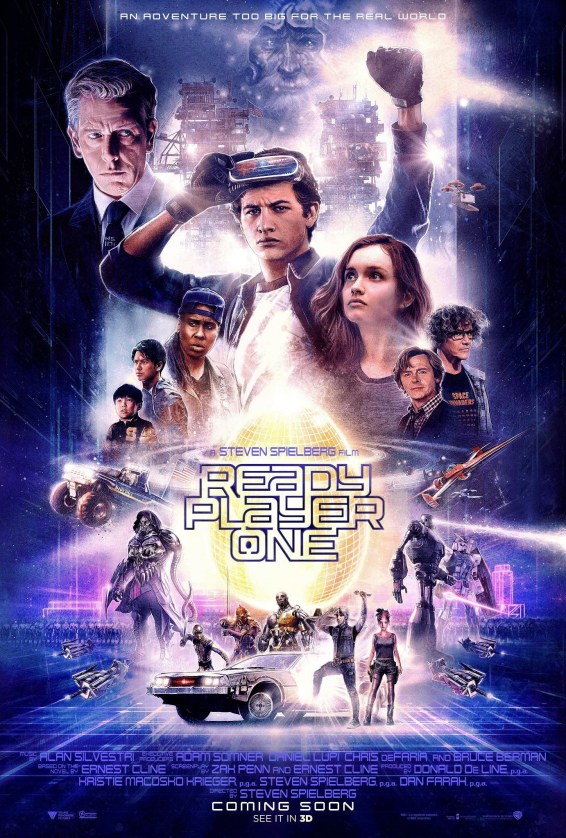
Ready Player One (2018) – Film Review

A triumphant return back to the silver screen for legendary director Steven Spielberg (Jurassic Park, Schindler’s List, Raiders of the Lost Ark), this time taking on an adaptation of a beloved science fiction novel by Ernest Cline. 2018’s ‘Ready Player One’ not only manages to capture that classic Spielberg whimsy all these years later, along with having plenty of breathtaking visuals and thrilling action sequences to boot. But, through its many, many references and appearances to/from iconic properties and characters from all types of media, ‘Ready Player One’ soon becomes a sweetly nostalgic adventure for any age.

Plot Summary: In the dystopian future of 2045, humanity spends their days inside ‘The OASIS,’ a virtual world where the only limits are your own imagination. Until on his deathbed, the original creator of ‘The OASIS’ makes a posthumous challenge, promising his entire fortune as well as complete control over his virtual world to the lucky ‘OASIS’ user that finds his ‘Golden Easter Egg.’

As its story may imply, ‘Ready Player One’ follows its novel counterpart closely by structuring its narrative half in the real world, and half within ‘The OASIS.’ Having all of the scenes set within the virtual world be comprised entirely of CGI, whilst reality is presented through live-action. While many viewers may initially be quite cautious of this (myself included), fearing a barrage of phoney-looking CG set pieces, Spielberg actually pulls this idea off very well, as the film never feels as if its CG visuals are being overused despite them taking-up most of the runtime. Interestingly, Spielberg teamed-up with effects company Industrial Light & Magic for most of ‘Ready Player One’s imagery, the company that previously worked with him for the first ‘Jurassic Park,’ so the Tyrannosaurus Rex that appears in the film is recreated using the same base-model made for the original film.

Best known as ‘Cyclops’ in the new incarnation of the ‘X-Men’ series, Tye Sheridan does a decent job at portraying the film’s likeable protagonist; ‘Wade Watts.’ Alongside Sheridan, Olivia Cooke as ‘Wade’s love interest; ‘Samantha,’ as well as Mark Rylance as ‘Halliday’ and Ben Mendelsohn and T.J. Miller as the film’s antagonists are all fine throughout the film. Yet, whilst every member of the cast is trying here, the performances in ‘Ready Player One’ are made more impressive considering the film’s extremely weak characters, as, unfortunately, nearly every character we meet within the story is mostly one-note, being nothing more than your traditional hero, companion or villain, etc.

Although an enormous amount of the cinematography by Janusz Kaminski is visually striking, having a large number of moving shots where the camera soars through the limitless world of ‘The OASIS.’ It’s difficult to judge it in its entirety, as a good majority of the camerawork is obviously CG due to half of the film’s story being set within a virtual world, and whenever we cut back to reality, the cinematography usually feels quite bland. However, I do appreciate the gloomy colour palette that’s utilised when the film returns to the real world, as it contrasts well against the incredibly colourful visuals of ‘The OASIS.’

Even though the film’s original score by Alan Silvestri is a serviceable and uplifting score in its own right, sounding subtlety like a Steven Spielberg classic. The film’s score was originally going to be composed by longtime Spielberg collaborator John Williams, but as a result of a scheduling conflict with another Spielberg film, Williams left the project to Alan Silvestri. Making ‘Ready Player One’ the third of only three films where Spielberg didn’t collaborate with Williams.

Many of the main problems I find hard to ignore with ‘Ready Player One’ mostly revolve around its weak writing, as although not continually noticeable, the film has a number of cheesy moments/clichés scattered throughout its story, in addition to many moments of humour which fall completely flat. Some critics have also taken issue with the enormous amount of characters from other media appearing in the film, seeing it as pandering and meaningless. I don’t agree with this criticism, however, as the original novel is full of many of its own (unique) references. Personally, I also feel many of the film’s flaws are made up for by its brilliant action scenes, from the opening race to the explosive final battle, to even a scene where the characters travel into the classic 1980 horror; ‘The Shining,’ every set piece is both creative, and enjoyable to watch.

In summary, ‘Ready Player One’ definitely has its faults, in particular, when it comes to its screenplay. But, even with its problematic writing in mind, I’d still say the film is a great addition to Spielberg’s huge line up of family flicks, as while it may not be on the same level of classics like ‘E.T. the Extra-Terrestrial’ or ‘Hook,’ for example, ‘Ready Player One’ overcomes its weak characterisation and occasional corny dialogue to become an exciting sci-fi/fantasy odyssey, and a film I’d recommend a trip into ‘The OASIS’ for. Final Rating: low 7/10.

ready_player_one_ver2_xxlg