Joker (2019) – Film Review

Since even the first day of its release, ‘Joker’ has seemingly split audiences straight down the middle, being hit with numerous reviews all with varied ratings. Everything from the film’s violence to its intricate themes to especially its Oscar-nominations, have all been brought up in recent conversation, as this film’s character-driven narrative focuses on the origins of ‘The Joker,’ arch-nemesis of the ‘Caped Crusader,’ ‘Batman.’ Yet, ultimately, becomes far more of an affecting and compelling drama/thriller rather than your standard superhero affair.

Plot Summary: In ‘Gotham City’ during the 1980s, mentally troubled comedian ‘Arthur Fleck,’ is disregarded and mistreated by society. Over time, this leads him to embark on a downward spiral of revolution and bloody crime, eventually bringing him face-to-face with his chaotic alter-ego; ‘The Joker.’

Being directed by Todd Phillips (Old School, The Hangover, War Dogs), throughout ‘Joker’ you really get the sense that Phillips truly puts his all into it, pretty much leaving behind the realm of comedy flicks entirely to craft a film which puts more of an emphasis on character and filmmaking. As every aspect of the film from its performances to it’s writing, cinematography and even original score, all feel as if they’ve been thought over profusely. ‘Joker’ also attempts to back-up its story with plenty of thought-provoking themes of mental health and the cruel nature of modern-day society, which I feel are represented very well throughout the film, giving Phillip’s version of this iconic character more depth beyond him being a mysterious and lawless antagonist.

From ‘Joker’s laugh to his broken mental state, Joaquin Phoenix gives a true powerhouse performance as the classic comic book villain. Making the character sadistic and dangerous yet also sympathetic wherever possible, as even though ‘Arthur’ commits many horrible acts as the runtime continues on. You can’t help but feel sorry for him, being beaten relentlessly by the world he lives within. In my opinion, Joaquin Phoenix’s portrayal of this iconic character truly elevates the film as a whole, and I’d even argue is up there with Heath Ledger’s beloved performance in ‘The Dark Knight’ many years earlier. The supporting cast of Robert De Niro, Zazie Beetz, Frances Conroy and Brett Cullen are all also great within the film, with Robert De Niro’s character, ‘Murray Franklin,’ being an obvious throwback to his character from the classic Martin Scorsese film; ‘The King of Comedy,’ from 1982.

All of the cinematography by Lawrence Sher throughout the film is very impressive, which is actually quite surprising considering ‘Joker’ is shot by the same cinematographer as the rest of Phillip’s work (which all contain mostly bland shots due to their focus on comedic writing). Featuring a variety of both stunning and memorable shots throughout, ‘Joker’s cinematography does serve its narrative and dark tone very well, with the now-iconic scene; ‘Staircase Dance,’ since becoming one of the most recognised and celebrated moments of 2019 pop culture. Additionally, ‘Joker’ continues to steer away from becoming an average superhero flick through its implementation of bloody violence, never shining away from displaying scenes of visceral murder.

Despite feeling a little unfitting during some scenes, the original score by Hildur Guðnadóttir is both very beautiful and also quite tragic, as the score really enhances the audience’s journey into ‘Arthur’s depressing and broken state of mind. However, that being said, some of the tracks can begin to feel a little too similar over time, with the signature track; ‘Bathroom Dance,’ almost beginning to feel replicated later within the film, despite the soundtrack’s many attempts to do otherwise.

The main criticism ‘Joker’ has faced since its release has been its overreliance on borrowing elements from other films, most notably classic Martin Scorsese films, such as ‘Taxi Driver’ and the previously mentioned ‘The King of Comedy.’ As, ‘Joker’ utilises a style very reminiscent of ‘Taxi Driver’ whilst also featuring a protagonist not too dissimilar to the protagonist from ‘The King of Comedy,’ and while I definitely understand these complaints, I also feel many films throughout history have always borrowed elements from others, and in addition to having Martin Scorsese himself on board as an executive producer, ‘Joker’ does include some aspects of its own making to help it stand out.

In summary, ‘Joker’ isn’t perfect, but I do feel the film is successful enough, as while its occasional cheesy dialogue and derivative aspects may drag the film down, its stunning cinematography and haunting original score really lend themselves effectively to the already gripping story. Not to mention Joaquin Phoenix’s captivating performance, all of which leave ‘Joker’ an impactful and refreshing origin story for this cherished comic book character. So, if you’re a huge fan of this iconic antagonist or just have a fondness for character studies/intense dramas, I’d recommend you give ‘Joker’ a watch in spite of its mixed reception. Final Rating: low 8/10.

joker_ver2_xxlg

It (2017) – Film Review

After many years of waiting, horror and literature fans alike got their wishes granted in mid 2015 as director Andy Muschietti (Mama, It: Chapter Two) signed on to direct a reboot (or readaptation) of one of Stephen King’s most iconic and beloved horror stories, this, of course, being ‘It.’ And, due to its excellent cinematography by Chung-hoon Chung and incredibly memorable performance from Bill Skarsgård as the demonic clown ‘Pennywise,’ ‘It’ is certainly one of the better Stephen King adaptations in recent years, even with the array issues the film still suffers from.

Plot Summary: In the summer of 1989, a group of unpopular kids known as ‘The Losers’ Club,’ band together in order to destroy a shapeshifting monster known only as ‘Pennywise,’ a creature which has been terrorising their home town of ‘Derry’ for decades and can disguise itself as whatever it’s victim fears most…

Following the film’s incredibly successful release in 2017, ‘Pennywise’ has quickly become a modern horror icon despite only having about four minutes of dialogue in the entire film. But, it’s easy to see why this is, as not only does ‘It’ share the familiar fun tone of classic films of the 1980s, such as ‘The Goonies,’ ‘The Gate’ and ‘The Monster Squad,’ yet ‘It’ also manages to adapt the novel’s antagonist; ‘Pennywise,’ fairly closely from the original source material, resulting in a mostly entertaining novel-to-screen transition.

The main cast of ‘The Losers’ Club’ features Jaeden Martell, Sophia Lillis, Finn Wolfhard, Jeremy Ray Taylor, Jack Dylan Grazer, Chosen Jacobs and Wyatt Oleff, who all share pretty great chemistry with each other, as alongside the film’s terrific writing, the children truly feel like an actual group of kids, with the group constantly cursing and sharing in plenty of quippy banter with each other. In addition to the younger cast, ‘Pennywise’ is this time around portrayed by Bill Skarsgård, and while I have always loved Tim Curry’s cheesy yet menacing portrayal of the iconic clown. Bill Skarsgård is a stand out aspect of the film for sure. Capturing the eerie qualities of the character as well as his unworldly nature perfectly, truly embracing the idea that ‘Pennywise’ isn’t just a psychotic murderer dressed as a clown, but something far stranger…

The cinematography by Chung-hoon Chung is surprisingly brilliant for a modern horror, featuring a number of attractive shots which blend extremely well with the film’s story. The film does have one recurring shot which is quite irritating, however, as during many of the scenes where ‘Pennywise’ appears to his victims, the film utilises a shot in which the sinister clown approaches the camera straight on, sprinting directly towards the screen, and while I understand what the filmmakers were trying to accomplish with this shot, I feel it only comes off as fatuous and appears extremely out-of-place when compared to the rest of the film’s visually enthralling camerawork.

Admirable yet flawed, the original score by Benjamin Wallfisch ranges from being your typical horror soundtrack to eventually becoming more emotional for the more character-focused scenes. The main issue I take with the original score are some of the tracks which feature deep bass-like sounds, as I feel these tracks really don’t fit with the film’s tone or time-period. Regardless, the tracks; ‘Paper Boat’ and ‘Derry,’ do serve the film’s story delightfully well, with one of the film’s final tracks; ‘Blood Oath,’ also being a beautiful send-off for these characters before their inevitable return.

From ‘Pennywise’s uncanny appearance to the abandoned house ‘It’ lives within on ‘Neibolt Street,’ many of the film’s designs are also pretty memorable despite their limited screen-time. These fantastic designs are dragged down by the film’s poor CG effects, however, as the film always seems to resort to CG visuals during many of its more tense moments, which can take away from their impact. This is also where ‘It’s most substantial problem comes into play, as ‘It’ has really split audiences down the middle when it comes to its focus on horror, as while the film does have a few eerie scenes and creepy visuals, this adaptation seems to be more focused on being the coming-of-age story the novel mostly is. Although some viewers may be disappointed by this, desiring a narrative based more around the story’s darker elements, I feel the film’s distracting CG effects and constant barrage of jump-scares are made up for by its interesting delve into its themes of childhood fears and growing up.

In summary, 2017’s ‘It’ is a solid Stephen King adaptation, as while certainly let down by its weak CG visuals, overreliance on jump-scares and occasionally inconsistent tone, the film still is a pretty enjoyable watch throughout its two hour runtime, mostly due to the film’s great performances and general memorability, and with ‘It: Chapter Two’ turning out to be an underwhelming experience for most. I’d say it further proves that this film is the direction to go when it comes to adapting King’s work. Final Rating: low 7/10.

it_xxlg

Buried (2010) – Film Review

Ryan Reynolds impressively carries an entire film on his shoulders with ‘Buried,’ as this fast-paced and extremely tense thriller focuses entirely on a single character trapped within an enclosed space, building up a tension-filled atmosphere and displaying constant filmmaking talent throughout (especially since the film was shot in only seven days). ‘Buried’ manages to keep its audience on constant edge as we experience this terrifying event right alongside our protagonist.

Plot Summary: ‘Paul Conroy,’ a U.S. truck driver currently working in Iraq, wakes up to find he is buried alive inside a wooden coffin after being attacked by terrorists, with only a cigarette lighter and a phone by his side, it’s a race against time for him to contact whoever he can and escape before it’s too late…

In concept, ‘Buried’ is truly a brilliant idea for a low-budget flick, as the entire film takes place within a single location with only the protagonist ever being psychically seen on-screen, the film never breaks from its tension or narrative, with not even a single shot outside of the coffin itself, and yet, the film never fails at keeping those watching glued to the screen, as after the admittedly fairly cheesy opening title sequence, the film never seems to slows down, almost refusing to give the viewer a moment to breathe as ‘Paul’ is faced with one difficult task after the next.

As already mentioned, Ryan Reynolds is the only member of the cast to physically appear on-screen, meaning he has the monumental task of delivering a very emotional and gripping performance to keep the audience engaged, which, thankfully, he does a phenomenal job of, as throughout the film’s tight runtime the actor going against his usual comedic casting to mostly excellent results. ‘Buried’ even manages to give the protagonist some characterisation through his various phone conversations with the other characters, adding the film’s compelling story even further. The various characters who appear as voices through ‘Paul’s phone consist of his wife; ‘Linda Conroy,’ portrayed by Samantha, Mathis alongside José Luis García Pérez, Ivana Miño, Robert Paterson and Stephen Tobolowsky, who give the best performances possible even with their limiting roles.

The cinematography by Eduard Grau has a surprising amount of range, despite the extremely restrictive location, as the majority of shots get uncomfortably close to ‘Paul’s face, almost placing the viewer in the position of the protagonist themselves, pretty much ensuring a feeling of claustrophobia by the film’s end. The film’s dim lighting also adds to its uncomfortable nature, as ‘Paul’ only has a cigarette lighter and small glow stick by his side, the film consists entirely of bright orange and green colour palette, alongside the occasional glow of blue from ‘Paul’s phone. That is, at least when the screen isn’t covered in complete darkness. Another small detail I appreciate about ‘Buried’ is how ‘Paul’ being underground is displayed, as when shots pull outwards from ‘Paul’ within the coffin, nothing but total blackness is shown around him, really emphasising the true loneliness and desperation he feels in his situation.

Victor Reyes handles the original score for the film, and whilst the soundtrack is decent is some scenes where it is used quite subtly, the score is sadly one of the film’s worst aspects, as the original score for ‘Buried’ is usually very generic and feels almost a little too over-the-top for a film as subdued and relentless as this one. Personally, I actually think the film would’ve been improved if more focus was placed on the film’s solid sound design rather than its weak soundtrack.

The film also has some strange editing choices during its runtime, as although not present continuously throughout the film. Many scenes do have short moments where the editing becomes rather erratic, sometimes having shots which quickly close in on ‘Paul’s face as he looks upwards, and whilst I understand this may have been done to add to the film’s tension-building, I feel it only really takes away from it in the long-run.

In summary, I feel ‘Buried’ is a film you can truly immerse yourself in, as this film makes such outstanding use out of its simplistic yet effective script and small budget. Although the film does suffer from an excessive original score and some bizarre editing choices, the remainder of film’s execution alongside Ryan Reynold’s tremendous performance is really something to admire, making an already compelling story even more interesting. If you’re a fan of thrillers in particular, then I’m sure you’ll thoroughly enjoy this inventive indie flick. Final Rating: 8/10.

buried_xlg

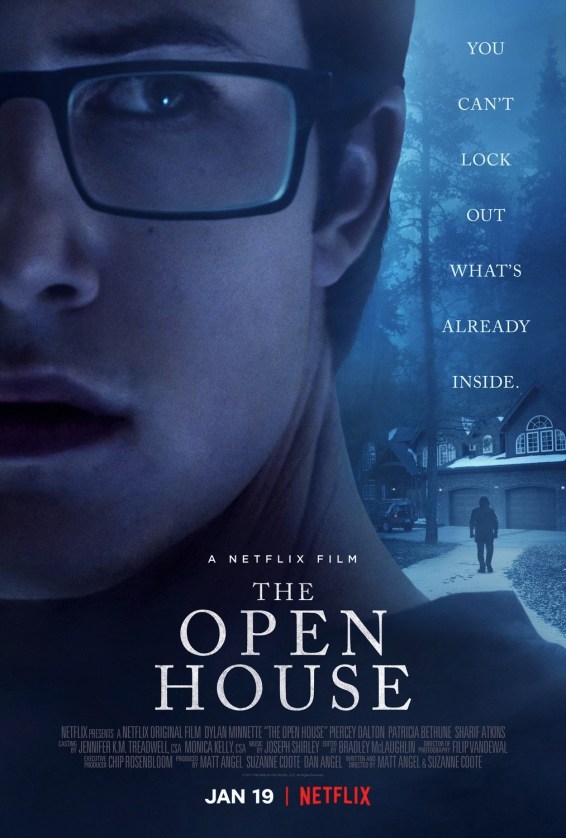
The Open House (2018) – Film Review

Netflix has always enormously ranged in quality when it comes to their original films and the horror genre, as despite films such as ‘The Ritual’ and ‘Gerald’s Game’ displaying some great promise for the streaming service, many horror duds, like ‘Malevolent,’ ‘Eli,’ ‘Rattlesnake’ and ‘The Silence’ just to name a few, leave ‘The Open House’ feeling like just another bland and (sometimes even moronic) entry into this ongoing trend.

Plot Summary: Following a recent family tragedy, athletic teenager, Logan, and his mother, Naomi, find themselves besieged by a threatening force when they temporarily move into a new house currently up for sale…

By far the worst element of ‘The Open House’ is its writing, as in addition to the film’s extremely dim-witted characters and bizarre misdirections. ‘The Open House’ almost feels as if it has a disconnect from reality at points, as the main antagonist of the film, ‘The Man in Black,’ lurks within the mother and son’s home unbeknown to them, usually hiding in their basement. Yet, somehow, also manages to navigate through the house without ever being seen, even going-up and down the single staircase to the basement constantly. The closest ‘The Man in Black’ ever comes to being found is through the noises he makes at night, and although these moments do give ‘The Man in Black’ the perfect opportunity to depose of his victims, he never does for reasons that go unexplained.

Dylan Minnette and Piercey Dalton portray the main duo of the film, ‘Logan’ and ‘Naomi Wallace,’ a mother and son broken apart by the recent death of their father/husband, and although neither of the two actors give a truly bad performance throughout the film, none of the characters ever really feel that likeable or interesting, even continuing onto the supporting cast of Sharif Atkins, Patricia Bethune, Paul Rae and Aaron Abrams. Who, all attempt to give each one of the small-town residents a distinct and out-of-touch personality, which usually fall quite flat. ‘Logan’ and ‘Naomi’ also suffer from one of the biggest issues for horror characters, that being their nonsensical decisions, as during many points within the story, the characters don’t react to situations how most people realistically would, sometimes even missing very obvious signs of danger.

Surprisingly, the cinematography by Filip Vandewal does allow for a number of attractive shots. Whilst still fairly dull overall, usually not really adding much to any of the film’s tension-filled moments (what little there are) through the film’s strong overreliance on its static shot-reverse-shot formula during many scenes. ‘The Open House’ does at least attempt to use a variety of wide-shots and focus-pulls to make effective use of its isolated yet beautiful location in the snowy mountains of Ohio, despite the story itself barely utilising this location aside from a scene nearing the end of the film.

The original score by Joseph Shirley is pretty much exactly what you’d expect, being the usual generic and sometimes even overbearing strings score composed for the majority of horror flicks. From the opening scene to the end of the film’s credits, every track is very forgettable and is barley distinct from each other. So much so, that it seems that the soundtrack is barley even findable online, as it actually took me quite a while to locate the score afterwards.

Another poorly-executed aspect of the film is its many misdirections, as already mentioned, as despite hinting at numerous different paranormal events throughout its runtime, ‘The Open House’ is actually a mostly grounded modern horror. As whilst the film constantly alludes to supernatural occurrences, the film then always undermines itself by completely ignoring them. This also isn’t just limited to the paranormal aspects, however, as the film also introduces a variety of loose-ends which the film never ties-up, and whilst some could see this as setting-up a layer of mystery, I personally feel it’s just lazy writing and bad red-herrings. This is most notable when it comes to the character of ‘Martha’ portrayed by Patricia Bethune, who repeatedly refers to her dead husband throughout the film and always acts very unusual. Yet, nothing ever comes of his, and by the end of the narrative, her character is almost completely forgotten about.

In summary, ‘The Open House’ is a truly dismal Netflix Original, with some weak performances, a forgettable original score, atrocious writing and an enormous amount of clichés. Aside from the occasional piece of decent cinematography, ‘The Open House’ simply feels like a ‘nothing’ experience as, for me, these kinds of low-effort and low-budget horrors are only dragging the genre down further than it already has been in recent years. Final Rating: 2/10.

open_house_xlg

Nocturnal Animals (2016) – Film Review

Part thriller, part drama and part literature fever dream, 2016’s ‘Nocturnal Animals’ may not appeal to every viewer, but those it will, it will certainly leave an impression, as this extremely underrated thriller led by some sublime performances from Amy Adams and Jake Gyllenhaal is incredibly dark and compelling from start-to-finish. Directed by former fashion designer turned director Tom Ford (A Single Man) and based on the novel; ‘Tony and Susan’ by Austin Wright, ‘Nocturnal Animals’ may not be flawless in its execution, but it is definitely worth a watch.

Plot Summary: An unhappy and lamenting art curator (Susan Morrow) begins to imagine herself within the pages of a novel manuscript sent to her by her former husband, whose negative associations of their relationship take on a fictionalised violent direction in a symbolic tale of revenge…

Split between two different storylines, one set in the real world and one set within the pages of the fictional crime novel. ‘Nocturnal Animals’ definitely has some changes in tone, as every scene with ‘Susan’ usually focuses on her broken marriage and current lifestyle, which feels very different when compared to the tense revenge story of the novel, and yet, neither of these stories ever feel dull, as they both are engaging for different reasons. Tom Ford also makes brilliant use of this structure, as for those more keen-eyed viewers, there are a variety of visual links between the two narratives, the most obvious of which being how ‘Susan’ imagines her ex-husband; ‘Edward,’ as the father character within the novel, meaning Jake Gyllenhaal takes on two separate roles.

The central cast of Amy Adams, Jake Gyllenhaal, Michael Shannon, Aaron Taylor-Johnson, Isla Fisher, Ellie Bamber and Armie Hammer, are all brilliant throughout the film as everyone one of the film’s characters gets plenty of development, usually all playing a crucial role within the film regardless of whichever storyline they are in. Although Jake Gyllenhaal does a pretty great job taking on two separate roles, the plot of the novel primarily takes place within the Texas desert, meaning the father character, ‘Tony Hastings,’ possesses a Texas accent, and whilst not terrible, it is a little inconsistent. This is quickly redeemed by the stand out performance from Aaron Taylor-Johnson as ‘Ray Marcus,’ however, as this usually vapid actor gives an amazing performance as a redneck delinquent, who is just as intimidating as he is erratic.

Although the cinematography by Seamus McGarvey is nothing extraordinary, there are still plenty of attractive shots throughout the runtime as the film uses its cinematography fairly effectively to create a contrast between the two stories, using an array of wide shots when focusing on the story within the novel adding too many of its tense moments, whereas the majority of the scenes within the real world mostly use a large number of close-ups and mid-shots to add to the film’s drama.

Without a doubt, however, my personal favourite aspect of the film is the original score by Abel Korzeniowski. Utilising an ensemble of violins, the score for ‘Nocturnal Animals’ is very memorable and excellently builds tension throughout the runtime as the soundtrack always remains very beautiful despite also feeling quite haunting. The original score even manages to capture the feeling of loneliness and sadness from ‘Susan’s storyline, with the tracks; ‘A Solitary Women’ and ‘City Lights,’ fitting this idea perfectly, yet neither of these two tracks beat out my personal favourite; ‘Revenge,’ referred to by most as the film’s signature track.

Throughout either of the two plots, the film is also filled with plenty of themes and underlying messages, many of which relate to the idea of expression through art, which does help distract slightly from the main issue I have with ‘Nocturnal Animals,’ this being the editing, although it may be intentional. At points, the editing throughout the film is rather fast-paced, cutting between shots rapidly, sometimes even using jump-cuts during some of the more drawn-out shots. If this style of editing was present continuously throughout the film, then perhaps it wouldn’t have been as noticeable, but as it was only occasionally, I personally found it quite distracting.

In summary, while ‘Nocturnal Animals’ may not be a shining masterpiece, but I do believe this film is very overlooked when it comes to thrillers, as the outstanding performances from the cast mixed in with the array of very tense moments and wonderful original score make for a genuinely gripping and interesting experience. So, whilst some audience members may not completely understand the themes and messages behind the story, I do feel this film will leave an impact on those it does appeal to. Final Rating: 8/10.

nocturnal_animals_ver5_xlg

The Snowman (2017) – Film Review

Despite being directed by Tomas Alfredson, head of some great films in the past, such as ‘Let the Right One In’ and ‘Tinker Tailor Soldier Spy,’ ‘The Snowman’ is a complete mess of a thriller from start-to-finish. Mostly as a result of the variety of issues it faced during its production, from a rushed filming schedule to plenty of scenes and story elements being left on the cutting-room floor. Although the film’s isolated location alongside the visually pleasing cinematography by Dion Beebe may be very effective at points, they simply aren’t enough to save the film from its weak writing and boring/confusing narrative, even with the film’s decent source material.

Plot Summary: As rough detective, Harry Hole, investigates the disappearance of a woman whose scarf is found wrapped around an ominous-looking snowman, he begins to fear an elusive serial killer may be active again. So, with the help of a brilliant recruit, ‘Harry’ must now connect decades-old cold cases in the hopes of outwitting this threat before the next snowfall…

‘The Snowman’ is based on the novel of the same name by Jo Nesbø, also known as: ‘Snømannen’ in Norwegian. However, although this is the first time audiences are seeing the character of: ‘Harry Hole’ portrayed on-screen, ‘The Snowman’ is actually the seventh entry in the character’s novel series. Making the narrative itself feel very underdeveloped and even a little out-of-place, almost as if the viewer hasn’t been informed of any of the film’s in-world events before the current story begins (this may also be why the film is brimming with overly long flashbacks).

Michael Fassbender portrays the protagonist; ‘Harry Hole,’ which is, unfortunately, one of his weakest performances to date, not only due to his poorly-written character (who is incredibly cliché as an uncaring alcoholic detective) but also as a result of his fairly bland line delivery. The rest of the cast featuring Rebecca Ferguson, Charlotte Gainsbourg, Jonas Karlsson and even a short appearance from J.K. Simmons, are all decent with what they are given, although they also suffer from similar poorly-written characters. Many of the characters throughout the film also never seem to react very realistically to situations, as characters usually just shrug off horrific sights with ease, never delving into how traumatic these experiences would actually be for a person to witness.

The cinematography by Dion Beebe is undoubtedly the best aspect of the film, however, as the beautiful yet isolated locations of the story really add to the film’s enormous array of wide shots and uncomfortable close-ups. Needlessly to say, this doesn’t really help with the lack of tension within the film, as although the film makes more than a few attempts at crafting tension-filled moments when ‘Harry’ investigates various crime scenes, the film never quite manages it, usually failing to build-up much of an eerie atmosphere.

Marco Beltrami handles the original score for the film, and although this composer usually does terrific work, his score for ‘The Snowman’ is mostly very dull. As with the exception of the tracks; ‘Main Titles’ and ‘Down the Harry Hole,’ the entire soundtrack feels as of it could’ve been taken from almost any other generic thriller, which is a huge shame, as I personally feel a more impactful score could’ve really helped with the film’s total lack of tension.

The film’s location probably intrigued a large number of viewers just on itself, clearly taking inspiration from films, such as ‘Deadfall’ and the dark comedy classic; ‘Fargo,’ from 1996, the film’s snowy Norway setting really gives the film a distinct look, with the bright red blood from many of the killer’s victims standing-out immensely amongst the white snow. These visuals also help to distract from the film’s slow pacing, as the film’s main mystery usually feels like quite a drag, with clues only being revealed very slowly over the course of the film.

In summary, ‘The Snowman’ definitely fails in more categories than one, as despite its interesting location and pretty fantastic cinematography, the film’s messy story and bland performances make the film pretty unappealing when considering it’s over two-hour runtime. Whilst I’m sure ‘The Snowman’ had the potential to be a great semi-Noir thriller at some-point in time, especially considering it was initially going to be directed by the legendary Martin Scorsese, who, eventually left the film to pursue other projects. ‘The Snowman’ is still far from the chilling crime tale it attempted to be and is a complete disappointment. Final Rating: 3/10.

snowman_ver3_xlg

Contagion (2011) – Film Review

Strikingly similar to current events in the world, ‘Contagion’ explores a scenario in which nearly every country is rapidly infected from a freak virus, eventually leading to a large number of deaths. Utilising some decent performances and unique story structure alongside its effective original score by Cliff Martinez, the film is both very bleak and realistic through its unnerving portrayal of a worldwide pandemic.

Plot Summary: After her return home from a business trip to Hong Kong, ‘Beth Emhoff’ dies from what is believed to be flu or some other type of infection, soon leading to an enormous outbreak across the world. For doctors and administrators at the U.S. Centre for Disease Control, several days pass before anyone realises the true extent of this new infection, leaving most of the world in the midst of a pandemic as the C.D.C. works desperately to find a cure…

Directed by Steven Soderbergh (Ocean’s Eleven, Side Effects, Unsane), ‘Contagion’ is truly dripping with the Soderbergh’s usual style as a director, as the film is constantly tense and unnerving throughout its tight runtime, with the film even having an element of uncertainty during many scenes, as any of the various characters we cut between within the story could be infected without even knowing it. And, of course, the film has many similarities to the current COVID-19 pandemic, such as the key to growing the virus being a fetal bat cell line from Geelong, Geelong referring to the Australian Animal Health Laboratory, a high-security laboratory for exotic animal diseases located in Geelong, Victoria, Australia.

Despite the film jumping from character to character during its story, the all-star cast of Laurence Fishburne, Matt Damon, Kate Winslet, Marion Cotillard and Gwyneth Paltrow are all great in their portrayals of various characters thrown into this chaotic event, as our perspective changes throughout the narrative, from the eyes of an average family isolated within their home, through to high up government officials scrambling to devise a plan. However, due to the film being structured like this, the film also displays plenty of wasted potential, as Bryan Cranston actually appears in the film as ‘RADM Lyle Haggerty.’ Who is only given a few short scenes and is hardly utilised within the story, making the brilliant actor feel incredibly wasted. There is also a similar issue with the internet blogger; ‘Alan Krumwiede,’ portrayed by Jude Law, as this character actually adds very little to the overall story and barely interacts with any of the other characters, resulting in most of his screen-time feeling like more of a distraction than anything else.

The cinematography within ‘Contagion’ is surprisingly by Steven Soderbergh himself, under the fictional name of ‘Peter Andrews,’ and whilst nothing incredible, it is fairly effective throughout the film. Having said that, I couldn’t help but feel whilst watching that the film could’ve made much better use of close-ups during many scenes, as due to the film’s focus on a spreading virus, I really feel these shots would’ve further added to the building of dread and uncomfortable nature of skin contact the film puts an emphasis on at many points.

Cliff Martinez’s original score does help to add to the drama and tension throughout the film, however, as the score usually appears during key moments to add more impact to the film’s montages of footage. This is most effective during a scene set in the early days of the initial outbreak, or when the film finally reveals where the virus originally came from, and although the soundtrack itself may not be incredibly memorable, I do still feel it suits the film’s tone very well. In particular, the film’s opening track; ‘They’re Calling My Flight,’ which starts the film off strong by jumping straight into the story’s inciting event.

My main issues with ‘Contagion’ are mostly related to the film’s structure, as the pacing nearing the ending of the film seems to slow down drastically in an attempt to wrap up every aspect of the story, and although I feel cutting between multiple different characters is an interesting way to approach a story like this, I could see it being frustrating for some viewers if one character’s plot is more compelling than another. Yet this is somewhat redeemed by ‘Contagion’s realism, as the film has actually been proven to be very accurate when it comes to its science, even receiving praise from ‘New Scientist’ magazine when the film was initially released in 2011.

In summary, whilst ‘Contagion’ doesn’t break any new ground when it comes it’s filmmaking, the film is still fairly entertaining and frightening throughout most of its runtime, while it definitely has its weak aspects, I would say ‘Contagion’ is certainly worth a watch. However, do bear in mind that I probably wouldn’t recommend this film if you are already in a panicked mindset over current events, as I feel this film could make those who are already concerned panic even further through its mostly realistic execution of a story like this. Final Rating: 7/10.

contagion_ver8_xxlg

Snowpiercer (2014) – Film Review

One of my favourite sci-fi films from this past decade, 2014’s ‘Snowpiercer’ is constantly engaging, rousing and gritty throughout both its original plot and exploration of the interesting world its story takes place within, as the film chooses to explore the worst of humanity through some gorgeous cinematography by Kyung-pyo Hong and some truly brilliant writing. Making ‘Snowpiercer,’ a superb science fiction thriller, all under the genius hand of director Bong Joon-Ho, who, recently gained a large amount of traction through his Oscar-winning flick; ‘Parasite.’

Plot Summary: In a future where a failed climate change experiment has killed all life except for the lucky few who boarded the ‘Snowpiercer,’ a train that travels around the globe, a new class system begins to emerge on board as ‘Curtis’ leads a revolution with the train’s lower-class citizens…

Despite director Bong Joon-Ho (Memories of Murder, The Host, Okja) usually sticking to this style, the very bleak tone of ‘Snowpiercer’ may leave many audience members in a depressing mindset long after their initial viewing, as the film deals with a variety of themes such as poverty, social class and survivalism, all portrayed in a dark and negative fashion. However, in spite of this, the film never fails to still be very entertaining and thrilling, mostly as a result of its fairly quick pacing and exhilarating action sequences. Although it may surprise many, ‘Snowpiercer’ also takes heavy inspiration from the French graphic novel; ‘Le Transperceneige’ by Jacques Lob, with the two stories sharing many similarities and many differences throughout their respective mediums.

Chris Evans, Jamie Bell, Tilda Swinton, Song Kang-ho, Octavia Spencer, John Hurt and Ed Harris are all fantastic throughout the film within their various roles, especially Tilda Swinton as the villainous and oppressive; ‘Manson’ (who completely nails many of the film’s most memorable lines). In addition to this, the film’s characters also get plenty of development throughout the narrative, to be specific, the film’s protagonist; ‘Curtis,’ as this character becomes far more tragic nearing the end of the film, eventually leading him to devolve from what we would usually expect to see from our main character.

The cinematography by Kyung-pyo Hong is pretty creative and visually impressive throughout the majority of the runtime, as the film’s cinematography backs up it’s story and drama very effectively. The film’s colour palette also plays into this, as the dirty greys, greens and blacks of the train’s tail all further display the contrast between the wealth of the different people on board. Of course, due to the film also being packed with a large number of action scenes, the cinematography does become slightly shakier during many of these moments, yet it is still clear what is happening throughout. One of these scenes in particular, known as ‘The Tunnel,’ I found extremely inventive, as this entire scene takes place in total darkness, with night-vision being utilised exceptionally well, shot without any additional lighting, according to director Bong Joon-Ho.

Although a little uninspired during some of the action scenes, the original score by Marco Beltrami does fit the story perfectly throughout most of the film. Especially when it comes to tracks, such as ‘This is the End’ or ‘Yona’s Theme,’ as the soundtrack matches the bleak tone of the film extremely well. The score also helps to add more impact to many of the more shocking moments within the story, as at multiple points during the narrative, the film reveals certain aspects of this twisted train society which really deepens film’s world.

As the film is set entirely within the futuristic train, the film does do a surprisingly excellent job of the keeping the film’s set pieces unique through the sheer variety of sets on display, as the film takes the audience from the dirty tail of the train, through to a classroom, a nightclub, and, eventually, even a spar, further emphasising ‘Snowpiercer’s underlying themes of social class. Another element of the film I adore is Joon-Ho’s focus on small details, as the film always alludes to smaller aspects of the story or characters which aren’t fully delved into, only hinted at. Despite all of this, however, ‘Snowpiercer’ isn’t totally flawless, as the film does become a little cheesy at points, mostly due to the occasional editing choice or line of dialogue, but this is very rare.

In summary, even though ‘Snowpiercer’ isn’t the best modern sci-fi to date, I personally don’t think the film is far off, from its creative ideas through to its beautiful cinematography and great original score. The film easily overcomes its few cheesy moments and slightly dated CG effects here and there, with a few tiny changes, I honestly believe that this exciting sci-fi flick could be up there with the likes of ‘Arrival’ or ‘Ex_Machina,’ when it comes to modern science fiction. Final Rating: 8/10.

snowpiercer_ver27_xlg

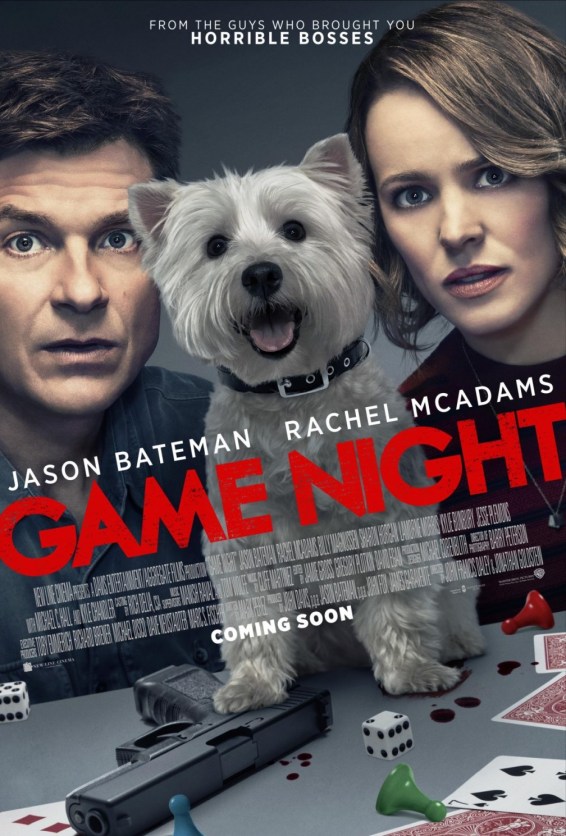
Game Night (2018) – Film Review

Going in initially, I had very little expectations for ‘Game Night,’ as although I mostly enjoyed ‘Horrible Bosses’ (which was written by this film’s directors), I’ve always found most modern comedies to be very hit-or-miss. However, as the runtime continued on, I soon realised ‘Game Night’ was far more than just your disposable comedy flick, as the great cinematography by Barry Peterson and the excellent original score by Cliff Martinez made the film just as stylish as it was entertaining.

Plot Summary: A group of friends who meet regularly for game nights soon find themselves entangled in a real-life mystery when the shady brother of one of them is kidnapped by a group of dangerous criminals…

Right from the opening titles, which are displayed through various falling board game pieces, through to the end credits, which entirely cover a pinboard with names of both the cast and crew (as well as an array of jokes). ‘Game Night’ is constantly brimming with style throughout its story, despite first appearing as nothing more than a straightforward comedy as the film uses its terrific editing to add to the humour at many different points, giving the impression that no corners were cut by the filmmakers when it comes to the filmmaking itself.

Jason Bateman, Rachel McAdams, Kyle Chandler as well as the large supporting cast are all fantastic within their roles, with each member of the cast having decent chemistry with each other and plenty of great comedic moments between them (which is most likely a result of the cast actually taking-part in their own game night prior to filming). Jesse Plemons has without a doubt the film’s best character, in my opinion, as he portrays the game night-obsessed police officer; ‘Gary,’ who is just as creepy as he is hilarious every time he is on-screen. Unlike most modern comedies, the characters throughout the film also get a surprising amount of characterisation, as there are plenty of scenes throughout the story in which the pacing slows down to develop each one of the characters individually, which makes the film more engaging, and is a complete breath of fresh air after so many bland comedies with over-acted goofballs as their protagonists.

The cinematography by Barry Peterson is very creative throughout the film, as in addition to a variety of visually appealing shots, ‘Game Night’ also frames many of its locations as if they are pieces on a game board, almost as if every time the characters arrive at a building, it’s as if they are arriving at a stop whilst playing ‘The Game of Life,’ which is exceedingly inventive. As well as this, the film features a variety of interesting transitions between scenes and even a moment which is filmed entirely within a single-take, both of which I felt really added to the film’s overall visual presentation and enjoyable flow.

Although it doesn’t quite fit every scene, the original score by Cliff Martez is both unique and memorable, as the soundtrack uses a minimalist techno feel to mesh-well alongside the film’s stylistic editing and cinematography. Whether a light-hearted comedic scene or even one of the more tense moments nearing the end of the film, the score itself is brilliant. I’m too surprised by this, however, as this composer has done some phenomenal scores in his past, such as ‘Drive,’ ‘Contagion’ and ‘The Neon Demon,’ to name a few. So, ‘Game Night’ is simply just another great soundtrack to add to his sublime catalogue of work.

The film really only has one major issue for me, which it’s the song choice, as although I understand the film is mostly light-hearted fun, the use of iconic songs, such as ‘Don’t Stop Me Now’ and ‘Quando, Quando, Quando,’ don’t really fit with the film’s tone, and can make the film feel a little cheesy at points. Of course, as the film is a comedy, there is also plenty of jokes that don’t quite hit the mark, but I’d say there are definitely far more that do than don’t in this case, as the film avoids the lazily written gross-out jokes and shock humour that infests a large number of modern comedies.

In summary, it’s fair to say that ‘Game Night’ was definitely a pleasant surprise for me on my initial watch, as I never expected this comedy to be as memorable or as well-crafted as it actually is. Although it’s not perfect due to its unusual song choices and a couple of overly long jokes, ‘Game Night’ is possibly one of the best comedies of the last few years, and while there are better displays of great filmmaking out there, I do feel this film should be higher on many cinephile’s watchlists. Final Rating: 8/10.

game_night_ver4_xlg

A Clockwork Orange (1972) – Film Review

Despite being very unusual and even somewhat disturbing throughout, legendary director Stanley Kubrick (2001: A Space Odyssey, The Shining, Full Metal Jacket) brings to life one of the best films of his career, as ‘A Clockwork Orange’ explores an original story with some impressive cinematography and set design, all leading the film to become very iconic and memorable within its own right. Even surpassing the novel it’s originally based on by Anthony Burgess, with Kubrick crafting one of his most faithful adaptations to date.

Plot Summary: In the near future, the young sadistic gang leader; Alex, is imprisoned after a violent event goes public, forcing him to serve time. But, with the promise of an early release, ‘Alex’ is eventually lead to volunteer for a conduct-aversion experiment, which doesn’t go as he anticipated…

Although the narrative throughout ‘A Clockwork Orange’ never fails to be engaging, usually focusing heavily on dark themes of insanity, violence and morals. I do feel the film could definitely be seen as too intense for some viewers, as although the large amount of nudity and torture does serve the film’s story, it could also be seen as tasteless for some, regardless of the film’s overall lack of blood and gore during many of the violent scenes.

Ignoring the unbelievable performance from Malcolm McDowell as the psychotic protagonist; ‘Alex,’ Warren Clarke, Aubrey Morris, James Marcus, Michael Bates and Carl Duering are all excellent in their respective roles, despite their very limited screen-time and development, and although the over-the-top British accents many of the characters have may put some viewers off, I do feel it fits well within the interesting sci-fi world the film sets up. However, we do get another appearance near the end of the film from a character, known as ‘Mr. Alexander,’ portrayed by the late Patrick Magee. Who, despite being an important character within the plot, gives a performance a little too ridiculous, in my opinion, as his facial expressions end up coming across as more comedic than emotional during his dramatic scene nearing the end of the runtime.

The cinematography by the late John Alcott definitely adds another level to the film, as the enormous amount of movement and uncomfortable close-ups throughout the film really add to the story itself, including the now-iconic; ‘Kubrick Stare,’ which can be seen in many of his films. In addition to the fantastic cinematography, however, is also the brilliant editing, which perfectly fits the film’s style, almost as if ‘Alex’ himself is taking the audience through the story within his erratic mind. This also links back to his narration, which is present throughout the film and is brimming with plenty of well-written and memorable dialogue.

The original score by Wendy Carlos is another element of the film I really enjoy, utilising an electronic soundtrack to further push the weird tone of the film, as the score recreates many of ‘Alex’s favourite classic songs in an interesting way, resulting in a soundtrack that’s both memorable and unique. The film also uses a variety of iconic songs very effectively, perfectly capturing the insanity within the main group of misfits. One of the most memorable moments of the film even comes from this, as ‘Alex’ brutally beats a couple whilst singing the classic song; ‘Singin’ in the Rain.’

As previously mentioned, ‘A Clockwork Orange’ is also one of the few films where the sets are incredibly iconic by themselves, as each location the characters visit is always colourful and visually appealing. From the ‘Korova Milk Bar’ through to the London apartment ‘Alex’ and his parents call home, every set has plenty of 1970s style mixed-in with some science fiction aspects (this also applies to the many wonderful costumes on display throughout the film). There were also a number of interesting scenes that were left on the cutting-room floor, including more scenes set within the ‘Korova Milk Bar,’ among plenty of other scenes focusing on the characters committing more horrible acts.

In summary, ‘A Clockwork Orange’ is an extremely bizarre yet incredible experience, as the film is just as interesting to discuss as it is to watch among many film fans. Containing plenty of hidden messages and underlying themes alongside its phenomenal filmmaking and brilliant story, I feel the film is truly one of Kubrick’s best, despite not beating out my personal favourite; ‘The Shining.’ So, although ‘A Clockwork Orange’ isn’t without its flaws, I would still highly recommend this one for anyone seeking something a little more out there, and of course, also due to its huge impact on pop culture and the film industry, alike. Final Rating: 8/10.

clockwork_orange_xxlg