Snowpiercer (2014) – Film Review

One of my favourite sci-fi films from this past decade, 2014’s ‘Snowpiercer’ is constantly engaging, rousing and gritty throughout both its original plot and exploration of the interesting world its story takes place within, as the film chooses to explore the worst of humanity through some gorgeous cinematography by Kyung-pyo Hong and some truly brilliant writing. Making ‘Snowpiercer,’ a superb science fiction thriller, all under the genius hand of director Bong Joon-Ho, who, recently gained a large amount of traction through his Oscar-winning flick; ‘Parasite.’

Plot Summary: In a future where a failed climate change experiment has killed all life except for the lucky few who boarded the ‘Snowpiercer,’ a train that travels around the globe, a new class system begins to emerge on board as ‘Curtis’ leads a revolution with the train’s lower-class citizens…

Despite director Bong Joon-Ho (Memories of Murder, The Host, Okja) usually sticking to this style, the very bleak tone of ‘Snowpiercer’ may leave many audience members in a depressing mindset long after their initial viewing, as the film deals with a variety of themes such as poverty, social class and survivalism, all portrayed in a dark and negative fashion. However, in spite of this, the film never fails to still be very entertaining and thrilling, mostly as a result of its fairly quick pacing and exhilarating action sequences. Although it may surprise many, ‘Snowpiercer’ also takes heavy inspiration from the French graphic novel; ‘Le Transperceneige’ by Jacques Lob, with the two stories sharing many similarities and many differences throughout their respective mediums.

Chris Evans, Jamie Bell, Tilda Swinton, Song Kang-ho, Octavia Spencer, John Hurt and Ed Harris are all fantastic throughout the film within their various roles, especially Tilda Swinton as the villainous and oppressive; ‘Manson’ (who completely nails many of the film’s most memorable lines). In addition to this, the film’s characters also get plenty of development throughout the narrative, to be specific, the film’s protagonist; ‘Curtis,’ as this character becomes far more tragic nearing the end of the film, eventually leading him to devolve from what we would usually expect to see from our main character.

The cinematography by Kyung-pyo Hong is pretty creative and visually impressive throughout the majority of the runtime, as the film’s cinematography backs up it’s story and drama very effectively. The film’s colour palette also plays into this, as the dirty greys, greens and blacks of the train’s tail all further display the contrast between the wealth of the different people on board. Of course, due to the film also being packed with a large number of action scenes, the cinematography does become slightly shakier during many of these moments, yet it is still clear what is happening throughout. One of these scenes in particular, known as ‘The Tunnel,’ I found extremely inventive, as this entire scene takes place in total darkness, with night-vision being utilised exceptionally well, shot without any additional lighting, according to director Bong Joon-Ho.

Although a little uninspired during some of the action scenes, the original score by Marco Beltrami does fit the story perfectly throughout most of the film. Especially when it comes to tracks, such as ‘This is the End’ or ‘Yona’s Theme,’ as the soundtrack matches the bleak tone of the film extremely well. The score also helps to add more impact to many of the more shocking moments within the story, as at multiple points during the narrative, the film reveals certain aspects of this twisted train society which really deepens film’s world.

As the film is set entirely within the futuristic train, the film does do a surprisingly excellent job of the keeping the film’s set pieces unique through the sheer variety of sets on display, as the film takes the audience from the dirty tail of the train, through to a classroom, a nightclub, and, eventually, even a spar, further emphasising ‘Snowpiercer’s underlying themes of social class. Another element of the film I adore is Joon-Ho’s focus on small details, as the film always alludes to smaller aspects of the story or characters which aren’t fully delved into, only hinted at. Despite all of this, however, ‘Snowpiercer’ isn’t totally flawless, as the film does become a little cheesy at points, mostly due to the occasional editing choice or line of dialogue, but this is very rare.

In summary, even though ‘Snowpiercer’ isn’t the best modern sci-fi to date, I personally don’t think the film is far off, from its creative ideas through to its beautiful cinematography and great original score. The film easily overcomes its few cheesy moments and slightly dated CG effects here and there, with a few tiny changes, I honestly believe that this exciting sci-fi flick could be up there with the likes of ‘Arrival’ or ‘Ex_Machina,’ when it comes to modern science fiction. Final Rating: 8/10.

snowpiercer_ver27_xlg

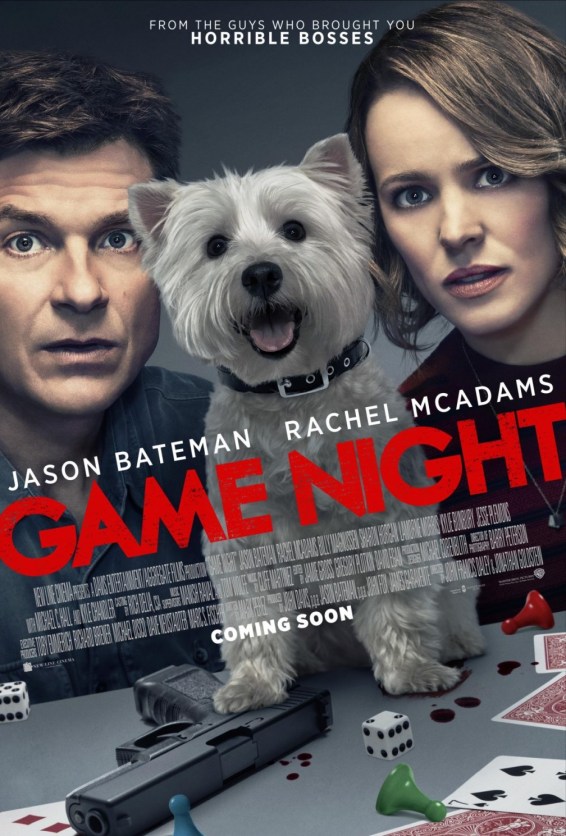
Game Night (2018) – Film Review

Going in initially, I had very little expectations for ‘Game Night,’ as although I mostly enjoyed ‘Horrible Bosses’ (which was written by this film’s directors), I’ve always found most modern comedies to be very hit-or-miss. However, as the runtime continued on, I soon realised ‘Game Night’ was far more than just your disposable comedy flick, as the great cinematography by Barry Peterson and the excellent original score by Cliff Martinez made the film just as stylish as it was entertaining.

Plot Summary: A group of friends who meet regularly for game nights soon find themselves entangled in a real-life mystery when the shady brother of one of them is kidnapped by a group of dangerous criminals…

Right from the opening titles, which are displayed through various falling board game pieces, through to the end credits, which entirely cover a pinboard with names of both the cast and crew (as well as an array of jokes). ‘Game Night’ is constantly brimming with style throughout its story, despite first appearing as nothing more than a straightforward comedy as the film uses its terrific editing to add to the humour at many different points, giving the impression that no corners were cut by the filmmakers when it comes to the filmmaking itself.

Jason Bateman, Rachel McAdams, Kyle Chandler as well as the large supporting cast are all fantastic within their roles, with each member of the cast having decent chemistry with each other and plenty of great comedic moments between them (which is most likely a result of the cast actually taking-part in their own game night prior to filming). Jesse Plemons has without a doubt the film’s best character, in my opinion, as he portrays the game night-obsessed police officer; ‘Gary,’ who is just as creepy as he is hilarious every time he is on-screen. Unlike most modern comedies, the characters throughout the film also get a surprising amount of characterisation, as there are plenty of scenes throughout the story in which the pacing slows down to develop each one of the characters individually, which makes the film more engaging, and is a complete breath of fresh air after so many bland comedies with over-acted goofballs as their protagonists.

The cinematography by Barry Peterson is very creative throughout the film, as in addition to a variety of visually appealing shots, ‘Game Night’ also frames many of its locations as if they are pieces on a game board, almost as if every time the characters arrive at a building, it’s as if they are arriving at a stop whilst playing ‘The Game of Life,’ which is exceedingly inventive. As well as this, the film features a variety of interesting transitions between scenes and even a moment which is filmed entirely within a single-take, both of which I felt really added to the film’s overall visual presentation and enjoyable flow.

Although it doesn’t quite fit every scene, the original score by Cliff Martez is both unique and memorable, as the soundtrack uses a minimalist techno feel to mesh-well alongside the film’s stylistic editing and cinematography. Whether a light-hearted comedic scene or even one of the more tense moments nearing the end of the film, the score itself is brilliant. I’m too surprised by this, however, as this composer has done some phenomenal scores in his past, such as ‘Drive,’ ‘Contagion’ and ‘The Neon Demon,’ to name a few. So, ‘Game Night’ is simply just another great soundtrack to add to his sublime catalogue of work.

The film really only has one major issue for me, which it’s the song choice, as although I understand the film is mostly light-hearted fun, the use of iconic songs, such as ‘Don’t Stop Me Now’ and ‘Quando, Quando, Quando,’ don’t really fit with the film’s tone, and can make the film feel a little cheesy at points. Of course, as the film is a comedy, there is also plenty of jokes that don’t quite hit the mark, but I’d say there are definitely far more that do than don’t in this case, as the film avoids the lazily written gross-out jokes and shock humour that infests a large number of modern comedies.

In summary, it’s fair to say that ‘Game Night’ was definitely a pleasant surprise for me on my initial watch, as I never expected this comedy to be as memorable or as well-crafted as it actually is. Although it’s not perfect due to its unusual song choices and a couple of overly long jokes, ‘Game Night’ is possibly one of the best comedies of the last few years, and while there are better displays of great filmmaking out there, I do feel this film should be higher on many cinephile’s watchlists. Final Rating: 8/10.

game_night_ver4_xlg

A Clockwork Orange (1972) – Film Review

Despite being very unusual and even somewhat disturbing throughout, legendary director Stanley Kubrick (2001: A Space Odyssey, The Shining, Full Metal Jacket) brings to life one of the best films of his career, as ‘A Clockwork Orange’ explores an original story with some impressive cinematography and set design, all leading the film to become very iconic and memorable within its own right. Even surpassing the novel it’s originally based on by Anthony Burgess, with Kubrick crafting one of his most faithful adaptations to date.

Plot Summary: In the near future, the young sadistic gang leader; Alex, is imprisoned after a violent event goes public, forcing him to serve time. But, with the promise of an early release, ‘Alex’ is eventually lead to volunteer for a conduct-aversion experiment, which doesn’t go as he anticipated…

Although the narrative throughout ‘A Clockwork Orange’ never fails to be engaging, usually focusing heavily on dark themes of insanity, violence and morals. I do feel the film could definitely be seen as too intense for some viewers, as although the large amount of nudity and torture does serve the film’s story, it could also be seen as tasteless for some, regardless of the film’s overall lack of blood and gore during many of the violent scenes.

Ignoring the unbelievable performance from Malcolm McDowell as the psychotic protagonist; ‘Alex,’ Warren Clarke, Aubrey Morris, James Marcus, Michael Bates and Carl Duering are all excellent in their respective roles, despite their very limited screen-time and development, and although the over-the-top British accents many of the characters have may put some viewers off, I do feel it fits well within the interesting sci-fi world the film sets up. However, we do get another appearance near the end of the film from a character, known as ‘Mr. Alexander,’ portrayed by the late Patrick Magee. Who, despite being an important character within the plot, gives a performance a little too ridiculous, in my opinion, as his facial expressions end up coming across as more comedic than emotional during his dramatic scene nearing the end of the runtime.

The cinematography by the late John Alcott definitely adds another level to the film, as the enormous amount of movement and uncomfortable close-ups throughout the film really add to the story itself, including the now-iconic; ‘Kubrick Stare,’ which can be seen in many of his films. In addition to the fantastic cinematography, however, is also the brilliant editing, which perfectly fits the film’s style, almost as if ‘Alex’ himself is taking the audience through the story within his erratic mind. This also links back to his narration, which is present throughout the film and is brimming with plenty of well-written and memorable dialogue.

The original score by Wendy Carlos is another element of the film I really enjoy, utilising an electronic soundtrack to further push the weird tone of the film, as the score recreates many of ‘Alex’s favourite classic songs in an interesting way, resulting in a soundtrack that’s both memorable and unique. The film also uses a variety of iconic songs very effectively, perfectly capturing the insanity within the main group of misfits. One of the most memorable moments of the film even comes from this, as ‘Alex’ brutally beats a couple whilst singing the classic song; ‘Singin’ in the Rain.’

As previously mentioned, ‘A Clockwork Orange’ is also one of the few films where the sets are incredibly iconic by themselves, as each location the characters visit is always colourful and visually appealing. From the ‘Korova Milk Bar’ through to the London apartment ‘Alex’ and his parents call home, every set has plenty of 1970s style mixed-in with some science fiction aspects (this also applies to the many wonderful costumes on display throughout the film). There were also a number of interesting scenes that were left on the cutting-room floor, including more scenes set within the ‘Korova Milk Bar,’ among plenty of other scenes focusing on the characters committing more horrible acts.

In summary, ‘A Clockwork Orange’ is an extremely bizarre yet incredible experience, as the film is just as interesting to discuss as it is to watch among many film fans. Containing plenty of hidden messages and underlying themes alongside its phenomenal filmmaking and brilliant story, I feel the film is truly one of Kubrick’s best, despite not beating out my personal favourite; ‘The Shining.’ So, although ‘A Clockwork Orange’ isn’t without its flaws, I would still highly recommend this one for anyone seeking something a little more out there, and of course, also due to its huge impact on pop culture and the film industry, alike. Final Rating: 8/10.

clockwork_orange_xxlg

Rise of the Planet of the Apes (2011) – Film Review

Many years after the original ‘Planet of the Apes’ franchise ended, the series was rebooted in its entirety with a new ‘Planet of the Apes’ trilogy, with these films almost serving as prequels to the original films, as well as being set within their own timeline. ‘Rise of the Planet of the Apes’ was the first of this new series, and surprised many people upon its initial release in 2011.

Plot Summary: When a substance designed to help the brain repair itself and cure Alzheimer’s gives advanced intelligence to a chimpanzee, named; ‘Caesar,’ he soon begins to enhance other apes in order to lead an ape uprising through the city of San Francisco…

Although I was never overly invested in the original ‘Planet of the Apes’ film from 1968, as I was always familiar with the sci-fi classic purely through its iconic plot twist near the end of its narrative, I personally feel that director Rupert Wyatt (The Escapist, The Gambler, Captive State) did a pretty great job revamping the science fiction series, as despite the film having plenty of sci-fi elements throughout its story, the film is mostly grounded in reality, focusing more on being a tense thriller with small elements of science fiction scattered throughout the runtime.

Andy Serkis takes on the difficult role of portraying the completely CG protagonist; ‘Caesar,’ and does a superb job of it, as he manages to capture the movements and mannerisms of an ape perfectly through motion capture (which is even more impressive when considering that the film was one of the earliest to use a motion capture setup on location), all whilst ensuring the audience sympathises with ‘Caesar.’ In addition to Andy Serkis, the rest of the cast of James Franco, Freida Pinto, John Lithgow and Brian Cox, are all decent in their roles, despite the film having the occasional cliché line of dialogue for most characters.

The cinematography by Andrew Lesnie is visually pleasing for the most part, having a variety of attractive shots as well as having plenty of movement especially when following the apes sprinting or climbing. The way many of the shots are also framed further feeds into the theme of man controlling nature (which is present throughout the film). Many of the scenes set within the ape sanctuary also link back to this theme, including my personal favourite scene of the film; ‘Caesar Speaks,’ which is executed perfectly.

Despite the later films in the trilogy being composed by the fantastic Michael Giacchino, the original score by Patrick Doyle is decent throughout the film, as while it definitely doesn’t have a variety of memorable tracks, the soundtrack does back up many of the action scenes and more emotional moments quite well. I also felt the sound design throughout the film helped add to the film’s realism, mostly through the enormous amount of ape roars, squeals and grunts, whenever the animals interacted with humans or each other.

The CG effects throughout the film still hold up surprisingly well, as although the visual effects have definitely aged since the film’s release in 2011, and the CG visuals are for sure the weakest when it comes to the entire trilogy. The visuals effects are still heavily detailed and feel very real when placed into their locations, which is lucky, as if not, I do feel the weak CG effects could’ve possibly derailed some of the excellent performances from the cast. Aside from the flaws already mentioned with the visual effects, however, the action scenes throughout the film are handled pretty well, as many would probably know this film mostly for its huge action set piece on San Francisco’s iconic Golden Gate Bridge.

In summary, ‘Rise of the Planet of the Apes’ may not be the best film within the new trilogy, but it definitely is a very strong start, as although the visual effects may be lacking at points, the great cinematography, decent original score, and brilliant motion capture all backing up Andy Serkis’ outstanding performance, all leads this initial entry to have plenty of entertainment value throughout its runtime, and I’d be very surprised if this first film doesn’t make many viewers want to continue on with this sci-fi series. Final Rating: 8/10.

rise_of_the_planet_of_the_apes-p595307

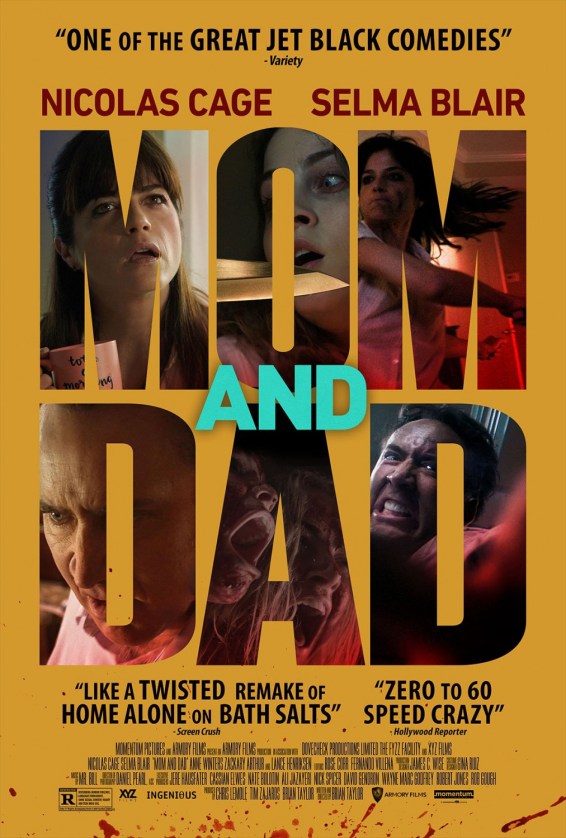
Mom and Dad (2018) – Film Review

I was very disappointed upon my initial watch of ‘Mom and Dad,’ as I originally went into this one anticipating an extremely funny, gory and over-the-top dark comedy, featuring an equally over-the-top performance by the infamous Nicolas Cage. However, I soon found out this wasn’t the case at all, as the film didn’t deliver enough on most of the elements I was expecting, resulting in an extremely weird film for all the wrong reasons.

Plot Summary: When a teenage daughter returns home after a day at school, she and her younger brother must try to survive a twenty-four-hour period in which a mass hysteria of unknown origins causes parents to violently kill their own children…

Although it’s never fully explored, I personally feel this strange yet unique idea for a narrative is one of the best elements of the film. But, with a plot sounding this insane, and, of course, featuring Nicolas Cage (a man known for his crazy and very memorable performances) I expected something truly special for the comedy-horror genre. Yet, I was very underwhelmed, as the film didn’t really deliver on any of it’s best aspects for me, with the story is very simple and barely getting any development beyond the initial idea, with the same sadly being said for the characters.

The film also gives nowhere near enough screen-time to Nicholas Cage, as although he does have a few memorable moments throughout the story. It’s his co-star Selma Blair, who takes up the majority of the runtime, and considering his name is all over the marketing, and his over-the-top style of acting would suit a film like this perfectly, it’s not unfair to have expected more from him. The children in the film, portrayed by Anne Winters and Zackary Arthur, are both decent but very forgettable characters.

In regards to the actual filmmaking, the film is nothing too impressive, as film contains mostly bland cinematography by Daniel Pearl, relying on large amounts of shaky-cam for the majority of the runtime. The editing in the film is also very distracting, as aside from the opening title sequence of the film which is framed similar to the opening of a family sitcom, which I found quite amusing. Unfortunately, everything after this intro I did not, as the film’s editing comes across as very messy and out-of-time at points, as it feels to me like director Bryan Taylor was trying to capture a similar tone to his ‘Crank’ series of films. With the film feels very energetic and fast-paced, but it simply comes across as unusual to me.

One of the element of the film I did somewhat enjoy, however, is the original score composed by ‘Mr. Bill,’ as the film’s soundtrack does help to build tension during many of the chase scenes. However, although I do like this score for its originality, it doesn’t always fit within the film or it’s pacing. Alongside this, the film also seems to shy away from more violent scenes, as we only see a few actual deaths on-screen. The remainder of the violence is usually off-screen, only showing small bits of blood to the audience now and then, for a fun comedy-horror like this, I believe that’s a huge mistake, as I feel the film should have gone all-in on the gore/fun factor.

In summary, I wasn’t very impressed with ‘Mom and Dad,’ I feel a film like this would’ve been extremely entertaining if done correctly, but the film really falls short of being the fun gore-fest it set out to be. If the film was more along the lines of something, like ‘Shaun of the Dead’ or ‘Tucker and Dale vs. Evil,’ I think it could’ve been something really enjoyable, as I believe director Bryan Taylor is talented, being both the director and writer of this film, I could see him directing another strange comedy like this in the future, but hopefully one that’s a little better. Final Rating: 3/10.

mom_and_dad_xlg

Ex_Machina (2014) – Film Review

One of my all-time favourite science fiction films, and a truly incredible A.I.-centric story, ‘Ex_Machina’ is directed by Alex Garland, the director of ‘Annihilation,’ another sci-fi film that I absolutely adore, as the film combines some stunning cinematography and visual effects alongside a smart, original and thought-provoking story that any film fan is sure to adore from beginning to end.

Plot Summary: After the young programmer, Caleb, is invited to participate in a groundbreaking experiment involving artificial intelligence by evaluating human qualities in the subject, he soon discovers not everything is as it first appears…

The majority of the film takes place within ‘Nathan’s home, and the film uses this to its best advantage, as every set for each room of the house always feels as if it’s attempting to be comforting, yet always feels very isolated, cold and sleek at the same time. The entire film also has a great flair for feeling futuristic yet still grounded. However, easily one of the best elements of the film for me has to be the visual effects, as the film actually won an Oscar for its effects back in 2016, and it’s easy to see why, as there are so many amazing shots within the film that are very well-crafted, combining sets with CG effects and blending them brilliantly.

Whilst all the style is great throughout the film, it shouldn’t take your attention from the excellent performances on display here, as Domhnall Gleeson, Alicia Vikander, and especially Oscar Isaac, all bring their ‘A’ game to the film as the entire cast has a lot of chemistry with each other, and their performances only elevate the tension-filled scenes throughout the film, not to mention their characters are given a decent amount of depth or thought they definitely could be explored further.

The stunning cinematography by Rob Hardy makes use of a variety of different shots, having the camera constantly in motion at various points throughout the runtime. Always being quite slow yet still very appealing to the eye, with the original score by Geoff Barrow and Ben Salisbury also contributing to the film, as the score manages to be both extremely eerie yet also very beautiful, all whilst sticking to a classic science fiction-type soundtrack.

The writing is also another element of the film that cannot be ignored, as each line of dialogue feels both real and fits the film perfectly. Without ever losing the audience along the way, if I had to give any criticisms of the film, however, as already mentioned it would be the character writing. Although the characters do get some development as the film goes on, we are never given anything that truly makes us invested in them, only bits and pieces. If the characters were developed further throughout the story, I do feel this would’ve made the film a little more engaging.

In summary, I still adore ‘Ex_Machina,’ as not only is the film gorgeous to look at as well as being a smart sci-fi-thriller, which really isn’t afraid to delve further into the world of A.I. no matter how dark it may become. If I had to express my criticisms of the film, it’s simply the overall lack of characterisation, and perhaps the conclusion to the film (although this may be just my personal opinion) as I personally found it slightly unsatisfying and a little out of character for some of them. Still, I highly recommend this one, and I really can’t wait to see what Alex Garland does for his next project. Final Rating: 9/10.

ex_machina_xxlg

Halloween (2018) – Film Review

Confusingly titled; ‘Halloween,’ despite not being a remake, this direct sequel to John Carpenter’s 1978 classic ignores all the other entries in the franchise in favour of telling a completely new story set forty years later, with Jamie Lee Curtis even returning to her iconic character of ‘Laurie Strode,’ now much older and much wiser. Yet, while definitely a decent attempt at continuing the ‘Halloween’ series, the film is still far from perfect.

Plot Summary: ‘Laurie Strode’ confronts her long-time foe, ‘Michael Myers,’ once again, as the masked figure who has haunted her since she narrowly escaped his killing spree on Halloween night four decades ago, now begins a new massacre after his recent prison escape…

Although the film’s narrative does have some interesting ideas, the film always felt a little too familiar to me, as I usually found myself correctly predicting what was around the next corner, leaving little to be surprised by. Under the direction of David Gordon Green, best known for his 2017 drama; ‘Stronger.’ The film does pay plenty of respect to the original film, as can always tell whilst watching that Green does have a passion for this horror franchise (as he clearly understands what made the original work so well). I still feel a better director could’ve been chosen, as at points, the story does seem to be slightly lacking in direction, and with his previous work in mind, it’s clear that he doesn’t specialise in horror.

It is great, however, to see Jamie Lee Curtis back as her classic character once again, as she really excels in showing how ‘Laurie Strode’ has been affected by those horrific events many years ago. Alongside the rest of the great cast of Judy Greer, Andi Matichak, Will Patton and especially Haluk Bilginer as ‘Dr. Sartain,’ who I was initially concerned would be nothing more than another ‘Dr. Loomis’ type character, but did actually end up going in a very different direction.

The cinematography by Michael Simmonds is nothing outstanding for the majority of the film, yet is still attractive when combined with the dark lighting throughout, particularly anytime ‘Michael’ is on-screen. Another strong element of the film is the wonderful original score by John Carpenter, his son Cody Carpenter and Daniel A. Davies, as although the soundtrack does slightly rely on tracks from the original film, there is plenty of new tracks here as well. Proving John Carpenter is brilliant at his craft once again, with the tracks; ‘The Shape Hunts Allyson’ and ‘The Shape Burns,’ being some of Carpenter’s best work in a long time, in my opinion.

One of the strongest elements of the film for me are definitely the kills, as it’s clear the filmmakers got very creative with the ways ‘Michael Myers’ disposes of his victims, usually creating very memorable scenes with some fantastic practical gore effects included. I also felt the film represented the iconic slasher very well, as ‘Michael Myers’ is always intimidating through his movements, ‘Michael’ even manages to steal the film for me by being the main focus of my personal favourite scene of the film, as ‘The Shape’ stalks his way through ‘Haddonfield’ with murderous intent, all completed within a single take.

Being produced by Blumhouse Pictures, ‘Halloween’ also, unfortunately, features the company’s usual pandering to younger audiences you’d come to expect by now, as the film is littered with jump-scares throughout the runtime, with little attempt to create an eerie atmosphere or build large amounts of tension. In addition to this, the writing throughout the film is decent when it comes to the characters but usually is very lacking when the film attempts comedy, resulting in plenty of cringey lines of dialogue and out-of-place jokes.

In summary, 2018’s ‘Halloween’ is mostly enjoyable, but with a lack of originality, some cheesy lines and forced comedy (not to mention its strong overreliance on jump-scares) the film doesn’t even come close to replicating the classic horror’s best qualities. I do hold the original film in high regard, of course (it being one of my personal favourite horrors), but with plenty of entertaining moments throughout, this latest entry in the ‘Halloween’ series is definitely on the higher end of long-awaited sequels to classic horrors. Final Rating: 6/10.

halloween_xxlg.jpg

The Conjuring (2013) – Film Review

From director James Wan (Saw, Dead Silence, Insidious), comes another modern horror based on real-life events, this time focusing on one of the many cases of the Warrens set in the year of 1971, and while the film does succeed more so than many other modern horrors, soon leading the ‘The Conjuring’ to become an enormous horror franchise, with the likes of its sequels and spin-offs, such as ‘Annabelle’ and ‘The Nun.’ The original film does suffer from a variety of issues, which leads it to become more forgettable than anything else by the end of its runtime.

Plot Summary: In 1971, after ‘Carolyn’ and ‘Roger Perron’ move their family into a dilapidated Rhode Island farmhouse, they soon begin to suspect there may be a dark presence haunting them. So, as the abnormalities begin to increase, ‘Carolyn’ contacts famed paranormal investigators; Ed and Lorraine Warren, for help, who together, begin delving into the disturbing history behind the family’s new home in an attempt to stop the evil…

Whilst more enjoyable than a large number of other modern horrors as already mentioned, I wasn’t overly invested in the film’s story, as although the film is effective in some areas, in others the film simply doesn’t stick the landing. Feeling mostly like your standard horror story without ever delving too deep into the characters or time-period, as despite a few thrilling scenes with the spirits themselves, I always felt a slightly more character-driven narrative would have benefited the film.

The cast is definitely one of the film’s better aspects, as Patrick Wilson and Vera Farmiga do have a decent amount of chemistry together as the married paranormal investigators the Warrens. Lili Taylor also does a decent job as the family’s concerned mother, especially further into the film as the story becomes more intense. Unfortunately, however, Ronald Livingston who portrays the father of the family, is easily the weakest actor within the film, as he never really seems overly panicked or scared of these paranormal events, regardless of the scene (which becomes especially clear nearing the end of the film).

The cinematography by John R. Leonetti is definitely an improvement over his previous work on the ‘Insidious’ series, as the film does have a few appealing shots here and there despite never really being anything exceptional. The film does, however, make excellent use of P.O.V. shots during many of the tense scenes at night within the farmhouse, placing the audience in the position of the characters themselves, which I personally found very effective. As, according to director James Wan, much of the film’s visual design was actually inspired by classic 1970s horrors, such as ‘The Exorcist,’ ‘The Omen’ and ‘The Amityville Horror.’

Although not quite as distinctive as some other modern horror soundtracks, the original score by Joseph Bishara isn’t completely forgettable, as the score does help to build tension during quite a few scenes, as well as also back up some of the emotional moments between characters (as short as they may be).

I was also surprised to learn that the film doesn’t entirely rely on jump-scares, as although they are present within the film, ‘The Conjuring’ does feel more focused on creating an eerie atmosphere and having many creepy visuals throughout. Rather than the usual bombardment of jump-scares, which was definitely a breath of fresh air. One element I thought was a little weaker than some of James Wan’s other films was the design of the ghosts themselves, as the design of the spirit haunting family’s farmhouse is one of the most generic and dull designs you could think of when it comes to creating a horror antagonist. Especially when compared to the many memorable designs of the spirits/demons within the ‘Insidious’ franchise.

In summary, whilst ‘The Conjuring’ does have some great elements, and at least attempts to create something slightly different from your typical horror flick. I never really felt the film excelled in any particular area, as the majority of the film felt mostly bland, despite its decent cast and creepy atmosphere in some scenes. So, while there are definitely worse modern horrors, I feel there is also much better out there, perhaps even in this very same franchise. Final Rating: 5/10.

conjuring_ver2_xlg

Children of Men (2006) – Film Review

An intelligent, dark, and grounded sci-fi film, with ‘Children of Men’ director Alfonso Cuaron (Harry Potter and the Prisoner of Azkaban, Gravity, Roma) crafts a truly memorable experience, as the film’s fresh take on the science fiction genre combines some great performances, alongside decent writing and some absolutely incredible cinematography by Emmanuel Lubezki, alongside many scenes throughout the film being done within a single take.

Plot Summary: In a world in which women have somehow become infertile, former activist; ‘Theo Faron,’ agrees to help transport a miraculously pregnant woman across a war-ridden country out to a sanctuary at sea in order to save the human race…

Based on the acclaimed novel; ‘The Children of Men’ by P. D. James, the film adaptation begins its narrative in a similar fashion to its source material, as the story kicks off with a quick peek into the grim world of the film, as the protagonist; ‘Theo,’ makes his way into a small café to grab a coffee. This soon leading onto a very shocking moment, which instantly establishes the tone of the film, and really helps give the audience a clear understanding of how these characters are coping with this reality. This soon leads onto the opening becoming very iconic in its own right (as well as my personal favourite scene of the film) and still feels effective, even today.

When it comes to the characters, all the performances throughout the film are pretty great, as every actor is really giving their all here regardless of the importance of their roles within the story as Clive Owen, Clare-Hope Ashitey, Chiwetel Ejiofor and Michael Caine are all terrific. Julianne Moore as ‘Julian,’ in particular, was a stand out for me, however, having some very memorable moments within only a short amount of screen-time. This is also one of the few films where I must really praise the extras, as many of the continuous takes are done using enormous amounts of extras, and from the foreground through to the background, there isn’t one out-of-place extra.

Every piece of the cinematography by Emmanuel Lubezki throughout the film is nothing short of phenomenal, using hand-held shots to the best of their advantage. Many scenes are filmed from the perspective of the characters, placing the audience in their own tense scenarios. Furthermore, the dark grey colour palette of the film also lends itself well to the war-ridden country setting, as every location always feels rustic, dirty, and lived-in. The original score by John Tavener is also effective, despite being used sparingly throughout the film to further add to the bleak atmosphere.

My only real criticisms with the film are related to the lack of character depth and the film’s overall pacing, as the pacing throughout the film is extremely slow, leading to many scenes feeling a little drawn out at points. Despite this slow pace sometimes adding to the building of tension, it feels mostly unnecessary for most of the film’s runtime. The lack of characterisation throughout the film is also a problem, as although a few characters do get some development, it’s usually few and far between, as I found myself finding more information about the characters online than within the film itself, luckily, however, the decent writing does save this from being a huge issue.

In summary, ‘Children of Men’ is an exceptional piece of the sci-fi genre. Coming across as a very different approach than what you’d usually expect from a film such as this one, the film almost feels like more of an apocalyptic drama at points. But, with a thought-provoking narrative, some amazing cinematography, and a fantastic cast, ‘Children of Men’ truly is a very captivating (if not a very bleak) piece of entertainment, which never fails to impress me every time I revisit it. Final Rating: 8/10.

kinopoisk.ru

Nightcrawler (2014) – Film Review

Held up by an incredible performance from Jake Gyllenhaal, ‘Nightcrawler’ is a visually beautiful and very tense thriller from director Dan Gilroy (Roman J. Israel Esq, Velvet Buzzsaw), focusing on the dangerous life of a freelance journalist who ends up falling deeper and deeper into a world of greed and accomplishment. Gripping from start-to-finish (as well as being one of my personal all-time favourite films), ‘Nightcrawler’ is truly an amazing experience any film fan is sure to enjoy.

Plot Summary: When ‘Louis Bloom,’ a con-man desperate for work, muscles his way into the world of Los Angeles crime journalism, he blurs the line between observer and participant to become the star of his own story, determined to rise to the top regardless of competition, or even morals…

Being shot over the course of twenty-eight nights, the film does a brilliant job of blending a narrative of what the life for a freelance journalist is actually like, as well as focusing on the more personal story of ‘Louis’ at the same time, with both of them fitting the dark tone of the film extremely well. This alongside the exploration of the city of Los Angeles gives the film a great personality, as the film explores every seedy corner of the city, always using real locations over any visual effects, unlike many other films nowadays.

Jake Gyllenhaal also gives one of the best performances of his career here, portraying ‘Louis Bloom’ as a creepy, sly and selfish character who excels at his work, yet despite being mostly unlikeable. He still manages to be an engaging protagonist mostly through his charisma and intelligence, even as he descends further and further down the line. Gyllenhaal even went to the extent of losing over twenty-pounds for the role, which was actually Gyllenhaal’s own idea, as he visualised ‘Louis’ as a hungry coyote. Riz Ahmed also appears in the film as ‘Rick,’ ‘Louis’ underpaid and underappreciated partner who serves as almost his complete opposite in many different ways. These two alongside the supporting cast of Rene Russolate and the late Bill Paxton are all brilliant throughout the film, never failing to impress within their respective roles.

The cinematography by Robert Elswit is some of the best cinematography I’ve seen in a film in a long time, utilising an enormous amount of varied shots, including a large amount of wide and mid-shots, which are always a joy to see, with the film always using its cinematography to increase the amount of tension or drama that’s on-screen. The film also makes great use of it’s dark blue and orange colour palette as well as large amounts of street lighting, which both definitely help give the film a distinct visual flair and make many of the bright colours stand out amongst the darkness of Los Angeles late at night.

This is also backed up by the calming and yet also eerie original score by James Newton Howard, and while perhaps not incredibly memorable on itself, I do like this composer for much of his previous work (The Sixth Sense, King Kong, I Am Legend) and the soundtrack here does back up the film pretty well for the majority of its runtime, aside from the occasional track which can come across as slightly cliché.

Another element of the film I really enjoy is it’s grasp on realism, as although I’m no expert in regards to the world of crime journalism. The film never really seems to go beyond believability within its story, even when the story begins to enter more dangerous territory for its characters. One element of the film that didn’t really exceed my expectations, however, was the film’s editing, as although the editing throughout the film is decent, I was never overly impressed by it, as I always felt it was one of the few areas of the film which could’ve been slightly improved.

In summary, ‘Nightcrawler’ still retains it’s spot on my list of favourites, with its outstanding cinematography in addition to the pretty fantastic original score and performances throughout. The film has a lot to offer, and I’m still thrilled the film came out as well as I did, due to both its filmmaking and it’s appeal, I’d absolutely recommend anyone give ‘Nightcrawler’ a watch. Final Rating: 9/10.

nightcrawler_ver4_xxlg