The Voices (2014) – Film Review

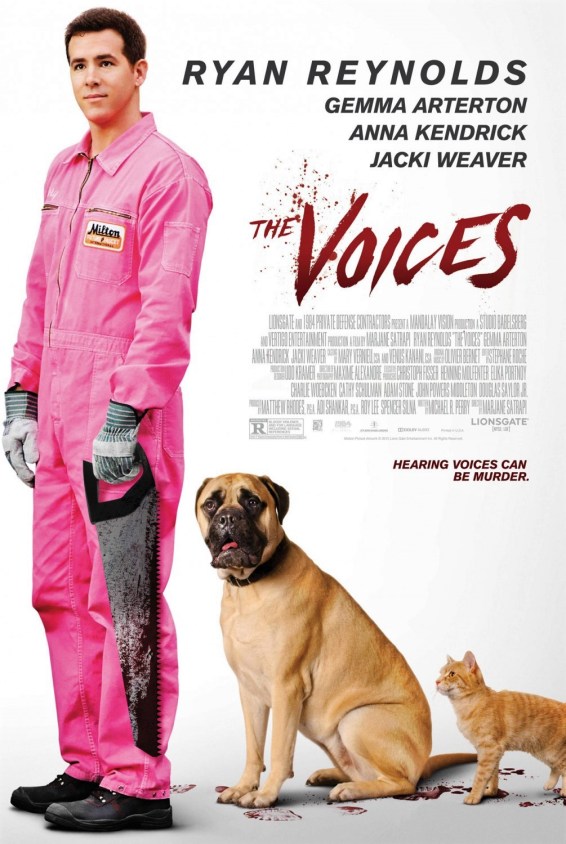
This obscure horror-comedy released in late 2014 will certainly make for a divisive viewing, as while ‘The Voices’ does feature an inspired use of colour and set design alongside a stand out performance from Ryan Reynolds, the film is also far more disturbing than much of its marketing would lead you to believe, swerving from absurd moments of humour to visceral moments of gore in a heartbeat. The resulting film essentially becoming a parody/throwback of/to classic horrors, like ‘American Psycho,’ and is a far-cry from a realistic study of psychosis for better, and for worse.

Plot Summary: After working a nine-to-five job at his local bathtub factory, the mentally ill; ‘Jerry,’ finds comfort in returning home to his beloved pets; ‘Bosco’ and ‘Mr. Whiskers.’ Until one day, with the help of his psychiatrist, ‘Jerry’ decides to pursue his office crush; ‘Fiona.’ But, when their relationship takes a sudden, murderous turn leaving ‘Jerry’ with the corpse of his co-worker, he tries desperately to strive for normalcy, only to fall deeper into instability…

Early in the pre-production of ‘The Voices,’ director Mark Romanek, best known for the 2002 drama/thriller; ‘One Hour Photo,’ was attached as the film’s director, before Marjane Satrapi (Persepolis, Chicken With Plums, Radioactive), later took over as the head of the project. And, whilst ‘The Voices’ does feel like quite a large shift from Satrapi’s usual work, it’s hard to know exactly which director would’ve excelled with a screenplay as original as this one is, as while ‘The Voices’ does share some similarities to other serial killer flicks, many of the film’s ideas are just brimming with personality, as everything from ‘Jerry’ showing symptoms of OCD when slicing up the bodies of his victims, to ‘Jerry’ living above an abandoned bowling alley, the film just has such a unique appeal.

Ryan Reynolds really gets a chance to shine portraying the film’s mentally ill protagonist, as whilst ‘Jerry’ does commit many horrible acts over the course of the runtime, Reynolds manages to capture the idea of ‘Jerry’ being a man forced down a road of violence. He is a distinct serial killer in the sense that he desires companionship and happiness, and doesn’t receive any pleasure from killing. So, when it’s eventually revealed what happened to him as a child, you can’t help but sympathise with him, evoking a level of emotion that many murderous characters struggle to achieve. But, unfortunately, the film’s side characters, portrayed by Gemma Arterton, Anna Kendrick, and Jacki Weaver, all feel quite thin as a result of them only being in the story to serve as ‘Jerry’s potential victims.

Maxime Alexandre handles the film’s cinematography well, as the camerawork throughout ‘The Voices’ remains fairly creative. The film’s visuals are most impressive most, however, when it comes to the film’s colour palette, set design, and set dressing, as with nearly the entirety of the story being seen through ‘Jerry’s perspective, the film displays the true extent of ‘Jerry’s delusions through its use of colour/sets. For example, when not on his prescribed medication, ‘Jerry’ views his apartment as very clean and organised, giving the location a much more comfortable feel, whereas when ‘Jerry’ does take his medication, he sees the grim reality of his soiled home.

The original score by Olivier Bernet is similar, never reaching into full on horror, but being a mixture of cartoonish, dream-like tracks, such as ‘In the Woods’ and ‘Jesus Dad,’ before then moving onto more upbeat tracks, like ‘Don’t Mess with Milton.’ A seemingly ironic track focused around the fictional woodland town of ‘Milton,’ where the story takes place, comically claiming the town to be nothing but a friendly and welcoming place.

The main aspect of ‘The Voices’ that I feel could make or break the film for many is likely to be its comedy, as whilst it is revealed fairly early on that many of the film’s bizarre moments, such as ‘Jerry’s pets speaking to him or ‘Jesus’ appearing on a forklift are all taking place within his mind, much of this strange humour is very hit-or-miss. However, an interesting yet small detail regarding the talking pets is that Ryan Reynolds actually voices each one of the animals himself, with each pet having a different accent, furthering ‘Jerry’s delusions. In fact, Reynolds actually modelled the voice of ‘Mr. Whiskers,’ a.k.a. ‘Jerry’s cat, after a Scottish friend he knew for over twenty years.

In summary, while ‘The Voices’ is overflowing with both charm and wit, it also has many issues. From its quickly altering tone and many jokes that fall flat, the film is far from a perfect horror-comedy. But, it does redeem many of its faults through its great performances and eccentric style, all playing into the film’s quirky personality. And, it’s due to all of this that the film feels as if its made for a very niche audience, yet for those ‘The Voices’ does appeal to, there is a fair amount to enjoy here. Final Rating: low 7/10.
voices_ver2_xlg

Non-Stop (2014) – Film Review

Although ‘Non-Stop’ has been heavily overshadowed by a number of other films within the thriller genre, being mostly forgotten amongst the strew of critically acclaimed films that released in 2014. I personally feel this high-altitude thriller is one of the better stories set within the confines of an aircraft, utilising Liam Neeson’s action expertise to craft a compelling mystery with occasional moments of excitement, even if the film is noticeably lacking in both realism and memorability.

Plot Summary: While on a flight from New York to London, ‘Bill Marks,’ a worn and alcoholic air marshal, receives an anonymous text message, informing him that unless one hundred and fifty million dollars are transferred into an offshore account within the next twenty minutes, someone aboard the plane will die. Now, finding himself in the middle of a deadly cat-and-mouse game, ‘Bill’ desperately searches for the suspect, unintentionally implicating himself into a hostage crisis unfolding at thirty-thousand feet…

‘Non-Stop’ is actually the second of four films directed by Jaume Collet-Serra that feature Liam Neeson, beginning with ‘Unknown’ in 2011, then ‘Run All Night’ in 2015, and lastly ‘The Commuter’ in 2018. And, whilst Collet-Serra’s other films also contain a central mystery, ‘Non-Stop’ certainly has the most interesting location of the bunch, using its tight and claustrophobic setting of an aircraft to great effect as the film never cuts away from the plane itself, even when ‘Bill’s contacts his superiors we the audience remain inside the aircraft with the characters, adding to the suspense. The film also attempts to integrate themes of airline safety and security into its story, which are intriguing though they are never fully explored, nor is the terrorist’s motivation when it’s finally revealed.

Liam Neeson leads the cast as ‘Bill Marks,’ giving his standard action film performance as a mostly straight-faced action hero. But, just as he is in the ‘Taken’ franchise and every other explosive blockbuster, Neeson is an easy protagonist to root for, and ‘Bill’ is given a fair amount of development for what is required. Julianne Moore also makes an appearance in the film as ‘Jen Summers,’ who similar to the rest of the supporting cast of Michelle Dockery, Scoot McNairy, Corey Stoll, Jason Butler Harner, Nate Parker, Omar Metwally, and Lupita Nyong’o, is given limited characterisation and is mostly in the film to serve as a potential suspect, but I suppose considering this is the basis for the story, it would’ve been an enormous challenge to development the huge array of passengers and crew aboard the flight.

The cinematography by Flavio Martínez Labiano is serviceable for the most part, as whilst the film features a few attractive shots and focus pulls throughout its runtime, the majority of the film’s camerawork focuses on hand-held shots, which aside from lending themselves effectively to action sequences and scenes where the plane experiences turbulence, do become a little monotonous. ‘Non-Stop’ also features a couple of scenes that were filmed entirely within a single take, most notably, from the moment ‘Bill’ begins his announcement to the passengers about his phone inspection, through to the moment he duct-tapes a suspect’s hands together, there isn’t a single cut.

John Ottman’s original score does suit the film well, with tracks, like ‘Non-Stop,’ ‘Welcome to Aqualantic,’ and ‘Reluctant Passenger/Blue Ribbon,’ having a nice fusion of synth sounds, percussion, strings, and brass, adding up to simplistic yet competent soundtrack. Constantly pushing or creating the tension in a simple and confined environment while simultaneously fitting with the modern set design of the plane and ‘Bill’ as a reluctant hero forced into action.

With 95% of the film taking place within an aircraft, the set for the plane itself was certainly a crucial detail to get right. Luckily, ‘Non-Stop’ does succeed here, as despite the set having to be built slightly larger than a standard commercial airliner to accommodate for equipment and Liam Neeson’s 6’4′ height. The set does feel like a real plane, having both sleek business class and first class areas as well as lavatories and a crew rest compartment, all of which are very cramped and dimly lit, as the story takes place over the course of one night. This realism is even more impressive considering that the aircraft and airline are clearly fictional, as the aircraft type is never referred to yet its cabin interior and flight deck layout doesn’t match any real aircraft design.

In summary, even though films, like ‘Red Eye’ and ‘Flightplan,’ have taken the enclosed setting of an airplane and made it work before, I believe ‘Non-Stop’ has slightly more entertainment value, as whilst some viewers may find the story’s absence of realism quite frustrating at points, the film distracts from its over-the-top ideas and bland side characters through its tense and fast-paced narrative, making for a thrilling mystery for those that can suspend their disbelief for a few elements. And, with Liam Neeson and the rest of the cast helping ‘Non-Stop’ to collect plenty of air-miles for enjoyability, I’d say the film is worth a watch. Final Rating: low 7/10.

nonstop_xxlg

As Above, So Below (2014) – Film Review

Co-written and directed by John Erick Dowdle (The Poughkeepsie Tapes, Quarantine, Devil), ‘As Above, So Below’ is certainly an interesting found-footage flick, as while at a first mention the film may just sound like another a stereotypical horror, this claustrophobic delve into the caliginous Paris catacombs does actually have some depth hidden beneath its generic exterior. But, unfortunately, even with the story’s intriguing religious imagery/influences, the film soon plummets into clichéd mediocrity, mostly as a result of its bland characters and weak scares.

Plot Summary: When a team of explorers venture into the miles of twisting catacombs that lie beneath the streets of Paris, all in search of the historical ‘Philosopher’s Stone,’ they encounter far more than they bargained for when they realise they have entered into the first of the nine rings of Hell, where visions of their past sins begin to relentlessly torment them…

From a quick glance at the film’s visuals, its understandable why many would see ‘As Above, So Below’ as just another found-footage horror, only this time capitalising on the daunting real-world location of the Paris catacombs, which hold the remains of more than six million people in the small part of a tunnel network built to consolidate Paris’ ancient stone quarries. But, the film’s setting does heavily relate to the story of ‘Inferno,’ a short poem written by Italian poet Dante Alighieri in the fourteenth century, focusing on the tale of man who journeys through Hell guided by the Roman poet Virgil. Even the film’s title plays into this central idea, as the words; “As Above, So Below,” are derived from “On Earth as it is in Heaven,” which is a line from the ‘Christian Lord’s Prayer,’ which begins with “Our Father, Who Art in Heaven…”

Even though their characters are immensely mundane, Ben Feldman, Edwin Hodge, François Civil, Marion Lambert, and Ali Marhyar are all serviceable in their respective roles, delivering the usual screaming, ventilating and panicking performances that occur in most found-footage films. However, while the film’s protagonist; ‘Scarlett,’ is portrayed well by Perdita Weeks, the character herself is noticeably very unlikeable, mostly due to her constant obsession with the ‘Philosopher’s Stone,’ which she places all of her friend’s lives at risk for without question, and its never made clear whether we should actually be rooting for her to survive or not.

The cinematography by Léo Hinstin is more of the usual for this subgenre, providing the viewer with plenty of shaky and out of focus shots as the characters make their way through the almost pitch-black burial ground. This doesn’t distract from what is easily the film’s most impressive (and most ambitious) filming tip-bit, however, which is that the film was actually shot in the Paris catacombs themselves, not in a soundstage. In fact, this was the first production ever to secure permission from the French government to film within the catacombs, which would have been quite a challenge as the series of narrow, winding tunnels with centuries-old skeletons arranged on the walls would’ve had little room for equipment and crew. Yet, this does payoff as the film utilises its location extremely well, always placing its characters in tight areas to insight a feeling of claustrophobia in the audience.

While the film doesn’t feature a complete original score for obvious reasons, one of the strongest aspects of found-footage flicks, sound design, is actually an area where ‘As Above, So Below’ is lacking, as despite the film’s many attempts to feel impactful when the characters dive into water or are nearly crushed by a collapsing ceiling, a vast majority of the sound effects don’t sound as if they are coming from within the catacombs, usually sounding quite evident they have been added in post-production on account of the absence of echo or density.

With a large portion of the film’s narrative being based on Dante’s ‘Inferno,’ the film’s basic structure revolves around the characters heading further and further into Hell, with each character facing a vision of a personal sin from their past. These rings (or levels) in order are ‘Limbo,’ ‘Lust,’ ‘Gluttony,’ ‘Greed,’ ‘Anger,’ ‘Heresy,’ ‘Violence,’ ‘Fraud,’ and ‘Treachery.’ But, outside of the film’s previously mentioned religious symbolism, after the characters leave the initial catacombs, each ring is represented purely through dark empty caverns, which become quite repetitive after a point.

In summary, despite the Paris catacombs being a very compelling setting for a modern horror film, in addition to much of the film’s religious influences making for quite a unique story. I’d still suggest other claustrophobic horrors, like ‘The Descent’ or ‘The Thing’ before ‘As Above, So Below,’ as not only does the film eventually devolve into the standard horror formula without much experimentation, but if you’re unaware of any of the religious context, then I could definitely see the film being fairly forgettable. In all honesty, I feel this film may have been better off as non-found-footage, as I think this would’ve allowed the film to better explore its story and religious subtext. Final Rating: 5/10.

as_above_so_below-p874968

The Babadook (2014) – Film Review

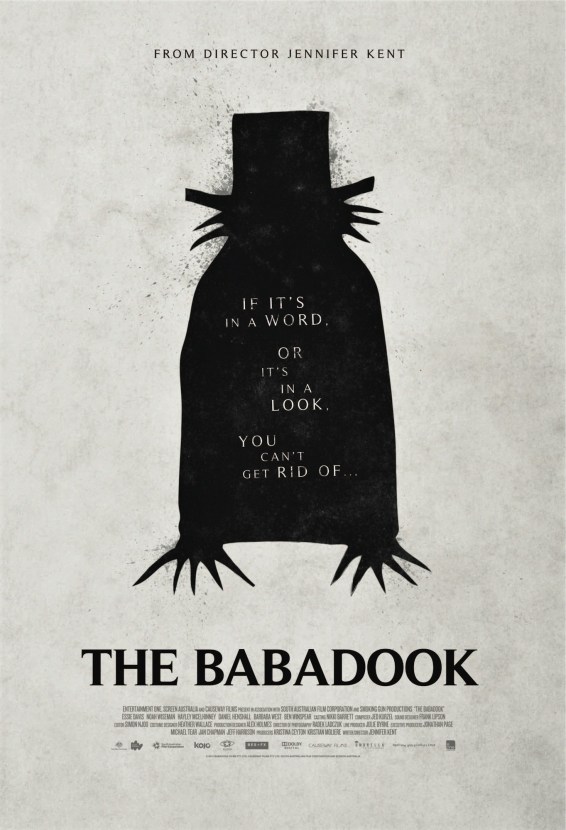
Surreal, engrossing and truly terrifying during some scenes, ‘The Babadook’ is, in my opinion, one of the best modern horrors released in quite some time. Through its excellent filmmaking, astounding performances and horrifying yet also intriguing creature, ‘The Babadook’ attempts to do something different with its horror, going about its story with far more depth than many other films within its genre, soon becoming an experience that’s just as immersive as it is disturbing for anyone who stumbles upon it.

Plot Summary: Following the sudden death of her husband in a car crash, the now-widow; ‘Amelia,’ struggles to cope as a single mother, as her son’s chaotic behaviour and constant paranoia of monsters makes her friends become distant and even her sanity begin to fade. Until, one night, after the pair read a mysterious pop-up book, titled; ‘Mister Babadook,’ they soon discover a malevolent creature has manifested itself into the dark corners of their home…

Directed by Jennifer Kent (The Nightingale), ‘The Babadook’ is a horror film that has much more to offer beneath its surface, with themes of family, grief and trauma throughout. Based on the short film; ‘Monster,’ also directed by Jennifer Kent, ‘The Babadook’ actually takes much of its inspiration from one of Kent’s real-world friends, a single mother whose son was traumatised by a monstrous figure he thought he saw everywhere in the house. So, Kent imagined a scenario in which this creature was real, eventually leading her to create her short film, before then wanting to expand on the idea further.

The main area ‘The Babadook’ excels where most modern horrors fail is the characters. Only featuring a main cast of two terrific actors, Essie Davis and Noah Wiseman, with Wiseman only being six-years-old at the time of filming. The mother and son of the film are both compelling characters for very different reasons, as the mother ‘Amelia’ struggles to cope as a single parent. Alienating her friends/colleagues and becoming more lonely and sexually frustrated as time passes, mostly due to her son; ‘Samuel,’ who continuously struggles with anxiety and the absence of a real father, which makes it challenging for him to mix with other children. This all adding up to making the film just as effective as a family drama as it is a supernatural horror.

Although Radek Ladczuk’s cinematography isn’t quite as impressive as the film’s magnificent editing, which allows for plenty of quick visual storytelling and gives the film a level of style that I didn’t expect. ‘The Babadook’ does still feature a number of stunning shots, which are enormously enhanced by the film’s dread-inducing lighting. As, not too dissimilar to the horror flick; ‘Lights Out,’ from 2016, ‘The Babadook’ himself only appears within the shadows. So, with nearly the entire runtime being set within a dark run-down house (usually also at night), the creature could be lurking within any shot, and occasionally, even is…

Slightly fairytale-esque in parts, the original score by Jed Kurzel may not be a stand out horror score up there with the likes of ‘Halloween’ or the original ‘Psycho.’ But, the score is still a fair amount more creative than many other modern horror scores, with tracks, such as ‘Trippy Television’ and ‘It’s Only a Story,’ giving the film a very dream-like quality, sounding almost as if they were composed for a Tim Burton-penned project at points. That is before the soundtrack becomes a little more of the standard horror affair with tracks, like ‘The Playground’ and ‘Re-Writing the Story,’ despite these tracks still helping to build tension throughout.

Immensely creepy throughout the film, ‘The Babadook’ himself is a very memorable and frightening presence in spite of his somewhat goofy moniker, as every one of his appearances is always elevated by his bone-chilling sound design, which is very uncanny in a similar fashion to the original score. The only major issue I take with the film is the lack of encounters the characters actually have with the creature, as while many of his scenes are extremely well-executed, ‘Mister Babadook’ just doesn’t have quite enough screen-time for me. However, this problem also extends to nearly all of the film’s side characters, as ‘Claire,’ ‘Robbie’ and ‘Mrs. Roach,’ all feel underutilised within the narrative, even though the story’s main focus is very clearly the mother and son relationship.

In summary, ‘The Babadook’ is a brilliantly crafted horror, mostly as a result of its atmospheric cinematography/lighting and masterful editing, alongside its great performances and array of tension-filled moments. Whilst perhaps not for every horror addict, due to its sparse amount of jump-scares and very low body count. Jennifer Kent’s directorial debut is certainly a horror flick I’d recommend to most, and considering Kent has stated that the film will never receive a sequel, it’s clear the film was a true passion project that won’t fall into the trap that many successful horrors do of milking themselves into an over-blown franchise. Final Rating: 8/10.

babadook_xxlg

Edge of Tomorrow (2014) – Film Review

Exceeding expectations in more ways than one and combining the star-power of both Tom Cruise and Emily Blunt, ‘Edge of Tomorrow’ is an explosive summer blockbuster which reimagines the comedy classic; ‘Groundhog Day,’ into a thrilling sci-fi flick to fantastic results. Directed by Doug Liman (Swingers, The Bourne Identity, American Made) and based on the Japanese manga; ‘All You Need is Kill’ by Hiroshi Sakurazaka, ‘Edge of Tomorrow’ or ‘Live Die Repeat,’ as it’s now commonly dubbed, manages to succeed in nearly every aspect an exciting science fiction film would need to.

Plot Summary: When an alien race invades Earth and releases an unrelenting assault unbeatable by any military unit in the world. ‘Major William Cage,’ an officer who has never seen a day of combat, is unceremoniously dropped into the frontline. Getting killed within minutes, ‘Cage’ now finds himself thrown into a time-loop forcing him to live out the same battle over-and-over again. But, with each reset, ‘Cage’ learns to defend himself with the help of Special Forces soldier; ‘Rita Vrataski,’ who, together, hatch a plan to defeat the creatures, permanently…

Taking inspiration from sci-fi war epics, such as ‘Aliens,’ ‘Starship Troopers,’ and ‘Independence Day,’ in addition to the previously mentioned; ‘Groundhog Day.’ ‘Edge of Tomorrow’ may have initially had disappointing box-office returns when it released in 2014, but mostly through word-of-mouth, the film has since continued on to become a modern science fiction classic, keeping itself distinct through its signature ‘resetting the day’ idea and couple of amusing moments in between its action-packed story.

For a large majority of the film, Tom Cruise actively plays against his usual type, as ‘Major William Cage’ is essentially the complete opposite of his character; ‘Ethan Hunt,’ from the ‘Mission Impossible’ franchise, with most of the character’s screen-time being spent dying continuously in horrific (yet also somewhat comedic) ways, alongside his genuinely cowardly and untrained demeanour. Cruise also bounces off his co-star Emily Blunt very well throughout the film, with Blunt portraying the complete opposite of Cruise’s character as ‘Rita Vrataski,’ a hard-as-nails soldier, who is a skilled as they come. And, whilst a romantic subplot can sometimes derail a film’s story, ‘Edge of Tomorrow’ manages to pull its off, mostly due to the chemistry between its heroic duo.

Although the film’s cinematography by Dion Beebe does heavily rely on hand-held camerawork, this hand-held approach does remarkably add to many scenes within the film. Replicating the chaos of the constant war that surrounds ‘Cage’ as he tries different tactics in an attempt to survive on the battlefront, not to say that the cinematography doesn’t still allow for the occasional attractive shot, however. Much of the film’s CG visuals are also up-to-par, excluding the ‘Exo-Suits,’ of course, which are actually practical costumes for the most part. This was done so the suits would appear more real to the audience, which does stop the film from feeling too CGI-heavy during many of the film’s action sequences, even if the suits did weigh between eighty-five to ninety-pounds on set.

The original score by Christophe Beck is certainly no where near as memorable as the film itself, being a mostly typical soundtrack for a action blockbuster with little charm or even a slight sci-fi twist to help the score stand out. This, unfortunately, even applies to the best track of the score; ‘Solo Flight,’ which does at least utilise what sounds like metal-clanging audio effects to add a little more impact wherever it can.

The film’s main issues mostly revolve around two particular areas, firstly, the designs of the alien creatures known as ‘Mimics,’ as whilst the CG effects that bring the creatures to life do look superb, the creatures feel a little too similar to video game enemies, as their different breeds are only distinct by colour, being either red or blue, with the remainder of their design being almost identical. While this is slightly redeemed by their unique sound design, it can become difficult to even tell the creatures apart when they are in large groups. My other complaint with the film is with its final act, as whilst the narrative throughout most of the runtime remains engaging and rousing. The film’s final portion ends up becoming a little more generic after losing its signature time-looping concept.

In summary, since even my first viewing of ‘Edge of Tomorrow’ I’ve always been impressed by this science fiction flick, as while the film isn’t flawless and does still suffer from its cloned creature designs and weak final act. ‘Edge of Tomorrow’ is still a far more enjoyable and enthralling sci-fi than many may initially think. Even though the film didn’t thrive at the box-office on its release, it seems with its recent change in marketing to “Live Die Repeat,” many more sci-fi fanatics have now stumbled across this underrated gem, and with a blockbuster as riveting and surprisingly clever as this one is, I feel it can always be praised further. Final Rating: low 8/10.

rFSStxPT5CBiDWUotReCvRXltQk

The Purge: Anarchy (2014) – Film Review

This sequel to the original ‘Purge,’ released just a year earlier is a slight improvement over the first, yet still doesn’t fare much better, as while ‘The Purge: Anarchy’ does deliver more on what its initial film setup, now focusing on a small group of characters attempting to survive the night of chaos and murder out on the desolate streets of Los Angeles. ‘The Purge: Anarchy’ doesn’t do enough with this new perspective, and it soon becomes quite evident that it isn’t going to be enough to save the film from its return to weak filmmaking and storytelling.

Plot Summary: As another year’s ‘Purge Night’ commences, two groups of survivors unintentionally intertwine after being rescued by a mysterious stranger out on a mission. Now, stranded and in desperate need of a vehicle, the group agree to stick together in order to survive against the many ‘Purgers’ out for blood…

Once again directed by James DeMonaco, it’s clear from the larger-scale that ‘The Purge: Anarchy’ is aiming for that the film is trying to please the audience members that were dissatisfied with the first entry in the franchise, ditching the small-scale home invasion story in favour of becoming more of an action-focused thriller that further explores its disturbing world. Yet, even with the many themes of ‘The Purge’ series still present, ‘The Purge: Anarchy’ manages to feel like a bigger waste of potential than the first film. As in spite of the fact we get to see how many different Americans spend their murderous night, the film still feels quite restrained, never delving enough into each baleful group of ‘Purgers’ or their violent deeds.

Frank Grillo leads the cast this time around as a character only known as ‘The Sergeant,’ who has easily become the most beloved character in the series since ‘The Purge: Anarchy’s initial release, soon becoming the only character to return in a later ‘Purge’ film. However, whilst I understand why most viewers resonate with his character, I did feel much of his characterisation was lost as a result of a large amount of his dialogue (including his backstory) being cut during post-production. The sequel’s cast also includes Carmen Ejogo and Zoë Soul who both give decent performances, as well as the other two cast members of Zach Gilford and Kiele Sanchez, who are both about as irritating and dim-witted as horror characters come, having nothing but scene-after-scene of the two making moronic decisions following their many sessions of obnoxiously loud panicking.

Unfortunately, returning cinematographer Jacques Jouffret doesn’t innovate much on his style of cinematography from the first film, relying very heavily on hand-held camerawork now just with slightly better lighting due to the many street lights above the characters’ heads. Although there are still a few interesting shots, the only real aspect of the film that manages to stand out stylistically is the film’s end credit sequence, which combines footage from both of the ‘Purge’ films released at the time in addition to shots of fire, bullets, blood, firearms and the American flag, all key visuals of the series.

Nathan Whitehead’s original score is similar to that of the first film, only this time being much shorter in length, mostly consisting of a series of tracks that lack anything overly distinctive about them, being utilised within the film exclusively to help build tension. That is with the exception of the track; ‘Commencement,’ however, without a doubt the best track of the entire score, as this impactful and brooding track plays when ‘The Purge’ first begins, making for one of the film’s most memorable scenes.

Whilst this was also an issue in the original ‘Purge’ film, ‘The Purge: Anarchy’ carries over the same problem, suffering repeatedly throughout the runtime as a result of its many awful CG effects. Most notably, the heavy overreliance on CG blood, which looks dreadful in nearly every shot it’s featured in. That being said, ‘The Purge: Anarchy’ does also take on one of the previous film’s best elements, that being the many frightening (and occasionally also iconic) masks. From skulls, to blood-stained hockey masks and even a simple white bag, nearly all of the masks seen during ‘The Purge’ franchise manage to add a little personality and character to each film’s signature psychopaths.

In summary, ‘The Purge: Anarchy’ is another lacklustre entry within ‘The Purge’ series, even though I do feel a similar plot to this one could be executed well, ‘The Purge: Anarchy’ somehow manages to feel more disappointing as it tries to be more ambitious. Whilst the film is perhaps the best entry in the current series (which isn’t really a compliment), mostly due to Frank Grillo’s entertaining performance and the film’s continuous feeling of rush helping to propel the film forward as the group attempt to live through this yearly night of violence. ‘The Purge: Anarchy’ still relies far too heavily on the central concept of ‘The Purge’ itself. Final Rating: 4/10.

the-purge-anarchy-one-sheet

Dawn of the Planet of the Apes (2014) – Film Review

The second outing of the revamped ‘Planet of the Apes’ series and, in my opinion, the best of the most-recent trilogy. ‘Dawn of the Planet of the Apes’ takes place a decade after the previous film, now taking the story into an apocalyptic world where humans and intelligent apes co-exist. Featuring another spectacular performance from Andy Serkis as ‘Caesar’ as well as a much larger role for the vicious ape; ‘Koba,’ this time around (now portrayed by Toby Kebbell), this thrilling and propulsive sci-fi blockbuster is sure to keep its audience glued to the screen.

Plot Summary: Many years after ‘Caesar’s escape from captivity and the outbreak of ‘Simian Flu’ that followed, the clan of intelligent apes and chimps now resident within the Muir Woods just outside a derelict San Francisco. Living a peaceful existence amongst themselves until a group of human survivors journey into their territory in order to find a solution to their colonies’ lack of power, soon leading both sides to consider the possibility of war…

Giving directorial control over to Matt Reeves (The Pallbearer, Cloverfield, Let Me In), Reeves would write and direct both this film and the following entry in the series; ‘War for the Planet of the Apes,’ allowing Reeves to really give a sense of continuity within the story and style (not to say the sequel doesn’t retain continuity from the first film). Yet, what makes this sequel stand out when placed against the first entry in the trilogy is its narrative focus, as ‘Dawn of the Planet of the Apes’ continuously builds tension throughout its runtime, with much of the film leaning on the two species as they balance on the brink of a war that could desolate both parties.

Andy Serkis leads the motion capture cast of apes once again as ‘Caesar,‘ developing his character even further after the first film as ‘Caesar‘ now cares for the clan of apes alongside his newly-found family, and just like the first film, Serkis once again manages to make an animalistic ape a far more interesting and likeable character than would initially seem possible. It’s the criminally underrated actor Toby Kebbell who shines most within the film, however, as the sequel provides the war-mongering ape; ‘Koba,’ with a much larger role, having the ape serve as the film’s main antagonist. In addition to the apes, the film also features a number of human characters, portrayed by Jason Clarke, Keri Russell and Gary Oldman, who are all great in spite of their limited screen-time.

Whilst ‘Rise of the Planet of the Apes’ did feature plenty of attractive shots, Michael Seresin’s cinematography is actually an improvement over the previous entry, as the sequel manages to utilise its dim lighting and the overgrown/dilapidated cityscape of San Francisco to fantastic results. The cinematography also helps add too much of the film’s action, as despite the film only containing two action set pieces, both scenes manage to feel like an excellent payoff to the large amount of build up before them. Yet, personally, I believe one of the most impressive aspects of the film has to be its practical sets, from the overcrowded ‘Human Colony’ to the decrepit streets of San Francisco, nearly all of the film’s sets are breathtaking in both size and detail, with the ‘Ape Village’ being the clearest example of this superb craftsmanship.

Capturing the bleak and ominous tone of the story flawlessly, the original score by Michael Giacchino is also continuously brilliant, and personally, I feel it’s very underrated. As, immediately from the stylish opening sequence which informs the audience of all of the events that have taken place prior to this film, the backing track; ‘Level Plaguing Field,’ really elevates the scene’s emotional impact, with the later tracks; ‘Past Their Primates,’ ‘Along Simian Lines,’ and the 1968 country-rock song; ‘The Weight,’ continuing this trend. 

Although it could go without saying, the visual effects throughout are the film are fantastic, while still perhaps not as pristine as ‘War for the Planet of the Apes’s effects, the CG visuals do still hold up very well since 2014 and contain an immense amount of detail in areas. In fact, the company that created the apes, Weta Digital, were even brought back to bring to life a variety of other animals for the film including deers, horses, and even a grizzly bear, each sharing the same high level of detail.

In summary, ‘Dawn of the Planet of the Apes’ is another remarkable instalment in this new series, upping the stakes and visuals from the previous film alongside continuing the story in a meaningful and entertaining fashion. This science fiction sequel is certainly worth a watch, and whilst I would recommend watching the entire trilogy in order to experience the full story of ‘Caesar’ as a character, if you have limited time or perhaps don’t usually enjoy sci-fi, then I’d say the middle chapter of this ape-led trilogy is truly the most exciting and memorable of the three. Final Rating: 8/10.

dawn_of_the_planet_of_the_apes_ver6_xxlg

The Problem with Live-Action Disney Remakes – Film Discussion

In years recent years, Disney has noticeably been taking quite an aggressive approach to reimagining many of the company’s classic animated adventures into live-action blockbusters, which I personally feel is having a bad influence on the rest of the film industry in more ways than one…

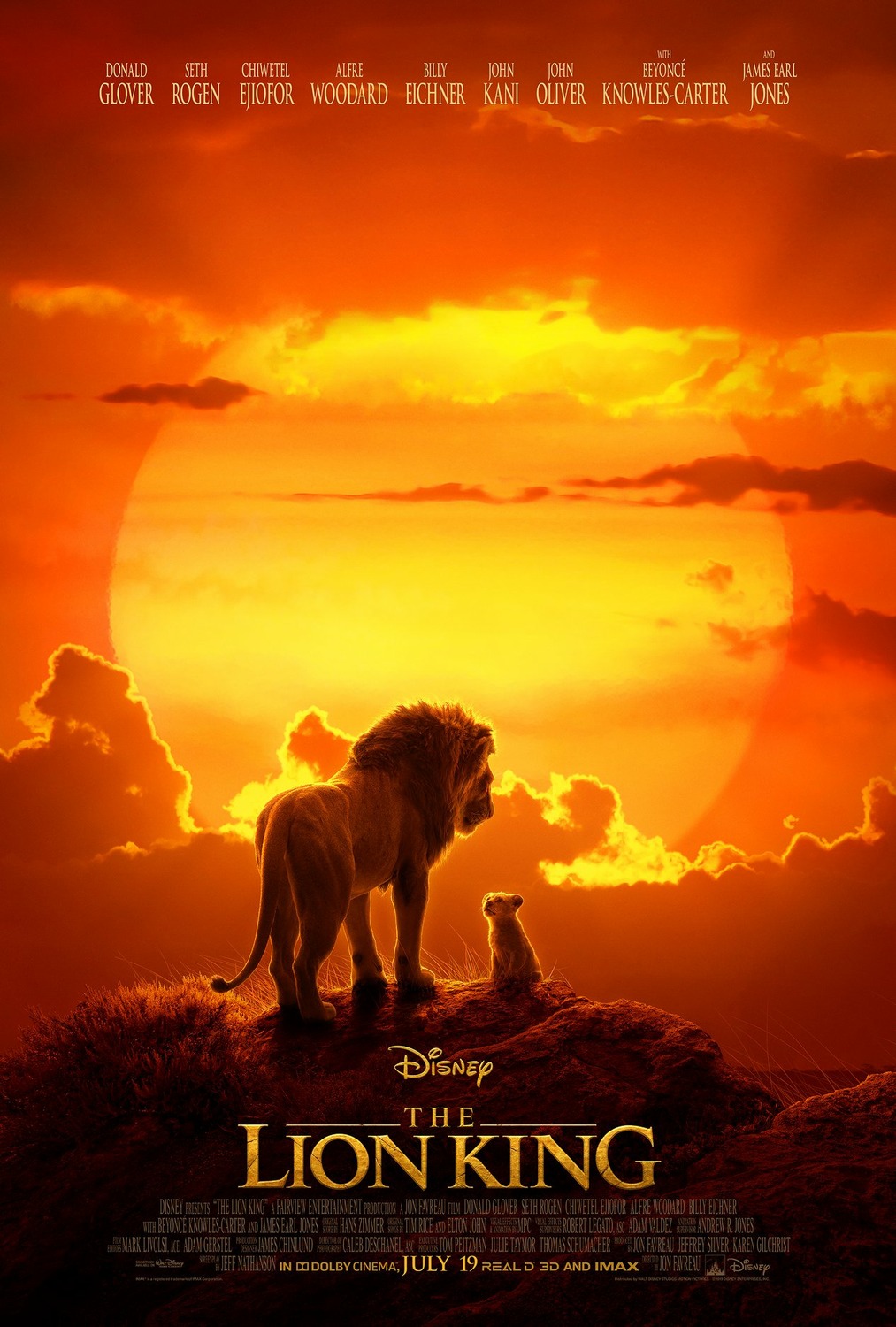
Despite Disney actually began the trend of remaking their classic films all the way back in 2010 with the semi-sequel/remake of ‘Alice in Wonderland,’ directed by Tim Burton. Disney didn’t begin to get truly rampant with its approach until the later successes of ‘Cinderella’ and ‘The Jungle Book’ in 2015 and 2016, respectively, with ‘Beauty and the Beast,’ ‘Dumbo’ and ‘Aladdin’ following not far behind, eventually leading to their most recent releases, that being ‘The Lion King’ and ‘Lady and the Tramp.’ Yet, whilst all of these films did receive mostly positive reviews from both critics and audiences upon their initial release, I personally have never understood why. As, for me, none of these remakes ever manage to really justify their existence, with each new film simply feeling like nothing more than a product, a money machine disguised as a film created purely to rinse profit out of Disney fans who desire to see their childhood classics recreated in a new light and, by this point, I just find it irritating.

Of course, remaking iconic films is nothing new for the film industry, with dreadful remakes, such as ‘RoboCop,’ ‘Ghostbusters’ and ‘Robin Hood,’ all being great examples of how taking a classic film and giving it a sleek modern aesthetic doesn’t automatically make it superior to the original. However, it’s the way Disney goes about executing their remakes that makes them even more frustrating, as even though most reimaginings may not differ too much from the original story, the majority of Disney remakes feel almost identical to their animated counterparts, featuring nearly all of the same scenes and dialogue, now just dragged down by much weaker visuals, vocal performances, and songs. This, in turn, also allows directors and writers to simply borrow material from previous filmmakers without having to innovate much themselves. Another issue I have with Disney converting their animated classics into live-action is that many of the original stories were always envisioned to be animated as they were being written, meaning when transferred into a different style of filmmaking, they usually are forced to rely on enormous amounts of CGI.

Although most audiences seemingly don’t take issue with Disney’s constant remakes, there are still some Disney fans who have spoken out about losing interest in Disney’s future live-action endeavours. In particular, I personally recall many weren’t looking forward to watching the ‘Aladdin’ remake around the time of its release, which I feel is understandable, as just from its trailer alone, it was clear that not only would the film intensely mirror the original, but it was obvious just from a glance that its visuals were also far, far duller, as the remake was lacking in both colour and style. Focusing more on being semi-realistic rather than fully engaging in its elements of fantasy (which, for a narrative revolving around a powerful genie who grants three magical wishes, feels like a huge mistake to me). Whilst the original ‘Aladdin’ may not be the most visually enthralling of Disney’s catalogue of family flicks, the classic style of 2D hand-drawn animation is still very pleasing to look at, even by today’s standards for CG animated films.

It may even surprise some to know that many of these bland remakes were actually directed by talented filmmakers like Jon Favreau and the previously mentioned Tim Burton. Yet, with each new film, every director’s unique style always seems to be stripped away or completely absent, as not only does each remake barely utilise any creative cinematography or editing, relying nearly entirely on CG effects to impress the audience. But usually inventive directors such as Guy Ritchie, who has made phenomenal use of his unique style of editing and humour in the past within his films, like ‘Snatch’ and ‘The Gentlemen,’ suffers as a result of how simply generic and even somewhat boring his reimagining of ‘Aladdin’ is, and while Disney may not be entirely to blame for this, I do believe the company would prefer to keep each remake fairly easy to digest in order to appeal to a wider audience.

In addition to both the visuals and directing, however, the cast of the original animated flicks were also a huge contributing factor to them becoming as beloved as they now are, with not only actors like Robin Williams as the original ‘Genie,’ of course, but also lesser-known actors such as Nathan Lane and Ernie Sabella as ‘Timon’ and ‘Pumbaa,’ to Jodi Benson and Pat Carroll as ‘Ariel’ and ‘Ursula,’ as all these voices not only gave the characters great comedic timing and a distinct tone, but they soon even became an extension of the characters themselves, making them recognisable purely through their voice. Whereas Disney’s newer remakes prefer to just take the much easier approach of simply casting the most relevant actors at the time and throwing them into an iconic role, and whilst actors, like Donald Glover and Chiwetel Ejiofor, will always be superb at their craft, forcing these performers into roles within ‘The Lion King’ simply due to their popularity will always make their vocal performance feel very out-of-place when in comparison with the original film.

The final area I find Disney remakes to be most lacking is the tampering of classic Disney songs, as although I’m personally not an enormous fan of musicals within the realm of live-action, I’ve always enjoyed many of the songs in Disney animated classics. As, not only do I feel these songs add to the characters and the story of each film immensely, but many classic Disney songs also manage to become iconic amongst themselves, with nearly any fan of animation more than likely know all the words to ‘Be Our Guest,’ ‘The Circle of Life,’ and ‘Under the Sea’ (just to name a few). But, when it comes to the remakes, once again, both the original score and songs feel far duller, even in spite of the legendary Hans Zimmer returning for ‘The Lion King’ remake to recreate many of his classic tracks. Still, a few of the reimaginings do at least attempt to throw in some original songs, which unfortunately end up being mostly forgotten due to them being overshadowed by the classic songs audiences are more familiar with.

In summary, it seems the influx of live-action Disney remakes won’t be stopping anytime soon, with ‘The Lion King’ racking in over £1 billion worldwide, Disney will most likely continue this remaking trend until their audience completely loses interest, as reimaginings of ‘Mulan,’ ‘Peter Pan,’ ‘The Little Mermaid,’ ‘Pinocchio,’ The Sword in the Stone’ and ‘Lilo and Stitch,’ as well as many, many more, are already set for release. Whilst the House of Mouse does still have a few original films on the horizon, Disney seems to be heading down a similar path to their paired animation company Pixar, that being one of laziness, relying mostly on their previous stories and franchises for profit rather than creating something new which, in turn, is also encouraging other production companies to do the same. So, if you share my opinion, perhaps sit out Disney’s next live-action release, stay at home, and just relive many of the beautifully animated stories from the past, as I honestly believe many of these films are timeless.

lion_king_ver2_xlg

The Amazing Spider-Man 2 (2014) – Film Review

Overstuffed with plot lines, characters, and ideas alike, this sequel to the ‘Spider-Man’ reboot from 2012 lacks much of anything to truly get invested in. As, this time around, returning director Marc Webb alongside the long list of Sony producers seem to be far more focused on setting up future sequels and spin-offs for the franchise rather than the current story, resulting in a superhero flick that’s just as muddled and inconsistent as it is forgettable. And, while the film did receive fairly average reviews upon its initial release, I’ve personally always felt ‘The Amazing Spider-Man 2’ is anything but ‘Amazing.’

Plot Summary: Continuing the adventures of the wall-crawler, New York City’s hero is thrown into action once again as he faces his newest threat; ‘Electro,’ whilst also balancing his normal day-to-day life as ‘Peter Parker’ with that of being ‘Spider-Man.’

It’s easy to see that throughout its production, ‘The Amazing Spider-Man 2’ faced the problem of having far too many creative minds involved, as director Mark Webb fought against producers constantly as to what would be featured and explored within the superhero sequel. This is why the film eventually ended up having three separate antagonists, in addition to also focusing on ‘Peter’s various relationships and the surrounding mystery of his parents, which when all combined, make the film feel completely directionless, as the audience is given very little time to become invested in any specific aspect of the story before quickly moving on.

Andrew Garfield and Emma Stone return to their roles of ‘Peter Parker’ and ‘Gwen Stacey’ for the sequel, whos romantic chemistry is still one of the film’s best elements similar to the previous instalment. New to the cast this time, however, is Jamie Foxx, Dane DeHaan and Paul Giamatti, who, all take on various roles as villains from ‘Spider-Man’s iconic rogues’ gallery, with the three portraying ‘Electro,’ ‘Green Goblin’ and ‘The Rhino,’ respectively. Yet, despite all these actors giving some fantastic performances in the past, most of the cast give extremely over-the-top and sometimes even strange performances here, which is only made worse as a result of the film’s large amount of cringey dialogue and absence of a consistent tone.

The film’s decent yet not overly inventive cinematography by Dan Mindel is, unfortunately, also hurt by the erratic editing throughout the film, as whilst not always present, occasionally, the editing does result in quite rapid cuts, with some shots that utilise slow-motion even being cut to when the ones before/afterwards did not, stopping the film from ever obtaining a smooth flow. Of course, although it’s usually a no-brainer when it comes to modern superhero flicks, the film’s CG effects are one of its most impressive and visually pleasing aspects, with many of ‘Electro’s shocking abilities being visualised as if they were ripped straight from the source material.

One of the most bizarre original scores in Zimmer’s catalogue of work, the original score by both him and Pharrell Williams gives the impression it’s made up of a number of different tracks from other unrelated films. As, aside from the signature track; ‘I’m Spider-Man,’ which does suitably feel like a heroic and upbeat theme for the beloved superhero. Many of the other tracks simply don’t mesh together well when they manage to stray away from being generic. However, it’s the infamous track; ‘I’m Electro,’ which certainly feels the most out-of-place, as the track employs electronic dubstep with vocals underneath by Pharrell himself that give voice to ‘Electro’s compulsive thoughts.

‘The Amazing Spider-Man 2’ is even surprisingly poor when it comes to its action, as whilst the film does attempt to be very ‘large-scale’ with its action set pieces, having many of them take place within the centre of New York City (where nearly all of the sequel was actually filmed). Much of the action also heavily relies on slow-motion, cheesy quips/jokes, and CG effects, all of which give the film’s action scenes an insufficiency of tension due to their over-extravagance.

In summary, after ‘The Amazing Spider-Man 2’s release, it’s fair to say that Sony was put into a tough situation. As in spite of the film doing fairly well at the box-office, it was clear that fans had no further interest in seeing Sony’s many planned franchise instalments, eventually leading them to strike a deal with Disney to bring ‘Spider-Man’ into the Marvel Cinematic Universe, now portrayed by actor Tom Holland. Although some may be saddened this version of the iconic web-head will more than likely never return to our screens, other than the comic-accurate suit and great chemistry between Garfield and Stone, I feel this sequel (and rebooted series in general) had very little to offer to begin with, and I’m thankful Marvel is now taking the character in a different direction rather than just regurgitating the same narrative we’ve seen many times before. Final Rating: low 3/10.

amazing_spiderman_two_ver11_xxlg

Whiplash (2014) – Film Review

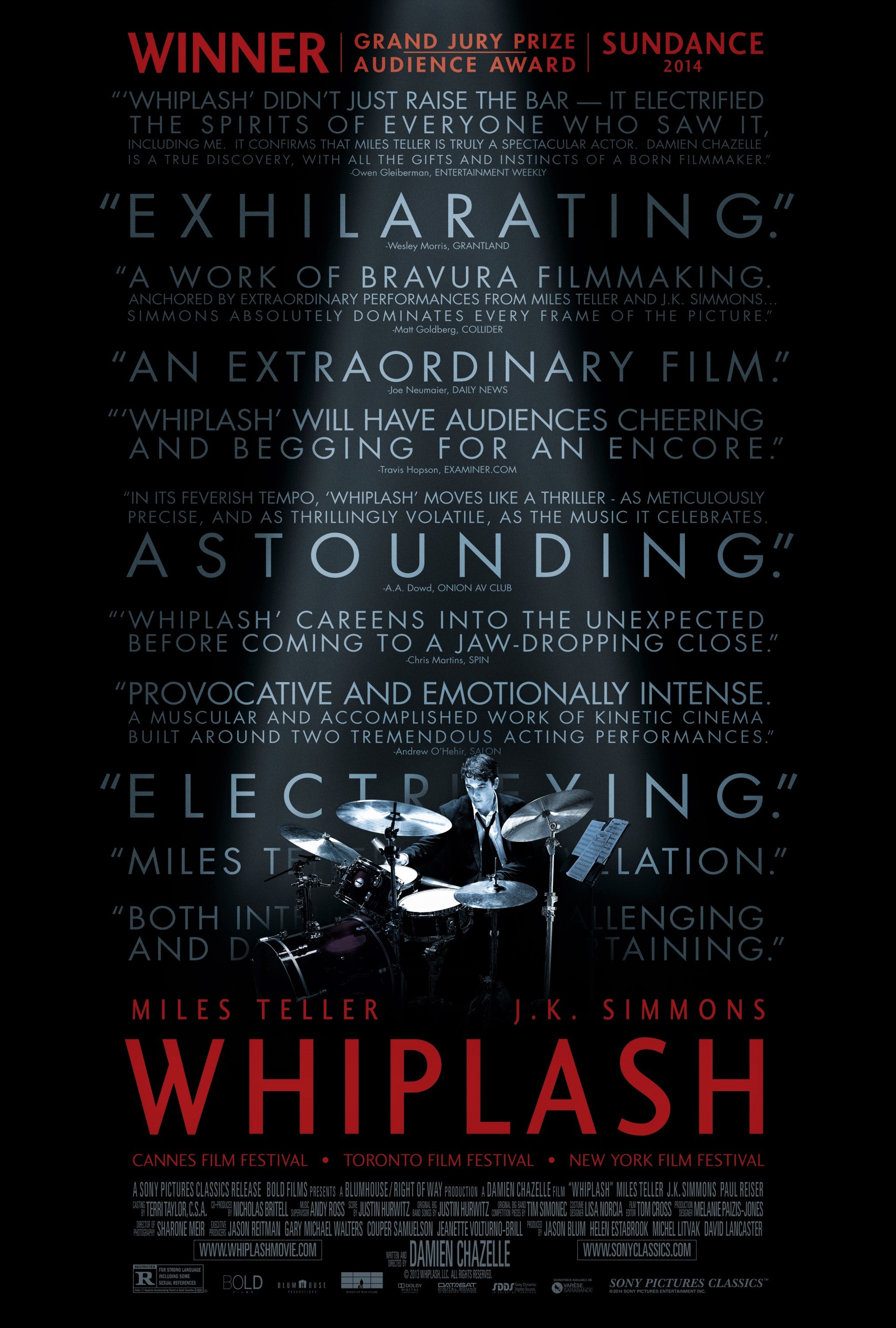
Written and directed by Damien Chazelle (La La Land, First Man), this indie drama appeared almost out of nowhere to incredible reviews from both critics and audiences alike in 2014, featuring some unbelievable performances from Miles Teller and J.K. Simmons alongside an engaging narrative and well-written screenplay. ‘Whiplash’ truly raises the bar for quality when it comes to the independent film sector and small-budget filmmaking in general.

Plot Summary: A promising young drummer (Andrew) attending a prestigious music academy finds himself under the wing of the most respected professor the academy has to offer who has gained an infamous reputation over time due to his constant abuse towards students who aren’t reaching their full potential…

Being shot in only nineteen days, ‘Whiplash’ feels like a true passion project for director Damien Chazelle, with large portions of the film even being based on Chazelle’s own experiences of being part of a band during his high school days. Despite this promising inspiration, to even receive funding for ‘Whiplash’ Chazelle actually had to turn a small portion of the screenplay into a short film, which he then submitted to numerous different short film festivals. In which, J.K. Simmons played the same character whilst Miles Teller’s character was originally known as ‘Johnny Simmons’ before later being changed.

Miles Teller (who has actually played the drums since he was fifteen) portrays the film’s protagonist; ‘Andrew,’ very well. Presenting ‘Andrew’ as a likeable and talented drummer who soon becomes incredibly self-righteous as he begins to dismantle his own life after becoming more and more obsessed with trying to perfect his musical talent. However, it’s the criminally underrated J.K. Simmons who truly steals the film. Portraying ‘Andrew’s tutor, ‘Fletcher,’ as a strict and often intimidating presence, usually resulting in ‘Andrew’ (as well as his many other students) being eager to impress him despite his constant ridiculing of them, a large amount of which the writing actually manages to make quite humorous without taking away from the film’s drama. Melissa Benoist also makes a short appearance within the film as ‘Nicole,’ a young girl who ‘Andrew’ has an affection for, yet despite her decent performance, ‘Nicole’ ends up feeling very underutilised due to her extremely short screen-time.

The cinematography by Sharone Meir is fairly solid throughout the film, while nothing extraordinary, the film’s various close-ups of different drum kit pieces (as well as many other instruments) really gives the film an element of style, in addition to making for a number of memorable and visually pleasing shots. Alongside this is also the film’s colour palette, which mostly consists of dirty yellows and oranges, giving the film an almost rustic appeal, not too dissimilar to a drum kit cymbal itself.

Throughout the runtime, the original score by Justin Hurwitz is predominantly based around drums (obviously due to the story’s focus on such) aside from a few tracks which utilise various trumpets and pianos. Meaning all of the tracks feel very Jazz-like, which fits perfectly with the film as nearly every song that is performed by ‘Andrew’ and his fellow band members is always within this genre of music. My personal favourite from this long list of impressive work is more than likely the signature track; ‘Overture,’ simply due to the track’s enormous amount of range.

As mentioned previously, Miles Teller has played the drums since he was fifteen, and throughout the film, ‘Andrew’ receives numerous blisters on his hands due to his vigorous and unconventional style of jazz drumming. While most are aware of this, it may surprise some audience members to know that this style of drumming is Teller’s own. Meaning some of the blood that appears on his hands and drumsticks within the film’s more intense scenes is actually real. Despite this commitment, however, ‘Whiplash’ still suffers from one major flaw, this being the film’s overly fast pacing. Due to the film’s tight runtime, ‘Whiplash’ does sprint through its story without much hesitation. Although it doesn’t feel rushed per se, the film’s fast pacing does begin to make certain aspects of its story feel undeveloped as a result, e.g. ‘Andrew’s various relationships and his life outside of music.

In summary, ‘Whiplash’ may be a low-budget indie flick, but through its marvellous performances, brilliant writing and attractive cinematography. Chazelle manages to craft a very entertaining film focused on music that isn’t simply an adaptation of a classic theatre performance. Whilst it may not feature the vibrant and varied colour palette of ‘La La Land’ or the stunning CG visuals of ‘First Man,’ Damien Chazelle’s directorial debut is certainly an astounding effort and a memorable musical experience, to say the least. Final Rating: low 9/10.

whiplash_xxlg