Possessor (2020) – Film Review

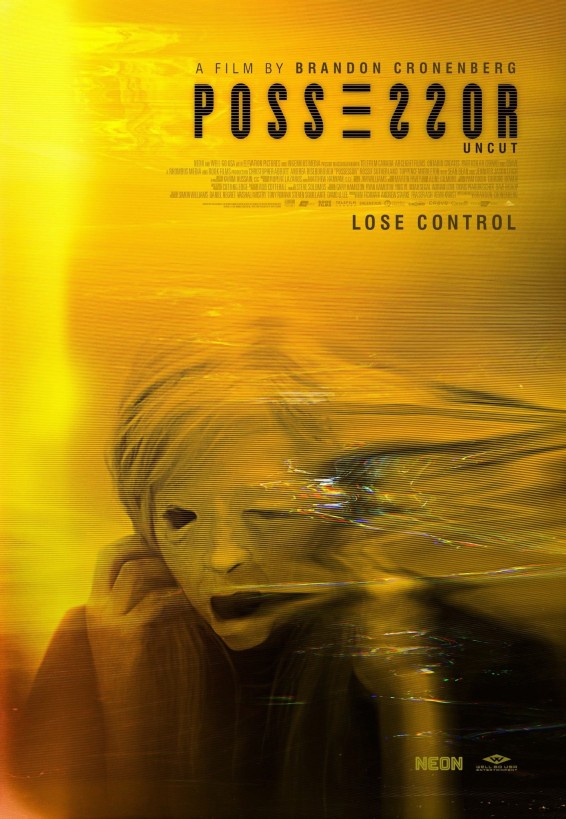
Following his 2012 directorial debut with ‘Antiviral,’ Brandon Cronenberg, son of legendary sci-fi-horror director David Cronenberg, crafts a captivating sci-fi thriller with 2020’s ‘Possessor,’ a film that deals with heavy underlying themes of identity loss and sexual discomfort, all whilst displaying its story through some truly spectacular cinematography and lighting. And, even though Brandon’s second sci-fi/arthouse outing doesn’t quite reach the high bar set by his father’s work, ‘Possessor’ is still more than successful as a surreal and layered science fiction flick with outbursts of strong, bloody violence.

Plot Summary: After many years of working as a corporate agent utilising brain-implanted technology to inhabit other people’s bodies and force them to commit assassinations for the benefit of the company. ‘Tasya Vos’ struggles to suppress her violent memories and urges, soon causing her to completely lose control when taking over the mind of a new subject, whose identity now threatens to destroy her own…

Debuting at Sundance Film Festival in early 2020, ‘Possessor’ has quickly gone down as one of the best low-budget releases of that year. Or, at least, this version of the film has, as according to writer-director Brandon Cronenberg, there was an alternate screenplay for ‘Possessor’ which drastically differed from the version that was released. So much so, that Brandon stated it could possibly become a second film later down the line, encompassing all of the material that didn’t quite make it into the first, which was primarily inspired by two pieces of media, the first being the 1971 novel; ‘Physical Control of the Mind: Toward a Psycho-Civilised Society’ by José Delgado, and the second being the short film; ‘Please Speak Continuously and Describe Your Experiences as They Come to You,’ written and directed by David Cronenberg.

Andrea Riseborough gives a fantastically cold performance throughout the film as ‘Tasya Vos,’ making it clear within only a few minutes that ‘Tasya’ is deeply suffering from the effects of her job, as each time she steps into the life of a new subject, she remerges different, finding it harder and harder to untangle her true identity from the one she just inhabited. And, it probably goes without saying that as a sci-fi focused on entering other people’s bodies, the story does explore sexual desire/sexual discomfort, never shying away from scenes of ‘Tasya’ being entranced with her new body after taking over the mind of ‘Colin Tate,’ portrayed by Christopher Abbott. Who, also gives a superb performance as the unfortunate host chosen to execute the company’s assassination, continuously switching between two personalities before eventually becoming devoid of all emotion as minds conflict.

‘Possessor’s cinematography by Karim Hussain also rarely ceases to impress, as nearly every shot is both attractive and memorable, with many shots leaning into the narrative’s themes in addition to providing a closer look at the heavily detailed gore effects through an array of extreme close-ups. The innovative camerawork is also enhanced by the film’s terrific use of colour, as the lighting and colour palette swiftly alters from bright yellows to dark blues to eye-piercing reds. But, this isn’t where ‘Possessor’s filmmaking peaks, as it can’t be denied that the film is at its best whenever it visualises ‘Tasya’ and ‘Colin’ mentally battling for control of ‘Colin’s body, as the film visually displays this interesting concept of a psychic battle on the astral plane through a range of editing techniques and creative yet strange practical effects. The scene in which ‘Tasya’ first enters ‘Colin’s mind is particularly astounding, as the film displays the fake bodies of the two main cast members, which then melt entirely into liquid flesh.

Many of the film’s bizarre visuals are also elevated to a great extent by Jim Williams’ original score, as ‘Possessor’s synth-esque soundtrack keeps the film’s eerie atmosphere present throughout the runtime, capturing the story’s surreal tone and constantly building tension through its atmospheric feel until we arrive at the story’s thrilling climax. My two personal favourite tracks; ‘Reborn in the Mind of Another’ and ‘A False Reputation,’ aren’t exactly distinctive, but both tracks do help tremendously in this regard.

The leading issue ‘Possessor’ suffers from is its lack of world-building, as supposedly the film takes place in an alternate version of the year 2008, but aside from one short scene where we see ‘Colin’s day-to-day job as a data miner, which does at least serve as a comment on the paranoia of corporate overlords and their nefarious activities, the world of ‘Possessor’ receives very little development and can often feel inconsistent when it comes to its technological advances.

In summary, ‘Possessor’ is the perfect hybrid of sci-fi, character study and body horror, as whilst its lack of world-building and compelling side characters do stop the film from reaching its true potential, ‘Possessor’ (along with Brandon’s previous film), definitely prove that Cronenberg’s son has a talent for telling harrowing and violent stories, all the while never forgetting to integrate intriguing concepts and ideas. And, with Brandon pushing for most of ‘Possessor’s effects to be completed in-camera rather than with CGI, the two directors may be even more alike than I first thought. Final Rating: low 8/10.
possessor_ver3_xxlg

The Invitation (2015) – Film Review

A fairly subdued but very effective thriller, ‘The Invitation,’ released in 2015, builds-up an almost absurd amount of tension over the course of its ninety-nine-minute runtime, maintaining the intrigue within its plot whilst also constantly defying the audience’s expectations. Although the film does eventually devolve into generic slasher territory for its final act, this indie thriller utilises its confined location and fantastic performances so effectively that it soon overcomes the majority of its flaws.

Plot Summary: After ‘Will’ and his girlfriend ‘Kira’ accept a formal invitation to a dinner party in the Hollywood Hills hosted by his ex-wife; ‘Eden,’ and her new husband, ‘Will’ begins to feel unsettled as his ex-wife seems overly eager to reunite with friends she lost contact with over two years ago. But, as the dinner party continues, ‘Will’ is presented with mounting evidence that their hosts have a more sinister agenda…

Directed by Karyn Kusama (Girlfight, Jennifer’s Body, Destroyer), ‘The Invitation’ is a low-budget film in the best possible way, as the director and writers had complete creative control over the project due to it being produced without any involvement from major production companies. This is more than likely why the film lacks any unnecessary jump-scares or a forced cliffhanger ending to serve as sequel/prequel bait. Instead, the story has strong underlying themes of past trauma, as the protagonist ‘Will,’ along with his ex-wife; ‘Eden,’ both share a dark past which looms over their present-day lives.

Logan Marshall-Green portrays ‘Will’ very well, as the excellent character-writing combined with Marshall-Green’s performance make ‘Will’ feel like not only a realistic character, but also somewhat of a stand-in for the audience themselves. As upon ‘Will’s arrival at the party, he immediately suspects that something is wrong, as he analyses the small yet strange details of their hosts. But, obviously, it’s also understandable as to why the other guests question or even just deny his claims, as his traumatic background makes him appear almost jealous that his ex-wife has moved on from their past in search of happiness. The rest of the cast of Tammy Blanchard, Emayatzy Corinealdi, John Carroll Lynch and Toby Huss (just to name a few), are all also stellar in their respective roles.

Everything from the film’s colour palette to its lighting to its cinematography by Bobby Shore, all visually display the contrast between the story’s cosy setting and the tension and discomfort that is building throughout the narrative, as the film’s visuals are intentionally quite dim and warm in order to relate to the idea of the lavish house being a safe environment, when, in reality, something far more ominous is at work, which in a way is also visually represented through the darkness of the night creeping its way into the house via the windows. Additionally, the film’s huge amount of variety when it comes to its camerawork helps to make ‘The Invitation’ a more engrossing experience, as with the film mostly relying on its structure of every combination of characters slinking away into the next room for a conversation, it manages to avoid becoming tiresome as a result of its cinematography and score.

Speaking of the soundtrack, the original score by Theodore Shapiro goes a long way to accentuate the feeling of foreboding that the story protrudes, as the soundtrack only utilises solitary stringed instruments. This minimalist approach works perfectly, as the subtlety is reflective of both the story itself and the dimmed-down visuals, really driving a knife through the viewer through the simple use of a violin. The two tracks; ‘Into the Canyon’ and ‘I’m Actually Early,’ are brilliant examples of this, but, in all honesty, the score features so many wonderful tracks, that its difficult to pick between them.

Spoilers ahead in this section for those who wish to go in blind. But, when it’s finally revealed that the goal of the dinner party is to murder all the guests present for the purpose of pleasing a malevolent cult, the film does lose much of its charm, as the short scene we see of the guests being shot one-by-one doesn’t feel like a truly rewarding payoff considering how long the build-up actually was. However, the film does still make an attempt to develop the cult, and it quickly becomes clear that the group share many similarities to real-world groups, with the two most obvious influences being ‘Heaven’s Gate,’ and, of course, Charles Manson and ‘The Manson Family.’

In summary, ‘The Invitation’ is quite the underappreciated gem, as the film makes great use of its thin budget to craft a slow-burning yet layered thriller. While there are a few minor plot threads left lingering, the film does give enough clues/hints for keen-eyed viewers to find, and aside from perhaps the lacklustre climax, I personally have very few gripes with ‘The Invitation,’ and I would recommend it to anyone in search of a tense and entrancing story with equally entrancing filmmaking. Final Rating: low 8/10.

invitation_ver2_xxlg

Moonlight (2016) – Film Review

Directed by Barry Jenkins (Medicine for Melancholy, If Beale Street Could Talk) and based on the unproduced stage play; ‘In Moonlight Black Boys Look Blue’ by Tarell Alvin McCraney. ‘Moonlight’ has been heavily praised since its initial release in 2016, being just one of the films from adored production company A24, who also brought us modern indie classics, like ‘Hereditary,’ ‘Waves,’ ‘Eighth Grade,’ ‘The Witch’ and ‘A Ghost Story,’ just to name a few. And, although ‘Moonlight’ may not be the company’s greatest film to date, it is certainly one of the finest examples of visual storytelling and subtle characterisation in recent memory.

Plot Summary: Through three different time periods, young adolescence, mid-teen and young adult, African-American; Chiron, grapples with his identity and sexuality as he grows up in Miami, his journey to manhood being guided by the kindness, support and love of the community that helped raise him…

In addition to receiving almost universally positive reviews, ‘Moonlight’ also won three Oscars for Best Picture, Best Screenplay and Best Supporting Actor in 2017. And, with the film only having a budget of around £1.1 million, ‘Moonlight’ has the lowest budget of any Best Picture winner since ‘Rocky’ in 1976, which cost only £820,000. However, even with this smaller budget, director Barry Jenkins and writer Tarell Alvin McCraney always had a clear vision as to what the film would be, as both men had similar childhood experiences living in Miami, with mothers who had both struggled with drug addiction. So, it was decided early on to replicate those experiences, with roughly 80% of the film being shot in the same neighbourhood the pair originally grew up.

Alex R. Hibbert, Ashton Sanders and Trevante Rhodes portray ‘Chiron’ across the three different time periods of his life, and all do a great job in spite of them not sharing many of the same mannerisms outside of ‘Chiron’s manner of speaking, yet this doesn’t stop the trio from still making ‘Chiron’s quiet and sheepish personality shine. The supporting cast of Mahershala Ali, Naomie Harris, Janelle Monáe and André Holland, are all also fantastic, but with all four being such skilled actors who have given few bad performances throughout their careers, it was unlikely this indie drama would ever be an exception, it’s just a shame their characters aren’t featured more within the narrative.

Despite a large amount of James Laxton’s cinematography consisting of shaky hand-held shots, the film’s camerawork does allow for plenty of movement, as the camera rarely remains still during conversations between characters, making many of the story’s dramatic moments far more visually interesting and giving each scene a consistent flow through the many revolving shots. Additionally, the film also utilises its cinematography to reflect ‘Chiron’s emotional state at many points, combining with the film’s original score for some very impactful story beats. All of this working in synch with the film’s bright colour palette and smooth editing, which both make superb use of the beautiful setting of Miami.

Another masterful and memorable aspect of ‘Moonlight’ is its original score by Nicholas Britell, as the film has a very diverse yet gentle score with tracks ranging from orchestral to more piano-focused, as Britell decided to ‘Chop and Screw’ the orchestra to create a new kind of sound, this technique can be seen throughout the tracks; ‘The Middle of the World,’ ‘Chiron’s Theme’ and ‘Chef’s Special,’ with director Barry Jenkins stating that he always wanted the film’s score to be distinctive, as he actively tried to avoid the cliché of Black-lead films featuring exclusively hip-hop soundtracks.

Much of ‘Moonlight’s story was also inspired by Barry Jenkins’ own childhood in Miami, where he was surrounded by lush green grass and stunning golden sunsets, yet also lived in a neighbourhood where some tragic events took place, declaring his childhood; “A Beautiful Struggle.” And, whilst the film’s slow pacing allows this story to be fully explored, this shouldn’t put viewers off, as the narrative doesn’t move along at a brutally slow pace, only slow enough to fully immerse its events/characters in realism. Then, of course, there is the film’s visual/minimalist storytelling, which is some of the best executed I’ve seen in a long-time, as the film hides many small visual/audio details for those paying close attention, presenting its themes of embracing yourself, addiction and masculinity in such a fashion that I feel different audience members will interpret the story in their own way.

In summary, ‘Moonlight’ is a prepossessing coming-of-age story, even if it isn’t one of the best films A24 has to offer, as while the film is still an incredibly entertaining and well-written drama with an equally well-crafted original score and some creative cinematography to boot. A24 simply has such a vast and exceptional range of indie films to choose from, as the production company is never hindered by genre, style or tone for projects they green-light. But, if you enjoy dramas or are a lover of Barry Jenkins’ other work, then ‘Moonlight’ will surely be a captivating watch followed by a fascinating discussion, just be sure to give the film your full attention. Rating: 8/10.

moonlight_ver2_xxlg

The Blair Witch Project (1999) – Film Review

Upon its initial release, the original ‘Blair Witch Project’ blew many audiences away with its realistic depiction of found-footage horror, subsequently leading many audience members to believe that the events they were watching on-screen actually took place, making for a truly terrifying experience. However, now, many years after its first appearance, the film’s reputation has significantly altered with both critics and audiences alike, as ‘The Blair Witch Project’ is definitely a film that lies outside of the usual horror clichés.

Plot Summary: When three student filmmakers travel to Burkittsville, Maryland, in attempt to produce a documentary based around the local urban legend of ‘The Blair Witch,’ they mysteriously disappear after traveling into the nearby Black Hills Forest, leaving only their footage behind to be discovered one year later…

Whilst ‘The Blair Witch Project’ wasn’t the original found-footage horror film, with the infamous exploitation flick; ‘Cannibal Holocaust,’ first introducing the horror subgenre in 1980. ‘The Blair Witch Project’ was the first film to popularise the found-footage concept, as this film was at one point in time in the ‘Guinness Book of World Records’ for the largest box-office ratio, as the low-budget film only had a budget of around £45,000 and made back over £189 million, quickly spawning an inconsistent horror franchise despite the film’s only partially complete backstory for its creature and setting.

The three main cast members of Heather Donahue, Joshua Leonard, and Michael C. Williams (who all share their real names with their characters), are all tremendous throughout the film, as while their character’s don’t receive nowhere near as much development as they should considering how much screen-time we spend with them, each one of the actors do give the impression they are becoming more tormented and frustrated the longer they remain in the Black Hills Forest. The main reason the film’s protagonists don’t receive much characterisation, however, is actually due to the film’s production itself, as with the film not focusing very heavily on story, the actors were given no more than a thirty-five page outline of plot points rather than a full screenplay. So, as filming continued, the cast just played out various scenes, only having little knowledge of the mythology behind ‘The Blair Witch’ and improvising the vast majority of their lines.

Practically the entirety of the cinematography by Neal L. Fredericks is exactly what you’d expect from a found-footage horror, featuring an abundance of both shaky and out-of-focus shots, further adding to the idea that just behind the lens is a group of amateur student filmmakers (with some scenes even being shot by the cast themselves). In addition to the hand-held camerawork, the film’s visuals are also quite distinctive when it comes to its visual quality, as throughout the duration of the film, many shots remain incredibly grainy and occasionally even switch to a completely greyscale colour palette, which again, whilst adding to the realism of the film being a no-budget student documentary, does ensure the absence of any genuinely attractive shots.

Although it’s only heard during the film’s atmospheric end credits, ‘The Blair Witch Project’ does actually have an original score composed by Antonio Cora, but obviously being a found-footage horror, the film mostly aims to please with its sound design, as the sounds of crackling leaves and chirping birds are heard continuously. Interestingly, many of the eerie branch-cracking sounds heard at night even being made by the director and his friends simply walking up to the cast’s camp-perimeter and then tossing around twigs, rocks, and branches in various directions.

The main aspect that many will either admire or despise about ‘The Blair Witch Project,’ is its previously mentioned focus on realism and minimalist storytelling, as while the film does utilise its forest setting very effectively throughout the runtime, many who may be expecting a thrilling final act or possibly even a glimpse at ‘The Blair Witch’ herself will be greatly disappointed, as due to the story’s constant emphasis on realism, the film never actually provides any genuine evidence of the supernatural, with many of the film’s tense moments mostly relying on the darkness of the woods or the belligerent quarreling between the characters.

In summary, ‘The Blair Witch Project’ is certainly a fascinating horror film even if it isn’t always a successful one. As, to this day, this found-footage indie flick is a very divisive film for horror fans, with a 86% score on Rotten Tomatoes, the film has the highest-rating of any film that was also nominated for a Razzie Award for Worst Picture. So, even with the cast’s impactful performances and ‘The Blair Witch’ herself being an intriguing urban legend, this is one horror that really depends on your personal taste. For myself, while I find the film far from perfect and considerably less compelling than many other iconic horrors, I can appreciate what this experimental piece of filmmaking (and its marketing) was trying to accomplish, and for that, I feel it’s worth at least one viewing for any fan of the genre. Final Rating: 6/10.

blair_witch_project_ver3_xxlg

The Autopsy of Jane Doe (2016) – Film Review

A twisted and unique indie horror that is certainly not for the squeamish, ‘The Autopsy of Jane Doe’ utilises it’s simple concept and individual location to the best of its ability, immersing its audience into its grim setting almost as if they are performing the autopsy themselves alongside the film’s characters. Whilst the film may still suffer from a couple of the same issues that plague many other modern horrors, ‘The Autopsy of Jane Doe’ manages to overcome most of its faults to evolve into a compelling slice of low-budget horror.

Plot Summary: While investigating the murder of a family, a small-town Sheriff and his team are puzzled with the discovery of a mysterious body buried underneath the crime scene. After bringing the corpse of the unnamed; ‘Jane Doe,’ to family coroners; ‘Tommy’ and ‘Austin Tilden,’ to determine her cause of death, the pair soon discover the corpse is harbouring a dark secret…

Directed by André Øvredal (Troll Hunter, Scary Stories to Tell in the Dark), ‘The Autopsy of Jane Doe’ may be slightly lacking in terms of budget, yet the film always manages to use this to its advantage by setting nearly the entirety of its story within the walls of the ‘Tilden Morgue and Crematorium.’ Through which, the film constantly retains its eerie atmosphere and even a partial feeling of claustrophobia. In addition to also keeping its audience entranced within its narrative through its signature mystery, as the questions of “Who was ‘Jane Doe?” and “How was She Killed?” remains on every viewers’ mind after the opening scene.

The main father and son duo portrayed by Brian Cox and Emile Hirsch both do a great job throughout the film, with the writing also contributing to the film’s engagement as their characters receive a decent amount of characterisation. Easily the most challenging (and respectfully most impressive) performance of the film has to be the ‘corpse’ herself; ‘Jane Doe,’ however, as while there were some prosthetics used during production, it may surprise many to know this role was actually portrayed by actress Olwen Catherine Kelly for the majority of the film, as André Øvredal felt it was necessary to have an actress in the role to help connect to the audience on a human level, eventually leading Kelly to be cast due to her knowledge of yoga, which helped her minimise both her breathing and slight body movements.

The cinematography by Roman Osin is admirable, implementing a number of attractive shots during the runtime. However, the film’s cinematography is still best utilised when it comes to the many gruesome close-ups, as the film never shies away from the “Autopsy” part of its title, displaying nearly every part of the autopsy from the initial exterior examination through to the interior examination, securing this film’s position as not one for the faint of heart when its comes to blood/gore (or nudity for that matter). The lighting throughout ‘The Autopsy of Jane Doe’ also benefits its story, as the film’s array of tense moments are only enhanced as a result of the morgue being shrouded in shadows.

Danny Bensi and Saunder Jurriaans handle the film’s original score, which in spite of its complete lack of memorability does help add to the film’s foreboding tone and blood-curdling atmosphere, as the score feels more like ominous ambience rather than a standard horror score, with the track; ‘Hair Cut,’ being the clearest example of this. The film also places a heavy emphasis on the song; ‘Open Up Your Heart and Let the Sun Shine In,’ a classic ’50s song, which repeatedly plays over the overly static radio within the morgue, resulting in the song quickly becoming one of the film’s creepiest aspects.

Whilst ‘The Autopsy of Jane Doe’ does avoid many of the usual horror clichés, the film, unfortunately, still suffers from the most common problem in horror; jump-scares. Despite relying far more on its atmosphere and occasional chilling visuals to place its audience on edge, the film still feels the need to spread a variety jump-scares throughout its tight runtime. In particular, within the film’s final act, which is when the film loses much of its originality in favour of becoming more generic and predictable.

In summary, ‘The Autopsy of Jane Doe’ is a fairly underrated gem in the realm of modern horror, surpassing many other films that attempt many similar ideas but usually end up feeling quite tasteless, such as the overlooked film; ‘Anatomy,’ from 2000, or the bizarre 2008 indie flick; ‘Deadgirl.’ So, although not completely perfect in its execution, ‘The Autopsy of Jane Doe’ still delivers on its setup of a tense and engrossing tale that also manages to make time for its characters in the process, and even though I personally don’t find Øvredal’s filmography impeccable, I believe this director has talent, and projects like ‘The Autopsy of Jane Doe’ prove he can be a worthy contributor to the horror genre. Final Rating: 7/10.

autopsy_of_jane_doe_xxlg

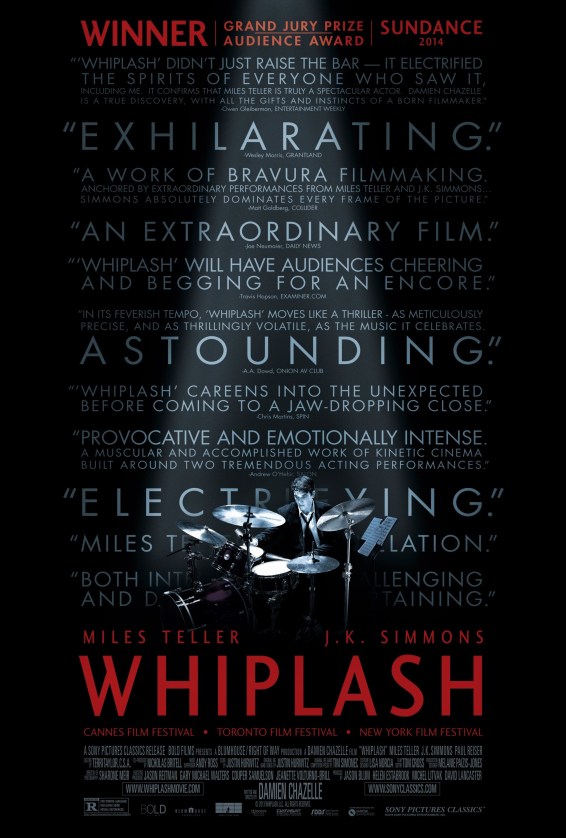
Whiplash (2014) – Film Review

Written and directed by Damien Chazelle (La La Land, First Man), this indie drama appeared almost out of nowhere to incredible reviews from both critics and audiences alike in 2014, featuring some unbelievable performances from Miles Teller and J.K. Simmons alongside an engaging narrative and well-written screenplay. ‘Whiplash’ truly raises the bar for quality when it comes to the independent film sector and small-budget filmmaking in general.

Plot Summary: A promising young drummer (Andrew) attending a prestigious music academy finds himself under the wing of the most respected professor the academy has to offer who has gained an infamous reputation over time due to his constant abuse towards students who aren’t reaching their full potential…

Being shot in only nineteen days, ‘Whiplash’ feels like a true passion project for director Damien Chazelle, with large portions of the film even being based on Chazelle’s own experiences of being part of a band during his high school days. Despite this promising inspiration, to even receive funding for ‘Whiplash’ Chazelle actually had to turn a small portion of the screenplay into a short film, which he then submitted to numerous different short film festivals. In which, J.K. Simmons played the same character whilst Miles Teller’s character was originally known as ‘Johnny Simmons’ before later being changed.

Miles Teller (who has actually played the drums since he was fifteen) portrays the film’s protagonist; ‘Andrew,’ very well. Presenting ‘Andrew’ as a likeable and talented drummer who soon becomes incredibly self-righteous as he begins to dismantle his own life after becoming more and more obsessed with trying to perfect his musical talent. However, it’s the criminally underrated J.K. Simmons who truly steals the film. Portraying ‘Andrew’s tutor, ‘Fletcher,’ as a strict and often intimidating presence, usually resulting in ‘Andrew’ (as well as his many other students) being eager to impress him despite his constant ridiculing of them, a large amount of which the writing actually manages to make quite humorous without taking away from the film’s drama. Melissa Benoist also makes a short appearance within the film as ‘Nicole,’ a young girl who ‘Andrew’ has an affection for, yet despite her decent performance, ‘Nicole’ ends up feeling very underutilised due to her extremely short screen-time.

The cinematography by Sharone Meir is fairly solid throughout the film, while nothing extraordinary, the film’s various close-ups of different drum kit pieces (as well as many other instruments) really gives the film an element of style, in addition to making for a number of memorable and visually pleasing shots. Alongside this is also the film’s colour palette, which mostly consists of dirty yellows and oranges, giving the film an almost rustic appeal, not too dissimilar to a drum kit cymbal itself.

Throughout the runtime, the original score by Justin Hurwitz is predominantly based around drums (obviously due to the story’s focus on such) aside from a few tracks which utilise various trumpets and pianos. Meaning all of the tracks feel very Jazz-like, which fits perfectly with the film as nearly every song that is performed by ‘Andrew’ and his fellow band members is always within this genre of music. My personal favourite from this long list of impressive work is more than likely the signature track; ‘Overture,’ simply due to the track’s enormous amount of range.

As mentioned previously, Miles Teller has played the drums since he was fifteen, and throughout the film, ‘Andrew’ receives numerous blisters on his hands due to his vigorous and unconventional style of jazz drumming. While most are aware of this, it may surprise some audience members to know that this style of drumming is Teller’s own. Meaning some of the blood that appears on his hands and drumsticks within the film’s more intense scenes is actually real. Despite this commitment, however, ‘Whiplash’ still suffers from one major flaw, this being the film’s overly fast pacing. Due to the film’s tight runtime, ‘Whiplash’ does sprint through its story without much hesitation. Although it doesn’t feel rushed per se, the film’s fast pacing does begin to make certain aspects of its story feel undeveloped as a result, e.g. ‘Andrew’s various relationships and his life outside of music.

In summary, ‘Whiplash’ may be a low-budget indie flick, but through its marvellous performances, brilliant writing and attractive cinematography. Chazelle manages to craft a very entertaining film focused on music that isn’t simply an adaptation of a classic theatre performance. Whilst it may not feature the vibrant and varied colour palette of ‘La La Land’ or the stunning CG visuals of ‘First Man,’ Damien Chazelle’s directorial debut is certainly an astounding effort and a memorable musical experience, to say the least. Final Rating: low 9/10.

whiplash_xxlg

Buried (2010) – Film Review

Ryan Reynolds impressively carries an entire film on his shoulders with ‘Buried,’ as this fast-paced and extremely tense thriller focuses entirely on a single character trapped within an enclosed space, building up a tension-filled atmosphere and displaying constant filmmaking talent throughout (especially since the film was shot in only seven days). ‘Buried’ manages to keep its audience on constant edge as we experience this terrifying event right alongside our protagonist.

Plot Summary: ‘Paul Conroy,’ a U.S. truck driver currently working in Iraq, wakes up to find he is buried alive inside a wooden coffin after being attacked by terrorists, with only a cigarette lighter and a phone by his side, it’s a race against time for him to contact whoever he can and escape before it’s too late…

In concept, ‘Buried’ is truly a brilliant idea for a low-budget flick, as the entire film takes place within a single location with only the protagonist ever being psychically seen on-screen, the film never breaks from its tension or narrative, with not even a single shot outside of the coffin itself, and yet, the film never fails at keeping those watching glued to the screen, as after the admittedly fairly cheesy opening title sequence, the film never seems to slows down, almost refusing to give the viewer a moment to breathe as ‘Paul’ is faced with one difficult task after the next.

As already mentioned, Ryan Reynolds is the only member of the cast to physically appear on-screen, meaning he has the monumental task of delivering a very emotional and gripping performance to keep the audience engaged, which, thankfully, he does a phenomenal job of, as throughout the film’s tight runtime the actor going against his usual comedic casting to mostly excellent results. ‘Buried’ even manages to give the protagonist some characterisation through his various phone conversations with the other characters, adding the film’s compelling story even further. The various characters who appear as voices through ‘Paul’s phone consist of his wife; ‘Linda Conroy,’ portrayed by Samantha, Mathis alongside José Luis García Pérez, Ivana Miño, Robert Paterson and Stephen Tobolowsky, who give the best performances possible even with their limiting roles.

The cinematography by Eduard Grau has a surprising amount of range, despite the extremely restrictive location, as the majority of shots get uncomfortably close to ‘Paul’s face, almost placing the viewer in the position of the protagonist themselves, pretty much ensuring a feeling of claustrophobia by the film’s end. The film’s dim lighting also adds to its uncomfortable nature, as ‘Paul’ only has a cigarette lighter and small glow stick by his side, the film consists entirely of bright orange and green colour palette, alongside the occasional glow of blue from ‘Paul’s phone. That is, at least when the screen isn’t covered in complete darkness. Another small detail I appreciate about ‘Buried’ is how ‘Paul’ being underground is displayed, as when shots pull outwards from ‘Paul’ within the coffin, nothing but total blackness is shown around him, really emphasising the true loneliness and desperation he feels in his situation.

Victor Reyes handles the original score for the film, and whilst the soundtrack is decent is some scenes where it is used quite subtly, the score is sadly one of the film’s worst aspects, as the original score for ‘Buried’ is usually very generic and feels almost a little too over-the-top for a film as subdued and relentless as this one. Personally, I actually think the film would’ve been improved if more focus was placed on the film’s solid sound design rather than its weak soundtrack.

The film also has some strange editing choices during its runtime, as although not present continuously throughout the film. Many scenes do have short moments where the editing becomes rather erratic, sometimes having shots which quickly close in on ‘Paul’s face as he looks upwards, and whilst I understand this may have been done to add to the film’s tension-building, I feel it only really takes away from it in the long-run.

In summary, I feel ‘Buried’ is a film you can truly immerse yourself in, as this film makes such outstanding use out of its simplistic yet effective script and small budget. Although the film does suffer from an excessive original score and some bizarre editing choices, the remainder of film’s execution alongside Ryan Reynold’s tremendous performance is really something to admire, making an already compelling story even more interesting. If you’re a fan of thrillers in particular, then I’m sure you’ll thoroughly enjoy this inventive indie flick. Final Rating: 8/10.

buried_xlg

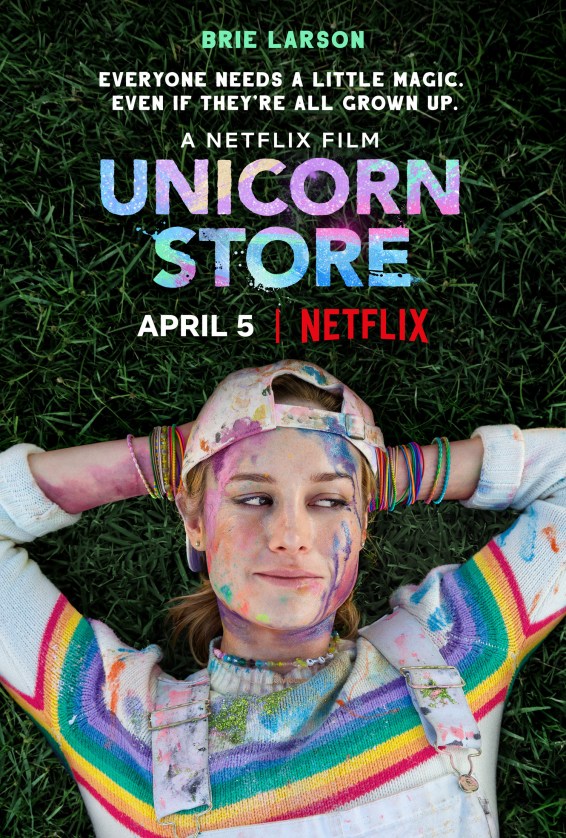
Unicorn Store (2019) – Film Review

Both starring and directed by Oscar-winner Brie Larson, ‘Unicorn Store’ is a light-hearted comedy-drama which attempts to delve into those childhood dreams many people have, but seems to fall very short in more aspects than one. As, aside from a pretty great original score by Alex Greenwald, the film is mostly very bland and forgettable, usually flopping most of the emotional moments and attempts at humour within its fantastical story.

Plot Summary: When ‘Kit’ is forced to move back in with her parents after being kicked out of art school, she takes on a boring office job in an attempt to finally grow up. But, when a mysterious stranger sends her an invitation, she is welcomed into a magical store with the promise of owning her own pet unicorn, her greatest desire as a child…

Personally, I do feel this is one of those films where the lack of experience from the director is a big part in what makes it fail, as although the writing throughout the film is fairly decent. The film’s visuals as well as the weak performances from the cast, leave the film feeling almost as if it’s presentation doesn’t match with the story itself, and whilst I’m definitely not this film’s main target audience, I don’t imagine even young girls could get much out of this less-than-imaginative experience.

Although Brie Larson has given a variety of excellent performances throughout her career, with ‘Room’ and ‘Scott Pilgrim vs. The World’ being the first two that come to mind. Her performance is extremely mixed throughout ‘Unicorn Store,’ as in some scenes she fairly decent, whilst in others, she is quite bland. This could also be due to her character, however, as ‘Kit’ is very irritating throughout the majority of the film, portraying the character as childish and loud in all the wrong ways. The supporting cast of Mamoudou Athie, Samuel L. Jackson, Bradley Whitford and Joan Cusack are serviceable, yet do have their weak moments similar to Larson.

Aside from the bright colour palette which does somewhat help to improve the film’s visuals despite not being as overly colourful as I initially expected. The cinematography by Brett Pawlak is mostly very dull, as the film is overflowing with a variety of boring shots, all displayed through soft hand-held camera techniques, which I actually found quite distracting throughout. This is also the case when it comes to the lighting, as aside from one visually pleasing scene with the unicorn itself nearing the end of the runtime, every scene is usually very white and pale, which is essentially the complete opposite of the story’s underlying theme(s).

Alex Greenwald handles the original score for the film, as already mentioned, and although not an incredible soundtrack by any means, the score is probably the best element of the film for me, as the original score succeeds where the film’s visuals fail, as the soundtrack embraces the more magical childlike tone of the film, utilising what almost sounds like wind chimes and harps to fit effectively alongside the film’s narrative.

Despite the story not quite reaching the heights it could in terms of humour and emotion, I do really like many of the film’s ideas, as the film’s themes of letting go of your childhood and growing up are interesting, and have been explored well before in a variety of Pixar and DreamWorks animated classics. However, ‘Unicorn Store’ seems to not place much emphasis on these ideas aside from a few lines of dialogue from ‘Kit’ herself. Initially, ‘Unicorn Store’ was supposed to be directed by Miguel Arteta, best known for his romantic drama; ‘The Good Girl,’ from 2002, and although I don’t think this director would’ve done an exceptional job with the film. I do feel he could’ve explored these themes better, and possibly even made the film more engaging when it comes to its characters, as this was always one of the stronger aspects of his previous works.

In summary, ‘Unicorn Store’ was pretty much what I expected it to be, whilst I could be a little biased due to my distaste of Brie Larson (mostly as a person rather than as an actress). The film simply isn’t that entertaining throughout, with its bland cinematography and lighting, in addition to some of its irritating characters and mediocre story. ‘Unicorn Store’ just isn’t worth it’s time when there’s plenty of other fantastic films currently available to watch on Netflix. Final Rating: low 4/10.

unicorn_store_xxlg

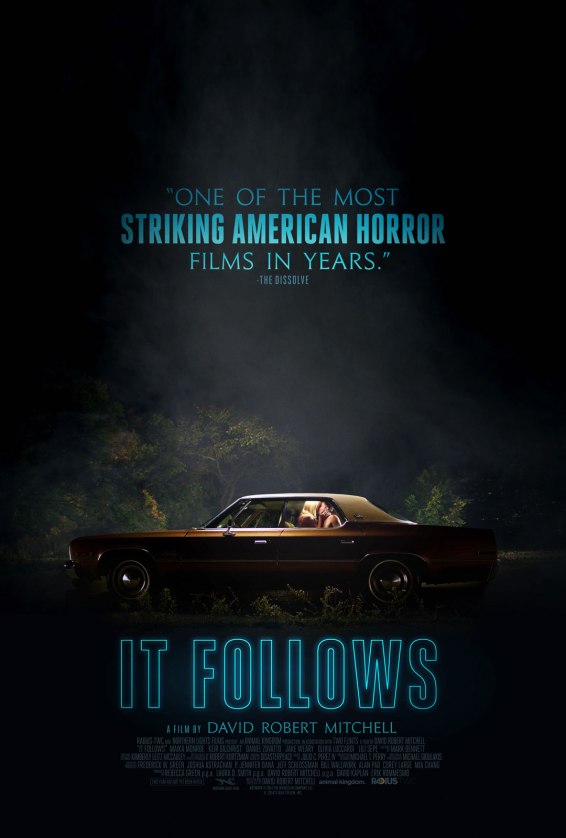
It Follows (2015) – Film Review

‘It Follows’ is easily one of my favourite modern horrors to date, as the film utilises some amazing cinematography by Mike Gioulakis, alongside an extremely eerie atmosphere and some decent performances. All tied in perfectly with an original and engaging story, resulting in a film that’s both very memorable, and very tense throughout.

Plot Summary: After a seemingly innocent sexual encounter, teenager ‘Jay’ finds herself plagued by strange visions and the inescapable sense that someone (or something) is following her. Faced with this burden, ‘Jay’ and her friends must find a way to escape their new nightmare, that seems to always be just a few steps behind…

Mostly due to the direction by David Robert Mitchell (The Myth of the American Sleepover, Under the Silver Lake), ‘It Follows’ feels very polished throughout, as every scene usually plays out very slowly, always using the screen-time to build more tension, which I quite enjoyed, I also found the underlying themes of the film very interesting, as the film’s narrative subtly explores ideas of sexual diseases through its unique plot. However, one element of David’s direction I personally don’t like is the lack of any specific time-period for the film’s setting, as although the majority of the film does feel like a classic 1980s monster flick, the film constantly shows many modern devices and cars, in addition to a variety of old horror films on ‘Jay’s television. Making the film feel very inconsistent, despite this being an intentional decision.

As a cast of mostly unknown actors, Keir Gilchrist, Daniel Zovatto, Lili Sepe, and Olivia Luccardi all give decent performances here, as while nothing truly phenomenal of note, all the characters do feel as if they have chemistry with each other, with Maika Monroe being the obvious stand out, of course, as although her character doesn’t get much development, she portrays ‘Jay’ quite well, coming off as a mostly innocent and likeable teenager.

The cinematography by Mike Gioulakis is nothing short of brilliant, especially in regards to many other horrors. As aside from a few too many hand-held shots, the film constantly uses the camera to build tension and paranoia throughout the entirety of its tight runtime, as in addition to filling the film with a variety of beautiful shots (many of which contain large amounts of movement). The film also uses plenty of P.O.V. shots to see through ‘Jay’s eyes, placing the audience in the terrifying position of the protagonist themselves. ‘It Follows’ is also mainly using wide-angle lenses, which according to David Robert Mitchell, was done in order to give the film a more expansive, intimidating feel.

One of my favourite aspects of the film is definitely the original score by ‘Disasterpeace,’ as this synth score (which was composed in only three weeks) really lends itself well to the film’s eerie atmosphere, creating an original soundtrack which is just as tense and chaotic as it is memorable. This does fall back on the problem of the film not being set within the ’80s again, however, as this original score would fit in perfectly, especially with the tracks; ‘Heels,’ ‘Title,’ ‘Jay’ and ‘Pool.’

As opposed to many other modern horrors, ‘It Follows’ has a noticeable lack of jump-scares, as the film is usually in favour of attempting to use simple yet creepy visuals hidden within the background of shots, which really gives the film a very fresh feel. ‘It Follows’ also separates itself from many other modern horrors by having many of the scenes involving the creature take place during the daytime and/or in locations such as a bright sandy beach or even ‘Jay’s bedroom, locations many would think to be safe for our characters.

In summary, I truly enjoy ‘It Follows’ from beginning-to-end, as the film is a genuine horror experience which takes risks and doesn’t simply feel like more of the same ideas we have seen before, as the fantastic cinematography and original score help create a film that we keep any horror fan engaged in this thrilling story, and while the film may not be entirely flawless, I really do hope more films within this genre can succeed as well as this one does. Final Rating: 8/10.

it-follows-poster

Free Fire (2017) – Film Review

An interesting film for sure, ‘Free Fire’ directed by Ben Wheatley (Kill List, Sightseers, High-Rise), thrusts it’s audience straight into a world of blood, bullets, and amusing quips. Setting the entire story in one single location, which truly helps the film in setting itself apart from other films within its genre, and I really do appreciate the effort that went into this film in order for it to be as entertaining as it is, and whilst not perfect, the film is still mostly entertaining and amusing throughout.

Plot Summary: In an abandoned Boston warehouse in 1978, a small-scale arms deal goes awry, turning the warehouse into a chaotic fight for survival with bullets flying in every direction…

As the film is set in the 1970s, the film is littered with ’70s style. Everything from the costumes, to the original score, to even the colour palette gives fit extremely well with the film’s tone. It’s clear from the style of the film and the witty dialogue that director Ben Wheatley was obviously inspired by early Quentin Tarantino and Martin Scorsese films, which makes complete sense as crime seems to be his go-to genre for the most part.

The entire cast here are all doing a great job of fitting film’s tone, as although there are a few comedically dark moments, the film is mostly light-hearted, as the cast’s performances back up this tone very well, giving the film an over-the-top and comedic outlook on the situation. I also enjoyed the sound design for the weapons in this picture, as I felt like each gunshot actually had an impact, not just that the actors were playing with props. I would say Armie Hammer as ‘Ord’ as well as Cillian Murphy as ‘Chris’ were easily my personal favourites of the cast, as I always found myself enjoying their very charismatic and cocky personas throughout the runtime.

Despite it being nothing amazing, the cinematography by Laurie Rose is decent enough throughout the majority of the film. Although I do believe there is a bit too much of a reliance of a hand-held camera at points, as I feel a still shot would be welcome more than a few times and as already mentioned, the original score by Geoff Barrow backs up that time-period very well. However, the soundtrack itself is pretty forgettable outside the rest of the film.

The best compliment I can give this film is without a doubt the writing, as even though the characters get barely any development throughout the narrative (relying mostly on the actor’s charismatic performances) the writing never fails to implement humour, or extremely tense scenarios nearing the end of the film. This is a shame, however, as I do feel a character arc would have worked very effectively for one of the greedy, egotistical characters on display.

In summary, I would say I enjoyed ‘Free Fire.’ The film definitely isn’t perfect due to its weak characterisation, overreliance on hand-held shots and maybe a few missed jokes here and there. But, still an enjoyable watch, and a nice 1970s throwback, nevertheless, plus the original concept of the narrative always intrigued me, and must be appreciated for its creativity alone. Final Rating: 6/10.

free_fire_ver18_xlg